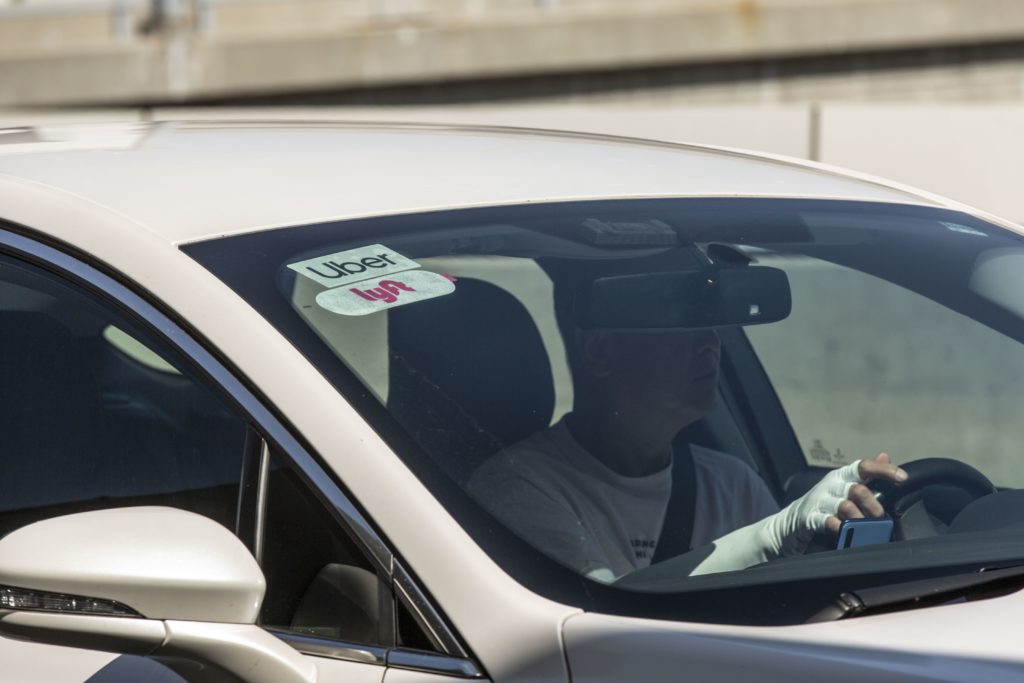
(Bloomberg) — A bill that would extend new benefits to Uber Technologies Inc. and Lyft Inc. drivers, while also designating them non-employees, passed the Washington State House, marking a step forward for a compromise that has won support from both a major union and the industry.
The legislation, backed by the local Teamsters union and both companies, has elements meant to appease drivers and the corporations, which have long opposed treating drivers as full-fledged employees.
For drivers, it would guarantee perks, such as paid sick leave and a minimum pay rate for the time they spend transporting passengers, and fund a “driver resource center,” which could represent workers in contesting their terminations.
The bill also fulfills long-sought goals of the companies.
It would preempt cities from regulating the ride-hailing companies themselves, and specify that the firms aren’t employers of their drivers, as long as they meet conditions — such as not unilaterally setting their workers’ schedules.
At a hearing last month on a prior version of the bill, Representative Liz Berry, a Democrat and one of the legislation’s sponsors, described it as a “culmination” of years of negotiations between Uber, Lyft and union representatives.
“Thousands of Uber and Lyft drivers — predominantly immigrants and people of color — will benefit from this long overdue expansion of pay raises, benefits and protections statewide,” Peter Kuel, president of the Teamsters-affiliated Drivers Union, said in an emailed statement.
He praised the legislation for making Washington “a national leader winning the highest labor standards in the gig economy.” Uber and Lyft spokespeople both confirmed that they support the current bill.
Spokespeople for the national AFL-CIO and Washington Governor Jay Inslee didn’t immediately respond to inquiries.
The legislation’s fate now rides on the state Senate. Similar efforts in states such as New York, California and Connecticut have been derailed by concerns among some labor advocates that the compromises would deprive workers of the full workplace protections to which they’d be entitled if they were classified as employees, such as an hourly minimum wage that includes their time waiting between passengers.
University of California Hastings law professor Veena Dubal said Wednesday that the Washington bill’s approach echoes Proposition 22, the ballot measure that gig companies spent $200 million passing in California to designate their workers as non-employees, while providing them a set of alternative perks.
“It is a sad compromise,” Dubal said in an email.
“The labor institutions involved on behalf of workers must demand more.”
(Updates with company response in fourth paragraph.)
More stories like this are available on bloomberg.com
©2022 Bloomberg L.P.