By Paul Sandle
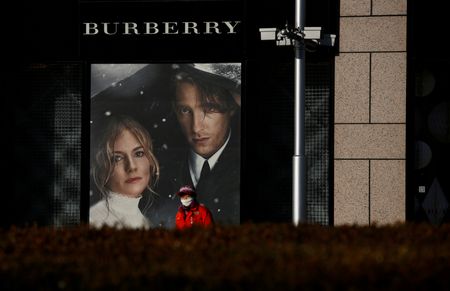
LONDON (Reuters) -Burberry’s prospects depend on how quickly its biggest market, China, recovers from COVID-19 lockdowns, the British luxury goods brand said on Wednesday while reporting higher sales and profits for its 2022 financial year.
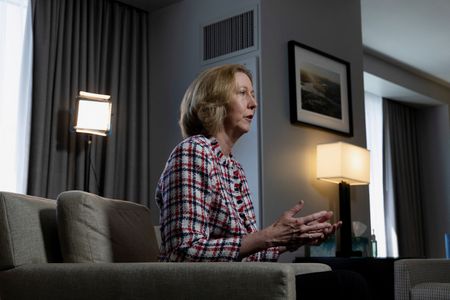
Sales in China, which accounted for 30% of the 166-year-old company’s turnover last year, fell 13% in its final quarter after some stores were forced to close and digital sales were disrupted in March, Chief Financial Officer Julie Brown said.
Full or partial lockdowns were imposed in dozens of Chinese cities in March and April, including a protracted shutdown in Shanghai, keeping workers and shoppers confined to their homes and severely disrupting supply chains.
Currently, about 40% of Burberry’s business in the country was affected by lockdown measures, Brown told reporters.
Burberry said its medium-term outlook of high single-digit revenue growth and meaningful margin growth at constant exchange rates depended on the impact of COVID-19 and rate of recovery in consumer spending in the world’s second-biggest economy.
China’s track record was a good omen, Brown said.
“The good news is when you look at what happened in the first wave, the recovery is very quick and very pronounced,” she said, noting that Burberry’s full-price sales in China were still 54% higher than pre-pandemic levels over the full year.
Shares in Burberry, which have fallen 25% in the last 12 months, were down 0.7% at 0845 GMT.
Burberry’s luxury rivals have faced similar hits in China.
Gucci-owner Kering said last month that lockdowns had disrupted its business in the country.
Burberry reported a 23% rise in revenue to 2.83 billion pounds ($3.5 billion) and a 38% rise in adjusted operating profit to 523 million pounds for the full year, which ended on April 2.
Comparable store sales in the final quarter rose 7%.
Burberry, known for its camel, red and black check and TB monogram, is so far only seeing a small impact from the rising cost of living, analysts said.
“That’s because the millionaires buying high-ticket handbags aren’t as worried about rising food and fuel prices, so the brand is relatively insulated in that respect,” said Hargreaves Langdon equity analyst Laura Hoys.
The company lost its chief executive Marco Gobbet, who sought to take the Burberry brand upmarket, to Ferragamo in January.
His replacement, Jonathan Akeroyd, joined in March.
Akeroyd said he would set out his plans to accelerate growth when it reports interim results in November.
($1 = 0.8021 pounds)
(Editing by Kate Holton, Matt Scuffham and David Clarke)