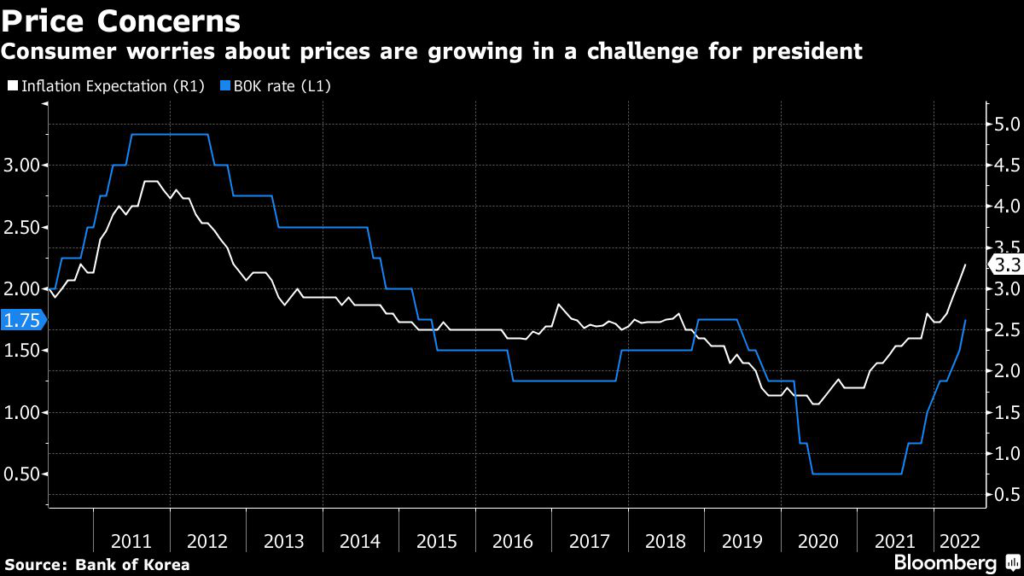
(Bloomberg) — South Korea’s economic chiefs stressed the need to remain focused on reining in inflation that’s threatening the nation’s outlook, after the Federal Reserve took aggressive policy action to tackle surging US prices.
Bank of Korea Governor Rhee Chang-yong, Finance Minister Choo Kyung-ho and several other senior policy makers met Thursday, just hours after the Fed raised its interest rate by 75 basis points in response to US inflation accelerating to a 40-year high.
The government and BOK have agreed to team up to combat inflationary pressures, Choo and Rhee told reporters following the meeting.
The BOK isn’t considering an emergency meeting and it’s too early to determine whether it should follow with a 50 basis-point hike next month, Rhee said.
Inflation is running hot across much of the developed world, with prices fueled by pandemic-era stimulus, Russia’s war on Ukraine and supply chain snarls.
Rising energy and commodity prices are eroding the bottom line of South Korean exporters, which serve as the engine-room of the nation’s economy.
The country has posted monthly trade deficits for much of the year to date.
Consumers are increasingly burdened by rising prices of staples as well, prompting the government to slash fuel taxes and suspend tariffs on food imports.
The BOK sees South Korea’s consumer prices rising 4.5% this year, compared with an earlier estimate of 3.1%.
The economy, under pressure from inflation, is likely to grow 2.7%, down from an earlier forecast of 3%.
The central bank has raised its benchmark rate five times since last summer, leading counterparts on the path toward policy normalization.
Rhee said last week though that the BOK’s moves may no longer qualify as pre-emptive given the pace of inflation and rate hikes by other central banks.
Thursday’s emergency gathering underscores the sense of urgency President Yoon Suk Yeol feels after taking office last month.
While he sees inflation as the biggest threat to the economy, he also vowed to boost growth as one of his key pledges.
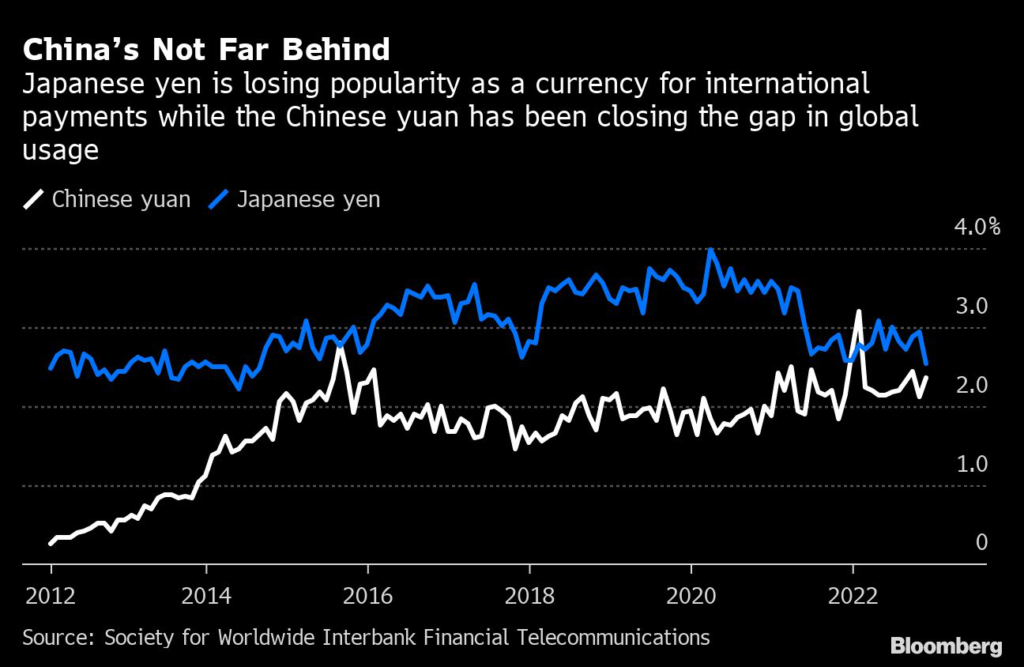
South Korea’s won has been among the worst performing currencies, along with the Japanese yen, as the Fed tightens.
Exports have helped shore up confidence in the won, with semiconductors and other technology shipments continuing to hold up.
More stories like this are available on bloomberg.com
©2022 Bloomberg L.P.