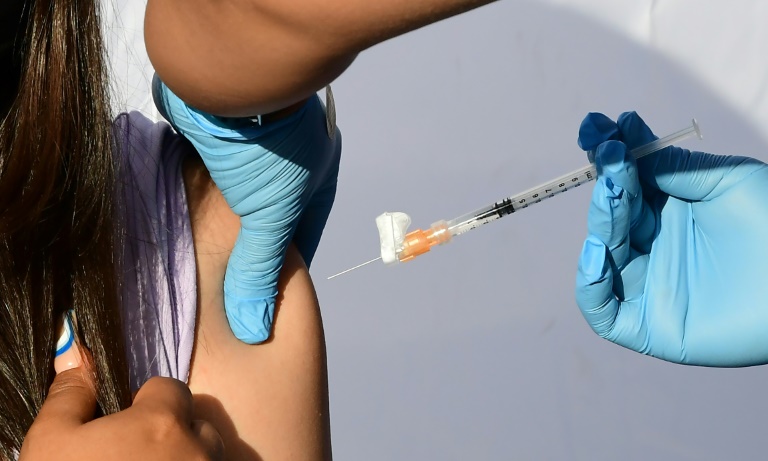
After months of anxious waiting for many parents, a panel of experts convened by the US Food and Drug Administration met Wednesday to weigh recommending Covid vaccines for the nation’s youngest children.
Children under five are the only age group not yet eligible for Covid immunization in the United States and most other countries.
If, as expected, panelists vote in favor of greenlighting the Pfizer and Moderna vaccines, formal authorizations should follow quickly, with the first shots in arms expected by next week.
Opening the meeting, senior FDA scientist Peter Marks said that despite studies showing the majority of children have now been infected with the coronavirus, the high rate of hospitalizations among babies, infants and toddlers during last winter’s Omicron wave underscored the urgent need for vaccination.
“We are dealing with an issue where we have to be careful we don’t become numb to the pediatric deaths because of the overwhelming number of older deaths,” he said.
“Every life is important and vaccine-preventable deaths are something we would like to try to do something about.”
The United States has recorded 480 Covid-19 deaths in the 0-4 age group so far in the pandemic, according to latest official data — far higher than even a “terrible flu season,” such as that of 2009-2010, when the H1N1 influenza strain caused 78 deaths in that age range, Marks said.
Ahead of the meeting, the FDA posted its independent analyses of the pharmaceutical companies’ vaccines, deeming both safe and effective.
Both vaccines are based on messenger RNA, which delivers genetic code for the coronavirus spike protein to human cells, training the immune system to be ready for when it encounters the real virus.
The technology is now considered the leading Covid vaccination platform.
Pfizer is seeking authorization for three doses at three micrograms given to children aged six months through four years, while Moderna has asked for the FDA to approve its vaccine as two doses of a higher 25 micrograms for ages six months through five years.
Both vaccines were tested in trials of thousands of children.
They were found to cause similar levels of mild side effects as in older age groups and triggered similar levels of antibodies.
– High protection against severe disease –
Efficacy against infection was higher for Pfizer, with the company placing it at 80 percent, compared to Moderna’s estimates of 51 percent for children aged six-months to two years old and 37 percent for those aged two to five years.
But the Pfizer figure is provisional and Moderna is studying adding a third dose later that may increase overall efficacy.
Moderna’s Rituparna Das said during her presentation the figures were also similar to efficacy for two doses in adults during the Omicron wave.
Even with modest efficacy against symptomatic disease, the shots should provide strong protection against severe disease and death, as they have done in other age groups.
There are some 20 million US children aged four years and under.
Obesity, neurological disorders and asthma are associated with increased risk of severe disease among young children.
However, the FDA noted in a briefing document that “a majority of children hospitalized for Covid-19 have no underlying medical conditions.”
Children can also go on to contract multisystem inflammatory syndrome in children (MIS-C), a rare but serious post-viral condition.
If the FDA-appointed experts recommend the two vaccines, then the matter will go to another committee convened by the Centers for Disease Control and Prevention for a final say.
White House officials last week said the rollout of millions of shots at pharmacies and doctors’ offices could begin as soon as June 21.