(Bloomberg) — US equity futures slid Tuesday amid escalating US-China tension over Taiwan and deepening worries about a global economic slowdown, driving investors into the safety of government bonds.
Nasdaq 100 contracts slumped 0.7% and those on the S&P 500 also fell as July’s equity market rebound stumbled into August.
Stocks in Europe dipped, and equity markets in China and Hong Kong were the worst performers in Asia as security analysts outlined potential military responses from Beijing.
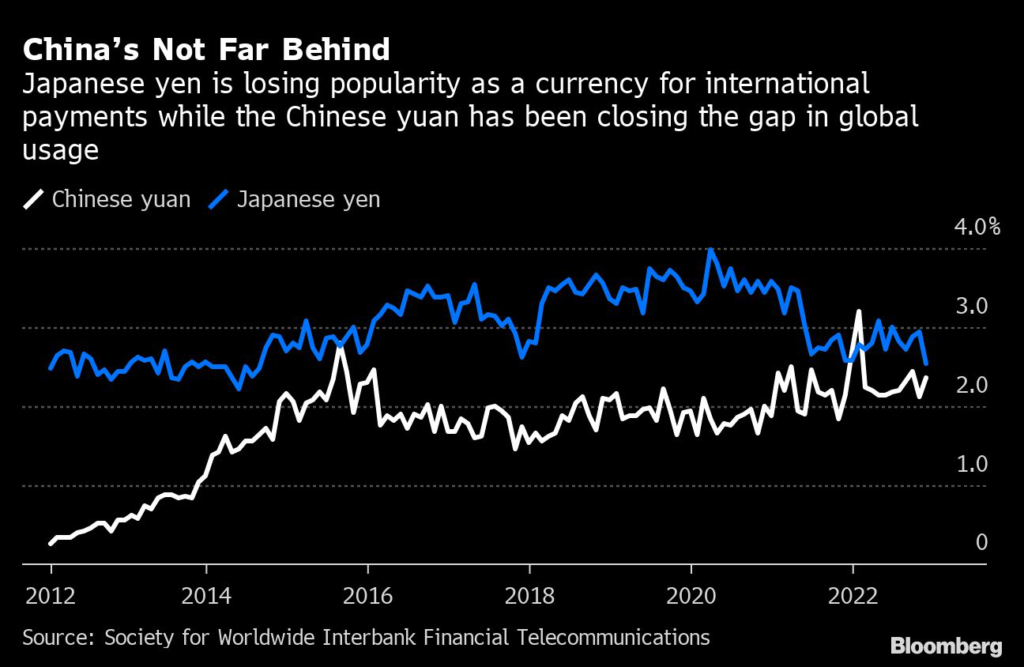
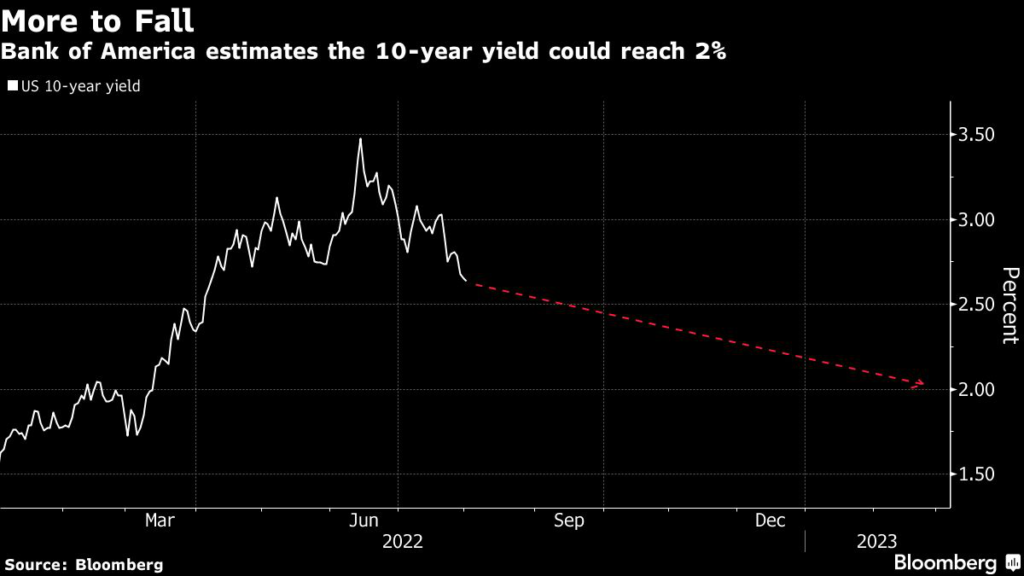
US Treasury 10-year yields dropped for a fifth day and approached 2.5%, a level last seen in April, while the Japanese currency advanced to the strongest level in two months.
US House Speaker Nancy Pelosi is set to land in Taiwan on Tuesday and would be the highest-ranking American politician to visit in 25 years.
China views the island as its territory and has vowed an unspecified military response to any Pelosi visit.
“Investors are likely to wait and see how all these data and geopolitical developments will play out before adjusting their portfolio,” said Pierre Veyret, a technical analyst at ActivTrades.
“Today’s price action can also be seen as a technical correction, with markets establishing a new floor level following the recent break-out of major resistances.”
Pelosi’s trip is creating a fresh pressure point for investors already dealing with the prospects of a US recession, worldwide rate hikes and inflation that risks becoming entrenched as Russia’s war in Ukraine exacerbates food shortages.
“Over the long run we fear that a Taiwan war is more likely than not” according to Matt Gertken, chief geopolitical strategist at BCA Research Inc. He recommends government bonds over equities, US defensive sectors and haven assets.
China, which regards Taiwan as part of its territory, has vowed an unspecified military response to any Pelosi visit that risks sparking a crisis between the world’s biggest economies.
Pelosi is expected to arrive at 10:20 p.m. local time via private plane at Songshan Airport, according to the Liberty Times, one of several media outlets linked to Taiwan’s ruling party.
Investors are also keeping a wary eye out for more potentially hawkish comments from Federal Reserve officials about the need for higher interest rates to restrain elevated inflation.
Expectations for how aggressive the Fed must be have receded because of recession risk, so any shift in those perceptions could stoke market volatility.
Goldman Sachs Group Inc. strategists led by Cecilia Mariotti said it was too soon for stock markets to fade the risks of a recession on expectations of a pivot in the Fed’s hawkish policy.
JPMorgan Chase & Co. strategists, on the other hand, said the outlook for US stocks is improving for the second half of the year on attractive valuations and as the peak in investor hawkishness has likely passed.
The prospect of a demand slowdown has sapped oil, leaving it around $94 a barrel.
Oilseed and grain futures fell after the first grain ship since Russia’s invasion left Ukraine, heralding some relief for a tight global food market.
This week’s MLIV Pulse survey is asking about your outlook for corporate bonds, mergers and acquisitions and health of US corporate balance sheets through the end of the year.
It takes one minute to participate in the MLIV Pulse survey, so please click here to get involved anonymously.
What to watch this week:
- US JOLTS job openings, Tuesday
- Chicago Fed President Charles Evans, St.
Louis Fed President James Bullard due to speak at separate events, Tuesday
- OPEC+ meeting on output, Wednesday
- US factory orders, durable goods, ISM services, Wednesday
- BOE rate decision, Thursday
- US initial jobless claims, trade, Thursday
- Cleveland Fed President Loretta Mester due to speak, Thursday
- US employment report for July, Friday
Some of the main moves in markets:
Stocks
- Futures on the S&P 500 fell 0.6% as of 8:31 a.m.
New York time
- Futures on the Nasdaq 100 fell 0.7%
- Futures on the Dow Jones Industrial Average fell 0.5%
- The Stoxx Europe 600 fell 0.5%
- The MSCI World index fell 0.4%
Currencies
- The Bloomberg Dollar Spot Index rose 0.2%
- The euro fell 0.4% to $1.0217
- The British pound fell 0.3% to $1.2215
- The Japanese yen rose 0.7% to 130.74 per dollar
Bonds
- The yield on 10-year Treasuries declined five basis points to 2.52%
- Germany’s 10-year yield declined eight basis points to 0.70%
- Britain’s 10-year yield declined 10 basis points to 1.71%
Commodities
- West Texas Intermediate crude rose 0.6% to $94.49 a barrel
- Gold futures rose 0.6% to $1,797.90 an ounce
More stories like this are available on bloomberg.com
©2022 Bloomberg L.P.