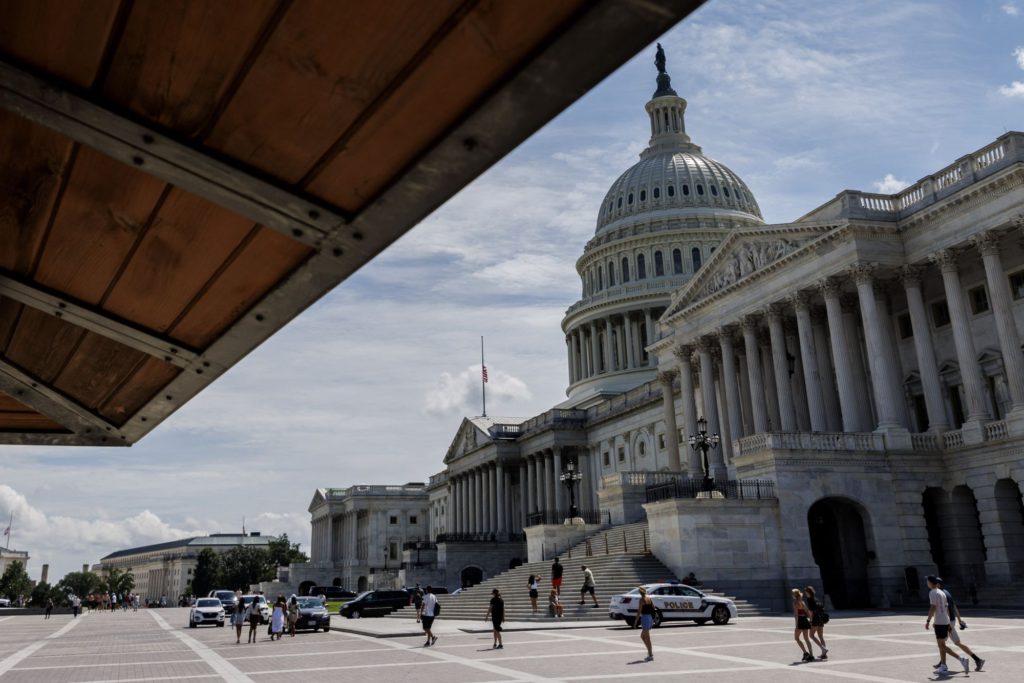
(Bloomberg) — The Senate has started voting on a lengthy series of amendments to the Democrats’ $437 billion climate, health and tax package leading up to expected passage of the legislation sometime this weekend.
In one of the quirks of Senate rules being employed by Democrats to pass the bill with a simple majority, Republicans have the chance to offer scores of amendments.
Most are designed to force Democratic senators to take politically fraught positions on contentious issues such as immigration and taxes.
In the 50-50 Senate, Republicans can force a change in the legislation with help from just one member of the Democratic caucus.
Democrats Turn Back Immigration Amendment (2:58 a.m.)
Democrats blocked an effort by Republicans to force a continuation of the Covid-era immigration policy known as Title 42 — which a number of Democrats have said they support — lest they risk the underlying bill.
Hispanic Democrats have warned they could derail the package in the House if anti-immigration policies are added to it in the vote-a-rama, and Republicans have made clear they hope to add amendments that could bring down the bill.
The amendment by James Lankford of Oklahoma failed on a 50-50 vote.
Democratic Senator Jon Tester then offered a similar amendment, but one that didn’t comply with the budget rules, that needed 60 votes.
It failed 56-44 but had the backing of Democrats Kyrsten Sinema and Mark Kelly of Arizona, Catherine Cortez Masto of Nevada, Raphael Warnock of Georgia, Maggie Hassan of New Hampshire and Tester.
Georgia Senators Support Sanders’ Medicare Amendment (2:25 a.m.)
Those votes came after a series of other failed amendments, including one by Vermont independent Bernie Sanders to expand Medicare benefits for dental, vision and hearing.
Sanders’ amendment, which would have been paid for with higher income tax rates on high-earning Americans, including a restoration of the 39.6% tax bracket, was defeated 97-3, with only Warnock and Jon Ossoff of Georgia joining him.
Most Democrats have adopted a strategy of voting against all amendments to protect the bill, though Democrats facing tough re-election fights, like Warnock, have on occasion broken from that strategy on amendments where their votes would not impact the outcome.
Republican Oil, SALT Amendment Blocked (12:50 a.m.)
The Senate blocked an amendment by Senator Lindsey Graham of South Carolina to nix a 16.4 cents per barrel oil import fee and extend a cap on the state and local tax deduction.
Graham said his amendment would prevent a rise in gas prices.
Democrats argued it amounted to less than a penny a gallon to pay for toxic cleanup.
But his amendment, defeated on a 50-50 party-line vote, also had a tax increase. It would have extended the $10,000 cap on the state and local tax deduction set in the 2017 GOP tax law by another year to 2027.
That cap is unpopular with voters in high-tax states like California, New York and New Jersey.
Hassan instead proposed an amendment to nix the fees to pay for the Superfund program, but without the SALT tax increase to pay for it.
The Senate voted 55-45 to waive a budget point of order to allow the amendment, short of a 60-vote threshold.
Three other Democrats who, like Hassan, face tough reelection fights in November joined her effort: Kelly, Cortez Masto and Warnock, as well as Sinema.
Democrats Hang Together in Early Sanders Test (12:10 a.m.)
In the first vote of the night, the Senate easily blocked an amendment by Sanders, the Budget chairman, to tie the cost of Medicare prescription drugs to the prices paid by the VA.
Sanders said his amendment would cut drug prices in half and save $900 billion.
But Graham, the ranking Republican on the Budget Committee, raised a budget point of order against it.
The Senate voted 99-1 against Sanders’ effort to waive the point of order, killing the amendment.
Sixty votes would have been required.
The early vote showed Democrats are united in their strategy of voting down all amendments — even measures they would otherwise agree with — in order to preserve all 50 Democratic votes for the underlying bill.
Minimum Tax Includes Special Treatment for Telecom (10:48 p.m.)
The bill text, released Saturday evening, contains a special carveout in the corporate minimum tax for telecommunications companies that wasn’t included in previous versions of the bill.
The change makes the 15% minimum tax on financial profits less severe for telecom businesses, because they will be able to claim additional deductions when calculating the tax.
The legislation also allows companies in all industries to claim tax breaks related to depreciating their equipment and facilities, a previously announced revision that Sinema requested in order to win her support.
Democrats Dare GOP to Strip Out Insulin Cap (10:06 p.m.)
Democrats included a $35 cap on insulin in the bill and are daring the GOP to strip it out.
The top Senate rules official has said the provision, authored by Warnock, is not eligible for the budget bill under Senate rules.
But they kept it in the legislation.
Republicans can object to the provision and then Democrats will need 60 votes to waive the objection. Pennsylvania Republican Senator Pat Toomey said the GOP will likely object.
Manchin Ready to Reject GOP Amendments (7:00 p.m.)
During the marathon of amendment votes, it would only take one Democrat siding with all Republicans to change the bill.
Senator John Thune said the GOP will try to add amendments intended to rile progressive Democrats and make the bill harder to pass the House.
West Virginia Senator Joe Manchin, a moderate Democrat who has sometimes angered his party’s left wing, indicated he wouldn’t go.
“I’m protecting the integrity of the bill” he said.
Thune said, “If he sticks to that he is going to make some votes that he regrets.”
Automakers Lost Fight Over Domestic Content (6:00 p.m.)
US automakers lost their fight to remove domestic content requirements from the vehicle tax proposal.
Michigan Senators Gary Peters and Debbie Stabenow told reporters that the changes they had sought were not made.
Companies will have to comply with tough new battery and critical minerals sourcing requirements that could render the credits useless for years for many manufactures, the senators have warned.
Manchin insisted on the domestic supply chain requirements.
More stories like this are available on bloomberg.com
©2022 Bloomberg L.P.