Micron Technology Inc. said it will use “anticipated” government grants and credits to help it invest $40 billion by the end of the decade to build out US semiconductor manufacturing capacity.
(Bloomberg) — Micron Technology Inc.
said it will use “anticipated” government grants and credits to help it invest $40 billion by the end of the decade to build out US semiconductor manufacturing capacity.
The company expects to begin to produce chips after 2025 and said it will create as many as 40,000 jobs, the Boise, Idaho-based memory manufacturer said in a statement on Tuesday.
The investment is being funded with subsidies it believes it will be awarded from the Chips and Science Act, Micron said.
The spending plan is part of the company’s previously announced $150 billion global investment goal, which it detailed last year.
President Joe Biden is expected to sign the chips act into law on Tuesday as part of a package of spending and tax reforms. Most of Micron’s production is done in Japan, Singapore and Taiwan.
Read More: Biden Gets Big Economic Win as Inflation Threatens Legacy
“Micron’s domestic leading-edge manufacturing capabilities will ensure U.S.
national security and supply chain resilience as demand for memory grows in critical market segments like automotive and data center, fueled by accelerating adoption of artificial intelligence and 5G,” the company said in the statement.
Read More: Micron’s Dim Outlook Suggests Tech Spending Is on the Wane
The company, which competes with South Korea’s Samsung Electronics Co.
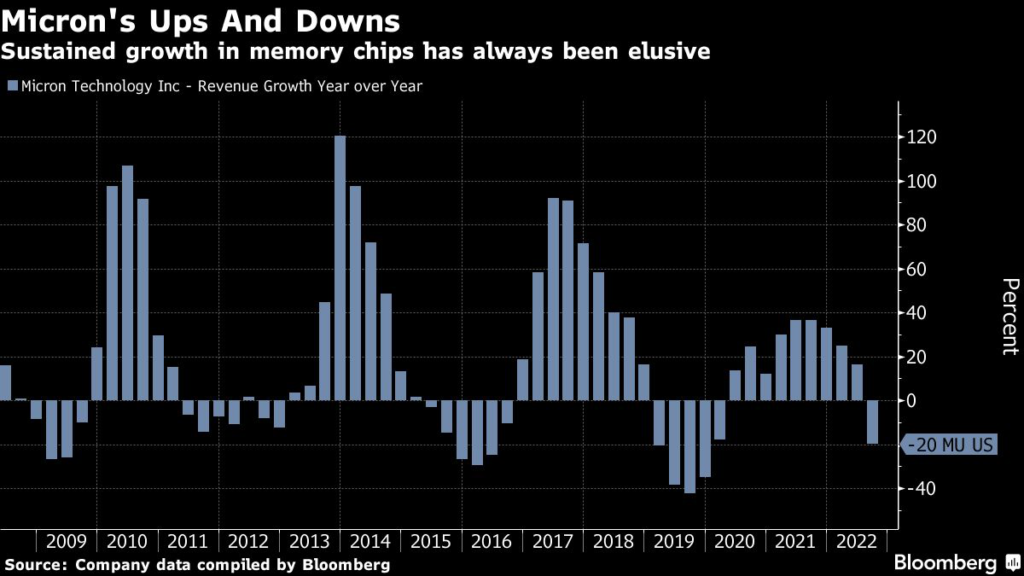
and SK Hynix Inc., as well as Japan’s Kioxia Holdings Corp., said last month that it’s cutting spending on plants and equipment to slow increases in factory output amid concerns about a glut in the market.
Electronic device makers that buy Micron’s chips have been scaling back orders to reduce their own inventory.
More stories like this are available on bloomberg.com
©2022 Bloomberg L.P.