The Kyiv region — although not Ukraine’s capital itself — was struck by Iranian-made drones on Thursday morning as air raid sirens rang out across much of the country for a fourth morning.
Air strikes continued in the south, including Mykolaiv, where a multi-story apartment building was destroyed.
(Bloomberg) — The Kyiv region — although not Ukraine’s capital itself — was struck by Iranian-made drones on Thursday morning as air raid sirens rang out across much of the country for a fourth morning.
Air strikes continued in the south, including Mykolaiv, where a multi-story apartment building was destroyed.
Ukraine’s allies in Brussels for a NATO defense ministers’ meeting are expected to offer more air defense capabilities for Ukraine in the face of Russia’s stepped-up missile strikes.
The UK on Thursday pledged Amraam rockets capable of shooting down cruise missiles. Turkish President Recep Tayyip Erdogan will meet Thursday with Russia’s Vladimir Putin in Kazakhstan.
The United Nations General Assembly condemned Russia’s annexation of four Ukrainian regions in a symbolic vote that nonetheless exceeded western expectations for how much support the measure would receive.
The vote was 143-5, with 35 nations, including India and China, abstaining.
(See RSAN on the Bloomberg Terminal for the Russian Sanctions Dashboard.)
Key Developments
- White House Weighs Retaliatory Ban on Russian Aluminum
- Putin Says All Infrastructure at Risk After Nord Stream Hit
- Russia Sends More Fuel to Army In Ukraine Amid Mobilization
- NATO Countries Back German Plan for European Anti-Missile Shield
- Europe Steps Up Defense of Energy Assets With Show of Force
On the Ground
Russia delivered missile and drone strikes on more than 40 settlements overnight, notably the Makariv municipal territorial community in Bucha district to the northwest of the capital.
Other cities including Mykolaiv, Vinnytsya and Cherkasy also sustained damage, Ukraine’s military said. Nikopol in the Dnipropetrovsk region was shelled, mostly from Grad systems, for a second consecutive night, the president’s office said: a residential district was targeted including private buildings, stores and a hospital.
Russia’s troops are struggling to stem Kyiv’s counteroffensive in the areas they seized from Ukraine and to break through near Bakhmut and Avdiyivka in Donetsk region, according to Ukraine’s military staff, which also said some Russian troops are getting orders to halt their offensive due to problems with low morale and mass desertion.
The claims can’t be verified.
(All times CET)
European Gas Prices Whipsaw After Putin Infrastructure Comment (11 a.m.)
European natural gas swung as anxiety mounted over the safety of infrastructure that’s key to ensuring supply to the continent.
Traders are on edge with Russian President Vladimir Putin saying any energy infrastructure in the world is at risk after the recent Nord Stream explosions.
Another Six Grain Ships Depart (10:46 a.m.)
Six vessels carrying a total of 154,000 tonnes of Ukrainian grain sailed early Thursday, taking total foodstuffs shipped under the safe-transit deal brokered by Turkey and the UN for three Black Sea ports to almost 7.4 million tns since early August, Ukraine’s infrastructure minister said on Twitter.
NATO Countries Back German Plan for Anti-Missile Shield (9:54 a.m.)
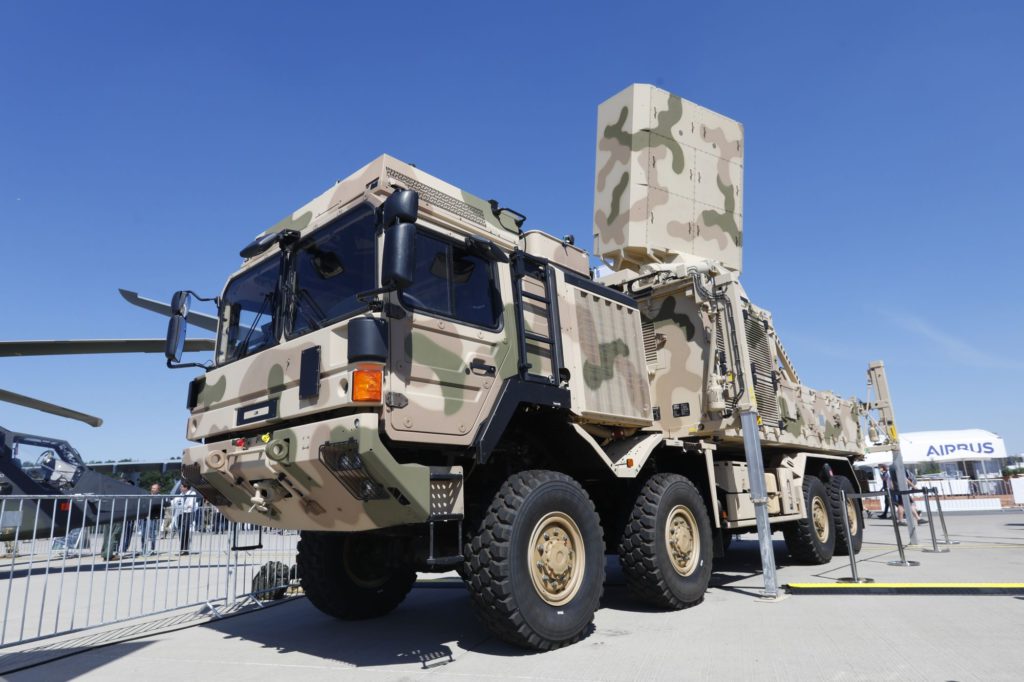
At least 15 countries of the NATO military alliance have signed a letter of intent to join a long-term German project to create a European anti-missile shield that would boost protection for much of the continent.
The system will have several layers to intercept various kinds of missiles from different heights, possibly linking up Israeli Arrow 3 air-defense systems as well as US-made Patriots and German Iris-Ts, and would be fully deployable through the North Atlantic Treaty Organization.
Read more: NATO Countries Back German Plan for European Anti-Missile Shield
Ukraine Says It’s Restored Mobile Network After Russian Attacks (9:30 a.m.)
Ukraine has restored its mobile network after recent missile and drone strikes from Russia, with the number of customers suffering from connection issues due to the attacks reduced from 18% at the beginning of the week to 2% now, according to Ukraine’s Information Protection Service.
The service urged people to limit usage of mobile internet to ease pressure on cell network and help fix the outstanding issues as soon as possible.
Russian Forces Anticipating Combat Reaching Kherson, UK Says (9 a.m.)
Moves by Russia’s occupation authorities to evacuate some civilians from Kherson suggest “they anticipate combat extending to the city,” the UK defense ministry said.
After retreating by about 20 km (12 miles) in the north of the Kherson region early this month, Russian troops are likely attempting to consolidate a new front line west from the village of Mylove, the UK said.
Ukrainian advances mean Russia’s flank is no longer protected by the Inhulets River.
UK Providing Air Defence Missiles to Ukraine (7 a.m.)
The UK said it will donate Amraam air defence missiles to help Ukraine defend against Russian missile strikes.
The rockets will be provided in the coming weeks and will help defend Ukrainian infrastructure, Britain’s defence ministry said in a statement. The UK said it would also donate more drones for information gathering and 18 extra howitzer artillery guns, in addition to 64 already delivered.
General Assembly Votes Overwhelmingly to Condemn Annexation (12:46 a.m.)
US Ambassador to the UN Linda Thomas-Greenfield said that the 143-5 vote denouncing the annexation of Ukrainian territory had a practical effect of showing that “Ukraine’s borders remain the same” in the eyes of the world.
She said the vote showed how the international community “soundly rejected the affront to territorial integrity, to national sovereignty, to peace and security.”
France Won’t Use Nuclear Weapons If Russia Does (9:53 p.m.)
France wouldn’t respond with nuclear weapons should Russia resort to deploying them tactically against Ukraine, President Emmanuel Macron said.
“Our doctrine rests on the fundamental interests of the nation,” Macron said during a live interview on public broadcaster France 2.
“They are defined clearly and wouldn’t be directly affected at all if, for example, there was a ballistic nuclear attack in Ukraine, in the region.”
Musk’s Starlink Gets a Thank-You From Ukraine (9:27 p.m.)
Mykhailo Fedorov, Ukraine’s vice prime minister and chief of digital transformation, praised Elon Musk’s Starlink satellite communications system, saying it “quickly restored” connections severed when “over 100 cruise missiles attacked” Ukraine’s energy and communications infrastructure.
“You’re most welcome,” Musk responded.
“Glad to support Ukraine.”
Ukraine Needs at Least $3 Billion a Month Next Year, IMF Says (8:28 p.m)
Ukraine will need at least $3 billion a month next year to finance its wartime economy, which means allies will have to step up with more support, the head of the International Monetary Fund said.
“Our current thinking is that the financing requirements” will be around $3 billion to $4 billion a month, Kristalina Georgieva said at a meeting in Washington to discuss global economic support for Ukraine, according to a draft text of her comments.
Developments in the war “could push financing needs beyond this range,” as the government seeks to maintain basic social services, repair infrastructure and import energy, Georgieva said.
“This requires actions on the part of the authorities but importantly also the international community.”
Read the full story here.
Zelenskiy Calls for IMF Loan of Up to $20 Billion (8:20 p.m.)
Speaking remotely to the same roundtable as the IMF’s Georgieva, President Zelenskiy said his nation is looking for a loan of as much as $20 billion from the Washington-based crisis lender as a main source of funds for closing the nation’s budget deficit.
Ukraine needs $38 billion to make up for the gap in its budget next year, he said.
Ukraine also needs targeted credits of $2 billion to rebuild its electric energy infrastructure, Zelenskiy said by video to the officials assembled in Washington.
Georgieva said later that Ukraine’s non-financial program, announced in recent days and monitored by the IMF board, will be a bridge to the larger borrowing that Zelenskiy is seeking.
The fund approved $1.3 billion for the nation under its new “food shock window” last week.
White House Weighs Retaliatory Ban on Russian Aluminum (5:47 p.m.)
The Biden administration is eyeing three options for action against Russian aluminum: an outright ban, increasing tariffs to levels so punitive they would impose an effective ban, or sanctioning the company that produces the nation’s metal, United Co.
Rusal International PJSC, according to people familiar with the decision-making.
Such a move would have wide-reaching repercussions for the globally traded aluminum market, potentially forcing consumers in the US and other countries into a rush to find replacement metal.
The globally traded aluminum price surged on the news of a possible ban.
Russia Running Low on Precision Guided-Munitions, Official Says (4:39 p.m.)
Russia has apparently depleted a significant portion of its precision-guided munitions because Moscow is increasingly using old Soviet munitions with indiscriminate precision on the battlefield, a senior NATO official said.
Such munitions have wider targeting margins, making it more likely they’ll hit civilian casualties, the official said, adding that Russia used a combination of both modern and older munitions in its latest round of strikes.
The official also said Russia’s new military commander, General Surovikin, will have to contend with an increasingly factional ministry of defense that’s poorly resourced to reach the Kremlin’s strategic objectives.
Erdogan Likely to Propose Ukraine Mediation Plan, Kremlin Says (4:32 p.m.)
“The Turks are offering their mediation,” state news service Tass reported Putin’s foreign policy aide, Yuri Ushakov, as saying ahead of an Erdogan-Putin meeting on Thursday.
“If any negotiations or contacts take place, then they’ll likely be on their territory, in Istanbul or Ankara.”
Turkey, along with Saudi Arabia and the UAE, has been involved in mediation efforts between Russia and Ukraine that led to a major prisoner exchange last month.
The three countries have refused to adopt Western sanctions on Russia and have maintained ties with both sides during the war.
More stories like this are available on bloomberg.com
©2022 Bloomberg L.P.