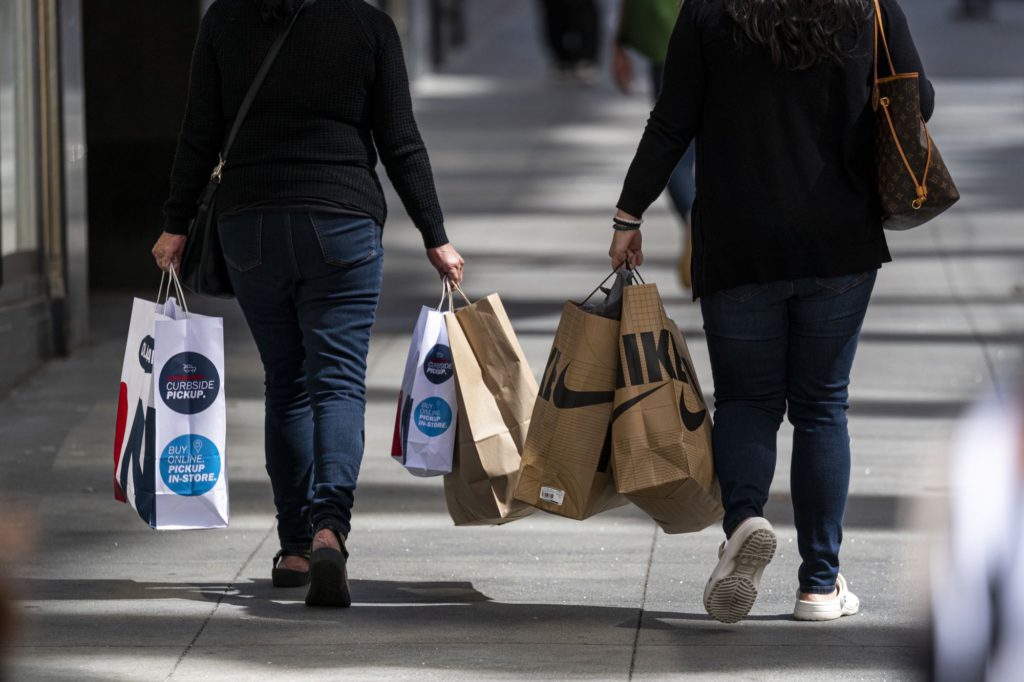
US retailers are bracing for a slower-than-normal Black Friday as high inflation and sagging consumer sentiment erode Americans’ demand for material goods.
(Bloomberg) — US retailers are bracing for a slower-than-normal Black Friday as high inflation and sagging consumer sentiment erode Americans’ demand for material goods.
Bloomberg News will be following the latest developments as information becomes available throughout the day.
All time stamps reflect the US East Coast.
Shopify Sees Bigger Thanksgiving Gain Than Adobe (9:40 a.m.)
Data from software provider Shopify Inc., which powers e-commerce platforms for small businesses, show that the average spend per cart on Thanksgiving Day was 3.8% higher than last year.
That might not point to higher sales volumes, but instead increases in prices due to higher inflation.
The Shopify data also showed an increase in the number of sales made on cell phones rather than on desktops, suggesting that more consumers were looking for deals while away from their desks.
The apparel and accessories category was the top seller in the US yesterday, followed by health and beauty, Shopify found.
Thanksgiving Sales Rise 2.9%, Adobe Says (9:40 a.m.)
Online sales climbed 2.9% to $5.29 billion on Thanksgiving Day, Adobe Analytics said Friday.
That’s slightly ahead of Adobe’s estimate for the overall holiday season, which the company sees expanding 2.5% from last year. On Black Friday itself, Adobe predicts only a 1% increase in online sales, to $9 billion.
Taking a step back, these numbers — which aren’t adjusted for inflation — show the challenge facing retailers.
The US consumer price index climbed 7.7% during the 12 months ending in October. So with e-commerce rising in the low single digits, unit sales are probably down.
Salesforce Inc., using a different methodology, reported a more robust 9% gain in online sales to $7.5 billion.
Activity jumped between 6 p.m. and 10 p.m. Eastern time and 78% of traffic came through mobile phones, suggesting that people did a lot of shopping from the couch after their Thanksgiving meals.
UK Deliveries Crunched by Postal Strike (9:40 a.m.)
One of the challenges for UK retailers this Black Friday will be how to deliver gifts bought online.
UK postal workers at Royal Mail are striking over pay and conditions on Nov. 24 and 25 with further walkouts planned in the leadup to Christmas, the busiest time of year.
Amazon.com Inc., a big discounter for Black Friday, is making deliveries using e-bikes in key British cities to reduce its emissions.
The online behemoth has opened e-bike delivery hubs in Manchester and London in time for the discount event. Amazon is investing £300 million ($362 million) over five years to reduce its transport emissions in the UK.
Retailers are seeking to ease the load on warehouse staff at the busiest time of year.
UK electronics retailer Currys Plc has spent more than £250,000 on “robotic exoskeleton suits” to help warehouse workers spread the weight of lifting heavy loads and prevent injuries. Currys says its distribution site in Newark, England, will deliver 8.7 million units of stock this Black Friday period, with the retailer offering as much as £500 off televisions.
Pitney Bowes Says Gen Z More Likely to Buy Online (8:26 a.m.)
Half of Gen Z consumers who participated in a Pitney Bowes survey say they’ll be shopping online more this season during Black Friday and Cyber Monday than they did last year.
Across age groups, one in four consumers plan to shop online more this year.
Younger consumers are more comfortable with online shopping, Pitney Bowes said in a separate report. And Gen Z is more likely to purchase from digital brands that don’t have physical stores and advertise on Instagram and TikTok.
With inflation putting the squeeze on holiday budgets, many consumers are looking online for deals.
As retailers try to offload a glut of inventory, promotions won’t be hard to find.
Hot Wheels, Paw Patrol Are Top Sellers (8:26 a.m.)
In addition to tracking online sales totals, Adobe Analytics has been keeping an eye on hot sellers during the first three weeks of November.
The list includes some perennial favorites such as air fryers, smart speakers and Apple iPads. The Nintendo Switch is the top-selling gaming console, while brisk-selling toys include Hot Wheels and Paw Patrol.
Among categories, kitchenware sales are up 155% from October, which is a relief for retailers since home goods have been slumping this year. Also rising: buy-now-pay-later options, as shoppers’ savings accounts dwindle and inflation takes a toll.
Inditex Workers Start the Holiday Season With a Strike (8:11 a.m.)
Inditex, the owner of the Zara fashion chain, is facing two days of strikes in its home market as the holiday shopping season begins.
As many as 13 shops closed on Thursday in the Spanish province of A Coruña, in Galicia, as workers walked off their jobs to demand a €440 ($458) monthly pay increase for staff earning €1,058. Unions are expected to shut most of the 44 Inditex-owned shops in the province, including a five-floor flagship Zara store in the center of A Coruña city.
The protest highlights growing demands from workers for wage increases in the face of soaring prices.
In spite of the cost-of-living crisis, Inditex has been able to pass on costs to shoppers and posted its biggest profit margins in seven years in September.
Fewer Gifts Expected Amid High Inflation (7:34 a.m.)
Inflation, not the Grinch, is stealing Christmas this year.
More than half (51%) of the 1,000-plus respondents to a RetailMeNot holiday trends survey say they’re coping with sky-high inflation this year by purchasing fewer gifts.
Polled shoppers plan to spend $725 for the holidays — 8% less than last year.
More than a third (36%) say they’re going to use more coupons to manage higher prices. And 22% say they’re going to purchase more used items.
RetailMeNot’s data also show that 53% of respondents plan to shop on Black Friday and 55% will shop Cyber Monday.
Many consumers have already started, with 52% taking advantage of pre-Black Friday deals.
E-Commerce Growth Seen Slowing (7:34 a.m.)
Retailers’ digital sales remain higher than in 2019, but growth has decelerated from the past two years, said David Bassuk, global co-head of the retail practice at consulting firm AlixPartners.
Consumers are still using online channels to get a sense for what deals are available, but that won’t be the only option this year.
“The stores are back,” Bassuk said. “The importance of the sales associate in the store is increasing once again.”
Black Friday Minus Thanksgiving: UK Stays Active (7:02 a.m.)
With inflation running at the highest in more than four decades in the UK, shoppers are actively looking for bargains this Black Friday.
Almost 70% of British shoppers plan to participate in the discount event imported from the US, up from 57% last year, according to McKinsey & Co. Online searches for Black Friday sales have risen by a quarter since last year.
With most people in the UK not celebrating Thanksgiving, Black Friday has morphed into a weeklong and in some cases a monthlong event.
It started even earlier than normal this year as retailers try to encourage shoppers to spend. British department store John Lewis Partnership Plc and drugstore chain Boots both offered deals from the start of the month.
Adobe Sees 2.5% Growth — Without Inflation (12:01 a.m.)
A key question this Black Friday will be how much higher prices are contributing to better sales numbers.
Overall spending this holiday season is seen growing 2.5% from a year ago, compared with 8.6% last year and a whopping 32% in 2020, according to data from Adobe Inc.
Those figures aren’t adjusted for inflation, meaning that sales could be down by volume given that consumer prices are up 7.7% from a year ago.
Telsey Sees Profits Amid Discounts as Key (12:01 a.m.)
Success for retailers this holiday season will be determined by which companies can maintain their discounts and still come out profitable, said Dana Telsey, chief executive officer of Telsey Advisory Group, in a Nov.
23 interview on Bloomberg Television. There’s still more inventory “to get through as we enter the holiday season, which is going to lead to good deals and good values for the consumer,” she said.
Telsey also said that brick-and-mortar sales are likely to get a big boost this year because “we have not had this type of in-person shopping for two years during the holiday season” due to Covid-19.
–With assistance from Tonya Garcia, Daniela Sirtori-Cortina and Clara Hernanz Lizarraga.
(An earlier version corrected a month in the introduction.)
More stories like this are available on bloomberg.com
©2022 Bloomberg L.P.