Inflation stirred up by Egypt’s second currency devaluation this year has made another sizable increase in interest rates all but certain on Thursday, a decision that may also signal how the central bank responds to pressure to allow the pound to weaken further.
(Bloomberg) —
Inflation stirred up by Egypt’s second currency devaluation this year has made another sizable increase in interest rates all but certain on Thursday, a decision that may also signal how the central bank responds to pressure to allow the pound to weaken further.
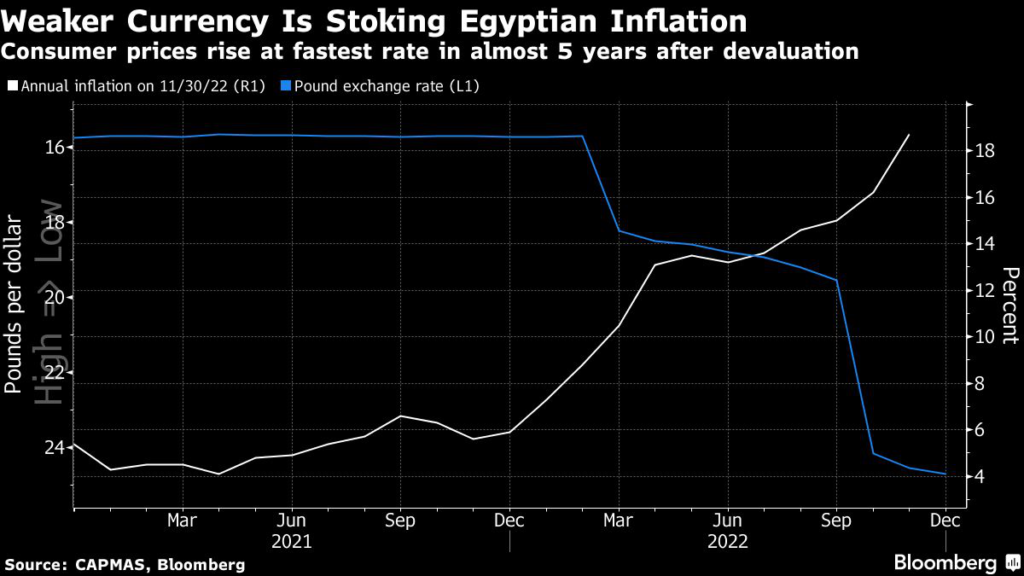
The choices facing policymakers reflect the severity of Egypt’s worst foreign-exchange crunch in half a decade at a time when consumers in the Middle East’s most populous country contend with the fastest price growth in almost five years.
Sharp rate hikes accompanied both devaluations in 2022.
Most economists polled by Bloomberg anticipate the Monetary Policy Committee will deliver this year’s fourth rate increase, with forecasts ranging from one to two percentage points.
A single dissenter expects the benchmark deposit rate to stay at 13.25%.
Policy in Egypt is at a crossroads after a year that’s seen the pound lose more than a third of its value in one of the worst performances globally.
Economic imbalances and a lack of foreign exchange are still leaving the currency under strain, with a backlog of requests from importers and companies estimated at over $5 billion.
Read More: Egypt Currency Flexibility Still in Doubt After Huge Selloff
Alongside 500 basis points of rate hikes this year, Egypt has also turned to the International Monetary Fund to help restore confidence in local assets.
The IMF last week approved a $3 billion loan for Egypt, a deal that’s expected to unlock additional financing of about $14 billion from international and regional partners.
Read More: Egypt Reveals $16 Billion Funding Gap, Looks to IMF Deal for Fix
A worsening outlook for consumer prices only adds urgency for the central bank.
Inflation is already approaching an annual 19% and will likely peak well past 20% next year.
The MPC on Thursday is set to announce a new inflation target. Its previous goal was 7%, plus or minus two percentage points, on average in the fourth quarter.
Despite announcing a shift to a more flexible exchange rate when it devalued the pound in October, Egypt has only allowed the currency to move in small increments since then.
In the black market, the pound has been trading at up to 33 per dollar, according to the state-run Al-Ahram newspaper, much weaker than the spot rate of about 24.8.
The reluctance to allow for a steeper currency adjustment is a turnoff for foreign investors, whose retreat from the local debt market this year has helped push up the yields on Egypt’s Treasury bills by the most since 2016.
The central bank also plans to remove a requirement for importers to acquire letters of credit to buy some goods abroad by the end of 2022, a step that could add more pressure on the pound.
Another devaluation hinges on the central bank’s ability to build enough of a liquidity buffer to clear the backlog for hard currency and ensure a stable supply of foreign exchange, according to Farouk Soussa, an economist at Goldman Sachs Group Inc.
in London, who expects a 100 basis-point hike.
Otherwise it “would not eliminate the black market or bring about any benefit to the economy,” said Soussa.
–With assistance from Harumi Ichikura and Netty Ismail.
More stories like this are available on bloomberg.com
©2022 Bloomberg L.P.