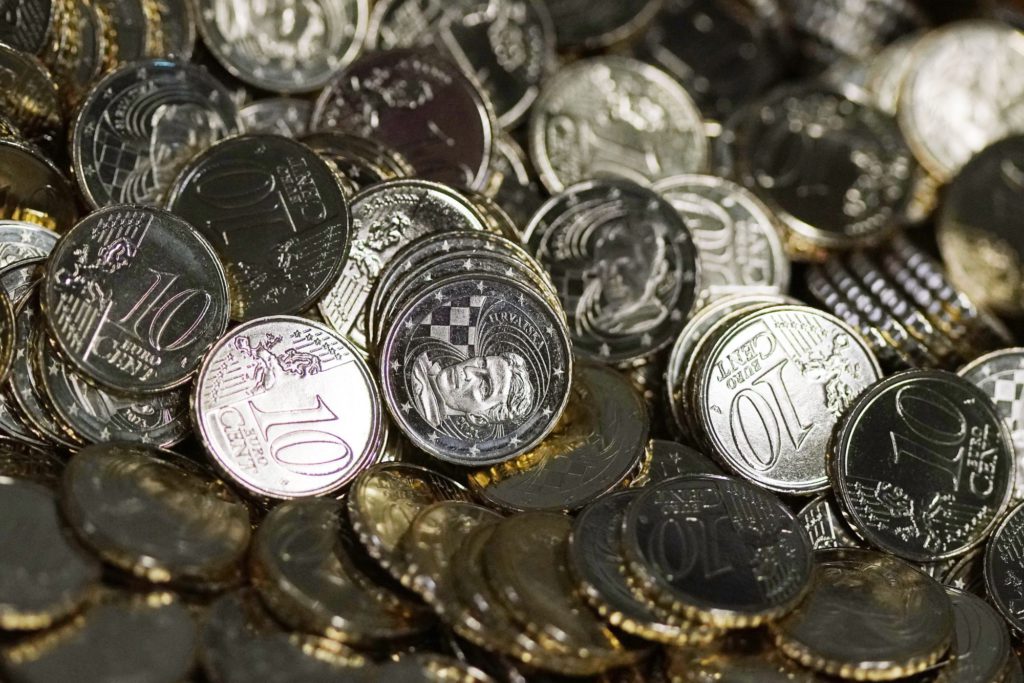
The former Yugoslav state joins Europe’s single currency and free-travel area on Jan. 1. It’s been quite a journey.
(Bloomberg) — As rockets hit Zagreb in the violent breakup of Yugoslavia, many Croats yearned that their country would one day become an integral part of Europe.
One of the generation just coming of age was new law graduate Andrej Plenkovic.
Now, as prime minister almost three decades later, Plenkovic is bringing Croatia into the euro zone and the European Union’s visa-free travel area on Jan.
1, completing its journey from the war-torn Balkans to the European mainstream.
Croatia still has issues with corruption, cumbersome bureaucracy and population decline, but it’s hard to overstate the moment for the nation of 3.9 million people.
A war for independence from Serb-dominated Yugoslavia that ended in 1995 left 20,000 dead, hundreds of thousands displaced and nearly a quarter of its economy in ruins.
It now joins fellow former Yugoslav state Slovenia in the euro zone while their neighboring former federation partners remain years or even decades away from joining the EU.
Both had a head start for sure: proximity to the EU, a more westward-looking Catholic society compared with Orthodox Serbia and the lion’s share of Yugoslavia’s foreign tourist industry.
That allowed Croatia to generate money, resist Russian involvement and stifle some of the nationalism that’s weighed on other parts of the region.
Successive leaders were determined to become part of European structures and rallied locals behind the goal, even as many people headed for the exit after Croatia joined the EU in 2013.
“We had a constant catching-up to do, with our neighbors who joined EU almost a decade earlier than we did,” Plenkovic, 52, said in an interview.
“We are still trying to attain the same economic and social standards, investment and business climate.”
Over the years, Croatia rebuilt its infrastructure, added tens of thousands of war veterans to its pension system and convinced tourists to return to its pebble beaches and hundreds of islands along the Adriatic Sea.
It pegged its currency, the kuna, to the euro to preserve its stability.
When Plenkovic took over as premier six years ago, he told his ministers they needed to prepare detailed plans and strategies to adopt the euro and enter the Schengen visa-free travel area.
He and others, including central bank Governor Boris Vujcic, saw both as crucial for a country where tourism accounts for about a fifth of the economy and most of the visitors arrive from Europe by car.
Preparing for Schengen was complicated given Croatia’s landscape. It shares a 1,000 kilometer-long (620 miles) border with Bosnia-Herzegovina.
Two other countries that tried to join Schengen along with Croatia — Bulgaria and Romania — have failed to do so.
The Balkans are used as a smuggling route for trafficking people and drugs.
That and the fact that many governments are built on the principle of staying loyal to supporters have made it difficult to root out corruption.
In Croatia alone, seven ministers left Plenkovic’s government amid allegations of fraud or conflict of interest during his first term alone.
The country ranked 63rd in Transparency International’s Corruption Perception Index in 2021 compared with 57th the year it joined the EU.
While millions of tourists flock to Croatia every year, the war and regional wage disparity have driven many of its own citizens away.
In recent years, it faced a shortage of workers, according to Goran Saravanja, the chief economist at the Croatian Chamber of Commerce.
Joining the Schengen area could “unlock the potential” of economically backward areas of Croatia, such as the Dalmatian hinterland, he said.
“Having a European perspective is incredibly important.”
Read More: Tourism to Fuel Croatian 2022 Economic Growth More Than Forecast War Hangover in Divided Kosovo Is a Warning for Europe ECB’s Newest Governor Warns of Danger From Inflation ‘Disease’
–With assistance from Slav Okov.
More stories like this are available on bloomberg.com
©2022 Bloomberg L.P.