By Paul Sandle
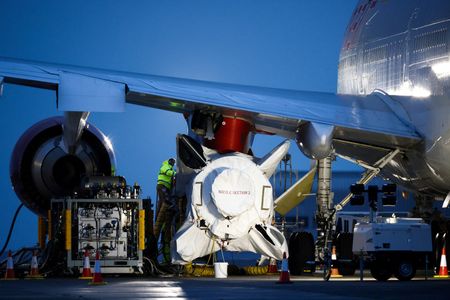
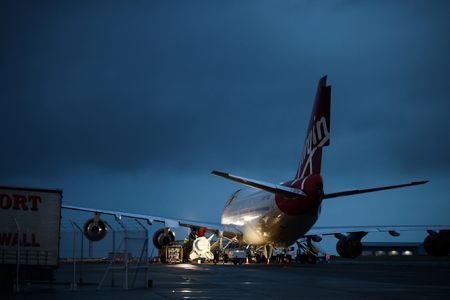
NEWQUAY, England (Reuters) -An English surfing resort was counting down the final minutes until it launches the first satellites from Western Europe on Monday, with Virgin Orbit’s “Cosmic Girl” awaiting take-off on the runway of Newquay’s spaceport in Cornwall.
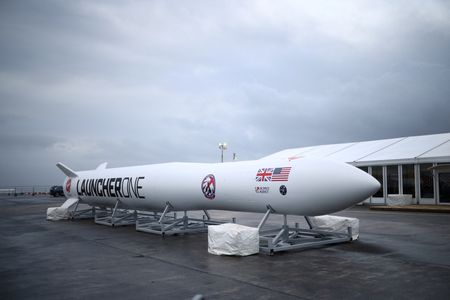
More than 2,000 space fans were positioned to see the modified Boeing 747 with a rocket under its wing take to the air before it soars out over the Atlantic Ocean, where after an hour it will release a rocket at about 35,000 feet (10,668 meters).
The “horizontal” launch will catapult the resort in southwest England – population 20,000 and famous for its reliable Atlantic waves – into the limelight as Western Europe’s go-to destination for small satellites.
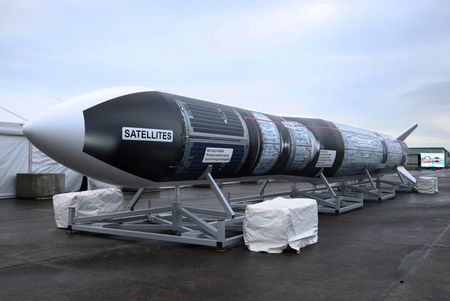
Virgin Orbit, part-owned by British billionaire Richard Branson, said nine satellites would be deployed into lower Earth orbit (LEO) from its LauncherOne rocket in its first mission outside its United States base.
The new spaceport gives Europe another option for launching smaller satellites at a critical time, after the Ukraine war cut access to its use of Russian Soyuz vehicles. The European Space Agency’s (ESA) Ariane 6 rocket, which launches from Kourou in French Guiana, is designed to carry large satellites and has also had delays.
The Ukraine war has highlighted the importance for tactical military purposes of smaller satellites, like those being launched from Newquay, which can get into low orbit at much shorter notice than bigger ones.
The UK Space Agency said it would be a moment of national pride for Britain’s growing space industry.
Deputy Chief Executive Ian Annett said more small satellites were built in Britain than anywhere outside of the United States, and the country hosted operation centres for companies like Inmarsat.
“So we have the full spectrum except launch,” he told Reuters.
“If you have launch, you have everything.”
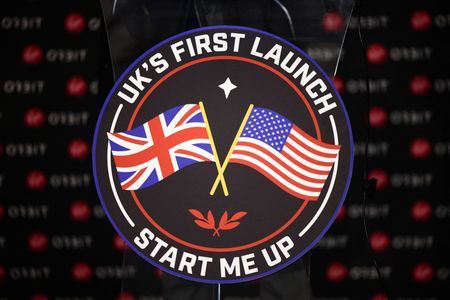
The mission, called “Start Me Up” after the Rolling Stones track, will deploy breakfast cereal boxes-sized satellites to fulfil tasks such as maritime research and detecting illegal fishing, as well as national security, Virgin Orbit said.
The company has previously launched from California.
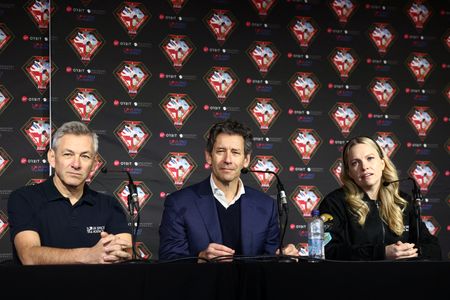
Chief Executive Dan Hart said the protocols would stay the same, joking to reporters: “Pasties versus hamburgers, it’s a significant shift.”
He added that partnerships with the UK Space Agency, Spaceport Cornwall, the British aviation regulator and the Royal Air Force had made the launch possible.
START ME UP
Cosmic Girl is expected to take off at some point between 2140 GMT and 2300 GMT, but it is dependent on the weather and and Virgin Orbit has said there are back-up dates available for later in January.
Space enthusiasts with tickets for the launch were securing positions in a viewing area as rock group Europe’s “Final Countdown” blasted from loudspeakers on Monday evening.
Retired teacher Pauline Clifton, who had come from Falmouth in the south of the county, said she was always confident that the spaceport would come to fruition.
“To be leading the way in anything is quite something for Cornwall,” she said.
Virgin Orbit’s focus on LEO satellites is at the other end of the scale from the large satellites in geostationary orbit that are launched by vertical rockets.
UKSA’s Annett said the LEO economy had boomed in recent years, noting Jeff Bezos’ Kuiper Systems and Elon Musk’s rival Starlink constellations.
But he said smaller satellites were also doing vital research in climate change, and they were a growing opportunity for an industry employing 47,000 people and worth 16.5 billion pounds ($20.09 billion) a year in Britain.
Getting the mission off the ground has taken time.
It was delayed from late last year due to the myriad regulatory clearances needed for the inaugural flight.
($1 = 0.8213 pounds)
(Additional reporting by Sarah Young; editing by Nick Macfie and Sandra Maler)