Apollo Global Management Inc. expects commitments for its 10th flagship private equity fund to reach the “low $20 billion range,” falling short of the buyout giant’s earlier $25 billion target.
(Bloomberg) — Apollo Global Management Inc.
expects commitments for its 10th flagship private equity fund to reach the “low $20 billion range,” falling short of the buyout giant’s earlier $25 billion target.
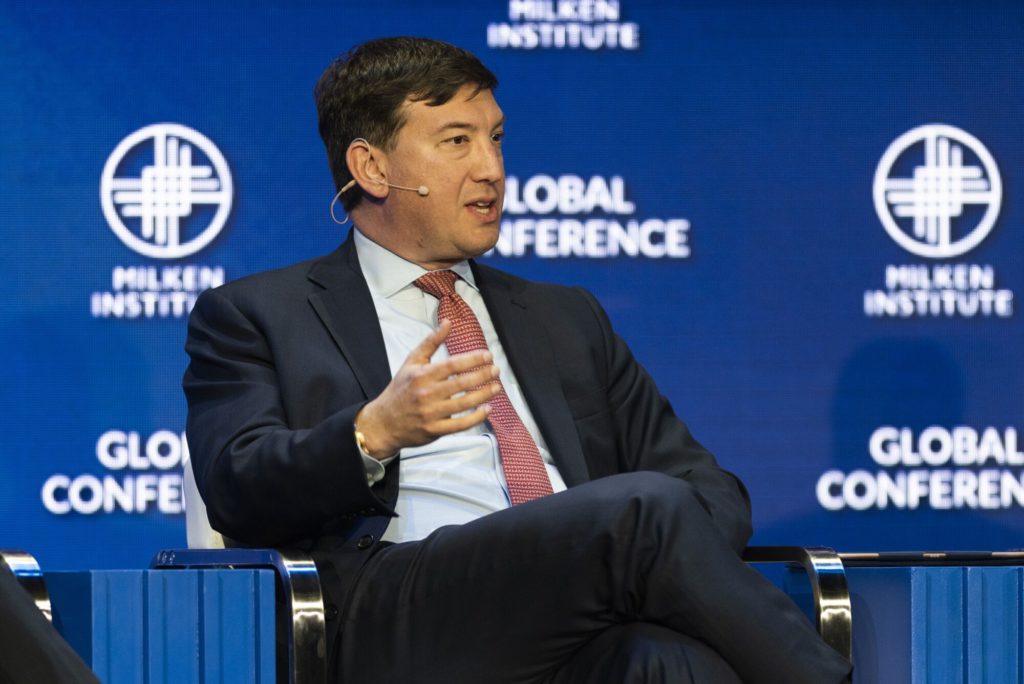
The fund received $16 billion of commitments through March 31, with a final close expected in the summer, Apollo Co-President Scott Kleinman said on an earnings call Tuesday, after the firm reported a sharper-than-expected drop in first-quarter profit.
Read more: Apollo Profit Slips Amid Lower Returns on Athene’s Alternatives
The flagship fund, Apollo’s 10th, has invested about $6 billion of capital, and the private equity team has signed four deals since the last earnings call, Kleinman said.
Those acquisitions include chemical company Univar Solutions and aluminum products manufacturer Arconic Corp.
“We’re one of the few firms who can play offense in these periods of uncertainty, which was quite clear by the level of deployment activity in the first quarter,” Kleinman said.
“Our current pipeline of opportunities is about three times a year ago and growing.”
Apollo’s private equity business, led by David Sambur and Matt Nord, faces one of the toughest fundraising environments in years amid rising interest rates and a looming recession.
Fundraising efforts are further hampered by constraints on pensions and endowments, which hit the limits of what they could allocate to private equity during last year’s market downturn.
Principal investing income from selling assets plunged 96% to $8 million in the first quarter as a difficult dealmaking environment persisted, dragging earnings down 7.9% from a year earlier.
Shares of Apollo rose 1.2% to $62.57 at 11:07 a.m.
in New York. The stock is down 1.85% year-to-date.
Bright Spots
Apollo’s credit and insurance businesses were a relative source of strength during the quarter, offsetting the tougher environment for private equity.
The firm’s Athene insurance unit, which sells annuities to retirees, saw earnings grow 2% as higher interest rates boosted its investment portfolio.
Apollo expects at least $17 billion of inflows during the second quarter, putting the firm on track to exceed Athene’s record annual inflows of $48 billion in 2022, Apollo Chief Executive Officer Marc Rowan said on the earnings call.
A key growth-driver, Athene contributes about two-thirds of Apollo’s income.
Analysts have scrutinized that business in recent weeks as regional US banks struggle to keep deposits.
Insurance companies focused on retirement services don’t face the deposit-flight risks seen in the banking industry, Rowan said.
Athene invests in long-term, locked-in liabilities, and 80% of the portfolio isn’t surrendable, he said.
“People who own annuities are saving for retirement,” Rowan said. “This is not money they think is accessible.
When they do surrender or move it, they’re typically moving to another policy — otherwise they incur” a tax burden.
(Updates with details on Athene business and share price starting in eighth paragraph)
More stories like this are available on bloomberg.com
©2023 Bloomberg L.P.