Indonesia’s central bank will likely wait for definitive signs that inflation is on the wane this year before considering a reduction in the benchmark rate, according to analysts.
(Bloomberg) — Indonesia’s central bank will likely wait for definitive signs that inflation is on the wane this year before considering a reduction in the benchmark rate, according to analysts.
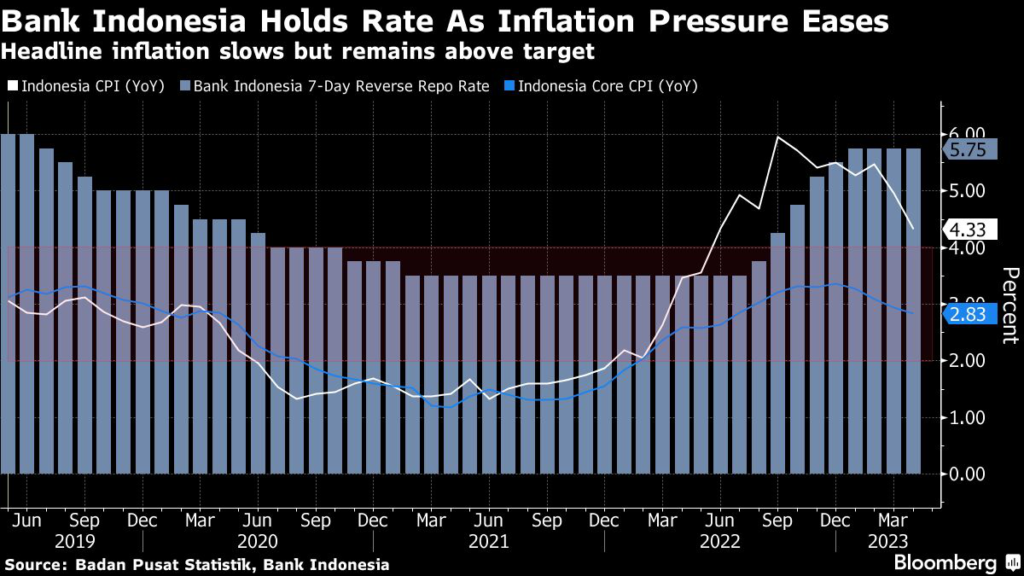
Nine out of 15 economists surveyed by Bloomberg expect Bank Indonesia to hold its key rate at 5.75% for the rest of the year and begin monetary easing only in 2024.
The remainder expect a rate cut could come into play as early as September.
The forecasts are in line with the latest signal from central bank Governor Perry Warjiyo on Monday, when he sounded cautious on being asked whether BI could unwind the 225 basis points in rate increases from August 2022 to January 2023.
“Inflation is falling faster but it’s currently still above target,” Warjiyo said.
“Be patient. We will evaluate from month to month.” The central bank, which has kept the rate steady in the past three meetings, is set to hold its next monetary policy decision on May 25.
Despite the relative calm in Southeast Asia compared to the economic turmoil affecting the US and Europe, policymakers have remained cautious about lingering price pressures.
Malaysia surprised with a quarter-point rate hike earlier this month, fearing a rollback in subsidies could fan inflation anew.
Still Dovish
Bank Indonesia will likely want to ensure headline and core inflation are firmly within its 2%-4% target, said PT Bank Permata chief economist Josua Pardede, who expects a rate pause throughout this year.
“In addition, BI needs to mitigate expectation of increasing volatile food inflation driven by a potential El Nino in the second half,” he said.
A severe dry spell will be a key risk as the ample harvest has capped Indonesia’s consumer prices so far in 2023.
The inflation rate fell to a near-one-year low of 4.3% in April, prompting analysts to forecast it could return to target as soon as this month, well ahead of the central bank’s August estimate.
To be sure, Indonesia has room to hold its key rate with economic growth back at its pre-pandemic level of 5% and consumer confidence improving.
The Federal Reserve’s pause signal should also further bolster the rupiah — Asia’s best-performing currency with a more than 5% gain year-to-date.
Some analysts are less optimistic about Indonesia’s prospects and expect the central bank to step in and support growth later this year.
According to Kunal Kundu, an economist with Societe Generale GSC Pvt, job creation remains weak, retail sales are below pre-pandemic levels, and investment is on the decline.
A gloomy global outlook will also dampen the nation’s exports.
“BI is in a sweet spot unlike many other Asia EM central banks,” said Kundu, who expects easing to begin in the fourth quarter.
“Domestic core inflation within target and a Fed pivot in the offing is a perfect combination for BI to reset the focus on growth.”
More stories like this are available on bloomberg.com
©2023 Bloomberg L.P.