Turkey suffered unexplained outflows of capital during a month of elections that were the largest since a 2021 currency crisis, revealing the extent of anxiety that gripped the economy as President Recep Tayyip Erdogan faced the biggest challenge to his two-decade rule.
(Bloomberg) — Turkey suffered unexplained outflows of capital during a month of elections that were the largest since a 2021 currency crisis, revealing the extent of anxiety that gripped the economy as President Recep Tayyip Erdogan faced the biggest challenge to his two-decade rule.
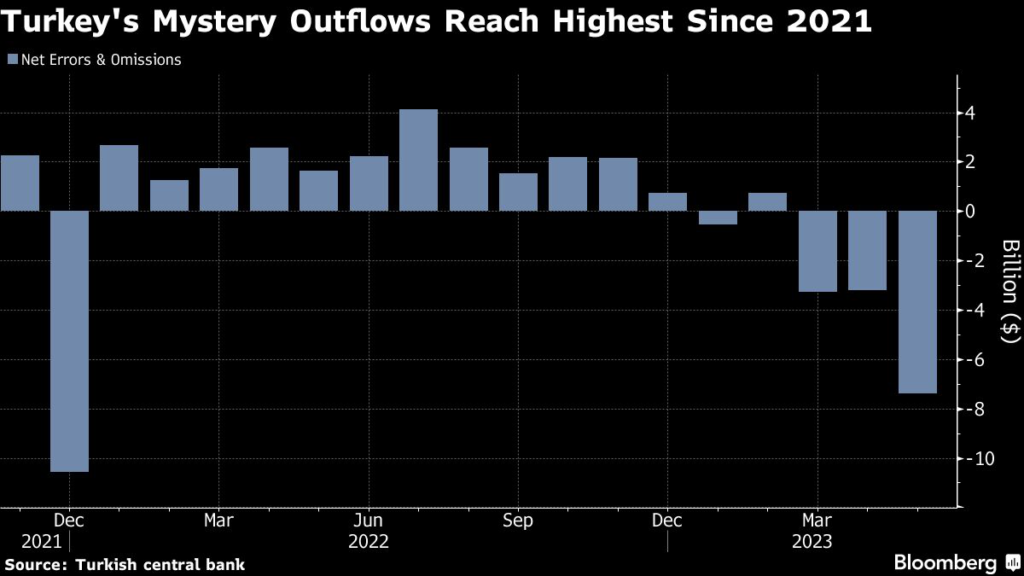
Balance-of-payments data published on Tuesday showed declines in net errors and omissions, or money of unknown origin, more than doubled from April to reach over $7.4 billion in May.
The outflows accounted for almost the entirety of Turkey’s current-account deficit, according to the figures published by the central bank.
The money flight stands in stark contrast with inflows last year, when capital from unknown origins funded the bulk of a current-account deficit that has long hobbled Turkey’s $900 billion economy.
But those inflows turned to outflows every month so far this year except February.
As a result, the central bank has had to rely on its reserves to help finance the ballooning gap in the current account, which widened more than analysts had expected in May to $7.9 billion.
Official reserves declined by about $17 billion the same month.
The only other time when reserves dropped by a comparable amount was at the start of the Covid-19 pandemic in March 2020.
Since Erdogan won another five-year term in May, authorities have been reversing some of the unconventional policies that drove Turkey’s trade balance deep into the red.
The central bank raised interest rates and scaled back its backdoor currency-market interventions that kept the lira relatively stable in the run-up to the vote at a huge cost to official reserves.
The lira has lost about a quarter of its value against the dollar since the ballot, helping Turkish exports become more competitive.
The depreciation could limit risks for year-end estimates of the current-account deficit by cooling off imports, according to Istanbul-based economist Haluk Burumcekci.
The “quickened pace” of lira declines “after elections, and the tightening seen in monetary and fiscal policies, could slow down internal demand,” Burumcekci said.
More stories like this are available on bloomberg.com
©2023 Bloomberg L.P.