By Hritam Mukherjee
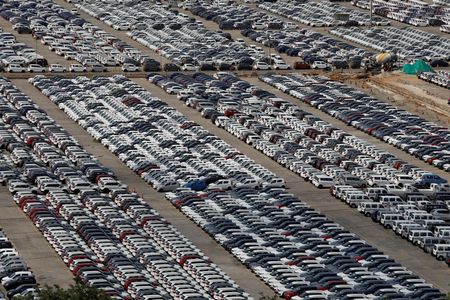
BENGALURU (Reuters) -Inventory levels for passenger vehicles in India hit an all-time high in August ahead of the festive season, an “alarming” trend that needs vigilant monitoring by automakers, an industry dealers’ body said on Tuesday.
The average passenger vehicle (PV) inventory at the end of August ranged from 58-63 days, up from 50-55 days in July and 30-35 days in August last year, the Federation of Automobile Dealers Association (FADA) said.
Higher inventory days indicate dealers are storing vehicles for longer before selling them.
“With anticipation of a good festive season, dealers may incur higher working capital costs for maintaining unsold vehicles,” said Himanshu Singh, research analyst at brokerage Prabhudas Lilladher.
India’s festive season, which lasts from August till November-end, usually draws maximum vehicle purchases.
“If festive demand falls short of expectations, we could see higher discounting from both OEMs (original equipment manufacturers) as well as dealers to clear inventory,” Singh added.
Analysts also warned about poor rains denting demand, with India poised to experience its lowest monsoon levels in eight years.
“If the monsoon trend continues in September, the entry level segment in two wheelers and PVs, where inventory is higher, will be impacted.
OEMs then will have to take corrective action sooner,” said Rishi Vora, associate vice president at Kotak Securities.
Retail sales of vehicles increased 8.6% in August, with PV volumes rising 6.5%, FADA data showed.
Meanwhile, three-wheeler sales soared 66% in August, surpassing July’s record high, while two-wheelers grew just 6%, hurt by poor consumer sentiment and increasing competition.
FADA said sparse rainfall could “adversely affect” consumer purchasing power, adding subdued rural demand in the two-wheeler market due to insufficient monsoons could temper sales growth.
Retail tractor sales rose more than 13% year-over-year, but fell over 18% sequentially, it said.
Last week, tractor maker Escorts Kubota reported a decline in monthly sales, partly due to deficient monsoons.
(Reporting by Hritam Mukherjee in Bengaluru; Editing by Sonia Cheema)