(Reuters) -Ukraine’s commander-in-chief said on Wednesday the war with Russia was moving to a new stage of static and attritional fighting, a phase he warned could benefit Moscow and allow it to rebuild its military power.
In an article for The Economist, General Valery Zaluzhnyi said his army needed key new military capabilities and technology, most importantly air power, to break out of the new phase of the war, now in its 21st month.
“Basic weapons, such as missiles and shells, remain essential. But Ukraine’s armed forces need key military capabilities and technologies to break out of this kind of war. The most important one is air power,” he wrote.
His article comes almost five months into a major Ukrainian counteroffensive that has been unable to make a serious breakthrough against heavily mined Russian defensive lines with the fighting expected to slow as the weather worsens.
Russian troops have now gone on the offensive in parts of in the east and Kyiv fears Moscow plans to unleash a campaign of air strikes to cripple the power grid, plunging millions into darkness in the depths of winter.
Zaluzhnyi used stark language to describe the danger of a phase of attritional fighting saying: “This will benefit Russia, allowing it to rebuild its military power, eventually threatening Ukraine’s armed forces and the state itself.”
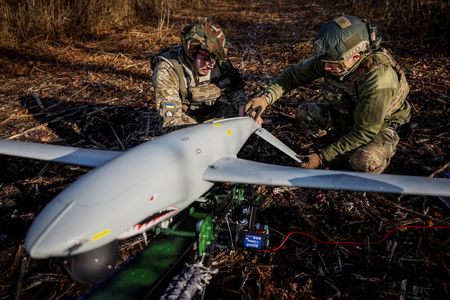
He singled out Russia’s air power advantage as a factor that had made advancing harder and called for Kyiv to conduct massive drone strikes to overload Russia’s air defences.
He said Ukraine needed to get better at destroying Russian artillery and also to devise better mine-breaching technology, saying Western supplies have proven insufficient faced with Russian minefields that stretched back 20 km (12 miles) in some areas.
He called it a priority for Ukraine to build up its reserve forces despite noting it had limited capacity to train them inside the country and highlighting gaps in legislation that allowed people to evade service.
“We are trying to fix these problems. We are introducing a unified register of draftees, and we must expand the category of citizens who can be called up for training or mobilisation,” he wrote.
“We are also introducing a ‘combat internship’, which involves placing newly mobilised and trained personnel in experienced front-line units to prepare them,” he said.
(Reporting by Tom Balmforth and Yuliia Dysa; Editing by Chris Reese and Jonathan Oatis)