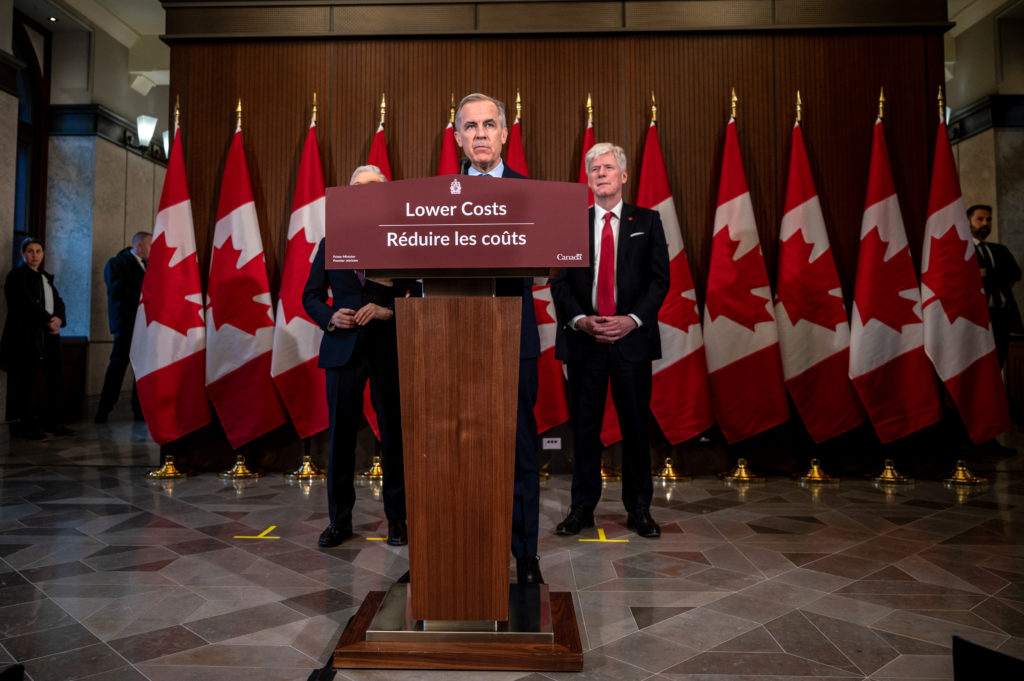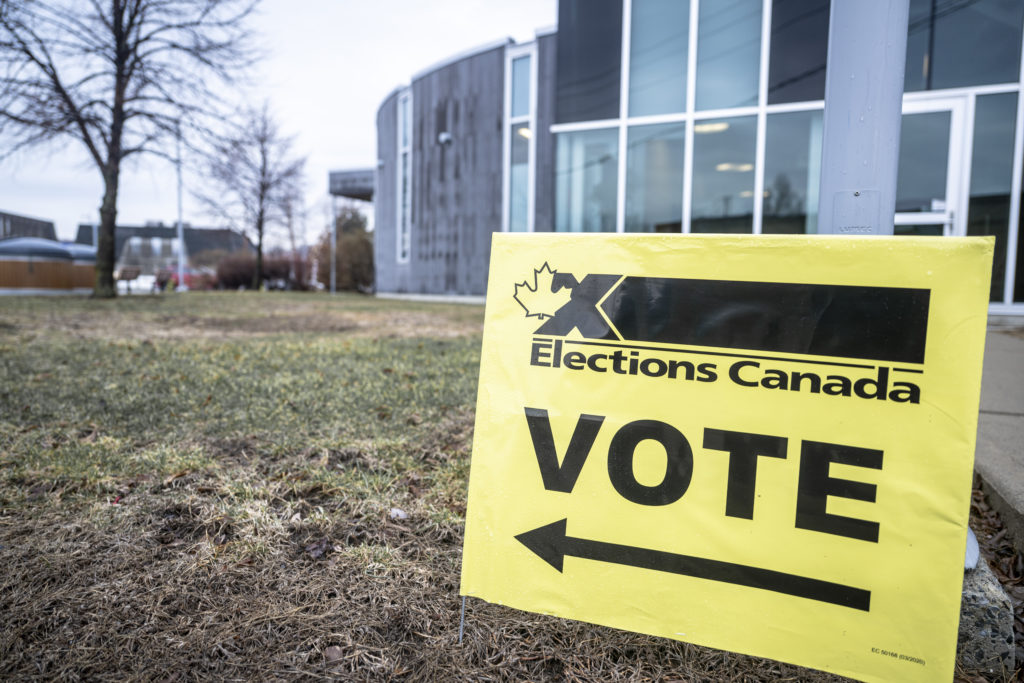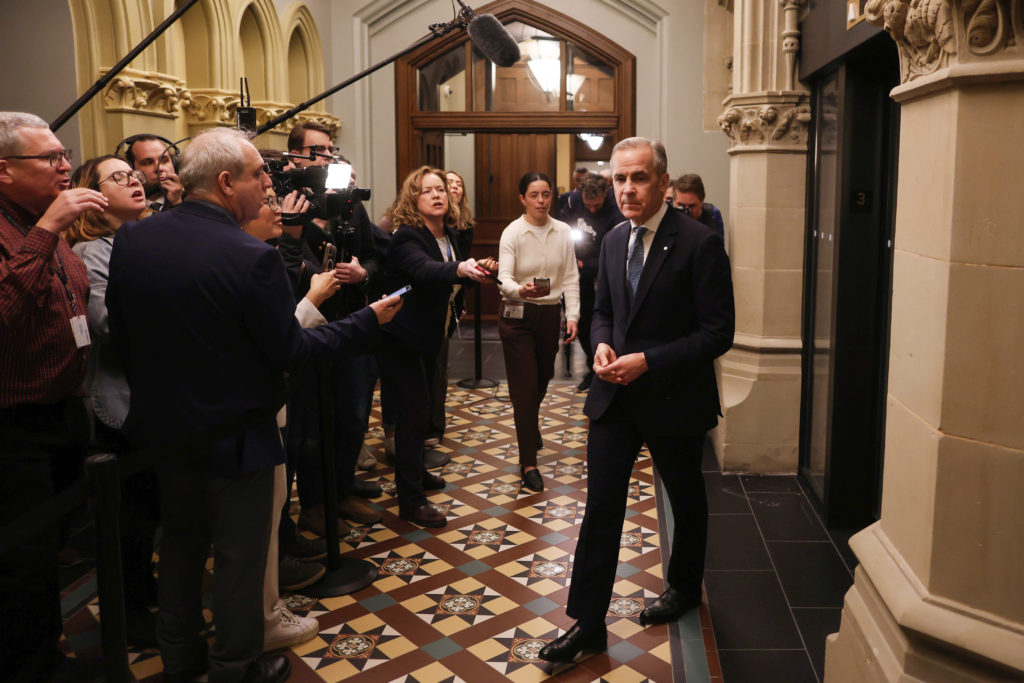
Canadian Prime Minister Mark Carney, the frontrunner in this month’s Canadian election, faces two tests in Wednesday’s televised debate: besting his conservative opponent — and showing the bilingual nation that he has good enough French.Carney’s main rival on the stage in Montreal will be Pierre Poilievre, whose Tory Party is trailing the Carney-led Liberals in most opinion polls ahead of the April 28 vote.
Carney, who took over as prime minister from Justin Trudeau on March 14, has argued his experience as a central banker during periods of economic upheaval make him the ideal choice to confront President Donald Trump.The US leader has unleashed a trade war on Canada and incensed the northern neighbor with repeated talk of annexation and making it a 51st state.Poilievre has also promised to stand firm against Trump, but argues that a decade of weak economic performance under the Trudeau-led Liberals left Canada vulnerable to hostile US trade policies.The leader of the left-wing New Democratic Party, Jagmeet Singh, and the head of the Quebec separatist Bloc Quebecois, Yves-Francois Blanchet, will also be on stage.In a last-minute decision, the debates commission disqualified Green Party co-leader Jonathan Pedneault on grounds the party was not contesting in enough electoral districts to meet the participation threshold.Past Canadian election have developed into fierce multi-party battles for seats.Polls indicate this year’s race is largely becoming a two-party contest, raising the debate stakes for Carney and Poilievre. “This is really a two-horse race, and it isn’t usually like that,” said Laura Stephenson, head of the political science department at Western University.
“Seeing them talk to each other is going to be very important,” she told AFP. – Low expectations -Wednesday’s debate will be entirely in French. An English language debate follows on Thursday. In a distinctly Canadian decision, Wednesday’s debate has been moved up two hours to minimize a scheduling conflict with the final regular season game of the Montreal Canadiens hockey team, a cherished Quebec institution. Carney’s campaign in Quebec has drawn particular scrutiny because of his occasional struggles to articulate his positions in French. Poilievre, like Carney, was raised in the western province of Alberta, but after two decades in parliament the Tory leader has become a proficient French speaker. The Conservatives can secure a government by winning anglophone districts in the West and Ontario, but for the Liberals victory has typically relied a strong showing in Quebec. The last three Liberal prime ministers — Trudeau, Paul Martin and Jean Chretien — all represented Quebec districts in parliament. Daniel Beland, director of McGill University’s Institute for the Study of Canada, noted that “Carney’s French has already been put under the microscope and so expectations are very low.”- ‘United’ against Trump-Trump’s rhetoric and trade policies appear to have altered the calculations of some francophone voters. Carole Potvin, 70, told AFP she had previously voted for the Bloc Quebecois separatists but is considering voting Liberal this year. “We feel threatened, and to face the American enemy we have to be united,” the Montreal resident and retired supermarket saleswoman told AFP.Carney’s level of French “is not my concern today,” she said. Fifty-year-old Montreal resident Alexandre Tittley agreed.”We have a disgusting global situation because of Trump, and what we’re looking for above all is a leader with a good head on their shoulders,” he said. “The candidates’ personalities are more important than their level of French.”Carney, a 60-year-old former investment banker who led the Bank of England and the Bank of Canada, has brought the Liberals back from potential political ruin. On January 6, the day Trudeau said he would resign, the Liberals trailed the Conservatives by 24 points, according to the public broadcaster CBC’s poll aggregator. On Wednesday, the CBC data put the Liberals at 43.6 percent support, with the Tories at 37.8. With a significant number of voters undecided, the race remains volatile. Political analysts have criticized Poilievre, 45, for struggling to adjust his message in response to Trump, arguing he remains too attached to attacking the Liberals instead of directing his ire at Washington.
Wed, 16 Apr 2025 15:24:08 GMT