By Chang-Ran Kim
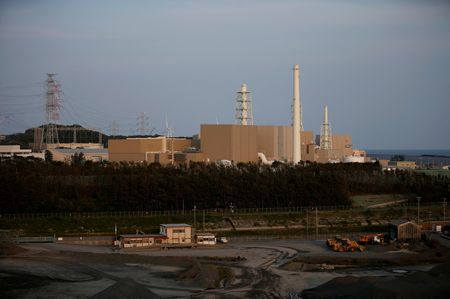
TOKYO, Jan 14 (Reuters) – Japan’s nuclear watchdog said on Wednesday it would order Chubu Electric Power to submit a detailed report on falsified seismic data and pause its review of the utility’s application to restart its only atomic plant.
The steps follow a tough warning by the Nuclear Regulation Authority (NRA) after revelations that Chubu Electric tampered with data regarding the No.
3 and No. 4 reactors at its Hamaoka plant, in the Pacific coast region of Shizuoka.
“Our view remains unchanged: that the incident caused by Chubu Electric is both serious and grave,” Chairman Shinsuke Yamanaka told a press conference.
“The severity and importance of this case are such that very serious measures must be considered,” he said, adding that rejection of the application to operate the reactors was a possibility.
The remarks followed a regular meeting at which the NRA decided to issue a formal reporting order and make on-site inspections to clarify the facts.
It set a March 31 deadline for the utility to provide findings on the cause of misconduct, and said it would pause the review process, citing the compromised credibility of the supporting documents provided so far.
Yamanaka said it was impossible to say how long the process would take, but he expected “at least several months”, based on a broad inspection of Chubu Electric, including aspects of its safety culture and governance.
In a statement, the utility apologised again for the misconduct, adding, “We will continue to respond sincerely, and to the fullest extent possible, to the instructions and guidance of the NRA.”
Chubu Electric’s applications to review the two units began more than a decade ago, and some experts had expected a possible resumption by 2030.
The company’s latest business plan predicted a restart in the near future, which it estimated would shave about 260 billion yen ($1.64 billion) a year in power procurement costs.
The utility plans to decommission the No.1 and No.2 units at Hamakao and has yet to apply for a restart of the site’s fifth reactor.
The NRA’s decision comes as Tokyo Electric Power prepares to turn on this month its first nuclear power plant since a 2011 tsunami destroyed its Fukushima Daiichi station.
That was the worst nuclear disaster since the Chornobyl crisis in 1986 and shook public confidence in atomic power.
Japan shut down all its 54 reactors after the Fukushima meltdown but has since restarted 14 of the 33 that remain operable.
Prime Minister Sanae Takaichi has backed nuclear restarts to strengthen energy security and counter the cost of imported fossil fuels that power 60% to 70% of electricity generation.
($1=158.7000 yen)
(Reporting by Chang-Ran Kim; Editing by Christian Schmollinger)