By Karol Badohal and Gergely Szakacs
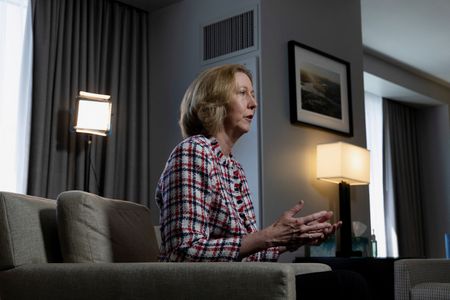
WARSAW (Reuters) -Poland’s appeal to foreign investors could suffer if a power struggle between its liberal government and newly elected conservative president deepens in the next years, the leader of a leading employers’ group, Lewiatan, told Reuters.
Eurosceptic historian Karol Nawrocki, backed by right-wing opposition parties, defeated government candidate Rafal Trzaskowski in a June 1 presidential vote.
The victory dealt a blow to Prime Minister Donald Tusk’s plan to consolidate power and steer Poland fully back onto a European Union-oriented course.
Nawrocki’s veto powers could stymie any reform drive by Tusk, whose popularity has already eroded, partly due to his failure to deliver on key electoral pledges such as judicial reform or big tax cuts, since taking power in 2023.
The threat of continued political infighting would create “a climate of uncertainty” for investors, Lewiatan head Maciej Witucki said, adding to worries over geopolitics, the looming threat of tariffs and Poland’s deteriorating public finances.
“Today, there is a lot of capital in the world, but this capital is looking for safe places.
And places where the authorities fight among themselves are not safe,” Witucki said in an interview.
Poland’s stock of inward foreign direct investment had risen tenfold from 2000 till 2023 to $335.54 billion, data from the United Nations trade and development agency shows, though the pace slowed in 2023, reflecting wider trends elsewhere in central Europe.
Figures for 2024 released on Thursday showed a further steep fall in FDI inflows to Poland to $12.74 billion, their lowest since 2017 and less than half the previous year’s figure of $28.36 billion.
UNCTAD gave no reason for the decline, but its 2024 data showed foreign direct investment to the Czech Republic and Slovakia rising, while FDI flows to Hungary and Romania retreated to a far smaller extent than in Poland.
IMMIGRATION
Witucki said the stalemate could also complicate efforts to import more foreign workers, with most of Poland’s main parties during the election campaign opposing or showing caution about immigration from outside the EU.
Poland hopes to modernise its economy with billions in EU funding, but Witucki said this could prove difficult without “selective and smart” immigration.
Poland’s jobless rate is already among the EU’s lowest, while its birth rate also ranks among the worst in the bloc.
“We will not build highways, we will not build nuclear power plants without external workers,” Witucki said.
“We also do not have enough bricklayers, welders and other experts to carry out all these projects on our own.”
Alluding to the nearly one million Ukrainians who have settled in Poland since Russia’s 2022 invasion, Witucki added, “We cannot count on Ukrainians because they, I hope, will be rebuilding Ukraine.”
(Reporting by Karol Badohal and Gergely SzakacsEditing by Gareth Jones and Clarence Fernandez)