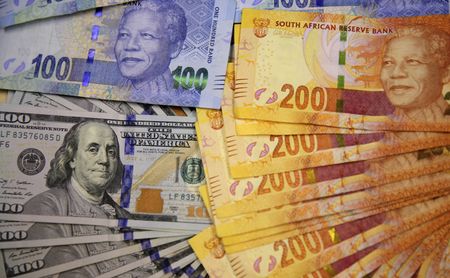
JOHANNESBURG (Reuters) -South Africa’s rand ended the week largely flat with hotter-than-expected U.S. inflation prompting more bets on interest rate hikes, lifting the dollar and dampening the rand.
At 1440 GMT, the rand was at 15.1600 against the dollar, 0.1% stronger than its closing level on Thursday, though slightly higher than its level in earlier trade as the dollar lost some gains.
The greenback was however still up 0.3% against a basket of currencies, boosted by data showing U.S. consumer prices increased 7.5% year-on-year in January, higher than the forecasts for a 7.3% rise.
That fuelled speculation that the Fed will increase rates by 50 basis points, rather than 25, in March.
These global factors put pressure on the rand even after a closely watched speech by President Cyril Ramaphosa on Thursday, which analysts interpreted as pro-business.
Ramaphosa used his State of the Nation Address to reaffirm pledges for fundamental reform, extend a social grant put in place to cushion the impact of the COVID-19 pandemic and promise new intensity for the fight against corruption.
The government’s benchmark 2030 bond dropped, with the yield rising 4 basis points to 9.210%.
Stocks ended the week in the red after investors were dealt another inflation blow, which Craig Erlam, a senior market analyst at OANDA, said cooled sentiment once more.
The Johannesburg All-Share index fell 0.26% to 76,382 points, while the Top-40 index closed 0.38% weaker at 69,681 points.
“We were just starting to see confidence building in the markets, with investors seemingly coming to terms with the prospect of four or five rate hikes this year,” Erlam added.
“But the relentless and broad-based price rises in the U.S.
delivered yet another hammer blow and ruined any momentum that had been building into the report.”
Higher U.S. interest rates tend to hit inflows into risk assets, and with other developed market central banks also turning hawkish, investors in these assets are bracing for a tough year.
(Reporting by Alexander Winning and Nqobile Dludla; Editing by Subhranshu Sahu and Mark Heinrich)