(Bloomberg) —
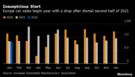
Europe’s car sales declined for a seventh consecutive month in January as an ongoing semiconductor shortage continued to hold back production.
New-car registrations in Europe fell 2.4% to 822,423 in January compared to last year, the European Automobile Manufacturers’ Association said Thursday.
The drop prolongs the industry’s worst stretch since the association started tracking the market in the early 1990s.
“As global production continues to be limited by a lack of parts, particularly microchips, supply shortages remain the number one drag to better market results, with this expected to remain a key feature of the automotive landscape for 2022,” forecaster LMC Automotive said in a report.
A shortage of semiconductors has hindered production of consumer goods ranging from electronics to automobiles across the globe.
Shoppers looking to buy new cars have been forced to wait for weeks or months, and the prices of used cars have surged.
Car sales were uneven across Europe’s biggest markets last month. While France and Italy posted some of the most significant declines, sales in Germany and the U.K.
grew modestly. But analysts and auto executives agree that the chip shortage will continue to dog the industry this year.
Volkswagen AG’s CEO Herbert Diess and other executives have signaled they see the chip supply improving in the second half of 2022, though few have offered specifics as to how it would be resolved.
Speaking Wednesday, Diess said VW has introduced an early-warning system on chips, and its engineers have identified some 150 technology alternatives to replace missing semiconductors.
More stories like this are available on bloomberg.com
©2022 Bloomberg L.P.