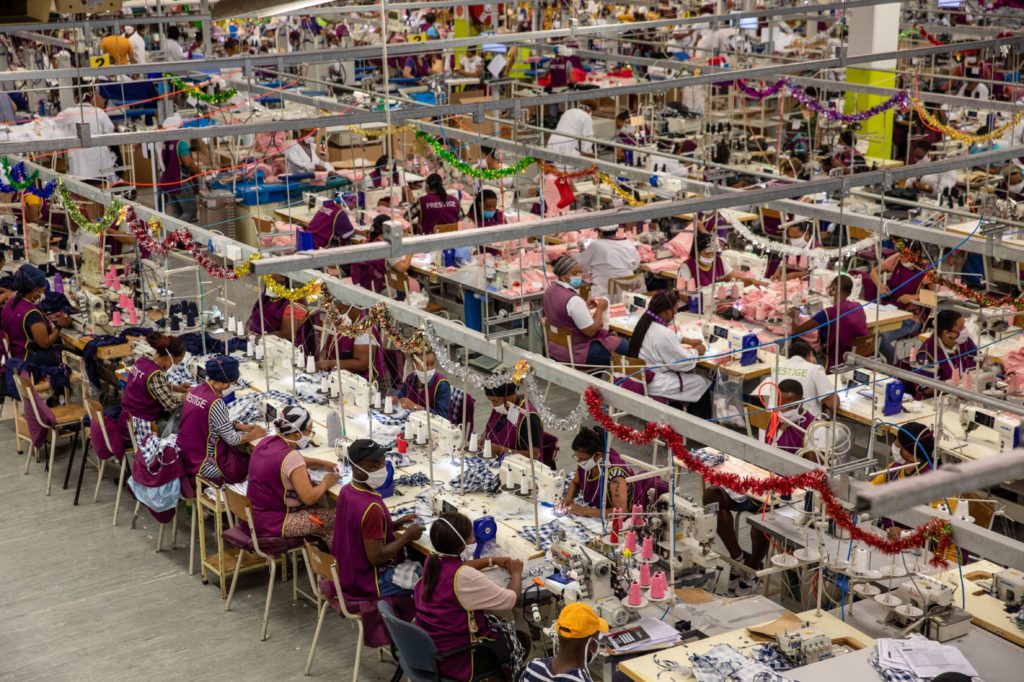
(Bloomberg) — A gauge measuring South African manufacturing sentiment rose to the highest level in almost 15 years in February, though its advance may be short-lived, with input costs likely to increase because of high international oil prices and the war in Ukraine.
Absa Group Ltd.’s purchasing managers’ index, compiled by the Bureau for Economic Research, climbed to 58.6 from 57.1 a month earlier.
That’s the highest monthly reading since March 2007, before the onset of the global financial crisis that triggered a severe contraction in activity. The median of five economists’ estimates in a Bloomberg survey was 56.3.
Since the PMI measures month-on-month changes and not the aggregate level of activity, “it doesn’t necessarily indicate that the level of manufacturing activity is as strong as it was in 2007,” Miyelani Maluleke, a senior economist at Absa, said in an emailed response to questions.
Still, the main index has now been above 50, the level that signals expansion, for seven consecutive months.
This suggests conditions in an industry hard-hit by stop-start coronavirus-lockdown restrictions, global supply chain disruptions and the worst civil unrest in South Africa since the end of White-minority rule in 1994 are continuing to normalize.
The monthly advance was driven by improvements in all five subcomponents, including new sales orders and business activity, that make up the index, according to the Johannesburg-based lender.
While the gauge tracking expected business conditions in six months’ time fell to 69.5, from an almost four-year high of 71.3 in January, purchasing managers remain upbeat, the lender said.
Still, further increases in input costs can’t be fully passed on to consumers while demand continues to recover, which may “sour sentiment,” it said.
Survey respondents flagged potential increases in freight costs that could stem from continued high oil prices or a sudden weakening of the rand as a key concern, Absa said.
“Renewed disruptions in the workings of global supply chains amid an escalation of the Ukrainian conflict will not only have cost implications, but could also negatively impact sentiment,” it said.