(Bloomberg) — President Joe Biden urged Congress to pass legislation aimed at making the U.S. more competitive with China with provisions including $52 billion to bolster chip manufacturing.
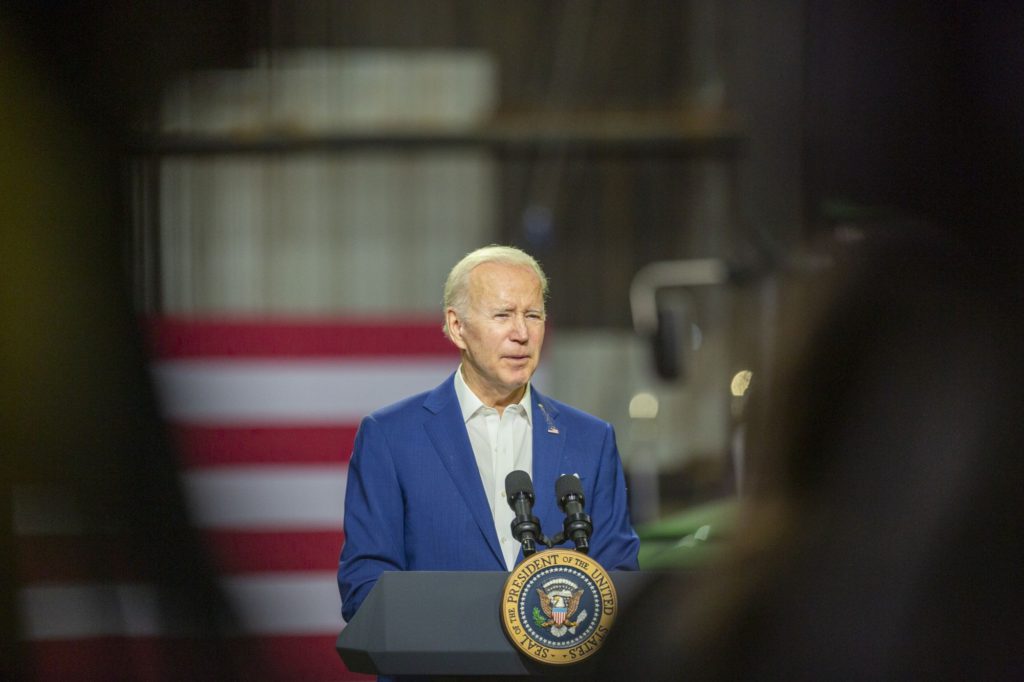
“Congress needs to get this bill to my desk as quickly as possible,” Biden said during a speech at North Carolina Agricultural and Technical State University in Greensboro, the nation’s largest historically Black college and university.
“Our economic strength is on the line and national security, as well, is on the line,” Biden, who toured a robotics lab while on the HBCU campus, added.
The president highlighted his domestic manufacturing strategy and how Greensboro’s economy could benefit from the passage of the so-called Bipartisan Innovation Act.
Lawmakers are hashing out differences between the Senate- and House-passed versions of the measure as the legislative window rapidly closes ahead of the November midterm elections.
A global shortage of semiconductors has caused production delays and disruptions for sectors like autos and consumer electronics.
“Other countries are racing ahead, but we can’t afford to wait,” Biden said.
The legislation Biden touted also includes provisions aimed at jump-starting innovation and bringing key industries back to the U.S.
amid the global supply chain crunch.
The North Carolina visit is Biden’s second trip this week aimed at highlighting his domestic economic agenda amid inflation that’s surged to the highest level in four decades.
Biden once again Thursday blamed Russian President Vladimir Putin’s invasion of Ukraine for inflation that’s now running at its highest in four decades — propelled by surging gas and food prices.
Administration officials have frequently pointed to the innovation bill as way to ease inflationary pressures for items including used cars.
But the legislation has attracted opposition from conservatives and progressives alike, who take issue with its favorable treatment of companies seeking to invest in U.S.
manufacturing. Senator Ron Johnson, a Wisconsin Republican, questioned why the U.S. would create a new “industrial policy” where the government would invest in semiconductor manufacturing rather than simply slapping tariffs on goods from countries that subsidize their chip-producing industries.
Senator Bernie Sanders, an independent from Vermont who caucuses with Democrats, decried the “corporate welfare” in the legislation during a speech lambasting the chip companies for outsourcing manufacturing jobs over the past two decades.
Read more: Senate Passes China Competition Bill to Start Talks With House
White House Deputy Press Secretary Karine Jean-Pierre told reporters Thursday aboard Air Force One that Biden’s team would continue working closely with lawmakers to try to bring the bill over the finish line.
But even if the legislation becomes law, it will take years for new chip production to come online.
Cabinet officials this week have also been dispatched around the country to talk about the bill and its benefits for the communities they’re visiting.
More stories like this are available on bloomberg.com
©2022 Bloomberg L.P.