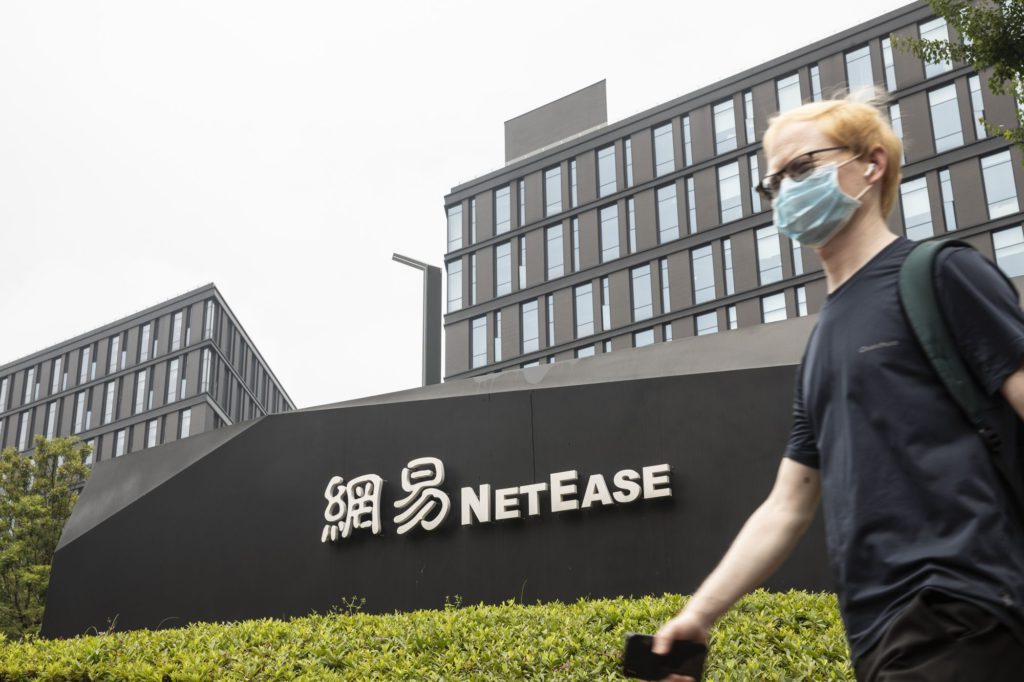
NetEase Inc. has acquired French game developer and publisher Quantic Dream SA, the companies announced in a statement Wednesday.
(Bloomberg) — NetEase Inc.
has acquired French game developer and publisher Quantic Dream SA, the companies announced in a statement Wednesday.
China’s biggest games distributor after Tencent Holdings Ltd., NetEase is stepping up the international expansion of its gaming business to counter economic and regulatory headwinds at home.
With Quantic Dream, it secures its first studio in Europe and the developer of an upcoming game in the Star Wars franchise.
Paris-based Quantic Dream will continue to operate independently and develop games on all platforms, as well as supporting and publishing third-party developed titles, the companies said.
They did not disclose the size of the deal.
“NetEase will continue to fulfil our promise to support Quantic Dream to realise its full potential,” said William Ding, chief executive officer of NetEase.
“There are infinite possibilities that could re-define the interactive entertainment experience.”
The Chinese publisher first acquired a minority stake in Quantic Dream in 2019 and their collaboration on projects has given the French outfit confidence in the partnership, according to Guillaume de Fondaumière, co-CEO and head of publishing at Quantic Dream, who described the deal as a “natural evolution” of the relationship.
China’s Other Gaming Giant Is Quietly Snapping Up Global Talent
The deal is an important step for NetEase as the $44 billion Chinese gaming arena is dragged by a weak economy and tightening regulations.
The company’s revenue for the second quarter grew just 13%, the slowest pace since the start of 2020. While the government lifted a months-long game approval freeze in April, regulators have made plain their willingness to punish an industry accused of encouraging addiction and even damaging children’s eyesight.
NetEase and deeper-pocketed rival Tencent are now accelerating their international endeavors after a Chinese government crackdown depressed growth prospects at home.
Having earlier partnered with Blizzard and Mojang, a Microsoft Corp. subsidiary, NetEase also opened its first development studio in Austin, Texas in May. Shenzhen-based Tencent has placed big bets on the likes of Ubisoft Entertainment SA and Activision Blizzard Inc.
and also holds a majority share in Finland’s Supercell.
NetEase generates about 10% of its gaming revenue overseas, compared with about a quarter for Tencent. In five years, NetEase wants to put its name on a quarter of new triple-A releases in the global market, through everything from self-development to investment and publishing, the company has said.
It also wants to generate half of its gaming sales from outside China, executives told Bloomberg News in an interview earlier this year.
More stories like this are available on bloomberg.com
©2022 Bloomberg L.P.