Japan’s biggest steelmaker — grappling with rising raw-material costs, a falling yen and waning demand — has warned the nation’s manufacturing giants face more price hikes this year.
(Bloomberg) — Japan’s biggest steelmaker — grappling with rising raw-material costs, a falling yen and waning demand — has warned the nation’s manufacturing giants face more price hikes this year.
Nippon Steel Corp.
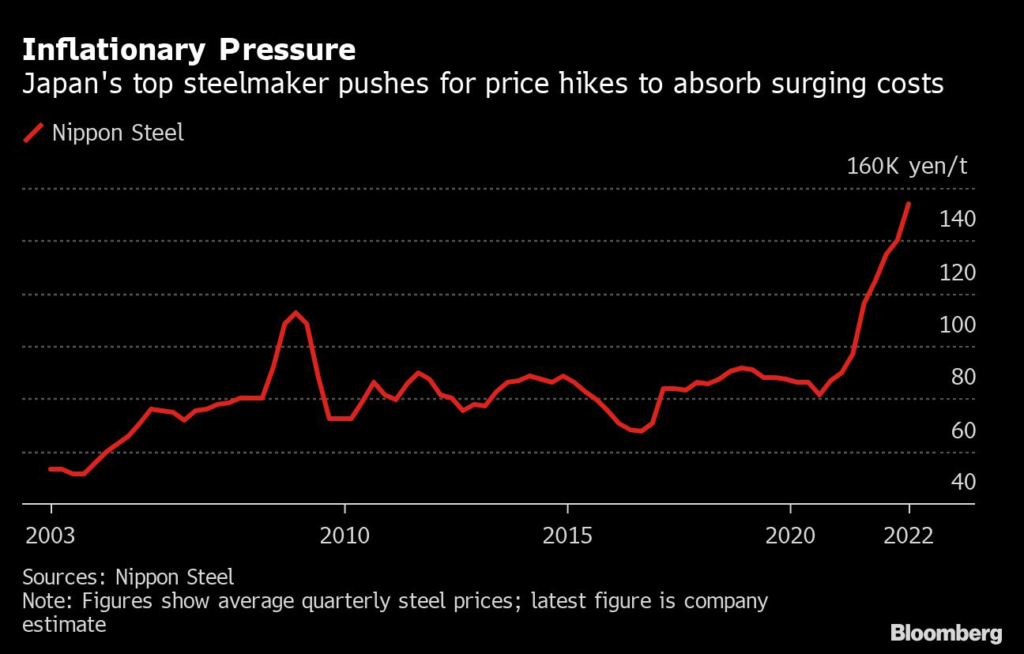
is securing increases on contract prices through negotiations with domestic customers in the second half of the fiscal year through March, Executive Vice President Takahiro Mori said in an interview. The company will pass on the surge in costs, including for iron ore and coking coal, which have been exacerbated by a historic decline in the yen.
The rise in raw material costs has been “quite different” from Nippon Steel’s assumptions made earlier this year, Mori said.
The portion of the extra costs, which were shouldered by the company in the first six months of the fiscal year, “will be reflected in product prices from October,” he said.
The price of iron ore, the major input cost for steel, jumped 32% in the three months through March but has now more than given up those gains amid weakness in China’s steel sector.
The yen, meanwhile, has dropped by around 18% against the dollar this year.
Nippon Steel has already secured a big hike from customers that negotiate prices on a shorter-term basis. It won an increase of at least 40,000 yen ($286) a ton for the July-to-September period, according to Mori.
Nippon Steel’s Customers
Steel is used in everything from cars and ships to skyscrapers, and soaring costs are a blow to Japanese manufacturers, who are also facing energy price hikes.
While Mori didn’t identify particular companies it’s in negotiations with, the industry closely monitors the twice-a-year price talks between Nippon Steel and Toyota Motor Corp.
that typically serve as a benchmark. Mitsubishi Heavy Industries Ltd. to Sony Group Corp. and Hitachi Ltd. are among other customers.
Toyota Shares Drop After Sticking to Conservative Profit Outlook
Toyota will raise the price of steel it sells to parts suppliers by 40,000 yen a ton in the second half, an increase of 20% to 30% from the previous six months, Nikkei reported on Thursday without attribution.
It buys steel in bulk and sells on to suppliers based on prices negotiated with Nippon Steel. The automaker said last month rising material prices will trim its profit by 1.7 trillion yen for the current fiscal year — more than it previously anticipated.
A Toyota spokesperson declined to comment.
Japanese steelmakers’ continued push for hikes in their home market has created a gap with overseas prices, posing a risk their customers will switch to cheaper alternatives.
Jefferies Japan Ltd. analyst Thanh Ha Pham last month noted in a report that Japanese steel prices were already “the highest on the planet.”
The latest round of price negotiations in Japan comes as the global market takes a hit from the slump in China, which makes more than half of the world’s steel.
China’s benchmark hot-rolled coil futures have plunged more than a quarter since the end of March.
They were trading 1.1% lower at 9:03 a.m. in Shanghai on Friday, while iron ore prices in Dalian were down 0.7%.
The Covid Zero policy has sapped demand and its measures to revive the economy aren’t yet bearing fruit.
The listed unit of China Baowu Steel Group said on Tuesday said it’s facing “severe challenges” in the current quarter after its earning missed estimates in the first half of 2022.
Still, China’s downturn hasn’t curbed Nippon Steel’s appetite to secure better terms on deals from domestic users.
The management is in the midst of reforms designed to boost earnings even under a “severe” trading environment.
Mori said there has been no sign of rising steel imports into Japan, partly because of the weak yen.
While the currency’s depreciation has amplified the costs of importing raw materials, it’s also made steel from overseas more expensive.
(Updates prices in 12th paragraph)
More stories like this are available on bloomberg.com
©2022 Bloomberg L.P.