A fiery debate and a blitz of campaign advertising further dashed Luiz Inacio Lula da Silva’s hopes of winning Brazil’s presidential election outright on Oct. 2, a DataFolha poll shows.
(Bloomberg) — A fiery debate and a blitz of campaign advertising further dashed Luiz Inacio Lula da Silva’s hopes of winning Brazil’s presidential election outright on Oct.
2, a DataFolha poll shows.
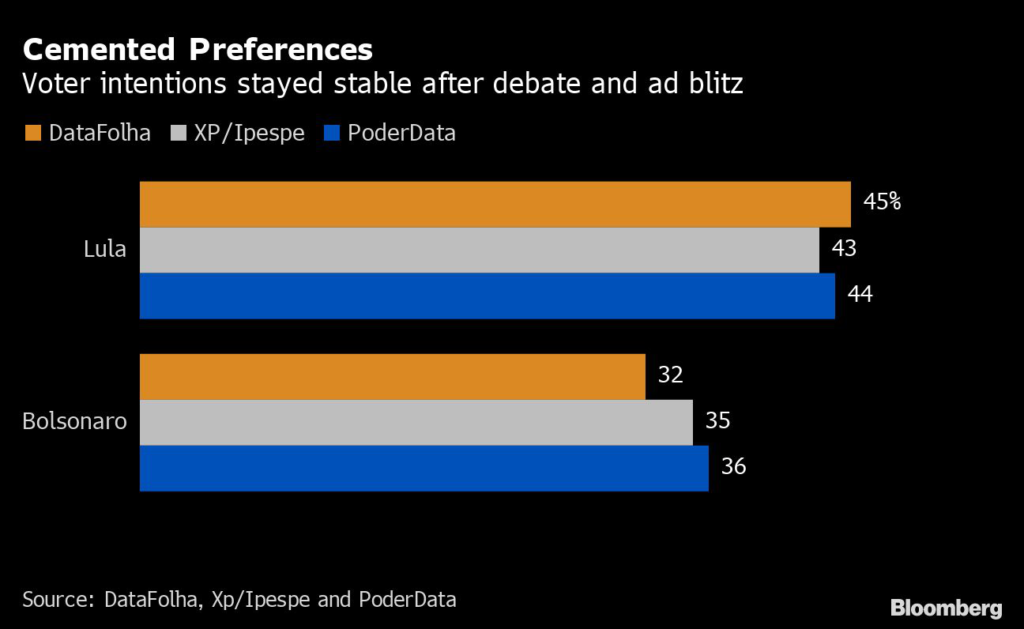
Maintaining a large lead, Lula, a two-term former president, would win 45% of the first-round vote, down from 47% in the last survey two weeks ago but the movement fell within the survey’s margin of error.
Incumbent Jair Bolsonaro held steady at 32%.
The results from the highly anticipated poll, with data collected between Aug. 30 and Sept. 1, captures the nation’s reaction to the first televised presidential debate.
It also reflects the effects of candidates’ TV and radio campaign spots, which started airing last week.
Moreover, it confirms how voter preferences are firming up before Brazilians head to the polls.
Other major opinion surveys released earlier this week also showed no change in voter sentiment, though with Lula leading by a smaller margin.
A candidate needs to win over 50% of the vote, otherwise the two top contenders head to a runoff.
Millions of viewers tuned in to watch as the candidates clashed with one another on Sunday.
For nearly three hours, they jousted over the state of the economy, lobbed corruption allegations and personal attacks back and forth.
Lesser-known challengers seized the opportunity to take aim the front-runners: Bolsonaro, long accused of being a chauvinist, was pilloried for his treatment of women.
Lula struggled to regain his footing after accusations that corruption raged at state-oil champion Petroleo Brasileiro SA during his time in office.
The stumbles appear to have increased the desire for an option besides the current and past president: Senator Simone Tebet now has 5% of voter intentions up from 2% previously.
Ciro Gomes, a former governor, would take 9%.
DataFolha interviewed 5,734 people across Brazil, with a margin of error of plus or minus 2 percentage points.
More stories like this are available on bloomberg.com
©2022 Bloomberg L.P.