(Bloomberg) — Treasury yields climbed after a wave of monetary tightening from global central banks that followed the Federal Reserve decision.
(Bloomberg) — Treasury yields climbed after a wave of monetary tightening from global central banks that followed the Federal Reserve decision.
Two-year rates continued to push above the 4% mark, deepening the curve inversion that signals economic headwinds.
Contracts on the S&P 500 edged higher, signaling a rebound of the US equity benchmark after Wednesday’s rout.
The Fed gave its clearest signal yet that it’s willing to tolerate a recession as the necessary trade-off for regaining control of inflation, with officials signaling a further 1.25 percentage points of tightening before year-end.
Switzerland, Norway and Britain followed with hikes of their own as officials rush to get to grips with rampant price increases.
“The Fed is engineering a hard landing — a soft landing is almost out of the question,” Seema Shah, chief global strategist at Principal Global Investors, wrote in a note following the Fed decision.
“Powell’s admission that there will be below-trend growth for a period should be translated as central bank speak for recession. Times are going to get tougher from here.”
Read more: Powell Signals Recession May Be the Price for Crushing Inflation
The Bank of England delivered a second consecutive half-point hike to quell price pressures.
Even so, the move to 2.25% wasn’t as big as some were expecting, and the pound pared its rise against the dollar. The gilts 10-year yield climbed.
The Swiss National Bank matched the Fed by raising interest rates 75 basis points to bring borrowing costs above zero for the first time in almost eight years.
Norway’s central bank, among the first in the rich world to start raising rates last September, lifted its key interest rate by a half point and signaled that its tightening may be nearing an end.
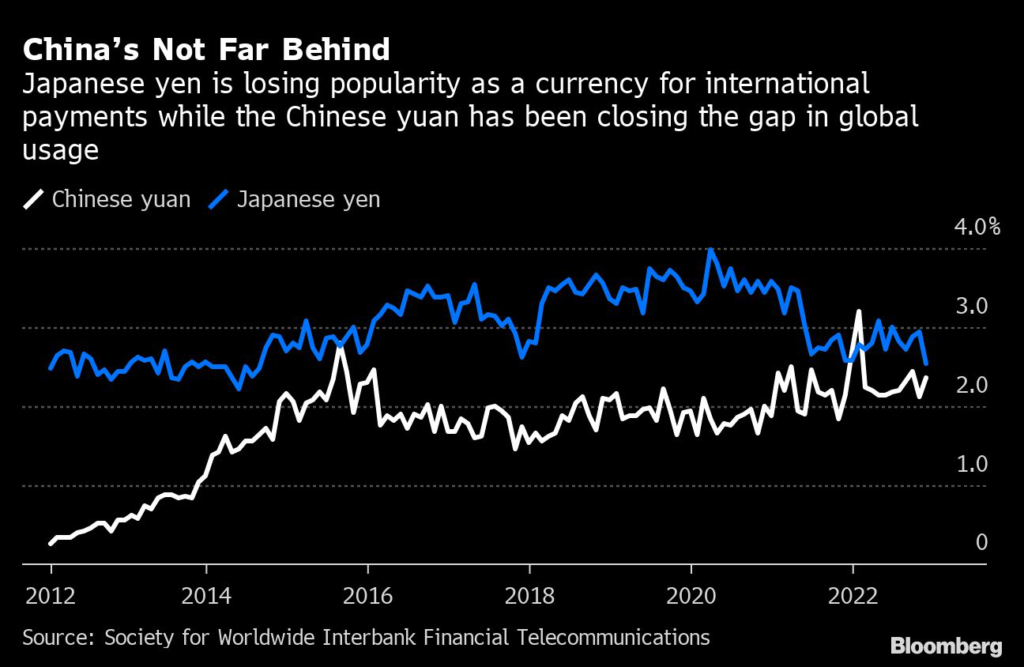
The yen rose after Japan’s first intervention since 1998 shored up the currency’s 20% slide against the dollar this year.
In contrast to the Fed, the Bank of Japan stuck steadfastly to its rock-bottom interest rate policy Thursday.
Will the Nasdaq 100 Stock Index hit 10,000 or 14,000 first? This week’s MLIV Pulse survey focuses on technology.
It’s brief and we don’t collect your name or any contact information. Please click here to share your views.
Here are some of the main moves in markets:
Stocks
- Futures on the S&P 500 rose 0.4% as of 8:53 a.m.
New York time
- Futures on the Nasdaq 100 rose 0.3%
- Futures on the Dow Jones Industrial Average rose 0.4%
- The Stoxx Europe 600 fell 0.5%
- The MSCI World index was little changed
Currencies
- The Bloomberg Dollar Spot Index fell 0.5%
- The euro rose 0.5% to $0.9883
- The British pound rose 0.6% to $1.1338
- The Japanese yen rose 2.4% to 140.67 per dollar
Bonds
- The yield on 10-year Treasuries advanced two basis points to 3.55%
- Germany’s 10-year yield declined three basis points to 1.87%
- Britain’s 10-year yield advanced nine basis points to 3.41%
Commodities
- West Texas Intermediate crude rose 2% to $84.60 a barrel
- Gold futures rose 0.9% to $1,690.30 an ounce
More stories like this are available on bloomberg.com
©2022 Bloomberg L.P.