Ukrainian forces moved deeper into Russian-occupied areas of the southern Kherson region, a day after the Kremlin ordered a withdrawal ahead of the winter months.
(Bloomberg) — Ukrainian forces moved deeper into Russian-occupied areas of the southern Kherson region, a day after the Kremlin ordered a withdrawal ahead of the winter months.
Kyiv’s troops have advanced 7 kilometers (4 miles) in two directions in Kherson in the last 24 hours, liberating 12 towns, according to the commander-in-chief of Ukraine’s armed forces, Valeriy Zaluzhnyi.
Even as the Kremlin continues to contend with sanctions, Russia’s current account surplus showed signs of growing again in October after three months of decline.
For the first 10 months of the year, the surplus reached a record $215 billion, according to central bank data.
(See RSAN on the Bloomberg Terminal for the Russian Sanctions Dashboard.)
Key Developments
- Ukraine Cautious Over Russia’s Kherson Exit as Army Advances
- Russia to Ease Child-Labor Rules as War Squeezes Worker Supply
- Food Prices Add to Agony for Ukrainians as Russia’s War Rages On
- Ukraine Wants Russia to Pay for Climate Damage Wreaked by War
- Russia Quietly Checks Its Bomb Shelters as War Fears Spread
On the Ground
Russian troops shelled the Nikopol district in the Dnipropetrovsk region overnight, local authorities said on Telegram.
Over the past day forces also struck areas in the Donetsk, Luhansk, Zaporizhzhia, Mykolaiv, Sumy and Kherson regions, Ukraine’s General Staff said in a morning update. Ukrainian troops repelled attacks near 12 settlements in Donbas and shot down 8 Russian drones, according to the statement.
(All times CET)
Russian Bank in Luxembourg Lays Off Half of Workforce (5:33 p.m.)
East West United Bank will cut about half its workforce amid “unprecedented challenges” after the Kremlin-led invasion of Ukraine, but reached an accord to help protect remaining staff and keep operating, Luxembourg’s main trade unions said in a joint statement.
East West, owned by conglomerate Sistema PJSC, provides wealth management and transaction services to Russian-speaking clients in and around Luxembourg, a European Union member state and financial hub.
Between 32 to 44 of the bank’s 80 employees will be let go.
Read more: Russian Bank in Heart of EU Lays Off Half of Workforce
Russia Quietly Checks Its Bomb Shelters as War Fears Spread (4:28 p.m.)
Bomb shelters across Russia are being brought back to life after more than three decades of neglect since the end of the Cold War.
State workers are quietly checking basements and other protected facilities, repairing and cleaning installations not used since the Soviet era, according to people familiar with the efforts.
The moves are part of a broader push by authorities to make sure civil-defense infrastructure is ready in case of a wider conflict, people familiar with the situation said, speaking on condition of anonymity to discuss matters that aren’t public.
Russia’s Cash Inflow Recovers as Current-Account Surplus Widens (3:52 p.m.)
Russia’s current account surplus for the first 10 months of the year reached a record $215 billion, according to preliminary data released by the central bank.
While the Bank of Russia doesn’t disclose monthly figures, they can be estimated by subtracting previous cumulative statistics.
On that basis, October’s surplus widened to $17 billion, the first month-on-month increase since June.
Food Prices Add to Agony for Ukrainians (2:57 p.m.)
The prices of eggs, vegetables and fruit spurred inflation to a six-year-high in Ukraine, while companies predicted a gloomy future for businesses hurt by Russia’s war.
Inflation in October climbed to 26.6%, beating economists’ estimates. Egg producers and farmers say the destruction brought by Russia’s invasion may further increase prices.
Still, the central bank said last month that inflation remains below its expectations and is “quite moderate” given the war, which has killed tens of thousands of people, crippled the economy and damaged more than a third of the nation’s power infrastructure.
Ukraine Says Russia-Backed Cyber Attacks Are Increasing (12:45 p.m.)
Cyber attacks against state information resources and critical infrastructure have been rising since the start of Russia’s war, with incidents having almost doubled in the third quarter, Ukraine’s State Service of Special Communication and Information Protection said on its website.
The “absolute majority of cyber incidents are linked to hacker groups financed by the Russian government,” according to the statement.
“Hackers resort to cyber espionage, disruption of state information services and even destruction of information systems by so called program wipers.”
European Commission Unveils Crisis Response Proposal (12:40 p.m.)
The European Commission, the bloc’s executive body, proposed plans to help European armed forces more speedily respond to a crisis by improving transport and other infrastructure within the EU.
The proposal aims to ensure the EU’s bridges, trains and roads can support heavy duty vehicles and military trucks, allowing them to move seamlessly across the bloc’s countries.
It also aims to design a fuel supply chain, ensuring forces have fuel as they travel.
“When crisis hits, we need to make sure that member states’ military can move quickly,” Executive Vice President Margrethe Vestager told reporters.
Estonian Premier Says Russia Losing Momentum in Ukraine (12:30 p.m.)
Kaja Kallas said Russia should not be given a chance to “pause” and regain the initiative after suffering setbacks in the fighting in Ukraine.
“Maybe I am overly optimistic, but I would like to hope that the moment is near where Russia sees that there is no point in continuing this war,” Kallas said at a news conference in Tallinn on Thursday.
Kallas praised the arrival in Ukraine of air defense weapons from Norway, Spain and the US in recent days.
Russia to Ease Child-Labor Rules as War Squeezes Worker Supply (12:18 p.m.)
Russia is planning to ease restrictions on child labor, removing rules that had made it hard for teenagers to get jobs as the economy struggles under sanctions and the impact of the mobilization of 300,000 reservists for the war in Ukraine.
Citing the need to boost the supply of labor amid “sanctions pressure from unfriendly countries,” legislators from the ruling United Russia party proposed legal amendments to make it easier for teenagers from 14 years old to get part-time jobs.
“A teenager’s income also would be additional financial support for families and help instill a sense of responsibility,” the proposal said.
Ukraine Wants Russia to Pay for Climate Damage Wreaked by War (12 p.m.)
Ukraine is taking its fight to repel the Russian invasion to the climate arena with demands that aggressors be forced to pay for greenhouse gas emissions caused by war.
Weapons manufacturing and military vehicles running on fossil fuels generate significant emissions of planet-warming gas, even in times of peace.
Missiles and bombs kill people but also disrupt power generation, destroy infrastructure and contribute to the warming of the atmosphere, while Russia’s decision to cut gas supplies into Europe has prompted a scramble for fossil fuels.
Baerbock Warns Hungary Over Ukraine Funds (11:30 a.m.)
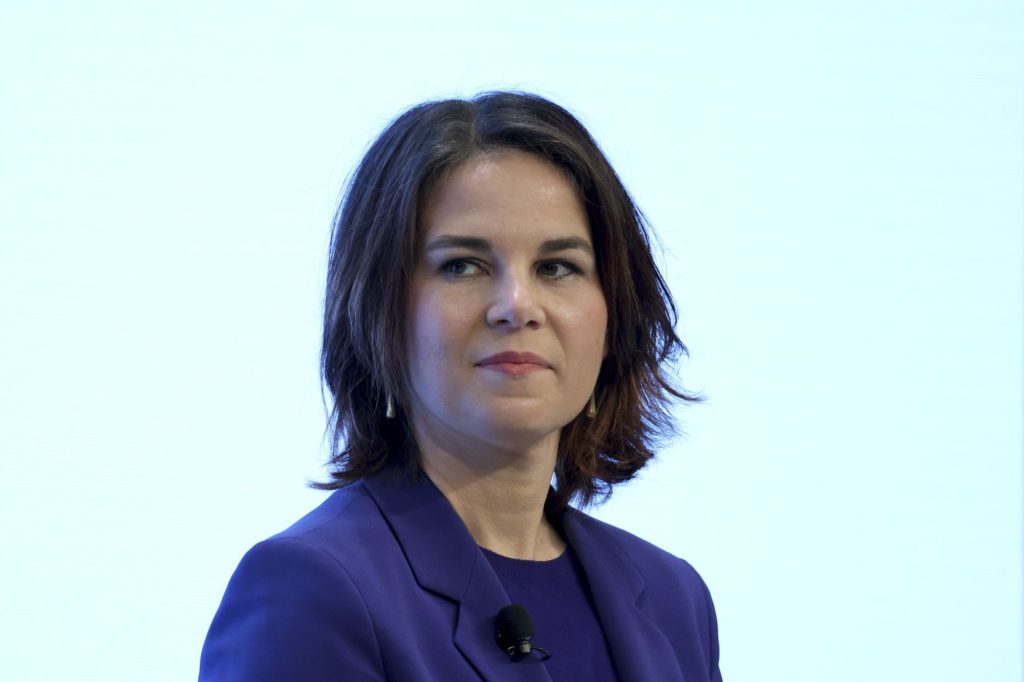
German Foreign Minister Annalena Baerbock cautioned Hungary over its threat to block EU financial aid for Ukraine amid a dispute with the bloc over rule of law and Budapest’s access to recovery funds.
Russia’s “deliberate destruction” of energy infrastructure in Ukraine is putting lives at risk this winter and EU funds will help prevent more deaths, Baerbock said at a news conference in Berlin, when asked about Hungary’s position.
“This is not some run-of-the-mill European issue where you can haggle over money,” Baerbock said.
“This European financial support saves lives every day and so I believe and expect that everyone is aware, and should be aware, of that in these such difficult times.”
UK Has Frozen More Than £18 Billion in Russian Assets (10:55 a.m.)
The UK has frozen £18.4 billion ($20.9 billion) in Russian assets since sanctions were imposed on the country following its invasion of Ukraine.
The Office of Financial Sanctions Implementation said Thursday that represents about £6 billion more than held against all other sanctioned regimes.
In conjunction with its allies, the UK has penalized more than 1,200 people and 120 businesses, it said in its annual review.
Amnesty International Accuses Russia of Crimes Against Humanity (8:52 a.m.)
Amnesty International accused Russian forces of deporting Ukrainian civilians from occupied areas, according to a report.
The actions amount to war crimes and crimes against humanity, the group said.
Amnesty said children were separated from their families and people were held in overcrowded conditions, denied food or water, tortured and threatened with execution, according to the report.
Milley Says 100,000 Russians Dead or Wounded (7:43 a.m.)
Chairman of the US Joint Chiefs of Staff, General Mark Milley, speaking at the Economic Club of New York on Wednesday night, put the toll of Russian forces killed or injured since the war began in February at “well over 100,000,” according to the Associated Press.
He added that about the same number of Ukrainian forces have been killed or wounded.
He said that the pending Russian retreat from Kherson and a potential standoff over the winter could provide a chance for negotiations to end the war, according to the AP report.
100,000 Russian Troops Killed Or Injured in Ukraine, US Says
More stories like this are available on bloomberg.com
©2022 Bloomberg L.P.