Pubs and restaurants in the City of London said sales were cut to almost half pre-pandemic levels during last week’s rail strikes, as businesses prepare for more transport disruption over Christmas and into the new year.
(Bloomberg) — Pubs and restaurants in the City of London said sales were cut to almost half pre-pandemic levels during last week’s rail strikes, as businesses prepare for more transport disruption over Christmas and into the new year.
Kate Nicholls, chief executive officer of trade group UKHospitality, said takings were 46% lower in real terms than during the same week in 2019.
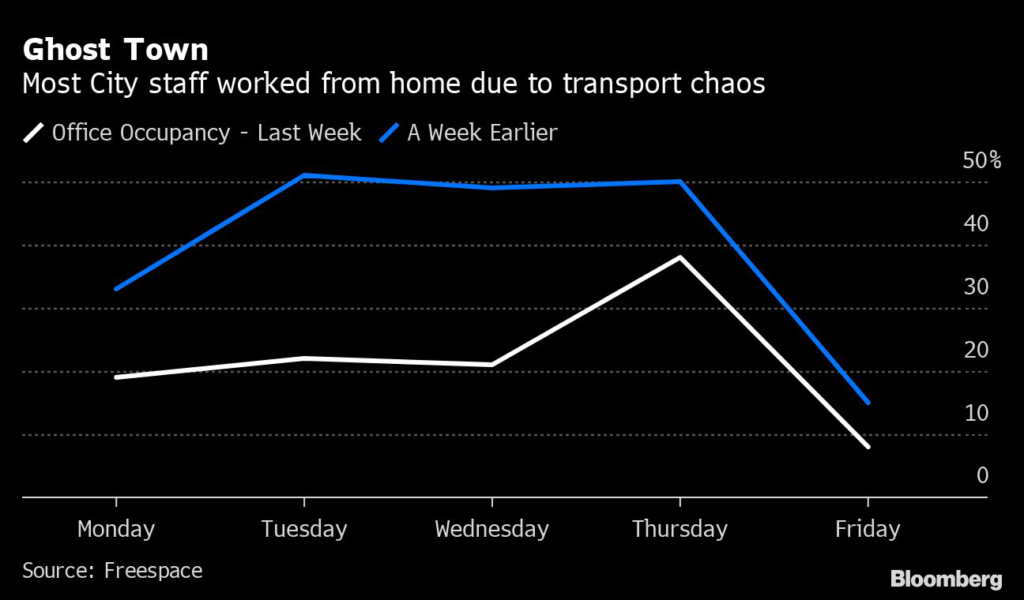
Four days of strikes caused chaos on train services and convinced many people to work from home.
One rail union is planning more strikes from Dec. 24-27, which train companies have said will cause heavy disruption to shopping trips on Christmas Eve.
Other strikes are set for Dec. 28-29 and Jan. 3-7 due to an ongoing dispute over pay.
Across London as a whole, revenue was down 37% last week compared with 2019 and adjusting for inflation, Nicholls said.
Hospitality businesses across the UK reported a 30% cancellation rate on bookings, as Christmas parties were called off.
Peter Marks, the chairman of nightclub operator Rekom UK, said sales were down 20% last week.
The final weekend before Christmas, traditionally among the busiest, was “substantially down” due to the rail strike on Saturday.
“Christmas is a critical time,” Marks said. “You need to make your money in December to get you through January and February, and here we are being held to ransom, and now we’ve got the whole first week back taken out by rail strikes.”
London Retailers
Shops in central London took a hit of around £850 million ($1 billion) to £1 billion during the latest strikes, according to the Centre for Retail Research.
It also expects the January sales, when shoppers traditionally flock to take advantage of discounts, to bring in £1 billion less than would be the case if there were no strikes.
Industrial action is sweeping the UK, with walkouts by workers in the Royal Mail, health sector, airports and various parts of the civil service as well as those by rail and bus staff.
The cost-of-living crisis has prompted unions to demand pay rises that keep pace with Britain’s double-digit inflation.
The number of people coming into the office in London plummeted during last week’s industrial action, with only 8% of desks occupied on Friday, according to workplace data company Freespace.
It was the lowest level of office occupancy since mid-August, and the equal second-lowest level of 2022.
Hospitality, entertainment, culture, sport and retail account for 10% of inner London’s GDP, according to estimates by Oxford Economics.
“London businesses bear the brunt of the effects of transport and postal strikes,” said Richard Burge, chief executive officer at the London Chamber of Commerce and Industry.
The retail and hospitality industry’s “make-or-break time of year is now being marred by low footfall, forced cancellations and missed opportunities in the capital.”
–With assistance from Eamon Akil Farhat.
More stories like this are available on bloomberg.com
©2022 Bloomberg L.P.