By Valerie Volcovici, Andrea Shalal and David Lawder
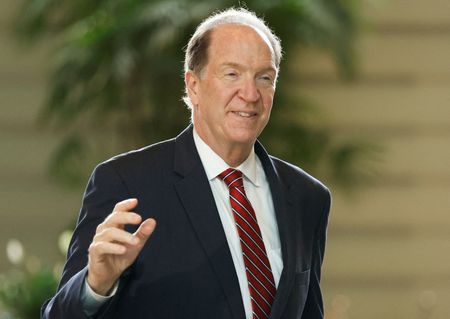
WASHINGTON (Reuters) -World Bank president David Malpass has said he will resign in June, leaving open a job that oversees billions of dollars of funding and has a direct impact on poverty, climate change preparation, emergency aid and other issues in developing countries around the globe.
The bank has historically been headed by someone from the United States, its largest shareholder, while a European heads the International Monetary Fund, but developing countries and emerging markets are pushing to widen those choices.
According to the bank’s 2021 annual report, Malpass earned $525,000 in annual net salary that year, and the bank made more than $340,000 in annual contributions to a pension plan and other benefits.
Here are names being floated by U.S. officials, climate change experts, and global development peers as possible candidates for the job:
RAJIV SHAH
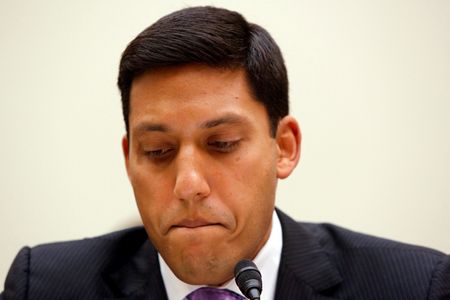
Shah is the former USAID administrator under former President Barack Obama and current president of the Rockefeller Foundation, a philanthropic group that says it aims to “promote the well-being of humanity throughout the world.” The foundation recently partnered with the U.S.
State Department on a carbon offset program at COP27, the international climate conference.
NGOZI OKONJO-IWEALA
The current head of the World Trade Organization and former World Bank official has been discussed as a potential successor to Malpass.
The dual U.S. and Nigerian citizen had served twice as Nigeria’s finance minister and had been a managing director at the World Bank, overseeing an $81 billion operational portfolio in Africa, South Asia, Europe, and Central Asia.
SAMANTHA POWER
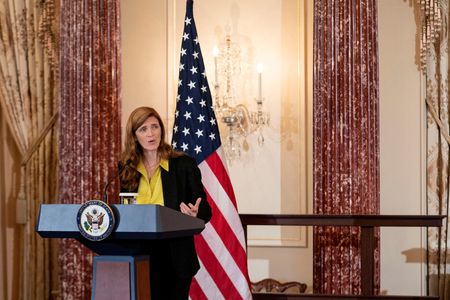
Power, who currently leads the USAID, is a longtime human rights advocate, diplomat and former journalist.
She served as U.S. ambassador to the United Nations under President Barack Obama and won a Pulitzer Prize for her 2002 book “A Problem from Hell,” a study of the U.S. failure to prevent a number of genocides over the past century.
INDRA NOOYI
Indian American Indra Nooyi, who served as the CEO of PepsiCo from 2006 to 2018, has been an advocate for the role of business in tackling climate change.
Under her tenure at PepsiCo, she created Performance with Purpose — a strategic initiative that tied revenue goals to societal good. Some have called that program a precursor to current Environmental, Social and Governance (ESG) metrics used by many companies.
She currently serves as a member of the Earthshot Prize Council, £50-million award for technologies and solutions that tackle major environmental problems.
SUSAN RICE
Susan Rice, Director of the White House Domestic Policy Council since 2021, had been floated as a possible World Bank president in 2012.
Rice is currently focused on domestic issues like gun control in her current role but she gained global experience as the U.S. ambassador to the United Nations and National Security Advisor during the Obama administration.
Rice had called climate change a national security issue.
GAYLE SMITH
A former administrator of the U.S. Agency for International Development (USAID) in the Obama administration, Smith currently serves as the CEO of the One Campaign, an NGO focused on ending extreme poverty and preventable disease.
She had also served under Democratic President Bill Clinton as the Special Assistant to the President and Senior Director for African Affairs at the National Security Council.
MINOUCHE SHAFIK
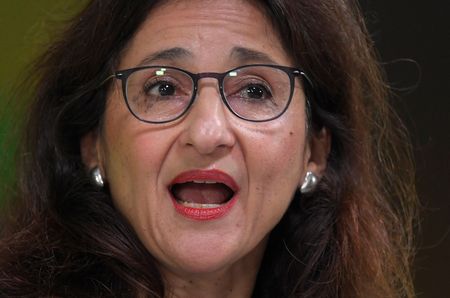
Shafik is an Egypt-born, British American economist who is currently president of the London School of Economics and has served as deputy governor of the Bank of England and deputy managing director of the IMF.
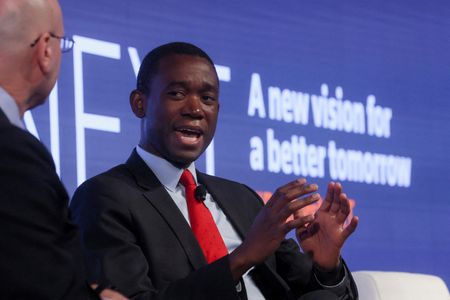
WALLY ADEYEMO
Adeyemo is the deputy secretary of the U.S. Treasury, who has played a lead role in coordinating sanctions and other measures against Russia to try to cut funding for Moscow’s invasion of Ukraine.
(Writing by Heather Timmons; Editing by Anna Driver and David Gregorio)