(Bloomberg) — Mexico’s headline inflation slowed more than expected in March, potentially moving the central bank closer to ending a tightening cycle that has added 725 basis points to the country’s interest rate.
(Bloomberg) — Mexico’s headline inflation slowed more than expected in March, potentially moving the central bank closer to ending a tightening cycle that has added 725 basis points to the country’s interest rate.
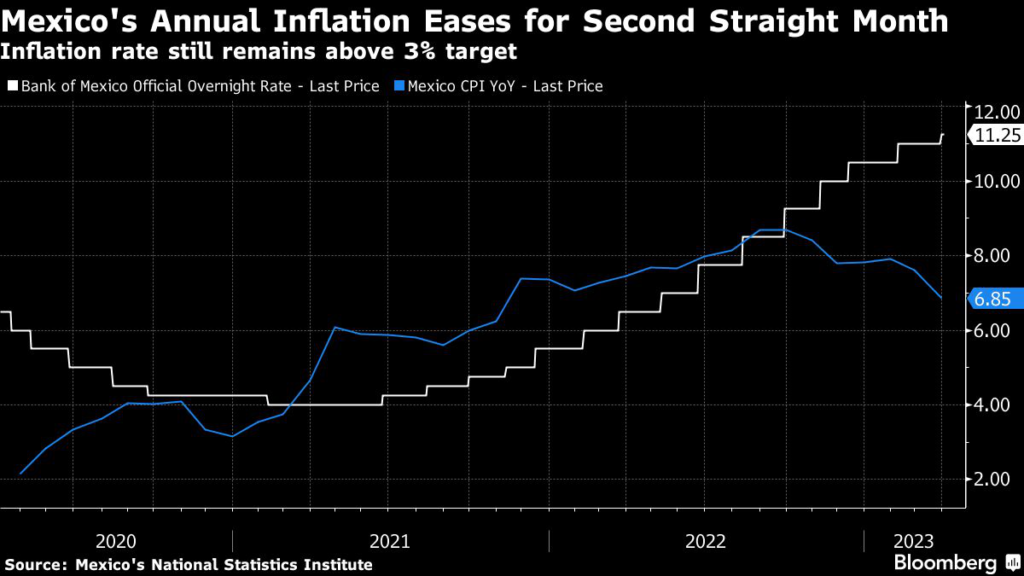
Consumer prices rose 6.85% from a year prior, less than the previous month’s reading of 7.62%, the national statistics institute reported Wednesday.
The reading was below the 6.89% median estimate of economists surveyed by Bloomberg.
Core inflation, which excludes volatile items like food and fuel, was 8.09% on an annual basis, below the previous measure of 8.29% though higher than economists’ 8.07% estimate.
Board members of Banxico, as the nation’s central bank is known, have warned that “resistant” underlying price pressures could make the case for “additional monetary efforts.”
Read More: Banxico Raises Rate to 11.25% as End of Hiking Cycle Nears
Policymakers led by Victoria Rodriguez Ceja have lifted Mexico’s interest rate for 15 straight meetings to 11.25%.
Last week, they slowed the pace of tightening with a quarter-of-a-point hike but stopped short of signaling a pause in their campaign. Their next steps will depend on the inflation outlook and the “monetary policy stance already attained,” central bankers wrote in their statement.
What Bloomberg Economics Says
“March data show headline and core Mexico inflation are facing less upward pressure from supply-chain disruptions and the Ukraine war.
We expect inflation to continue falling, aided by base effects and accumulated peso appreciation. That lowers the probability of additional interest-rate hikes. Persistent core services inflation is the only concern — it points to upward pressure from price indexation, labor costs and recovering demand.
— Felipe Hernandez, Latin America economist
— Click here for full report
Air transportation jumped 26% in March, representing the top inflation driver on the month, according to the statistics institute.
On the other hand, domestic gas fell 4.2%, representing the biggest downward pull on prices.
Mexico and Colombia are the only two inflation-targeting regimes in Latin America that are still raising interest rates as they try to tame consumer prices that remain above their goals.
Members of Banxico’s board have said in recent speeches that they see underlying inflation nearing a slowdown, as headline numbers continue to ease from last year’s 8.7% peak.
A surprise decision to cut oil production quotas among OPEC members and its allies is fueling bets of an extended rate hike cycle in the US, and Mexico’s monetary policy has historically followed the Federal Reserve’s path.
The crisis that resulted from the collapse of three regional banks in the US, meanwhile, brought an end to a yearlong run for Mexico’s currency, during which the peso appreciated almost 8% against the dollar.
It was Latin America’s best performer over that period.
Mexico’s monetary authority targets inflation at 3%. Most analysts see consumer price increases slowing down to 5.18% this year and 4.02% next, according to a Citibanamex survey.
–With assistance from Rafael Gayol and Giovanna Serafim.
(Updates with economist comments in fourth paragraph, details from the inflation release in fifth paragraph)
More stories like this are available on bloomberg.com
©2023 Bloomberg L.P.