Swiss National Bank officials can expect a day of protests and controversy this week as embittered shareholders vent on topics ranging from climate change to the fate of Credit Suisse Group AG.
(Bloomberg) — Swiss National Bank officials can expect a day of protests and controversy this week as embittered shareholders vent on topics ranging from climate change to the fate of Credit Suisse Group AG.
While the national embarrassment of the forced takeover of Switzerland’s second-biggest bank remains a political hot potato, green activists may grab the most attention as they seek to influence how the central bank invests its 743 billion-franc ($833 billion) foreign-currency trove.
Climate campaigners have spent about 800,000 francs buying up shares in the SNB to get to vote at its annual general meeting on Friday in Bern.
Their gripe is over oil and gas stock holdings encompassed in its reserves, including $1.9 billion worth of Exxon Mobil Corp., $1.4 billion of Chevron Corp. and $611 million of ConocoPhillips as of Dec.
31, according to public filings.
“Our main demand is quite simple: get rid of these assets,” said Jonas Kampus, an activist with the Climate Alliance, an umbrella association of about 140 Swiss environmental groups.
“The Credit Suisse debacle is peanuts against what happens when the carbon bubble bursts.”
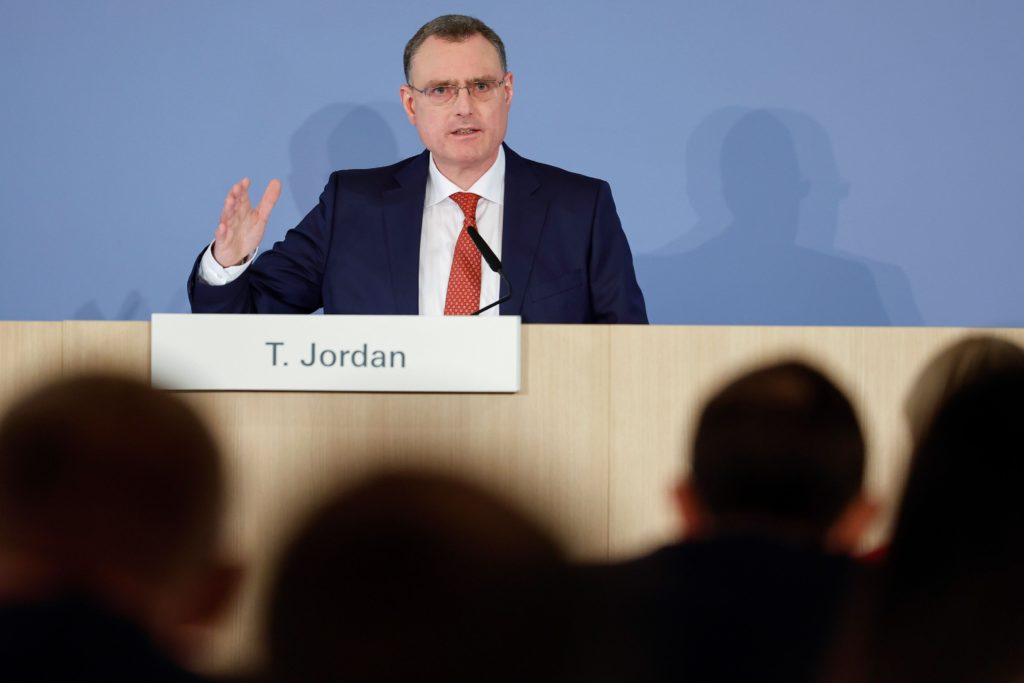
As a large institutional investor, the SNB led by President Thomas Jordan would have a huge financial lever to influence international climate action, Kampus says, if only it were to take the dangers of global warming seriously.
A spokesperson for the SNB declined to comment on the matter.
The central bank’s AGM is frequently a forum for political grandstanding on matters ranging from climate change to its investments in defense stocks.
Since the institution is tasked with achieving price stability and is granted independence on monetary policy, any shareholder influence is largely limited to public shaming on occasions like this.
It’s the SNB’s status as a publicly traded company, with shares held by some Swiss cantons and global investors, that gives campaigners the chance to use such meetings to make political points.
Only a handful of central banks around the world retain a similar structure.
Shareholders are typically entitled to a dividend, though the SNB’s record loss last year means they missed out on that.
Any prospects of a payout for 2023 may become clearer on Thursday, when the central bank publishes first-quarter results.
Economists at UBS Group AG said earlier this week that they are expecting a profit of as much as 27.5 billion francs for the period.
Still, the SNB’s earnings are heavily influenced by asset price changes and a positive quarter can still turn into a loss for the year.
What also makes the SNB stand out is its huge reserve hoard, largely built up during more than a decade of purchases to weaken the franc.
A quarter of it is held in equities, invested passively in global stock indexes.
Credit Suisse Demise
Most recently, the central bank found itself at the heart of national controversy as it helped oversee the government-mandated takeover of Credit Suisse by UBS Group AG.
A snap opinion poll after that crisis last month found more than half of Swiss voters disapproved, and it’s likely the episode will be brought up on Friday too.
Regarding climate campaigners’ demands, the SNB is unlikely to heed them.
Last year, its leadership won backing for its stance from the Swiss government, which said that widening the mandate would “inevitably” set up conflicts with the goal of price stability.
The central bank has refused to schedule three AGM motions tabled by activists, saying shareholders have no right to change its investment policy, according to Kampus.
“The SNB gave us a lengthy answer and justified it legally,” he said. “They did not respond to our requests in substance.”
The climate activists still intend to make their voices heard, protesting in front of the conference venue and delivering speeches at the AGM.
In a recent newspaper interview, Jordan sought to emphasize that the SNB has reduced fossil-fuel related securities to just over 3% of its holdings and previously excluded coal mining companies from its investments.
He insisted officials can’t go any further because the portfolio reflects the economy and “oil and gas are used intensively in Switzerland.”
Kampus says that’s short-sighted, not least because one day, writedowns on fossil-fuel-related holdings will become necessary as climate policies gain prominence.
“It should be enough that this is morally problematic,” he said.
“But the SNB’s actions also directly threaten the economic and financial stability of Switzerland.”
More stories like this are available on bloomberg.com
©2023 Bloomberg L.P.