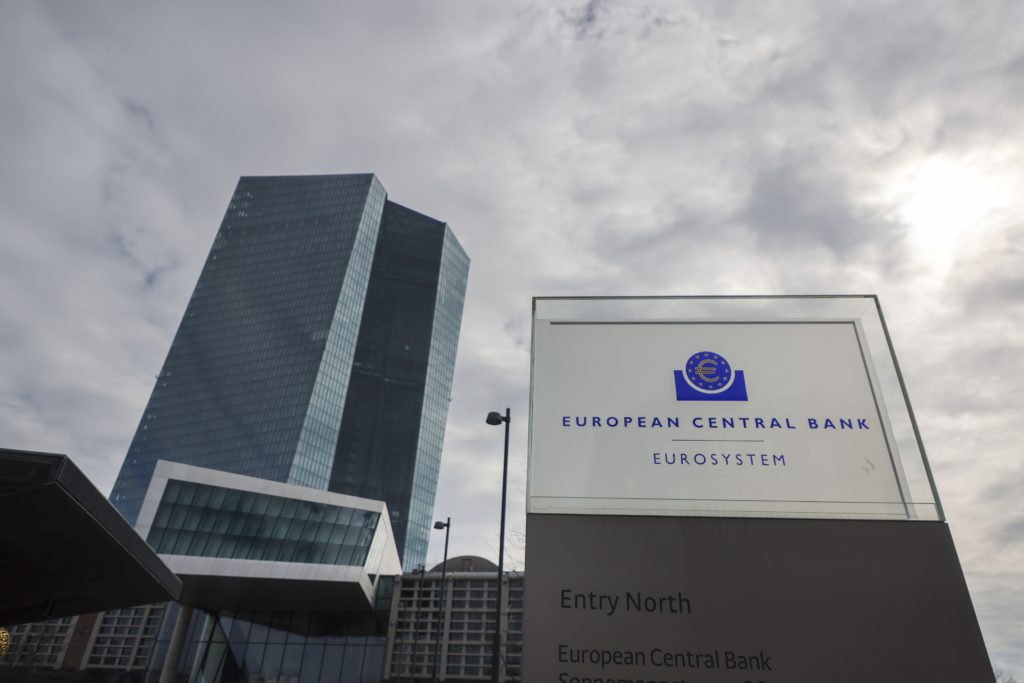
The European Central Bank has called out the finance industry’s failure to promote more women to its upper ranks, and pledged to “work relentlessly” to ensure banks set more credible and ambitious diversity targets.
(Bloomberg) — The European Central Bank has called out the finance industry’s failure to promote more women to its upper ranks, and pledged to “work relentlessly” to ensure banks set more credible and ambitious diversity targets.
“Banking is still a man’s world,” Frank Elderson, an ECB Executive Board member who’s also vice chair of its Supervisory Board, and Elizabeth McCaul, a member of the ECB’s Supervisory Board, said in a blog post on Tuesday.
Though there have been some improvements, “when we look at the actual targets set, we can only express our disappointment,” they wrote.
The ECB has since 2021 integrated gender diversity into its guide for so-called fit and proper assessments, which are used to ensure that the right senior managers end up leading banks.
Against that backdrop, Elderson and McCaul characterized as unfortunate the fact that of the 361 chief executives named at so-called significant institutions and their subsidiaries between 2020 and 2022, more than 300 were men.
On average, banks raised diversity targets for management bodies to 34% at the end of last year from 32% in 2020, they wrote.
But about one-third of significant institutions haven’t yet met their own targets, according to the ECB. Given the progress measured to date, “we doubt that these targets could be reached anytime soon,” Elderson and McCaul said.
The two warned that banks under ECB supervision face a reality check when the European Union’s new Women on Boards Directive is incorporated into national laws over the next few years.
The requirement states that boards will be considered balanced only when each gender makes up at least 40%.
“We will use the supervisory tools already available within the bounds of national legislation to insist that banks improve and address any internal governance shortcomings relating to gender diversity,” Elderson and McCaul said.
Meanwhile, a recent study by the International Monetary Fund took central banks to task for falling short on gender diversity.
The IMF survey, which included the ECB, showed that central banks on average filled less than half their positions with women. And the women they did hire ended up in lower-paid administrative positions or in human relations, according to the study.
–With assistance from Nicholas Comfort.
(Updates to add IMF study of central bank diversity in final paragraph.)
More stories like this are available on bloomberg.com
©2023 Bloomberg L.P.