By Andrew Mills and Bassam Masoud
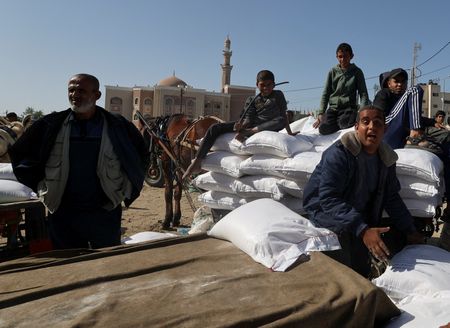
DOHA/GAZA (Reuters) -Israel and Palestinian Islamist group Hamas will start a four-day truce on Friday morning with a first group of 13 Israeli women and child hostages released later that day, mediators in Qatar said.
World powers gave the news a cautious welcome.
But fighting raged on as the hours counted down to the planned start of the first break in a brutal, near seven-week-old war. Both sides also signalled the pause would be temporary and they were ready to expand operations afterwards.
The truce would begin at 7 a.m.
local time (0500 GMT) and involve a comprehensive ceasefire in north and south Gaza, Qatar’s foreign ministry said.
Additional aid would start flowing into Gaza and the first hostages including elderly women would be freed at 4 p.m.
(1400 GMT), with the total number rising to 50 over the four days, ministry spokesperson Majed Al-Ansari said in the Qatari capital Doha.
It was expected Palestinians would be released from Israeli jail, he told reporters.
“We all hope that this truce will lead to a chance to start a wider work to achieve a permanent truce.”
Hamas – which had been expected to declare a truce with Israel a day earlier on Thursday only for negotiations to drag on – confirmed on its Telegram channel that all hostilities from its forces would cease.
But Abu Ubaida, spokesman for Hamas’ armed wing, later referred to “this temporary truce” in a video message that called for an “escalation of the confrontation with (Israel) on all resistance fronts”, including the Israeli-occupied West Bank where violence has surged since the Gaza war erupted.
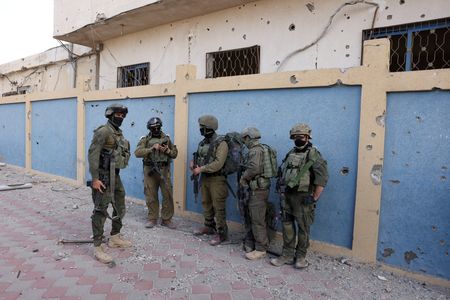
Israel’s military said its troops would stay behind a ceasefire line inside Gaza, without giving details of its position.
“These will be complicated days and nothing is certain… Even during this process there could be changes,” Israeli military spokesperson Daniel Hagari said.
“Control over northern Gaza is the first step of a long war, and we are preparing for the next stages,” he added.
Israel had received an initial list of hostages to be freed and was in touch with families, the prime minister’s office said.
“While this is a hopeful moment, our work is not yet done.
We will continue working to secure the release of all remaining hostages out of Gaza over the coming weeks,” a U.S. State Department official said in Washington.
Israel launched its devastating invasion of Gaza after gunmen from Hamas burst across the border fence on Oct.
7, killing 1,200 people and seizing about 240 hostages, according to Israeli tallies.
Since then, some 13,000 Gazans have been killed by Israeli bombardment, around 40% of them children, according to Palestinian health authorities.
However they have said it has become increasingly difficult to keep an up-to-date tally as the health service has buckled under the Israeli bombardment.
‘WE NEED TO KNOW THEY ARE ALIVE’
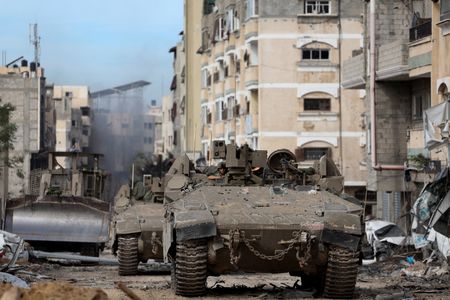
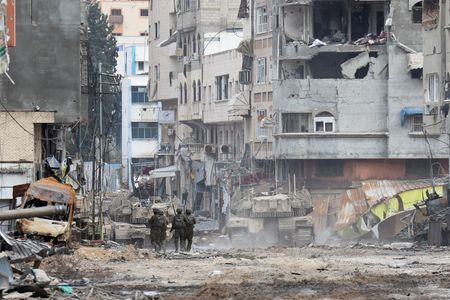
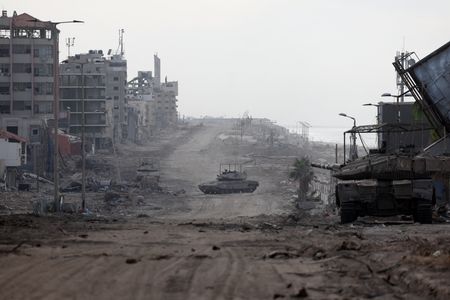
Ahead of the ceasefire, fighting continued at even greater than normal intensity, with Israeli jets hitting more than 300 targets and troops engaged in heavy fighting around Jabalia refugee camp north of Gaza City.
An army spokesman said operations would continue until troops received the order to stop.
Hamas said 30 people had been killed in an Israeli strike on a school affiliated with the U.N.
Palestinian refugee agency UNRWA in Jabalia. There was no immediate comment from UNRWA.
Earlier, from across the border fence in Israel, clouds of smoke could be seen billowing above northern Gaza’s war zone accompanied by the sounds of heavy gunfire and booming explosions.
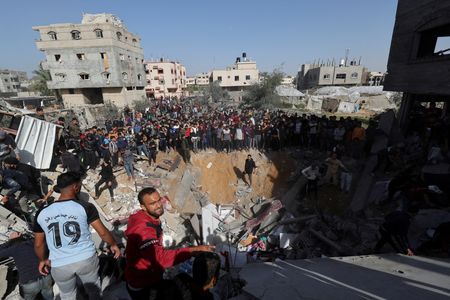
In Rafah, on the strip’s southern edge, residents combed with bare hands through the ruins of a house smashed in a giant crater.
A grey-bearded man wailed amid the shattered masonry while another man lay a hand on his shoulder to comfort him. Neighbour Khaled Hamad told Reuters it was the home of a primary school teacher, killed inside with his children.
Israel says Hamas fighters use residential and other civilian buildings, including hospitals, as cover.
Hamas denies this.
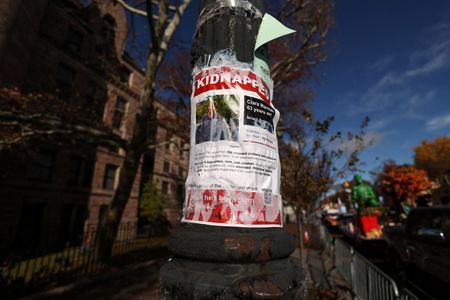
The delay to the start of the truce meant another day of worry for Israeli relatives who say they still know nothing about the fate of hostages, and of fear for Palestinian families trapped inside the Gaza combat zone.
“We need to know they are alive, if they’re okay.
It’s the minimum,” said Gilad Korngold, desperate for any information about the fate of seven of his family members, including his 3-year-old granddaughter, believed to be among the hostages.
Palestinian media reported at least 15 people killed in air strikes on Khan Younis, Gaza’s main southern city.
Reuters could not independently verify the toll there.
Israel said its strikes in the past day had hit “military command centres, underground terror tunnels, weapon storage facilities, weapon manufacturing sites, and anti-tank missile launch posts”.
Israel said on Thursday it had detained the head of Gaza’s biggest hospital Al Shifa for questioning over his role in what it said was the hospital’s use as a Hamas command centre.
Hamas condemned the arrest of Shifa director Muhammad Abu Salamiya and other doctors it said were trying to evacuate remaining patients and wounded from the facility.
International alarm has focused on the fate of hospitals, especially in Gaza’s northern half, where all medical facilities have ceased functioning with patients, staff and displaced people trapped inside.
“For 11 days, we lacked water, food, and medical supplies, except for two instances when the Israeli occupation army brought sandwiches and water, which fed less than half of the people in the hospital,” Ahmed El Mokhallalati, a Shifa doctor, said.
“Every day, patients die due to Israeli occupation forces occupying the hospital.”
(Reporting by Reuters bureauxWriting by Peter Graff and Andrew HeavensEditing by William Maclean, Mark Heinrich and Jonathan Oatis)