By Lisa Barrington and Lisa Baertlein
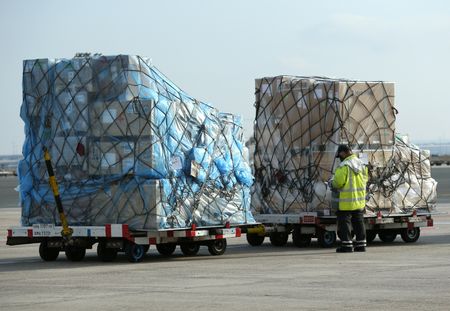
SEOUL/LOS ANGELES (Reuters) -Global air freight rates have climbed for the first time in seven weeks ahead of Asia’s Lunar New Year factory closures and as attacks on Red Sea shipping prompt companies to secure costlier air cargo space.
Major air freight providers like United Parcel Service and DHL say shippers – particularly purveyors of high-value goods – are using cargo planes to avoid delays resulting from rerouting hulking container vessels away from the Red Sea and the nearby Suez Canal trade shortcut.
“The drama in the Red Sea” and low water levels in the Panama Canal are causing “a lot of chaos”, UPS CEO Carol Tome said on a earnings conference call on Tuesday.
As some customers seek to avoid longer sailing times, she said, “air rates are tightening a bit.”
The Baltic Air Freight Index, which shows general cargo weekly transactional rates across a number of routes, rose 6.4% in the week to Monday, price reporting agency TAC Index said, reversing declines since a mid-December seasonal peak.
Attacks by Yemen’s Iran-aligned Houthi group on vessels in the Red Sea have forced shippers to take longer routes that can add weeks to delivery times.
The Red Sea lies on the key Suez Canal trade route for Europe-bound Asia factory goods and the east coast of the Americas. Most container vessels on those lanes are now sailing around the southern tip of Africa as passages through the Panama Canal, an alternate shortcut, have been crimped by drought.
“The (rate) increase is in line with expectations that rates may spike following disruption to ocean shipping in the Red Sea, though sources also point out that rates often rise in the run-up to Chinese New Year,” TAC Index said.
Many factories in China close for the 8-day holiday which begins this year on Feb. 10. Their customers rush to get orders in transit before those facilities shutter.
In recent weeks freight companies have been securing more air cargo space and some customers have begun shipping goods wholly or partially by air to avoid delays.
Nick Frank, CEO of DHL Global Forwarding Asia Pacific, said an expected shipping peak before the Lunar New Year was meeting longer sea transit times, higher sea rates and a shortage of vessels as a result of the Red Sea disruption.
This in turn is prompting some customers to move to air freight, he said.
Some are shipping more due to the longer transit time, “so they are moving stocks that are scheduled for later,” he added.
Air freight rates out of Shanghai rose 8.8% week on week on Monday, led by big increases to Europe. Rates out of Hong Kong gained 5.9% and rates out of Southeast Asia jumped 10%.
Still, air freight prices remained below pandemic highs as the post-Christmas lull in demand muted gains.
Global Air freight rates have been on a downward trend since early 2022 from all-time highs during the pandemic. The Baltic Air Freight Index was down around 24% year on year on Monday.
Air freight, more costly than sea freight, represents less than 1% of global trade by volume, according to airline industry association IATA.
(Reporting by Lisa Barrington; Additional reporting by Lisa Baertlein in Los Angeles Editing by Edwina Gibbs, Shri Navaratnam, Nick Zieminski and David Ljunggren)