AFP

Argentina turmoil sparks panic buying and price hikes

A political crisis in inflation-ravaged Argentina that was sparked by the economy minister’s resignation has spooked markets and generated fears resulting in panic buying and hasty price hikes, as the informal exchange rate soars.

“Every day it’s like going out to hunt a lion,” Luis Sacco told AFP in front of his electronics store in the capital Buenos Aires.

Since Monday, prices have risen dramatically at shops and businesses across the country.

On Saturday, economy minister Martin Guzman resigned following months of pressure from inside President Alberto Fernandez’s center-left Frente de Todos (Everyone’s Front) governing coalition.

Guzman was the chief negotiator in Argentina’s haggling with the International Monetary Fund to restructure a $44 billion debt.

But he was collateral damage in a power struggle between Fernandez and his vice-president, the former president Cristina Kirchner.

Opposition to Guzman’s fiscal policies from the former president’s influential faction within the coalition resulted in him quitting and being replaced by Kirchner loyalist Silvina Batakis.

She is the one who must now steer agricultural powerhouse Argentina through its years-long economic crisis.

Inflation, which surpassed 60 percent in the last 12 months, is hurting ordinary Argentines, who have been gripped by the political soap opera.

“It was the longest Sunday of my life,” said Sacco, the electronics store owner who spent an anxious weekend “not knowing whether or not to lift the shutters, (and) a Monday thinking about catastrophe.”

The black market peso briefly dropped from 239 to the US dollar to 280 on Monday before stabilizing at 250. The official exchange rate is 132.

– ‘Prices not set by costs’ –

But amidst the uncertainty and panic, sales actually soared for many businesses with consumers afraid prices would soon increase.

That is a major concern in a country struggling with years of high inflation.

“There was no earthquake. There are sales, more than ever,” said Sacco.

But “people are also buying because they know that if they wait, the price will increase. It’s the time to sell stock.”

He pushed up his prices by 15 percent a few weeks ago, with another five percent increase this week, while he has now hiked prices on his imported goods by 30 percent.

Fernando Agote, who owns a hardware store, says “things are calming down” after some initial panic buying despite little change in prices.

But conversely, many suppliers have suspended their sales, waiting to see what happens to prices before taking new orders, so they do not get left short-changed.

“There was a lot of anxiety, a lot of speculation. No one knows where the real prices are, they’re not set by costs,” said Agote.

Luckily for him, only one of his suppliers suspended their sales on Monday.

At a paint shop in the Floresta neighborhood, prices were pushed up 20 percent with no drop in sales volume.

“Everything was sold,” said the manager, Leo. However, supplies were not replenished.

“Only one company delivered.”

Leo expects that next week suppliers “will change all their price and payment conditions.”

After 20 years in the business, Leo has lived through several economic crises in Argentina.

“This is unusual because people have money, they are consuming, these days we’ve been selling like crazy, online orders have exploded,” he added.

– Time for caution –

The change in government comes at a time when workers are receiving a biyearly salary bonus, leaving them flush with cash.

Even so, “you have to be cautious and not change things more than they are so you don’t spark an unnecessary inflation snowball. We’ve already had enough of those,” said Alberto Sorrentino, 60, who runs a construction materials company.

He expects prices of “domestic products will rise between six and 10 percent, and imports between 10 and 20 percent.”

The biggest price hikes have been in the food industry.

“What comes from abroad like banana, papaya and melon increased 30 percent since Monday,” said John Quinteros, who runs a fruit and vegetable shop in Floresta.

“People are still buying, but less.”

In the Villa Crespo neighborhood a shop selling natural products has a sign informing customers it had not pushed up prices.

“We’ve decided to maintain them for as long as we can,” said Liliana de los Santos, admitting that “it’s a risk.”


TikTok sued in US after girls die in 'Blackout Challenge'

Video-sharing sensation TikTok is being sued in California after children died while taking part in a “Blackout Challenge” that makes a sport of choking oneself until passing out.

The lawsuit filed in state court in Los Angeles last week accuses TikTok software of “intentionally and repeatedly” pushing the Blackout Challenge that led to the deaths of an eight-year-old girl in Texas and a nine-year-old girl in Wisconsin last year.

“TikTok needs to be held accountable for pushing deadly content to these two young girls,” said Matthew Bergman, an attorney at the Social Media Victims Law Center, which filed the suit.

“TikTok has invested billions of dollars to intentionally design products that push dangerous content that it knows are dangerous and can result in the deaths of its users.”

TikTok, owned by China-based ByteDance, did not immediately respond to a request for comment.

The suit alleges that  TikTok’s algorithm promoted the Blackout Challenge to each of the girls, who died from self-strangulation — one using rope and the other a dog leash.

It additionally listed children in Italy, Australia and elsewhere whose deaths have been linked to the TikTok Blackout Challenge.

TikTok has featured and promoted an array of challenges in which users film themselves taking part in themed acts that are sometimes dangerous.

Among the litany of TikTok challenges described in court documents was the “Skull Breaker Challenge” in which people have their legs kicked out from under them while jumping so they flip and hit their heads.

The “Coronavirus Challenge” involves licking random items and surfaces in public during the pandemic, and the “Fire Challenge” involves dousing things with flammable liquid and setting them ablaze, court documents said.

The suit calls for a judge to order TikTok to stop hooking children via its algorithm and promoting dangerous challenges, and to pay unspecified cash damages.

TikTok sued in US after girls die in 'Blackout Challenge'

Video-sharing sensation TikTok is being sued in California after children died while taking part in a “Blackout Challenge” that makes a sport of choking oneself until passing out.

The lawsuit filed in state court in Los Angeles last week accuses TikTok software of “intentionally and repeatedly” pushing the Blackout Challenge that led to the deaths of an eight-year-old girl in Texas and a nine-year-old girl in Wisconsin last year.

“TikTok needs to be held accountable for pushing deadly content to these two young girls,” said Matthew Bergman, an attorney at the Social Media Victims Law Center, which filed the suit.

“TikTok has invested billions of dollars to intentionally design products that push dangerous content that it knows are dangerous and can result in the deaths of its users.”

TikTok, owned by China-based ByteDance, did not immediately respond to a request for comment.

The suit alleges that  TikTok’s algorithm promoted the Blackout Challenge to each of the girls, who died from self-strangulation — one using rope and the other a dog leash.

It additionally listed children in Italy, Australia and elsewhere whose deaths have been linked to the TikTok Blackout Challenge.

TikTok has featured and promoted an array of challenges in which users film themselves taking part in themed acts that are sometimes dangerous.

Among the litany of TikTok challenges described in court documents was the “Skull Breaker Challenge” in which people have their legs kicked out from under them while jumping so they flip and hit their heads.

The “Coronavirus Challenge” involves licking random items and surfaces in public during the pandemic, and the “Fire Challenge” involves dousing things with flammable liquid and setting them ablaze, court documents said.

The suit calls for a judge to order TikTok to stop hooking children via its algorithm and promoting dangerous challenges, and to pay unspecified cash damages.

US, Russian envoys gather for G20 with call to end Ukraine war

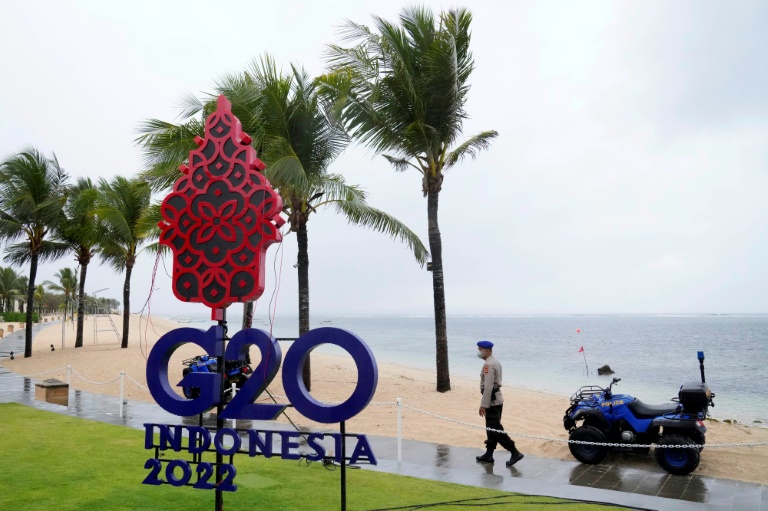
The top Russian and US envoys gathered on Friday for a Group of 20 foreign ministers meeting in Indonesia, with the host immediately telling them the Ukraine war must end and differences be resolved through negotiations.

US Secretary of State Antony Blinken and Russian counterpart Sergei Lavrov joined their colleagues for the start of day-long talks, with Washington seeking to gain support from the world’s top economies to pressure Moscow over the invasion of its neighbour.

“It clearly cannot be business as usual when it comes to Russia’s involvement and engagement in enterprises like the G20,” a senior US official said ahead of the meeting.

In comments to open the meeting on the resort island of Bali, Indonesian Foreign Minister Retno Marsudi directly addressed the war.

“It is our responsibility to end the war sooner than later and settle our differences at the negotiating table, not the battlefield,” Marsudi said, with Lavrov in the room.

While in Bali, Blinken will also seek to reopen dialogue with Beijing in talks with his Chinese counterpart Wang Yi, the first in months after tensions strained over issues including Taiwan.

The G20 meeting is looking to tackle the war’s impact on food and energy security, as well as the global economy’s recovery from the coronavirus pandemic and the ravages of climate change.

But Blinken will shun a direct meeting with Lavrov, instead pointing the finger at Moscow for triggering global food and energy crises.

– No family photo –

However the US official indicated Washington did not want to embarrass Indonesia.

The hosts have addressed US concerns about Lavrov attending in part by inviting Ukrainian President Volodymyr Zelensky to the G20 summit later this year and Foreign Minister Dmytro Kuleba to Friday’s meet.

“It’s very important to us that we focus on the G20 agenda,” the US official said.

The official declined to comment on the “choreography” in Bali between the American and Russian diplomats. 

But there will be no family photo of the G20 ministers as is customary, an Indonesian government official told AFP.

Blinken arrived at the Mulia hotel on the palm-fringed island on Friday where he could be seen talking with South Africa’s foreign minister before entering the same room as Lavrov, who he last met in January.

Russia’s top diplomat was seated between the Saudi Arabian and Mexican foreign ministers as the meeting began.

Friday’s meeting is a prelude to the leaders’ summit on Bali in November that is meant to focus on the global recovery from the Covid-19 pandemic.

But attention has instead shifted to Moscow’s invasion of Ukraine, which has rattled global markets, sent food prices skyrocketing and led to allegations of Russian war crimes.

– British FM leaves –

EU foreign policy chief Josep Borrell will prevent Russia using the meeting as a “propaganda forum” on the Ukraine war, his spokeswoman said Thurday.

Blinken’s efforts to have a powerful Western stance against Russia at the G20 were diluted after British Prime Minister Boris Johnson resigned as leader of the Conservative party on Thursday.

It prompted British Foreign Minister Liz Truss to cut short her Bali trip and pull out of Friday’s meeting, where she was expected to join her American and European counterparts in criticising Moscow. 

She flew out of Bali on Friday morning and was replaced by former British ambassador to the European Union Sir Tim Barrow, a British official told AFP.

The talks between Blinken and Wang on Saturday — their first since October — will seek to address tensions between the world’s two largest economies.

A top US official for East Asia said the pair would discuss “guardrails” on competition but said Blinken would also explore areas of cooperation.

The meeting comes as US President Joe Biden voices hope for a conversation in the coming weeks with Chinese President Xi Jinping, with whom he last spoke in March.

Lavrov met Wang on Thursday to discuss Russia’s invasion, which Moscow says it launched to stop Ukraine from joining the NATO military alliance.

The United States has condemned Beijing’s support for Russia and Blinken is expected to reiterate those warnings in talks with Wang.

Australian Foreign Minister Penny Wong will herself meet Wang on the sidelines of the meeting on Friday to press China to end trade “blockages”, she said.

“We all know we have our differences. There are challenges in the relationship. We believe engagement is necessary to stabilise the relationship,” Wong told reporters.

It will be Australia and China’s first foreign ministers’ meeting since 2019.

TikTok sued in US after girls die in 'Blackout Challenge'

Video-sharing sensation TikTok is being sued in California after children died while taking part in a “Blackout Challenge” that makes a sport of choking oneself until passing out.

The lawsuit filed in state court in Los Angeles last week accuses TikTok software of “intentionally and repeatedly” pushing the Blackout Challenge that led to the deaths of an eight-year-old girl in Texas and a nine-year-old girl in Wisconsin last year.

“TikTok needs to be held accountable for pushing deadly content to these two young girls,” said Matthew Bergman, an attorney at the Social Media Victims Law Center, which filed the suit.

“TikTok has invested billions of dollars to intentionally design products that push dangerous content that it knows are dangerous and can result in the deaths of its users.”

TikTok, owned by China-based ByteDance, did not immediately respond to a request for comment.

The suit alleges that  TikTok’s algorithm promoted the Blackout Challenge to each of the girls, who died from self-strangulation — one using rope and the other a dog leash.

It additionally listed children in Italy, Australia and elsewhere whose deaths have been linked to the TikTok Blackout Challenge.

TikTok has featured and promoted an array of challenges in which users film themselves taking part in themed acts that are sometimes dangerous.

Among the litany of TikTok challenges described in court documents was the “Skull Breaker Challenge” in which people have their legs kicked out from under them while jumping so they flip and hit their heads.

The “Coronavirus Challenge” involves licking random items and surfaces in public during the pandemic, and the “Fire Challenge” involves dousing things with flammable liquid and setting them ablaze, court documents said.

The suit calls for a judge to order TikTok to stop hooking children via its algorithm and promoting dangerous challenges, and to pay unspecified cash damages.

TikTok sued in US after girls die in 'Blackout Challenge'

Video-sharing sensation TikTok is being sued in California after children died while taking part in a “Blackout Challenge” that makes a sport of choking oneself until passing out.

The lawsuit filed in state court in Los Angeles last week accuses TikTok software of “intentionally and repeatedly” pushing the Blackout Challenge that led to the deaths of an eight-year-old girl in Texas and a nine-year-old girl in Wisconsin last year.

“TikTok needs to be held accountable for pushing deadly content to these two young girls,” said Matthew Bergman, an attorney at the Social Media Victims Law Center, which filed the suit.

“TikTok has invested billions of dollars to intentionally design products that push dangerous content that it knows are dangerous and can result in the deaths of its users.”

TikTok, owned by China-based ByteDance, did not immediately respond to a request for comment.

The suit alleges that  TikTok’s algorithm promoted the Blackout Challenge to each of the girls, who died from self-strangulation — one using rope and the other a dog leash.

It additionally listed children in Italy, Australia and elsewhere whose deaths have been linked to the TikTok Blackout Challenge.

TikTok has featured and promoted an array of challenges in which users film themselves taking part in themed acts that are sometimes dangerous.

Among the litany of TikTok challenges described in court documents was the “Skull Breaker Challenge” in which people have their legs kicked out from under them while jumping so they flip and hit their heads.

The “Coronavirus Challenge” involves licking random items and surfaces in public during the pandemic, and the “Fire Challenge” involves dousing things with flammable liquid and setting them ablaze, court documents said.

The suit calls for a judge to order TikTok to stop hooking children via its algorithm and promoting dangerous challenges, and to pay unspecified cash damages.

Using lasers and 'tow-trucks', Japanese firms target space debris

From laser beams and wooden satellites to galactic tow-truck services, start-ups in Japan are trying to imagine ways to deal with a growing environmental problem: space debris.

Junk like used satellites, parts of rockets and wreckage from collisions has been piling up since the space age began, with the problem accelerating in recent decades.

“We’re entering an era when many satellites will be launched one after another. Space will become more and more crowded,” said Miki Ito, general manager at Astroscale, a company dedicated to “space sustainability”.

“There are simulations suggesting space won’t be usable if we go on like this,” she told AFP. “So we must improve the celestial environment before it’s too late.”

The European Space Agency (ESA) estimates that around one million pieces of debris larger than a centimetre — big enough to “disable a spacecraft” — are in Earth’s orbit.

They are already causing problems, from a near-miss in January involving a Chinese satellite, to a five-millimetre hole knocked into a robotic arm on the International Space Station last year.

“It’s hard to predict exactly how fast the amount of space debris will increase,” said Toru Yamamoto, a senior researcher at the Japan Aerospace Exploration Agency (JAXA).

But “it’s an issue that raises real concerns about the sustainable use of space.”

With satellites now crucial for GPS, broadband and banking data, collisions pose significant risks on Earth.

Tadanori Fukushima has seen the scale of the problem in his job as an engineer with Tokyo-based satellite operator and broadcaster SKY Perfect JSAT.

“A stationary satellite would get roughly 100 ‘debris-approaching’ alerts a year,” he told AFP.

International “satellite disposal guidelines” include rules like moving used satellites to “graveyard orbit” — but the increase in debris means more is needed, specialists say.

– ‘No panacea’ –

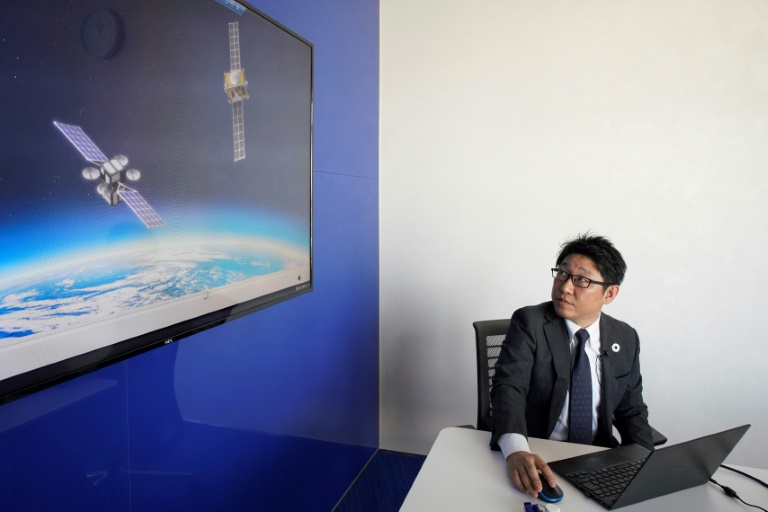
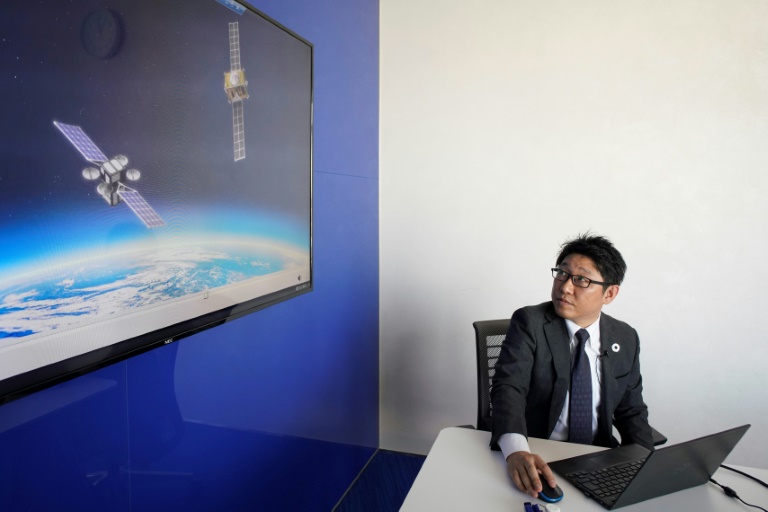
Fukushima launched an in-house start-up in 2018 and envisions using a laser beam to vaporise the surface of space debris, creating a pulse of energy that pushes the object into a new orbit.

The irradiating laser means there’s no need to touch any debris, which is generally said to move about 7.5 kilometres per second — much faster than a bullet.

For now, the project is experimental, but Fukushima hopes to test the idea in space by spring 2025, working with several research institutions.

Japanese firms, along with some in Europe and the United States, are leading the way on developing solutions, according to Fukushima.

Some projects are further along, including Astroscale’s space “tow-truck”, which uses a magnet to collect out-of-service satellites.

“If a car breaks down, you call a tow-truck service. If a satellite breaks down and stays there, it faces the risk of collision with debris and needs to be collected quickly,” Ito explained.

The firm carried out a successful trial last year and imagines one day equipping customer satellites with a “docking plate” equivalent to a tow-truck’s hook, allowing collection later on.

Astroscale, which has a contract with the ESA, plans a second test by the end of 2024 and hopes to launch its service soon after.

Other efforts approach the problem at the source, by creating satellites that don’t produce debris.

Kyoto University and Sumitomo Forestry envisage a wooden satellite that goes into orbit in a rocket and burns up safely when it plunges to Earth.

That project is also in its infancy — in March, pieces of wood were sent to the International Space Station to test how they respond to cosmic rays.

Space agencies have their own programmes, with JAXA focusing on large debris over three tonnes.

And internationally, firms including US-based Orbit Fab and Australia’s Neumann Space have proposed ideas such as in-orbit refuelling to extend the life of satellites.

The problem is complex enough that a range of solutions will be needed, said JAXA’s Yamamoto.

“There is no panacea.”

Using lasers and 'tow-trucks', Japanese firms target space debris

From laser beams and wooden satellites to galactic tow-truck services, start-ups in Japan are trying to imagine ways to deal with a growing environmental problem: space debris.

Junk like used satellites, parts of rockets and wreckage from collisions has been piling up since the space age began, with the problem accelerating in recent decades.

“We’re entering an era when many satellites will be launched one after another. Space will become more and more crowded,” said Miki Ito, general manager at Astroscale, a company dedicated to “space sustainability”.

“There are simulations suggesting space won’t be usable if we go on like this,” she told AFP. “So we must improve the celestial environment before it’s too late.”

The European Space Agency (ESA) estimates that around one million pieces of debris larger than a centimetre — big enough to “disable a spacecraft” — are in Earth’s orbit.

They are already causing problems, from a near-miss in January involving a Chinese satellite, to a five-millimetre hole knocked into a robotic arm on the International Space Station last year.

“It’s hard to predict exactly how fast the amount of space debris will increase,” said Toru Yamamoto, a senior researcher at the Japan Aerospace Exploration Agency (JAXA).

But “it’s an issue that raises real concerns about the sustainable use of space.”

With satellites now crucial for GPS, broadband and banking data, collisions pose significant risks on Earth.

Tadanori Fukushima has seen the scale of the problem in his job as an engineer with Tokyo-based satellite operator and broadcaster SKY Perfect JSAT.

“A stationary satellite would get roughly 100 ‘debris-approaching’ alerts a year,” he told AFP.

International “satellite disposal guidelines” include rules like moving used satellites to “graveyard orbit” — but the increase in debris means more is needed, specialists say.

– ‘No panacea’ –

Fukushima launched an in-house start-up in 2018 and envisions using a laser beam to vaporise the surface of space debris, creating a pulse of energy that pushes the object into a new orbit.

The irradiating laser means there’s no need to touch any debris, which is generally said to move about 7.5 kilometres per second — much faster than a bullet.

For now, the project is experimental, but Fukushima hopes to test the idea in space by spring 2025, working with several research institutions.

Japanese firms, along with some in Europe and the United States, are leading the way on developing solutions, according to Fukushima.

Some projects are further along, including Astroscale’s space “tow-truck”, which uses a magnet to collect out-of-service satellites.

“If a car breaks down, you call a tow-truck service. If a satellite breaks down and stays there, it faces the risk of collision with debris and needs to be collected quickly,” Ito explained.

The firm carried out a successful trial last year and imagines one day equipping customer satellites with a “docking plate” equivalent to a tow-truck’s hook, allowing collection later on.

Astroscale, which has a contract with the ESA, plans a second test by the end of 2024 and hopes to launch its service soon after.

Other efforts approach the problem at the source, by creating satellites that don’t produce debris.

Kyoto University and Sumitomo Forestry envisage a wooden satellite that goes into orbit in a rocket and burns up safely when it plunges to Earth.

That project is also in its infancy — in March, pieces of wood were sent to the International Space Station to test how they respond to cosmic rays.

Space agencies have their own programmes, with JAXA focusing on large debris over three tonnes.

And internationally, firms including US-based Orbit Fab and Australia’s Neumann Space have proposed ideas such as in-orbit refuelling to extend the life of satellites.

The problem is complex enough that a range of solutions will be needed, said JAXA’s Yamamoto.

“There is no panacea.”

Texas governor authorizes state police to return migrants to border

The governor of Texas on Thursday signed an order authorizing state law enforcement to detain migrants who have illegally crossed the border from Mexico, flouting the federal government’s usual authority over US immigration matters.

“The state of Texas is once again stepping up and taking unprecedented action to protect Americans and secure the southern border,” Republican Governor Greg Abbott said in a statement.

The executive order empowers the Texas National Guard and the Texas Department of Safety “to apprehend illegal immigrants who illegally cross the border between ports of entry and return them to the border,” the statement said.

Abbott has long attacked Democrats in Washington for allegedly being soft on immigration, and said Thursday that the measure was needed because US President Joe Biden “refuses to do his job and enforce the immigration laws enacted by Congress.”

The order sets up a potential legal conflict between Texas and the federal government, which generally handles immigration and foreign relations policies, though it is so far unclear how the order will be implemented. 

The Department of Homeland Security did not immediately respond to an AFP request for comment. 

The Mexican government meanwhile dismissed the order, saying the country would only discuss immigration policy on the federal level, which it pointed out is also the usual convention in the United States.

“Therefore, this action can only be understood as part of the electoral campaign in the state of Texas,” the Mexican government said in a statement Thursday night, referring to upcoming November polls that include the race for governor.

Migration numbers from Mexico into the United States have remained high in recent months. In May, authorities detained more than 239,000 people on the Mexican border, a record, though the figure also includes those who tried to enter the US multiple times.  

Abbott’s order also comes just a week after a ruling from the US Supreme Court gave Biden’s administration the green light to end the so-called Remain in Mexico policy instituted by former president Donald Trump in 2019.

The policy sent some non-Mexicans who entered the United States illegally back across the southern border to wait while their immigration cases made their way through the courts, instead of being detained or provisionally released. 

Biden’s attempt to terminate the policy was challenged by a group of Republican-governed states led by Texas. 

Migrants crossing into the United States from Mexico, many of whom have traveled from Central America, face an arduous and often dangerous journey, which can include harsh natural conditions and the risk of mistreatment by human traffickers. 

Just last week 53 people died after being packed inside a tractor-trailer truck without air conditioning that was abandoned in San Antonio, Texas.

Asian stocks extend global rally as recession fears ease for now

Asian markets rose Friday on easing recession fears, while there were growing hopes that Joe Biden will remove some Trump-era tariffs from Chinese goods.

Buying was also boosted by reports that Beijing was considering a huge stimulus shot to the struggling economy by allowing local governments to raise billions of dollars through bond issuance for infrastructure projects.

However, surging inflation, rising interest rates and a fresh flare-up of Covid infections in Shanghai continued to keep investor sentiment grounded.

Traders were handed a strong lead from Wall Street, where all three main indexes climbed for a fourth straight day, helped by two top Federal Reserve officials who said the economy could withstand sharper rate hikes and maintain growth.

There has been growing talk that the fast pace of monetary tightening by the bank will tip the world’s top economy into recession.

But Christopher Waller, a member of the board of governors, said worries were overblown and that a strong jobs market would provide a buffer, adding that rates needed to go up sharply and quickly.

St Louis Fed president James Bullard also said there was “a good chance of a soft landing”.

And Brian Belski, at BMO Capital Markets, agreed that fears of a recession had gone too far.

“I’m calling this period right now a recession obsession,” he told Bloomberg Television. “Institutional investors are not positioned for any kind of upside move. That’s why you are seeing these sharp moves on a day like (Thursday). We remain positive and think people are way too negative.”

With the mood more upbeat, Asian equities advanced with Hong Kong, Shanghai, Tokyo, Sydney, Seoul, Singapore, Wellington, Taipei, Manila and Jakarta all in the green.

– Jobs market weakness –

The Fed’s policy plans will be in focus later Friday when US employment data is released, with a strong reading providing the central bank with evidence to stick to its hawkish line.

But Matt Simpson at StoneX Financial said there were indications the jobs market could be showing signs of weakness.

The report “is unlikely to deter the Fed from a 75 basis points hike this month. But when the precious non-farm payroll numbers begin to crumble, so does the Fed’s argument that the US economy is robust”, he said.

“And we’re seeing early signs of that across multiple employment metrics.”

“When we do see unemployment begin to rise and headline employment growth lose momentum it will be hard for the Fed to ignore,” he added. 

“And that could provide a reason for the Fed to at least pause their hiking cycle, because a crumbling jobs market is great for deflation. So I’d expect market fireworks if and when (non-farm payroll numbers) begins to disappoint.”

Biden is also reported to be holding a meeting later Friday with top advisers to discuss whether or not to lift some of the Trump-era tariffs imposed on around $300 billion of Chinese imports.

While he is also said to be considering another probe into other facets of Beijing’s trade policy, analysts said the removal of the levies could boost China’s export growth to the United States by about 20 percent.

The move could also help ease upward pressure on US inflation, which is running at a four-decade high.

Sterling extended Thursday’s rally that came after Boris Johnson resigned as leader of the ruling Conservatives, paving the way for a new prime minister and bringing an end to weeks of political uncertainty in the United Kingdom.

The euro remained stuck at a 20-year low against the greenback after minutes from the European Central Bank’s most recent meeting indicated that, unlike the Fed, it was happy to hike rates at a slower pace despite surging inflation.

– Key figures at around 0245 GMT –

Tokyo – Nikkei 225: UP 1.4 percent at 26,869.82 (break)

Hong Kong – Hang Seng Index: UP 0.9 percent at 21,841.61

Shanghai – Composite: UP 0.5 percent at 3,381.11

Pound/dollar: UP at $1.2041 from $1.2024 Thursday

Euro/dollar: UP at $1.0173 from $1.0162

Euro/pound: DOWN at 84.46 pence from 84.49 pence

Dollar/yen: DOWN at 135.72 yen from 136.01 yen 

West Texas Intermediate: DOWN 0.3 percent at $102.43 per barrel

Brent North Sea crude: DOWN 0.2 percent at $104.49 per barrel

New York – Dow: UP 1.1 percent at 31,384.55 (close)

London – FTSE 100: UP 1.1 percent at 7,189.08 (close)

Close Bitnami banner
Bitnami