AFP

Oil rises after sell-off but euro stuck at 20-year low, equities drop

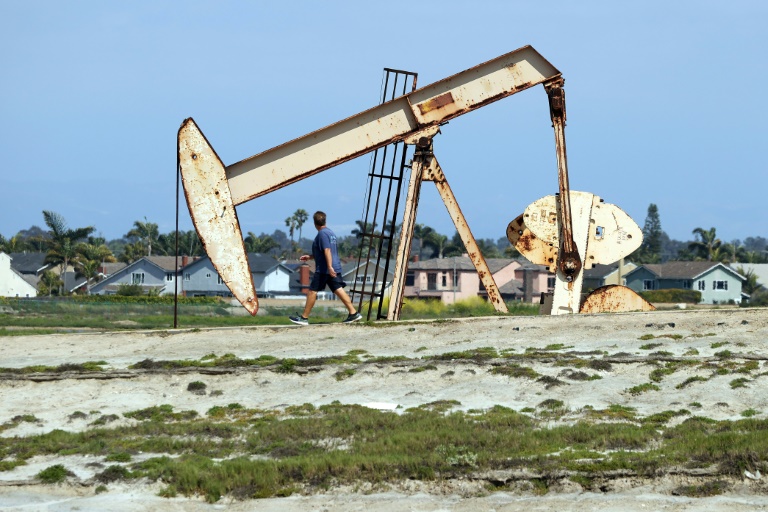
Oil prices rose Wednesday after suffering a painful drop the previous day, though the euro remained wedged at a 20-year low and equities mostly fell in Asia as recession fears continue to flow through trading floors.

Both main crude contracts were pummelled Tuesday as investors grow increasingly worried that leading economies will contract this year or next owing to sharp central bank interest rate hikes aimed at fighting decades-high inflation.

The main US contract WTI sank nearly nine percent below $100 a barrel for the first time since April, while Brent shed around 10 percent on expectations that any recession will slam demand, despite tight supplies caused by the Ukraine war.

And Citigroup said in a note that a recession could lead prices to as low as $65 this year if OPEC and other major producers do not step in to provide support and companies do not invest.

There are also signs that the high cost of fuel is hurting demand, in turn pushing prices down. Earlier this week, the head of Asia at crude trading giant Vitol said he saw signs consumers were beginning to feel the pressure of high prices — a phenomenon known as demand destruction.

Still, Goldman Sachs said it thought the commodity would remain elevated.

“While the odds of a recession are indeed rising, it is premature for the oil market to be succumbing to such concerns,” the bank’s analysts including Damien Courvalin said in a note. 

“The global economy is still growing, with the rise in oil demand this year set to significantly outperform GDP growth.”

– Euro-dollar parity eyed –

Commentators said falling oil prices and the prospect of a recession could give central banks room to ease up on their monetary tightening campaigns, which could provide some relief to equities.

Among those to benefit are rate-sensitive tech firms, which have risen as Treasury yields, a proxy for interest rates, fall.

“Markets are saying recession is coming, inflation will slow down, commodities will fall and the Fed will cut rates in 2023,” said Gang Hu, at Winshore Capital Partners.

He said it was hard to go against the view “because this storyline is consistent. It can be a self-fulfilling process”.

However, while there was help from speculation that Joe Biden was considering removing some Trump-era tariffs on Chinese goods, equities struggled in Asia.

Tokyo, Hong Kong, Shanghai, Sydney, Seoul, Jakarta and Taipei were all down, though Singapore, Wellington and Manila saw gains.

Investors have also been spooked by a fresh coronavirus outbreak in parts of China that has seen some cities locked down as part of officials’ zero-Covid policy.

The euro remained under pressure and appeared to be heading towards parity with the dollar after hitting a 20-year low owing to the European Central Bank’s decision not to lift interest rates until this month, lagging the Fed’s fast pace of hikes that have sent the dollar soaring.

The continent also faces an energy crisis caused by sanctions on Russian fuel, while a strike by workers in Norway threatened to hit supplies further.

“The euro has depreciated sharply due to a toxic cocktail of negative drivers,” said SPI Asset Management’s Stephen Innes.

“An oddly hesitant ECB contrasts with a more aggressive Fed, worries about natural gas supply disruption and economic recession are deepening.” 

And he warned further falls could be on the way for the single currency. 

“We have unlikely reached maximum uncertainty and total negativity, which opens the door to a test below sub-parity. So with the euro-dollar in the mid-1.02s, it might not be too late to punch your ticket for a ride on the parity party bandwagon.”

– Key figures at around 0230 GMT –

West Texas Intermediate: UP 0.8 percent at $100.27 per barrel

Brent North Sea crude: UP 1.3 percent at $104.07 per barrel

Euro/dollar: DOWN at $1.0262 from $1.0266 Tuesday

Euro/pound: DOWN at 85.78 pence from 85.85 pence

Dollar/yen: UP at 135.24 yen from 135.87 yen

Pound/dollar: UP at $1.1966 from $1.1956

Tokyo – Nikkei 225: DOWN 1.3 percent at 26,089.86 (break)

Hong Kong – Hang Seng Index: DOWN 1.1 percent at 21,609.59

Shanghai – Composite: DOWN 1.1 percent at 3,366.66

New York – Dow: DOWN 0.4 percent 30.967,82 (close)

London – FTSE 100: DOWN 2.9 percent at 7,025.47 (close)
Highland Park, a wealthy, all-American suburb, reels from mass shooting

It was the leafy, suburban backdrop for classic American films such as “Risky Business” and “Ferris Bueller’s Day Off,” but now Highland Park, Illinois has become the scene of a uniquely American crime — the city has been added to the long list of deadly shootings in the United States.

During the town’s annual Fourth of July parade, a 21-year-old gunman stood on a rooftop and opened fire on the parade and its spectators.

At least seven people were killed and more than two dozen others wounded — victims chosen at random, police said Tuesday.

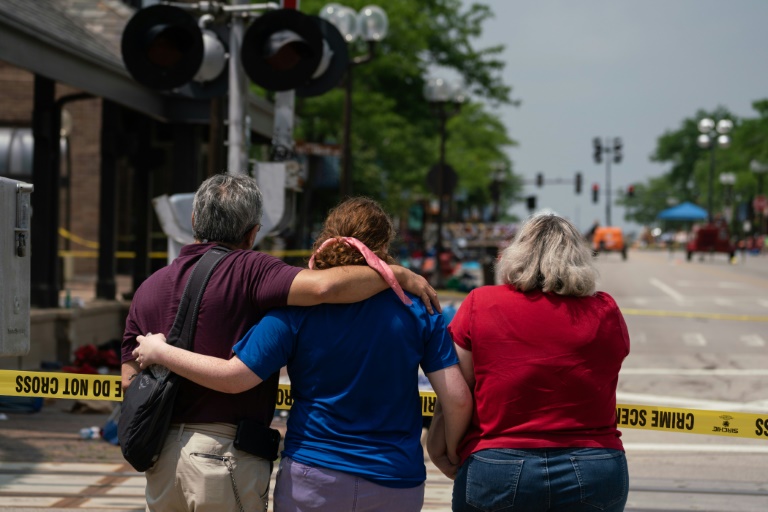
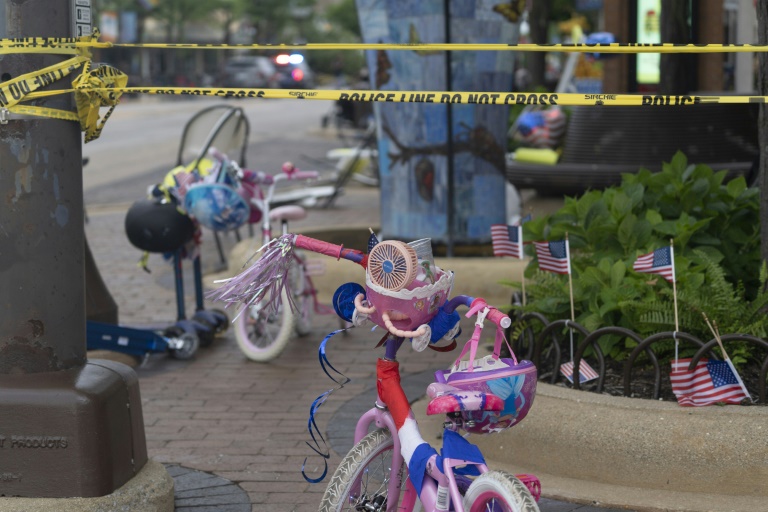
Along the parade route, American flags and LGBT pride flags hang side by side from lamp posts. But, behind yellow police tape, FBI officers are busy.

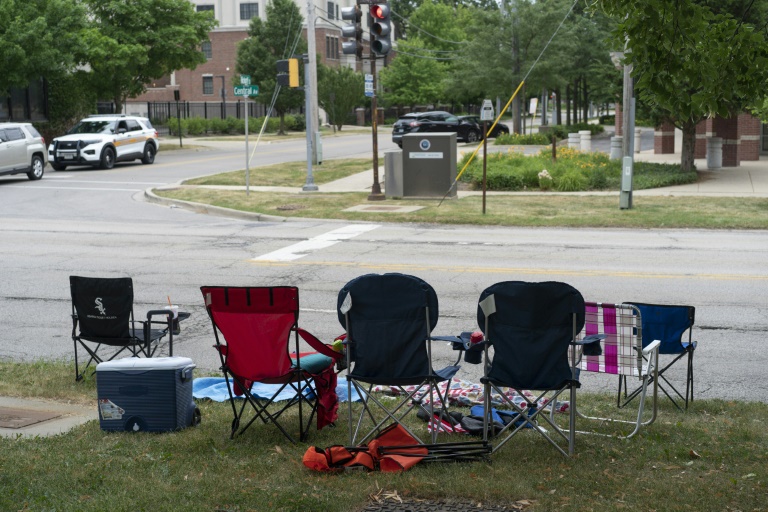
Overturned strollers still lie next to tricycles and folding chairs, all abandoned in the aftermath of the shooting that rocked the town, known for its plush homes, Lake Michigan beachfront and a few famous residents.

In front of the Highland Park Presbyterian Church, blue hearts have been mounted on small white sticks, inscribed with the names of the victims. Residents take turns writing a note on the hearts, which will be given to the families of the deceased. 

Natalie Belloff came to the scene Tuesday. A Highland Park native, she went to the same school as the accused shooter, though she said she didn’t know him.

The 20-year-old student at the University of Illinois told AFP she was “just horrified, mad… just appalled” by the shooting.

– ‘A safe community’ –

Belloff thinks the United States needs to pass more laws limiting access to guns.

“You can still have a second amendment right and not be able to purchase an assault rifle at the age of 20-21,” she said, referring to the US constitutional amendment that guarantees the right to bear arms.

Delivery driver Ivana Spasova agreed, saying “We shouldn’t give guns to young people and especially military-style guns.”

“This is a safe community,” said the 25-year-old, standing near the police cordon.

Susan Millner, 45, came with her mother to the scene of the shooting.

The two women had wanted to go to the parade with their families, like they do every year — but weren’t able to on Monday.

Millner said that in addition to guns, there is a “major mental health crisis” in the country.

“We don’t have the resources” to combat it, said the therapist, who noted that the situation has only gotten worse with the pandemic, particularly among younger people.

Andy Kanter, 60, a chief medical officer, was having trouble explaining what had happened to his children, aged eight and 10.

“It was a very difficult conversation to have for them,” he said. “We want people, especially our kids, to feel like they can grow up in a world where they have a future and where they can be happy. And trying to describe such a tragedy to them was a challenge.”

– Chicago elite –

A few tree-lined streets away from the scene of the tragedy are the large houses and neatly kept lawns of Highland Park.

Located just 25 miles (40 kilometers) north of Chicago and its notorious crime problems, Highland Park is known as a quiet town. The municipality of 30,000 had even enacted a ban on assault rifles in 2013.

The city is also known for being home to some of Chicago’s elite: basketball superstar Michael Jordan lived there during his years with the Bulls, in a house worth nearly $15 million.

Famous American architect Frank Lloyd Wright also designed several houses there.

And in the 1980s, many Highland Park houses served as the backdrop for iconic films including “Ferris Bueller’s Day Off” — the home of the character Cameron, with the glass windows through which he accidentally sends his father’s Ferrari, is located there.

“Sixteen Candles” starring Molly Ringwald was also partly shot there, while a producer from the Tom Cruise hit “Risky Business” told the Chicago Tribune in 2013 that Highland Park’s affluence — “basically white boys off the lake” — made it the perfect setting for the film.

– Modest home –

The accused shooter, Robert Crimo, was arrested several hours after the attack.

He lived in Highwood, the neighboring town to Highland Park.

On his suburban street on Tuesday, calm had returned.

Dave MacNerland, one of Crimo’s neighbors, said people in the area are “super nice.” He described Highwood as “more of a working class community.”

Outside the suspect’s house — a far more modest building than many in Highland Park — an old gray car is parked on the lawn. 

A large sticker, apparently of bared teeth outlined in blood red, across its front bumper gives the vehicle a menacing grin.

July 4 gunman charged with seven counts of murder

A 21-year-old man who allegedly opened fire on a July 4 parade in a wealthy Chicago suburb while disguised in women’s clothing was charged with seven counts of first-degree murder on Tuesday, prosecutors said.

Robert Crimo, 21, was arrested on Monday, several hours after the attack on a festive Independence Day crowd.

“There will be more charges,” Lake County State’s Attorney Eric Rinehart told reporters. “We anticipate dozens of more charges centered around each of the victims.”

Police spokesman Christopher Covelli said the death toll rose to seven on Tuesday after one of the wounded victims died in hospital. More than 35 people were injured.

Among the dead were Kevin McCarthy, 37 and his wife, Irina, 35 — the parents of a two-year-old boy who was found wandering alone after the shooting, according to CBS News.

Covelli said no motive had been established for the attack, which sent panicked parade-goers fleeing for their lives.

“We do believe Crimo pre-planned this attack for several weeks,” and that he acted alone, he said.

“We have no information to suggest at this point it was racially motivated, motivated by religion or any other protected status,” he added.

He said Crimo has a history of mental health issues and threatening behavior.

Police had been called twice to Crimo’s home in 2019, once to investigate a suicide attempt, and the second time because a relative said he had threatened to “kill everyone” in the family, he said.

Police removed 16 knives, a dagger and a sword from the home but did not make any arrests, he said.

Covelli said Crimo used a fire escape to access the roof of a building overlooking the parade route and fired more than 70 rounds from a rifle “similar to an AR-15,” one of several guns he had purchased legally.

“Crimo was dressed in women’s clothing and investigators believe he did this to conceal his facial tattoos and his identity and help him during the escape with the other people who were fleeing the chaos,” he said.

– ‘Still reeling’ –

Covelli said Crimo went to his mother’s nearby home after the shooting and borrowed her car. He was captured about eight hours later after a brief chase.

He also said the authorities were investigating disturbing online posts and videos made by Crimo.

The shooting has left the upscale suburb in shock.

“We’re all still reeling,” Mayor Nancy Rotering told NBC’s Today show. “Everybody knows somebody who was affected by this directly.”

The mayor said she personally knew the suspected gunman when he was a young boy in the Cub Scouts.

“How did somebody become this angry, this hateful to then take it out on innocent people who literally were just having a family day out?” Rotering asked.

Crimo, whose father unsuccessfully ran for mayor and owns a store in Highland Park called Bob’s Pantry and Deli, was an amateur musician billing himself as “Awake the Rapper.”

The younger Crimo’s online postings include violent content that alluded to guns and shootings.

One YouTube video posted eight months ago featured cartoons of a gunman and people being shot.

A voice-over says, “I need to just do it.”

It adds: “It is my destiny. Everything has led up to this. Nothing can stop me, not even myself.”

Crimo, who has the word “Awake” tattooed over an eyebrow, is seen sporting an “FBI” hat in numerous photos and a Trump flag as a cape in one picture.

The shooting is the latest in a wave of gun violence plaguing the United States, where approximately 40,000 deaths a year are caused by firearms, according to the Gun Violence Archive.

– ‘Epidemic of gun violence’ –

The deeply divisive debate over gun control was reignited by two massacres in May that saw 10 Black people gunned down at an upstate New York supermarket, and 19 children and two teachers slain at an elementary school in Texas.

Vice President Kamala Harris, who happened to be in Chicago Tuesday for a summit of the nation’s largest teachers’ union, said the Texas shooting was a reminder “of the risks that our children and our educators face every day,” and renewed a call for Congress to ban assault weapons.

Speaking later at the scene of the Highland Park shooting, Harris said: “The whole nation should understand… that this could happen anywhere, in any peace-loving community.”

The Highland Park shooting cast a pall over Independence Day, when towns and cities across the United States hold parades and people attend barbecues, sporting events and fireworks displays.

In another July 4 shooting, two police officers were wounded when they came under fire during a fireworks show in Philadelphia.

In Highland Park, Emily Prazak, who marched in the parade, described the mayhem.

“We heard the pop, pop, pop, pop, pop, and I thought it was fireworks,” Prazak said.

President Joe Biden vowed to keep fighting “the epidemic of gun violence.”

Last week, he signed the first significant federal bill on gun safety in decades, just days after the Supreme Court ruled that Americans have a fundamental right to carry a handgun in public.

US senators call for close look at TikTok

Leaders of the US Senate Intelligence Committee on Tuesday called for an investigation into whether Chinese officials are getting access to data about US users of video-snippet sharing sensation TikTok.

In a letter to Federal Trade Commission (FTC) chairwoman Lina Khan, the senators urged her to scrutinize how well TikTok safeguards private data.

“We write in response to public reports that individuals in the People’s Republic of China have been accessing data on US users, in contravention of several public representations,” the letter said.

TikTok has consistently defended itself against such accusations, saying it gives no data about US users to the Chinese government despite its parent company, ByteDance, being based in China.

“We’ve talked openly about our work to limit access to user data across regions, and in our letter to senators last week we were clear about our progress in limiting access even further through our work with Oracle,” a TikTok spokesperson said in response to an AFP inquiry.

“As we’ve said repeatedly, TikTok has never shared US user data with the Chinese government, nor would we if asked.”

In response to earlier inquiries from US authorities, TikTok had indicated in mid-June that all of its data on US-based users were now stored on US-based servers operated by US company Oracle.

TikTok last week responded by letter to questions from nine Republican senators about its data storage and access policies.

In that letter, TikTok confirmed claims made in a BuzzFeed article that employees based in China had access to US users’ data, but only within “robust cybersecurity controls and authorization approval protocols” overseen by the company’s “U.S.-based security team.”

TikTok officials also said that while ByteDance engineers could work on the platform’s algorithms, the new protocol ensures that they can only do so in Oracle’s computing environment, without extracting data from it.

The popular social media platform is currently being evaluated by the Committee on Foreign Investment in the United States, an inter-agency government review board that assesses risks of foreign investments on US national security.

During his White House tenure, former president Donald Trump was concerned about the security of the platform’s data and tried to force ByteDance to sell its subsidiary to Oracle.

He also issued executive orders to outright ban the service in the United States, but those never came into force and were later revoked by his successor, Joe Biden.

President Biden has nonetheless tasked his administration with measuring the possible risks associated with foreign ownership of social media websites and apps.

New US study helps de-mystify Covid brain fog

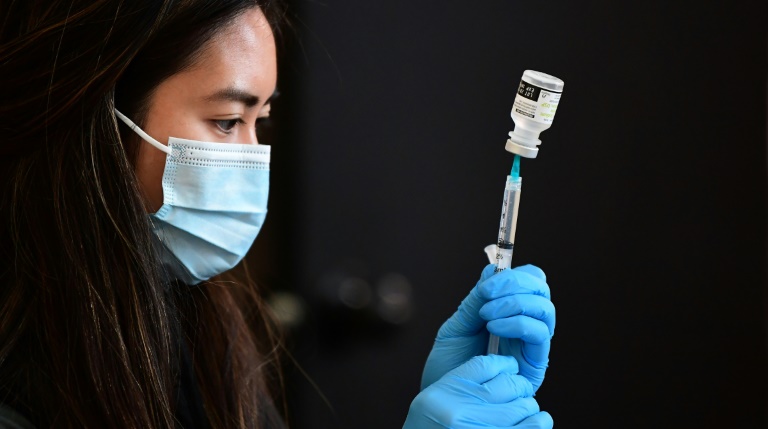
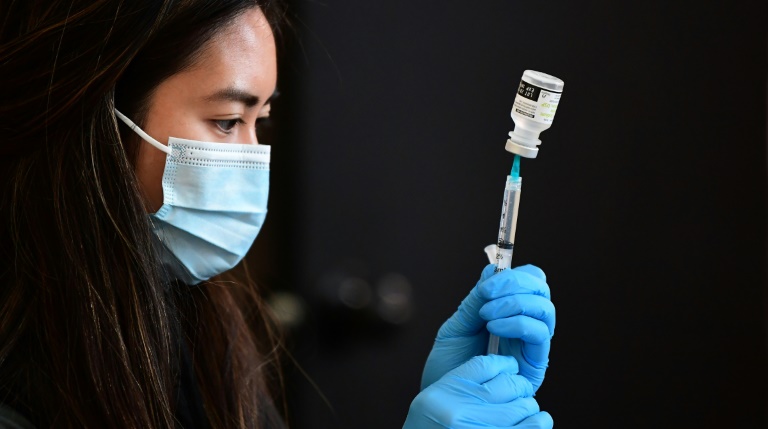
A small new study published Tuesday by scientists at the US National Institutes of Health suggests that the immune response triggered by coronavirus infections damages the brain’s blood vessels and could be responsible for long Covid symptoms.

The paper, published in the journal Brain, was based on brain autopsies from nine people who died suddenly after contracting the virus.

Rather than detecting evidence of Covid in the brain, the team found it was the people’s own antibodies that attacked the cells lining the brain’s blood vessels, causing inflammation and damage. 

This discovery could explain why some people have lingering effects from infection including headache, fatigue, loss of taste and smell, and inability to sleep as well as “brain fog” — and may also help devise new treatments for long Covid.  

NIH scientist Avindra Nath, the paper’s senior author, said in a statement: “Patients often develop neurological complications with COVID-19, but the underlying pathophysiological process is not well understood.”

“We had previously shown blood vessel damage and inflammation in patients’ brains at autopsy, but we didn’t understand the cause of the damage. I think in this paper we’ve gained important insight into the cascade of events.”

The nine individuals, aged 24 to 73, were selected from the team’s prior study because they showed evidence of blood vessel damage in their brains based on scans. 

Their brains were compared to those from 10 controls, with the team examining neuroinflammation and immune responses using a technique called immunohistochemistry.

The scientists discovered that antibodies produced against Covid-19 mistakenly targeted cells that form the “blood-brain barrier” — a structure designed to keep harmful invaders out of the brain while allowing necessary substances to pass. 

Damage to these cells can cause leakage of proteins, bleeding and clots, which elevates the risk of stroke.

The leaks also trigger immune cells called macrophages to rush to the site to repair damage, causing inflammation.

The team found that normal cellular processes in the areas targeted by the attack were severely disrupted, which had implications for things such as their ability to de-toxify and to regulate metabolism.

The findings offer clues about the biology at play in patients with long-term neurological symptoms, and can inform new treatments — for example, a drug that targets the build-up of antibodies on the blood-brain barrier.

“It is quite possible that this same immune response persists in Long COVID patients resulting in neuronal injury,” said Nath.

This would mean that a drug that dials down that immune response could help those patients, he added. “So these findings have very important therapeutic implications.”

New US study helps de-mystify Covid brain fog

A small new study published Tuesday by scientists at the US National Institutes of Health suggests that the immune response triggered by coronavirus infections damages the brain’s blood vessels and could be responsible for long Covid symptoms.

The paper, published in the journal Brain, was based on brain autopsies from nine people who died suddenly after contracting the virus.

Rather than detecting evidence of Covid in the brain, the team found it was the people’s own antibodies that attacked the cells lining the brain’s blood vessels, causing inflammation and damage. 

This discovery could explain why some people have lingering effects from infection including headache, fatigue, loss of taste and smell, and inability to sleep as well as “brain fog” — and may also help devise new treatments for long Covid.  

NIH scientist Avindra Nath, the paper’s senior author, said in a statement: “Patients often develop neurological complications with COVID-19, but the underlying pathophysiological process is not well understood.”

“We had previously shown blood vessel damage and inflammation in patients’ brains at autopsy, but we didn’t understand the cause of the damage. I think in this paper we’ve gained important insight into the cascade of events.”

The nine individuals, aged 24 to 73, were selected from the team’s prior study because they showed evidence of blood vessel damage in their brains based on scans. 

Their brains were compared to those from 10 controls, with the team examining neuroinflammation and immune responses using a technique called immunohistochemistry.

The scientists discovered that antibodies produced against Covid-19 mistakenly targeted cells that form the “blood-brain barrier” — a structure designed to keep harmful invaders out of the brain while allowing necessary substances to pass. 

Damage to these cells can cause leakage of proteins, bleeding and clots, which elevates the risk of stroke.

The leaks also trigger immune cells called macrophages to rush to the site to repair damage, causing inflammation.

The team found that normal cellular processes in the areas targeted by the attack were severely disrupted, which had implications for things such as their ability to de-toxify and to regulate metabolism.

The findings offer clues about the biology at play in patients with long-term neurological symptoms, and can inform new treatments — for example, a drug that targets the build-up of antibodies on the blood-brain barrier.

“It is quite possible that this same immune response persists in Long COVID patients resulting in neuronal injury,” said Nath.

This would mean that a drug that dials down that immune response could help those patients, he added. “So these findings have very important therapeutic implications.”

Rescuers gather body parts after Italy glacier collapse

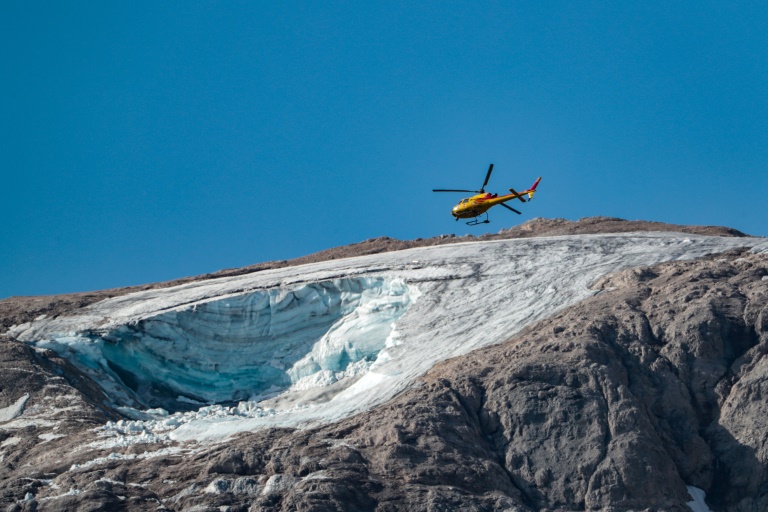
Emergency services at the scene of a deadly avalanche in the Italian Dolomites recovered what body parts they could on Tuesday, with the dangers of venturing under the partially collapsed glacier slowing the search.

Rescue teams sent helicopters and drones up for a second day after Sunday’s disaster, which saw at least seven hikers killed when a section of the country’s largest Alpine glacier gave way, sending ice and rock hurtling down the mountain.

The nationalities of the dead remain unclear — though the Czech foreign ministry told AFP two of its nationals were among those who lost their lives.

Eight people were also hurt, one of whom was able to leave hospital Tuesday evening.

Of those eight, two Germans, a man of 67 and a woman of 58, were said to be in a serious condition.

Italy has blamed the collapse on climate change and fears more of the glacier could come crashing down have prevented access to much of the area where hikers, some roped together, are believed to be buried.

Authorities had declared 14 people missing but revised that number down to five on Tuesday, all of them Italians, after managing to trace some of those initially unaccounted for.

They had stressed from the start that the exact number of climbers at the scene when the avalanche hit was unknown.

“Operations on the ground will only be carried out to recover any remains discovered by the drones, to ensure rescuers’ safety,” the Trentino Alpine Rescue Service said Tuesday.

Experts were surveying the area to determine how best to enable teams with sniffer dogs to get out onto the site safely on Wednesday or Thursday, the Service’s national chief Maurizio Dellantonio told AGI news agency.

Relatives of people reported missing gathered at the town of Canazei, where recovered remains were placed in a make-shift morgue at a gymnasium.

“The important finds, not just bones, are first photographed, then recovered and put onto a helicopter” and flown to Canazei to be “catalogued and placed in cold storage”, Dellantonio said.

Such finds were “bones that have not been flayed, a piece of hand with a ring, tattoos, anything that can enable a person to be identified”, including shoes, backpacks and ice-picks.

– Still hope for survivors –

Helicopter pilot Fausto Zambelli told journalists some belongings had been spotted from the air, but it was not yet clear “if that means there are victims there, or if they belong to old hiking expeditions”.

He said hope of finding survivors under the ice was slim, but not entirely gone.

“If there are ‘pockets’ (of air), there’s still hope. Time is obviously short, but we still hope to find someone alive”.

The disaster struck one day after a record-high temperature of 10 degrees Celsius (50 degrees Fahrenheit) was recorded at the summit of Marmolada, the highest mountain in the Italian Dolomites.

Italy’s President Sergio Mattarella said the collapse was “symbolic of the many tragedies that ungoverned climate change is causing in so many parts of the world”.

The Trento public prosecutor’s office has opened an investigation to determine the causes of the tragedy as relatives of those caught up in the drama demanded answers.

“Why did nobody warn on Saturday that water had filtered beneath the glacier? Why did they not stop the people from going climbing?” Italian news agency ANSA quoted the sister of one missing Italian as saying.

“If someone is responsible, we shall pursue it to the end,” she said.

Trento regional president Maurizio Fugatti, who said drones fitted out with thermal imaging cameras had been deployed in the search for survivors and added rescuers would pursue their search in situ on Wednesday, insisted: “this was an exceptional, if not unique, event. There were also Alpine guides on the glacier who know the situation well,” Fugatti, indicating there was no indication anything untoward was afoot.

The glacier, nicknamed “queen of the Dolomites”, feeds the Avisio river and overlooks Lake Fedaia in the autonomous Italian province of Trento.

According to a March report by the UN Intergovernmental Panel on Climate Change (IPCC), melting ice and snow is one of 10 major threats caused by global warming, disrupting ecosystems and infrastructure.

Ben & Jerry's sues Unilever to block distribution in Israeli settlements

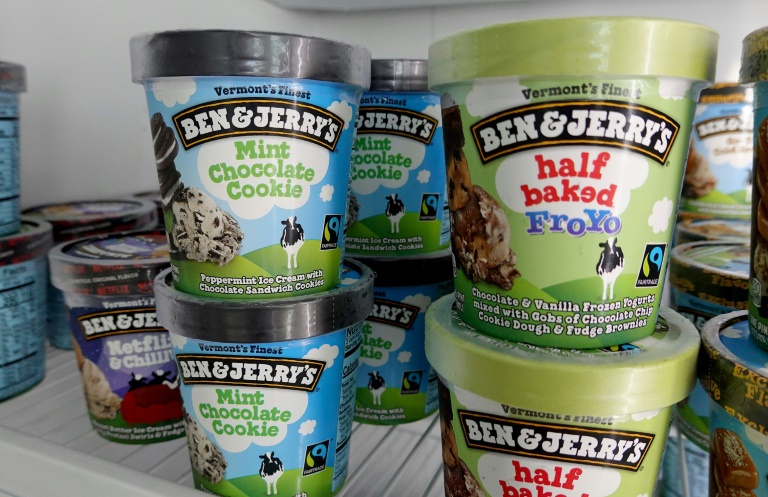
American ice cream brand Ben & Jerry’s said Tuesday it is suing its parent company Unilever to block a move that would see its product sold in West Bank settlements, which would run counter to its values.

The company, known for its political activism, took the unusual step seeking an injunction after London-based Unilever last week announced it had sold its interest in the ice cream to Israeli license-holder Avi Zinger.

The legal action was “essential to … protect the brand and social integrity Ben & Jerry’s has spent decades building,” according to the complaint filed in a US district court.

Unilever’s decision was “made without the consent of Ben & Jerry’s Independent Board,” and goes against the merger agreement that gave the board the ability to protect the founder’s values and reputation, the complaint said.

In July last year, Vermont-based Ben & Jerry’s announced it would no longer sell its ice cream in the Israeli-occupied Palestinian territories, which the Jewish state seized in 1967, saying it was “inconsistent with our values,” although it said it planned to keep selling its products in Israel.

However, Zinger had continued to produce the ice cream in his factory in the suburbs of Tel Aviv and distribute it to the Israeli settlements, going against Ben & Jerry’s decision.

Hundreds of thousands of Jewish settlers live in the occupied West Bank and east Jerusalem, in communities widely regarded as illegal under international law.

Palestinians cheered the company’s move last year, seen as a victory for the BDS movement, which calls for boycott, divestment and sanctions of the Jewish state over what it describes as the mistreatment of Palestinians.

Founded in the United States in 1978, Ben & Jerry’s is known for championing progressive causes, including protecting the environment and promoting human rights, and has frequently released special ice cream flavors to support causes or in protest.

Unilever, which last week said it had “never expressed any support” for the BDS movement, defended its right to execute the transaction.

“As we said in our statement of 29th June, Unilever had the right to enter this arrangement. The deal has already closed,” the company said Tuesday, adding “We do not comment on pending litigation.”

Ben & Jerry's sues Unilever to block distribution in Israeli settlements

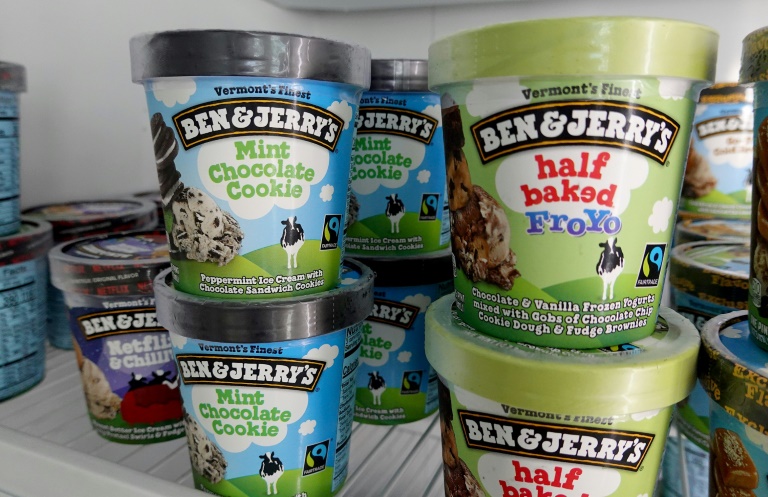
American ice cream brand Ben & Jerry’s said Tuesday it is suing its parent company Unilever to block a move that would see its product sold in West Bank settlements, which would run counter to its values.

The company, known for its political activism, took the unusual step seeking an injunction after London-based Unilever last week announced it had sold its interest in the ice cream to Israeli license-holder Avi Zinger.

The legal action was “essential to … protect the brand and social integrity Ben & Jerry’s has spent decades building,” according to the complaint filed in a US district court.

Unilever’s decision was “made without the consent of Ben & Jerry’s Independent Board,” and goes against the merger agreement that gave the board the ability to protect the founder’s values and reputation, the complaint said.

In July last year, Vermont-based Ben & Jerry’s announced it would no longer sell its ice cream in the Israeli-occupied Palestinian territories, which the Jewish state seized in 1967, saying it was “inconsistent with our values,” although it said it planned to keep selling its products in Israel.

However, Zinger had continued to produce the ice cream in his factory in the suburbs of Tel Aviv and distribute it to the Israeli settlements, going against Ben & Jerry’s decision.

Hundreds of thousands of Jewish settlers live in the occupied West Bank and east Jerusalem, in communities widely regarded as illegal under international law.

Palestinians cheered the company’s move last year, seen as a victory for the BDS movement, which calls for boycott, divestment and sanctions of the Jewish state over what it describes as the mistreatment of Palestinians.

Founded in the United States in 1978, Ben & Jerry’s is known for championing progressive causes, including protecting the environment and promoting human rights, and has frequently released special ice cream flavors to support causes or in protest.

Unilever, which last week said it had “never expressed any support” for the BDS movement, defended its right to execute the transaction.

“As we said in our statement of 29th June, Unilever had the right to enter this arrangement. The deal has already closed,” the company said Tuesday, adding “We do not comment on pending litigation.”

Suspect in July 4 shooting an alienated youth with dark online persona

Before he allegedly murdered seven spectators at a US Independence Day parade, the Highland Park community knew Robert Crimo as a quiet kid and former Cub Scout.

But online, the 21-year-old known to friends and family as “Bobby” showed a strong inclination for violence and anger at being overlooked.

“I know him as somebody who was a Cub Scout when I was the Cub Scout leader,” Highland Park Mayor Nancy Rotering told NBC on Tuesday, describing Crimo as “just a little boy.”

“It is one of those things where you step back and you say, ‘What happened?'”

Crimo, who grew up in Highland Park, just outside Chicago, lived in an apartment behind his father’s house. His dad, Bob Crimo, owned a local deli and had run against Rotering for mayor in 2019.

Crimo’s uncle, Paul Crimo, described his nephew on CNN as a “lonely, quiet person” who spent much of his time in front of his computer, not saying much.

A day after the shooting, authorities revealed that in 2019 Crimo had been visited twice by police, first after a suspected attempt at suicide, and a second time to remove a collection of knives, after he allegedly threatened to “kill everyone.”

– ‘Awake’ –

A thin white man with a patchy beard, Crimo sports several tattoos on his neck and face, including one above his left eyebrow of the word “Awake,” a reference to his stage name.

Multiple songs and videos posted online by “Awake the Rapper” include several references to mass shootings.

In one cartoon-style music video, the protagonist is seen shooting people with a rifle before finding himself lying in a pool of blood, shot dead by the police.

“I just want to scream. Sometimes it feels like I’m living a dream,” sings the rapper.

Another video is of Crimo in a classroom, wearing a helmet and bulletproof vest and standing next to an American flag as he throws bullets on the floor.

The voiceover on that video says, “I need to leave now, I need to just do it. It is my destiny. Everything has led up to this; nothing can stop me, not even myself.”

In another clip, Crimo says, “I hate when others get more attention than me on the internet.”

The videos and songs have now been removed from YouTube and Spotify.

Crimo’s social media pages have also been taken down, but archived photos from his accounts appear to show him at a rally for then-president Donald Trump.

In another, Crimo appears to have a Trump flag draped around his shoulders. He also posted a picture of “Pepe the frog”, a cartoon character that has become a rallying symbol for the American far right.

Bennett Brizes, a friend who had recently become estranged from Crimo, told the Washington Post the young man was “consistently apolitical,” and when asked about current events would always answer, “Man, I don’t know.”

Crimo “seems to have intended violence for a long time, even illustrating it” in his videos, said Emerson Brooking, a research fellow at the Atlantic Council think tank specializing in extremist internet and social media usage.

But even with the apparent pro-Trump images, “so far it does *not* appear that he was partisan or ideological,” Brooking said on Twitter.

Close Bitnami banner
Bitnami