AFP

Suspected July 4 gunman an alienated youth with dark online persona

Before he was accused of wreaking terror and chaos on a US Independence Day parade, the Highland Park community knew Robert Crimo as a quiet kid and former Cub Scout.

But online, the 21-year-old known to friends and family as Bobby showed a strong inclination for violence and anger at being overlooked.

“I know him as somebody who was a Cub Scout when I was the Cub Scout leader,” Highland Park Mayor Nancy Rotering told NBC on Tuesday, describing Crimo as “just a little boy.”

“It is one of those things where you step back and you say, ‘What happened?'”

Crimo, who grew up in Highland Park, lived in an apartment behind his father’s house. His dad, Bob Crimo, owned a local deli and had run against Rotering for mayor in 2019.

Crimo’s uncle, Paul Crimo, described his nephew as a “lonely, quiet person” to CNN.

“There were no signs that I saw would make him do this.”

But Paul Crimo also admitted he didn’t enjoy interacting with his nephew.

“I associate with him, but I don’t really like to engage with him,” he said.

– Dark online persona –

Despite the perception that Crimo was just an introverted young man, his online persona offered troubling signs.

A thin white man with a patchy beard, Crimo also has several tattoos on his neck and face, including one above his left eyebrow of the word “Awake,” a reference to his stage name.

Crimo bills himself as a musician, and goes by the online moniker “Awake the Rapper.” 

He posted his songs and music videos on Spotify and YouTube and had a modest following.

But in one video, computer drawn images show a figure in tactical gear shooting a rifle at a kneeling person begging for mercy.

Another video is of Crimo in a classroom, wearing a helmet and vest and standing next to an American flag as he threw bullets on the floor.

The voiceover on that video says, “I need to just do it. It is my destiny.”

In another clip, Crimo says, “I hate when others get more attention than me on the internet.”

The videos and songs have now been removed from YouTube and Spotify.

Crimo’s social media pages have also been taken down, but archived photos from his accounts appear to show him at a rally for then-president Donald Trump.

In another, Crimo appears to have a Trump flag draped around his shoulders.

Crimo “seems to have intended violence for a long time, even illustrating it” in his videos, said Emerson Brooking, a research fellow at the Atlantic Council think tank specializing in extremist internet and social media usage.

But even with the apparent pro-Trump images, “so far it does *not* appear that he was partisan or ideological,” Brooking said on Twitter, drawing a distinction between the mass shooters in Buffalo, New York and Uvalde, Texas.

Fierce shelling in eastern Ukraine as NATO heralds its 'historic' expansion

Fighting raged on Tuesday in and around Ukraine’s eastern Donbas region as Russian troops tried to maintain a series of battlefield gains, while NATO pressed ahead with Finland and Sweden’s momentous membership bids.

Moscow’s forces — buoyed by seizing several cities in the Donbas in recent weeks — continued to press west, pounding their next key target, the city of Sloviansk, with “massive” shelling, the city’s mayor said. 

At least two people were killed and seven others wounded in Russian strikes targeting its central market, following several days of similarly deadly bombing there.

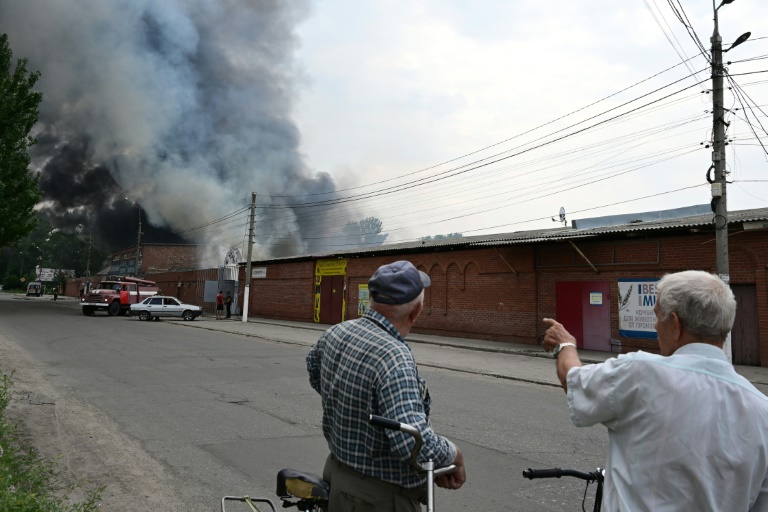
AFP journalists on the ground saw rockets hit the marketplace and several adjacent streets, as firefighters scrambled to put out resulting fires in the city, which had a pre-war population of around 100,000.

Pavlo Kyrylenko, governor of the Donetsk region, which includes Sloviansk, accused Russia of “intentionally targeting places where civilians assemble”.

“This is terrorism pure and simple,” he said on Telegram.

In Moscow, the defence ministry reported that Russian forces had also targeted the northeastern city of Kharkiv with “high-precision” weapons over the past 24 hours, claiming to have killed up to 150 Ukrainian servicemen.

Several other regions were also hit with missiles and artillery, Kyiv reported.

Meanwhile, Russia said it was investigating the torture of Russian soldiers held prisoner in Ukraine that were recently released as part of a prisoner swap. 

– ‘Timely’ –

In Brussels, NATO Secretary General Jens Stoltenberg and the foreign ministers of Sweden and Finland hailed Tuesday as “historic”, after they kicked off accession procedures for the two countries that will expand the military alliance to 32 members.

“The membership of both Finland and Sweden will not only contribute to our own security but to the collective security of the alliance,” said Finland’s Pekka Haavisto, after protocols were signed launching the required ratification process.

Sweden and Finland both announced their intention to drop decades of military non-alignment and become part of NATO in the wake of Russia invading Ukraine in February.

Ukrainian Defence Minister Oleksii Reznikov welcomed Tuesday’s “timely (and) correct” step, adding on Twitter: “Who will be next…?”

NATO offered Ukraine a path towards membership in 2008 but that stalled amid strong Russian opposition and has been further complicated by its invasion.

With the war well into its fifth month, Kyiv’s allies meeting in the Swiss city of Lugano committed Tuesday to supporting Ukraine through what is likely to be a lengthy and expensive eventual recovery. 

Two days of talks involving representatives from some 40 countries agreed on the need for reforms to boost transparency and tackle corruption, as they heard rebuilding the war-ravaged country could cost at least $750 billion.

“Our work prepares for the time after the war even as the war is still raging,” said Swiss President and co-host Ignazio Cassis.

– ‘Full alert’ –

After abandoning its initial war aim of capturing Kyiv following tough Ukrainian resistance, Russia has since focused its efforts on securing control of the Donbas.

The region is mainly comprised of Lugansk, which Russian forces have almost entirely captured, and Donetsk to its southwest, which they are now concentrating on seizing in full.

In a sign Moscow was trying to consolidate supply lines for its ongoing push, Ukraine’s armed forces said Russian troops in Lugansk were “taking measures” to restore transport infrastructure behind the fighting lines.

The fall of Lysychansk on Sunday, a week after the Ukrainian army also retreated from the neighbouring city of Severodonetsk, has freed them up to advance on Kramatorsk and Sloviansk in Donetsk.

On Tuesday, they were first closing in on the smaller city of Siversk — which lies between Lysychansk and Sloviansk — after days of shelling there.

Two Ukrainian Red Cross minibuses were heading there to evacuate willing civilians, according to AFP reporters.

To the southwest, in the Moscow-occupied Kherson region, Russia’s troops were deploying helicopters and various artillery to try to stem Ukrainian counter-attacks.

The intensifying battles there come as Kremlin-installed authorities in Kherson announced that an official from Russia’s powerful FSB security services had taken over control of the regional government there. 

Kherson city, which lies close to Moscow-annexed Crimea, was the first major city to fall to Russian forces in February, and has seen a campaign of so-called Russification since. 

A spokesman for Ukraine’s defence ministry said Tuesday Russian forces outside the Donbas were “trying to bind our troops in order to prevent them from moving to the battle areas”. 

“It keeps us… on full alert all along the front line,” he told the Ukrinform news agency.

Meanwhile, appearing by video Tuesday at an annual forum hosted by The Economist magazine, Ukrainian President Volodymyr Zelensky predicted Russian ally Belarus would not be drawn into the war.

But he warned “provocations” by its northern neighbour were likely to continue.

Belarusian leader Alexander Lukashenko on Saturday accused Ukrainian forces of firing missiles at his country.

US court rules distributors not responsible for opioid crisis

The three largest drug distributors in the United States have won a major court victory, with a judge ruling that they were not responsible for record opioid addiction in one part of West Virginia state.

About 10 percent of Cabell County’s population is or has been addicted to opioids — at a huge economic and social cost, acknowledged Judge David Faber.

But “while there is a natural tendency to assign blame in such cases, they must be decided not based on sympathy, but on the facts and the law,” he wrote in a decision released Monday night.

The “plaintiffs failed to show that the volume of prescription opioids distributed in Cabell/Huntington was because of unreasonable conduct” by defendants AmerisourceBergen, Cardinal Health and McKesson, Faber wrote.

Tasked with supplying pharmacies, the three firms delivered more than 51 million doses of pain medication in the county between 2006 and 2014, and local authorities accused them of turning a blind eye to suspicious order volumes.

But “there is nothing unreasonable about distributing controlled substances to fulfill legally written prescriptions,” Faber said.

He put the blame on manufacturers who “aggressively market prescription opioids,” rather than the companies that distributed them.

After becoming addicted to pain pills, many people increased their consumption and eventually turned to illicit drugs such as heroin and fentanyl, an extremely powerful synthetic opioid.

The opioid crisis, which has caused more than 500,000 deaths over 20 years in the United States, has triggered a flurry of lawsuits from victims as well as cities, counties and states impacted by the fallout.

The suit filed by Cabell County and the city of Huntington had become a symbol of authorities’ efforts to make companies pay for the social and economic cost of the crisis.

Between May 3 and July 28, 2021, 70 witnesses testified as part of the lawsuit in federal court in Charleston, West Virginia.

While the hearings were still ongoing, the three distributors and pharmaceutical company Johnson & Johnson agreed to pay $26 billion to end a series of legal actions in a settlement that is still being finalized.

US court rules distributors not responsible for opioid crisis

The three largest drug distributors in the United States have won a major court victory, with a judge ruling that they were not responsible for record opioid addiction in one part of West Virginia state.

About 10 percent of Cabell County’s population is or has been addicted to opioids — at a huge economic and social cost, acknowledged Judge David Faber.

But “while there is a natural tendency to assign blame in such cases, they must be decided not based on sympathy, but on the facts and the law,” he wrote in a decision released Monday night.

The “plaintiffs failed to show that the volume of prescription opioids distributed in Cabell/Huntington was because of unreasonable conduct” by defendants AmerisourceBergen, Cardinal Health and McKesson, Faber wrote.

Tasked with supplying pharmacies, the three firms delivered more than 51 million doses of pain medication in the county between 2006 and 2014, and local authorities accused them of turning a blind eye to suspicious order volumes.

But “there is nothing unreasonable about distributing controlled substances to fulfill legally written prescriptions,” Faber said.

He put the blame on manufacturers who “aggressively market prescription opioids,” rather than the companies that distributed them.

After becoming addicted to pain pills, many people increased their consumption and eventually turned to illicit drugs such as heroin and fentanyl, an extremely powerful synthetic opioid.

The opioid crisis, which has caused more than 500,000 deaths over 20 years in the United States, has triggered a flurry of lawsuits from victims as well as cities, counties and states impacted by the fallout.

The suit filed by Cabell County and the city of Huntington had become a symbol of authorities’ efforts to make companies pay for the social and economic cost of the crisis.

Between May 3 and July 28, 2021, 70 witnesses testified as part of the lawsuit in federal court in Charleston, West Virginia.

While the hearings were still ongoing, the three distributors and pharmaceutical company Johnson & Johnson agreed to pay $26 billion to end a series of legal actions in a settlement that is still being finalized.

Markets slump as recession fears grip investors

Stock markets sank and oil prices plummeted Tuesday as fears mounted that major economies will slide into recession as inflation soars, with the euro slumping towards parity with the dollar.

“Fears about the health of the world economy are circulating and that is why we are seeing major declines in stocks, energies, and industrial metals,” said market analyst David Madden at Equiti Capital.

“Worries about rising inflation, higher interest rates and slower economic growth are hanging over the markets,” he said.

European stock markets fell nearly three percent, while on Wall Street the Dow was down around two percent in late morning trading.

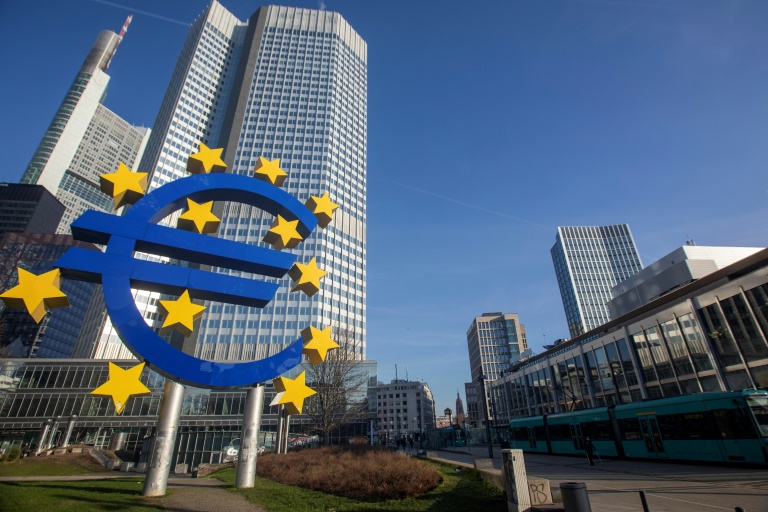
The euro sank to a 20-year dollar low of $1.0238 on recession fears and as investors eyed aggressive interest rate hikes by the US Federal Reserve in its fight against inflation, in contrast with the European Central Bank, seen as planning more modest increases.

The pound also slumped to a two-year low near $1.19.

The main international crude oil contract, Brent North Sea, fell nearly 10 percent, while the main US contract WTI, fell nearly nine percent to under $100 per barrel.

“There are increasing worries the elevated energy prices will chip away at demand, hence the fall in the oil contracts, said Madden.

Sentiment in Europe was shaken from the latest survey data showing economic growth in the eurozone floundered in June.

S&P Global’s closely-watched monthly purchasing managers’ index (PMI), which measures corporate confidence, fell to 52.0 in June from 54.8 in May.

Nevertheless, the reading, which was a 16-month low, remains above the 50-point level signalling expansion.

“Growing fears of a recession are hammering the euro lower, whilst the dollar is soaring on bets that the Fed will keep hiking rates aggressively to tame inflation,” City Index analyst Fiona Cincotta told AFP.

“Today’s PMI data from Europe have highlighted the risk of slowing growth at the end of the second quarter and raise the prospect of a contraction in activity in the coming months.”

Walid Koudmani, chief market analyst at XTB, said “the ECB is caught between a rock and a hard place as it needs to raise interest rates to tackle inflation and boost its currency while simultaneously supporting struggling economies which are just recovering after two years of pandemic related issues.”

The mood on trading floors has become increasingly gloomy in recent months as observers warn that sharp interest rate hikes aimed at curbing price rises could cause a contraction, compounding uncertainty caused by Russia’s war in Ukraine.

By contrast, most Asian stock markets closed higher on growing speculation that US President Joe Biden is about to roll back some of the Trump-era tariffs on Chinese goods.

Investors were keeping tabs also on fresh Covid outbreaks in China that have triggered city-scale lockdowns.

– Key figures at around 1530 GMT –

Euro/dollar: DOWN at $1.0243 from $1.0431 Monday

Pound/dollar: DOWN at $1.1908 from $1.2116

Euro/pound: DOWN at 86.03 pence from 86.09 pence

Dollar/yen: UP at 135.73 yen from 135.69 yen

Brent North Sea crude: DOWN 9.6 percent at $102.57 per barrel

West Texas Intermediate: DOWN 8.8 percent at $98.94 per barrel

New York – Dow: DOWN 2.1 percent 30,447.97 points

EURO STOXX 50: DOWN 2.3 percent at 3,389.69

London – FTSE 100: DOWN 2.9 percent at 7,025.47 (close)

Frankfurt – DAX: DOWN 2.9 percent at 12,401.20 (close)

Paris – CAC 40: DOWN 2.7 percent at 5,794.96 (close)

Tokyo – Nikkei 225: UP 1.0 percent at 26,423.47 (close)

Hong Kong – Hang Seng Index: UP 0.1 percent at 21,853.07 (close)

Shanghai – Composite: FLAT at 3,404.03 (close)

burs-rl/cdw

Ford's US car sales rise despite semiconductor crunch

Ford reported higher US auto sales Tuesday, bucking an industry-wide trend of declines in the latest quarter amid crimped supply of semiconductor and other key parts.

The Michigan giant delivered 483,688 vehicles, up two percent from the year-ago level.

While citing a continuation of supply constraints that have dogged the industry over the last year, Ford described vehicle demand as “strong.” 

Ford’s sales were dominated by larger vehicles, including pickup trucks and sport utility vehicles. The burden of limited inventories has been cushioned by strong pricing.

“Amid industry-wide supply constraints, Ford outperformed the industry driven by strong F-Series, Explorer and new Expedition and Navigator SUV sales,” said Andrew Frick, a vice president in sales and distribution at Ford Blue’s, the company’s division focused on internal combustion vehicles.

The results included the first deliveries of the new F-150 Lightning electric pickup truck, which added 2,296 units to the total.

Ford’s sales figures came as rivals General Motors, Toyota and FCA (Stellantis) all reported quarterly sales drops of at least 15 percent amid supply chain problems.

Ford's US car sales rise despite semiconductor crunch

Ford reported higher US auto sales Tuesday, bucking an industry-wide trend of declines in the latest quarter amid crimped supply of semiconductor and other key parts.

The Michigan giant delivered 483,688 vehicles, up two percent from the year-ago level.

While citing a continuation of supply constraints that have dogged the industry over the last year, Ford described vehicle demand as “strong.” 

Ford’s sales were dominated by larger vehicles, including pickup trucks and sport utility vehicles. The burden of limited inventories has been cushioned by strong pricing.

“Amid industry-wide supply constraints, Ford outperformed the industry driven by strong F-Series, Explorer and new Expedition and Navigator SUV sales,” said Andrew Frick, a vice president in sales and distribution at Ford Blue’s, the company’s division focused on internal combustion vehicles.

The results included the first deliveries of the new F-150 Lightning electric pickup truck, which added 2,296 units to the total.

Ford’s sales figures came as rivals General Motors, Toyota and FCA (Stellantis) all reported quarterly sales drops of at least 15 percent amid supply chain problems.

Chicago suburb in shock after mass shooting during July 4 parade

A wealthy Chicago suburb was reeling Tuesday from a devastating shooting that saw gunfire tear through a July 4 holiday crowd, as online posts and videos pointed to the troubled mind of the 21-year-old suspected gunman.

Robert “Bobby” Crimo III, who grew up in Highland Park, where the shooting occurred, was arrested on Monday after six people were killed and two dozen injured during an Independence Day parade.

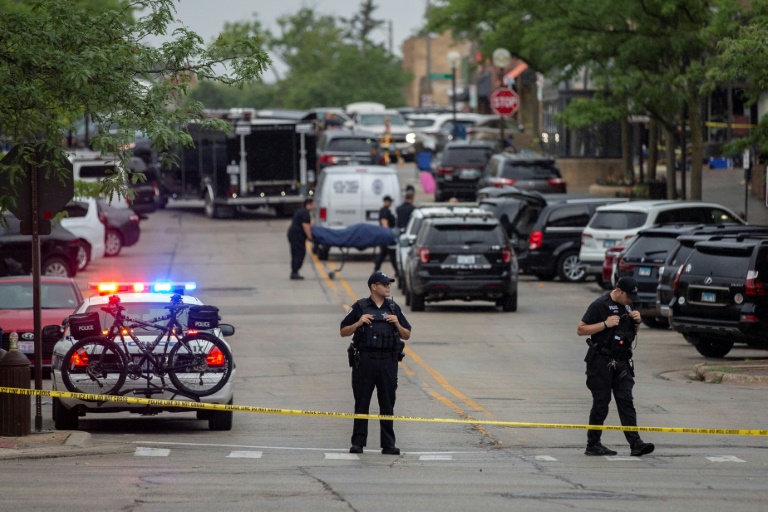
Crimo was taken into custody after law enforcement launched a  massive manhunt for the gunman who sprayed paradegoers with dozens of semi-automatic rounds from a rooftop, turning the celebration into a scene of death and trauma.

“We’re all still reeling,” Highland Park Mayor Nancy Rotering told NBC’s Today show on Tuesday.

“Unbelievable shock,” Rotering said. “Everybody knows somebody who was affected by this directly.”

Rotering said she personally knew the suspected gunman when he was a young boy in the Cub Scouts and she was a Cub Scout leader.

“How did somebody become this angry, this hateful to then take it out on innocent people who literally were just having a family day out?” Rotering asked.

David Baum, a doctor whose two-year-old was in the parade, witnessed the shooting and helped treat some of the injured.

“The people who were gone were blown up by that gunfire,” Baum told CNN. “The horrific scene of some of the bodies is unspeakable for the average person.”

On Tuesday, police and FBI agents looking for evidence were sifting through belongings left behind by members of the crowd as they fled.

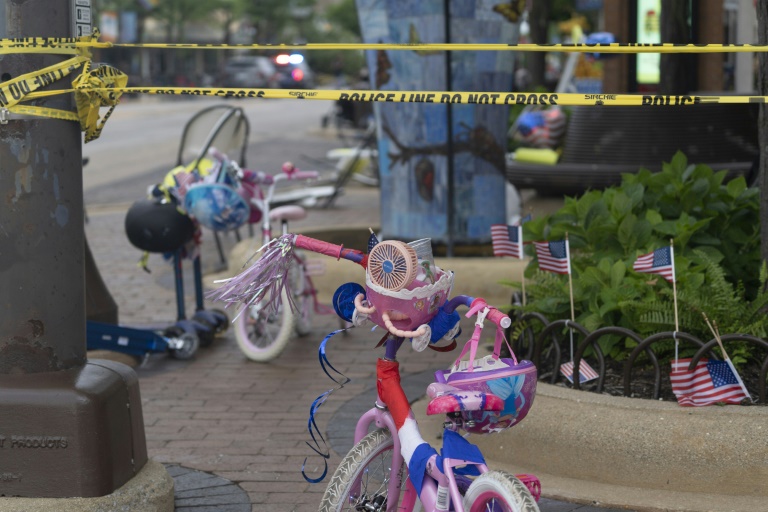
Strollers, bicycles, folding chairs and other items littered the parade route through the main street of Highland Park as American flags flapped in the breeze from brick buildings.

– Disturbing online content –

Crimo, whose father unsuccessfully ran for mayor and owns a store in Highland Park called Bob’s Pantry and Deli, was an amateur musician billing himself as “Awake the Rapper.”

The younger Crimo’s online postings include violent content that alluded to guns and shootings.

One YouTube video posted eight months ago featured cartoons of a gunman and people being shot.

A voice-over says “I need to just do it.”

It adds: “It is my destiny. Everything has led up to this. Nothing can stop me, not even myself.”

Crimo, who has the word “Awake” tattooed over an eyebrow, is seen sporting an “FBI” baseball cap in numerous photos and is wearing a Trump flag as a cape in one picture.

Rotering, the mayor, said the firearm used in the shooting was “legally obtained.”

“This nation needs to have a conversation about these weekly events involving the murder of dozens of people with legally obtained guns,” she said. “We need to re-examine the laws.”

The shooting is the latest in a wave of gun violence plaguing the United States, where approximately 40,000 deaths a year are caused by firearms, according to the Gun Violence Archive.

The deeply divisive debate over gun control was reignited by two massacres in May that saw 10 Black people gunned down at an upstate New York supermarket and 21 people, mostly young children, slain at an elementary school in Texas.

The Highland Park shooting cast a pall over Independence Day, when towns and cities across the country hold similar parades and people attend barbecues, sporting events and fireworks displays.

In another July 4 shooting, two police officers were wounded when they came under fire during a fireworks show in Philadelphia, local officials said.

– ‘Pop, pop, pop’ –

In Highland Park, Emily Prazak, who marched in the parade, described the mayhem.

“We were getting ready to march down the street and then all the sudden waves of these people started… like running towards us. And right before that happened, we heard the pop, pop, pop, pop, pop, and I thought it was fireworks,” Prazak told AFP.

Don Johnson said he initially thought it was a car backfiring.

“And finally, I heard the screams from a block down and people running and carrying their kids and everything, and we ran into the gas station, and we were in there for three hours,” Johnson told AFP.

“I’ve seen scenes like this over and over again on the TV and in different communities, and didn’t think it was going to happen here ever,” he said.

Five of the six people killed, all adults, died at the scene. The sixth was taken to the hospital but succumbed to wounds there.

Highland Park Hospital, where most of the victims were taken, said it had received 25 people with gunshot wounds aged eight to 85.

President Joe Biden voiced his shock and vowed to keep fighting “the epidemic of gun violence.”

“I’m not going to give up,” he said.

Last week, Biden signed the first significant federal bill on gun safety in decades, just days after the Supreme Court ruled that Americans have a fundamental right to carry a handgun in public.

Disputed Russian cargo ship still stranded off Turkish coast

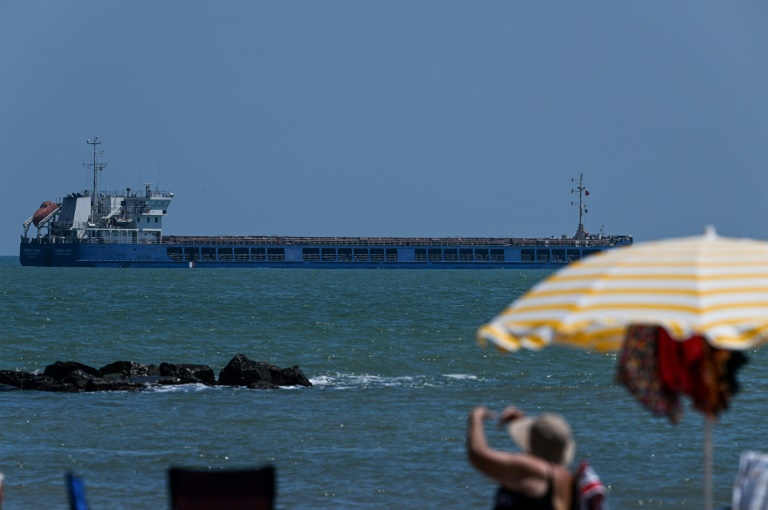
A Russian-flagged cargo ship at the centre of a fight over grain between Kyiv and Moscow remained anchored Tuesday off Turkey’s Black Sea coast — a full four days after its unexpected arrival.

Ukraine alleges that the Zhibek Zholy had set off from its Kremlin-occupied port of Berdyansk after picking up confiscated wheat.

Moscow concedes that the 7,000-tonne vessel was sailing under the Russian flag but denies any wrongdoing.

And NATO-member Turkey has said nothing official in public as it tries to maintain open relations with both Moscow and Kyiv while facing Ukrainian pressure to seize the ship.

The saga started when a Kremlin-installed leader in southeastern Ukraine last Thursday announced the launch of the first official grain shipments across the Black Sea since Russia invaded its neighbour in February.

Russia claims to have “nationalised” Ukrainian state assets and to be buying crops from local farmers. Ukraine says its grain is being stolen and used to fund Russia’s war effort.

Marine traffic websites then showed the Zhibek Zholy reaching Turkey’s Black Sea port of Karasu and stopping about a kilometre (half a mile) off shore.

The ship’s arrival was announced by Ukraine’s ambassador to Turkey — one of the most vocal officials in the entire dispute.

He asked Turkey on Twitter to take “corresponding measures” and then told Ukrainian state television the vessel had been impounded by local coastguards.

Turkish officials still offered no comment even though the 140-metre (460-foot) ship was now clearly visible by holidaymakers lounging on Karasu’s sandy beach.

– ‘It never moved’ –

Russian Foreign Minister Sergei Lavrov conceded to reporters on Monday that the Zhibek Zholy had not reached its intended destination.

But he also played down Moscow’s role or the ship’s importance to Russia’s efforts to resume marine traffic from parts of Ukraine now under its control.

“We have to look into this situation,” said Lavrov.

“The ship really does appear to be Russian, sailing under the Russian flag. I think it belongs to Kazakhstan, while the cargo was being shipped under contract between Estonia and Turkey.”

Kazakhstan said the ship was controlled by its national rail company but insisted it should bear no blame.

“There should be no consequences for Kazakhstan,” Kazakh industry minister Kairbek Uskenbayev told reporters.

“There were no restrictions on the Russian company that is currently leasing this ship.”

A Turkish diplomatic source told AFP on condition of anonymity that an “inspection” of the ship’s cargo was still underway.

But beachgoers watching the diplomatic drama unfold before them in Karasu — a town of 30,000 that swells during the summer tourism season — say little has happened on the ship since it showed up.

“It never moved,” said local pensioner Salise Aktan.

“On Sunday, a boat approached the ship and then left,” added fellow beachgoer Gulay Erol.

“I don’t know why,” the 33-year-old said.

– ‘Balanced policy’ –

Turkey’s four-day silence underscores the difficulty of its position in the war.

Turkish President Recep Tayyip Erdogan has had a tumultuous but close working relationship with Russian counterpart Vladimir Putin.

He has tried to use that access to thrust Turkey into the middle of diplomatic negotiations and talks on resuming grain shipments from Ukrainian ports.

But his Russian relationship is complicated by Turkey’s international commitments as a member of the NATO defence bloc.

Turkey’s Foreign Minister Mevlut Cavusoglu said last month that Ankara was investigating reports of Russian-seized Ukrainian grain reaching its Black Sea shores.

But he added that Turkey had been unable to find any stolen Ukrainian grain shipments.

Ankara also supplies combat drones to Ukraine that have proved effective in helping slow Russia’s advance across the Donbas war zone.

Erdogan told a NATO summit in Madrid last week that his country was trying to pursue “a balanced policy” because of its heavy reliance on Russian energy.

Turkish defence officials met with a Ukrainian delegation on Monday.

No details from those talks were announced.

Ukrainian becomes second woman to win Fields maths medal

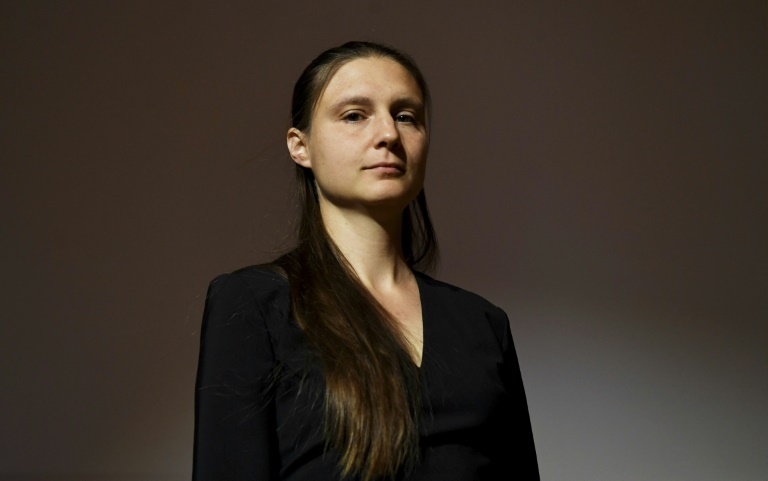
Ukraine’s Maryna Viazovska paid tribute to those suffering in her war-torn country on Tuesday when she became the second woman to be awarded the Fields Medal, known as the Nobel prize for mathematics.

Viazovska, a 37-year-old maths professor, received the prestigious award alongside three other winners at a ceremony in Helsinki.

“I am from Kyiv, Ukraine, and in February my life changed forever” when Moscow invaded, she said in a video displayed at the ceremony.

“Not only for me but for everyone in the world and especially the people in my country,” she said, adding that her two sisters had been evacuated from Kyiv.

“Right now Ukrainians are really paying the highest price for our beliefs and our freedom.”

The International Congress of Mathematicians, the event where the prize is awarded, was initially scheduled to be held in Russia’s second city, Saint Petersburg, and opened by President Vladimir Putin.

Earlier in the year hundreds of mathematicians signed an open letter protesting at the choice of the host city, and after Moscow invaded Ukraine the event was moved to the Finnish capital.

The other Fields winners were France’s Hugo Duminil-Copin of the University of Geneva, Britain’s James Maynard of Oxford University and June Huh of Princeton in the United States.

The medal, along with $15,000 Canadian dollars ($11,600), is awarded every four years to between two to four candidates under the age of 40 for “outstanding mathematical achievement”.

– ‘Sad and angry’ – 

Viazovska was born in 1984 in Ukraine and has been chair of number theory at the Ecole Polytechnique Federale de Lausanne since 2018.

At the ceremony she paid tribute to Yulia Zdanovska, a young mathematician who was killed by a Russian missile attack on the Ukrainian city of Kharkiv in March.

“Her dream was to raise this new generation of scientist, doctors, teachers,” Viazovska told AFP.

“The fact that these dreams will not be realised, it’s terrible. We could just think of what kind of great future we could have had and what the war is robbing us of.”

She felt “very sad and angry” and “feels a lot of pain every time I read the news”, she added.

In a decision made before the war in Ukraine began, Viazovska was awarded the Fields Medal for her work in sphere packing — a problem posed by German astronomer and mathematician Johannes Kepler nearly 400 years ago.

He proposed that the most compact way to pack spheres was in a pyramid, like oranges at a supermarket.

It was such a complex problem that it was not considered proved correct in the third dimension until 1998 via intense computer number-crunching.

Then in 2016, Viazovska solved the problem in the eighth dimension, using what is called an E8 lattice, and later also solved it in the 24th dimension.

Marcus du Sautoy, a British mathematics professor at Oxford University, told AFP it was a surprise when Viazovska came up with such “slick proof” compared to the “tortuous proof needed in three dimensions”.

The only previous female laureate in the prize’s 86-year history was Iranian mathematician Maryam Mirzakhani, who died of breast cancer in 2017 just three years after winning the award.

Du Sautoy said he hoped Viazovska’s win “will contribute to inspiring more women to choose mathematics as a career”.

– ‘Express the inexpressible’ –

Duminil-Copin, 36, is a professor at both the University of Geneva and the French Institut des Hautes Etudes Scientifiques.

He was honoured for solving “long-standing problems in the probabilistic theory of phase transitions”, which, according to the jury, has opened up several new research directions.

Maynard, 35, received the medal “for contributions to analytic number theory, which have led to major advances in the understanding in the structure of prime numbers”.

Du Sautoy said that even though prime numbers “get rarer and rarer as you count through the universe of numbers”, his Oxford colleague had been “able to show that infinitely often you’ll see two primes close together”.

June Huh, 39, was given the award for “transforming” the field of geometric combinatorics, “using methods of Hodge theory, tropical geometry and singularity theory”.

He is one of the rare Fields winner not to have focussed on mathematics in his teen years, after a bad elementary school test score convinced him he didn’t have a talent for it, he told Quanta Magazine.

“When I was young, math was like a faraway land, surrounded by giant walls that I could not climb,” Huh said in his video.

“I grew up in Korea and I dreamed of becoming a poet, to express the inexpressible. I eventually learned that mathematics is a way of doing that.”

Close Bitnami banner
Bitnami