AFP

India landslide death toll rises to 37

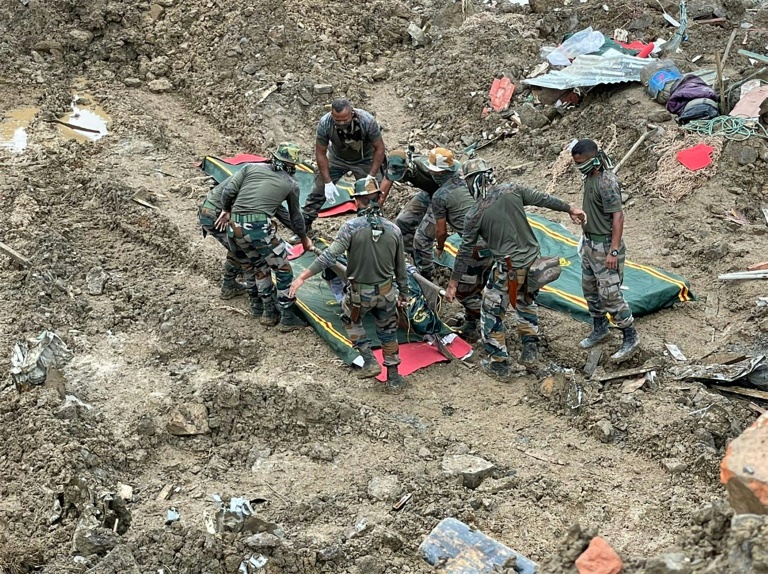
The death toll from a massive landslide in India hit 37 on Sunday, authorities said, as rescue teams battled teeming rain to search for 25 others still missing three days later.

A wall of mud and rock swamped a camp housing railway construction workers and members of the Territorial Army in remote Manipur state in the northeast after heavy rain early on Thursday.

Emergency teams rescued 18 survivors within the first few hours of the incident.

But army spokesperson Angom Bobin Singh said Sunday that 28 people were still missing before an announcement later that three more bodies had been retrieved. 

The fourth day of search operations was ongoing “despite adverse weather conditions” because of “heavy rains and fresh landslides”, Singh said.

The remote northeast has generally poor road and railway infrastructure but India in the last few years has pushed ambitious infrastructure projects to match a Chinese build-up across the border. 

The picturesque region — with mountains and dense forests — has been pummelled by heavy rainfall in recent weeks, triggering landslides and floods.

Dozens were killed in the area after flooding last month, with relentless rains causing landslides and inundating homes.

Experts say climate change is increasing the number of extreme weather events around the world, with damming, deforestation and development projects in India exacerbating the human toll.

Sri Lanka grinds to a halt as fuel reserves shrink

Sri Lanka has less than a day’s worth of fuel left, the energy minister said Sunday, with public transport grinding to a halt as the country’s economic crisis deepened.

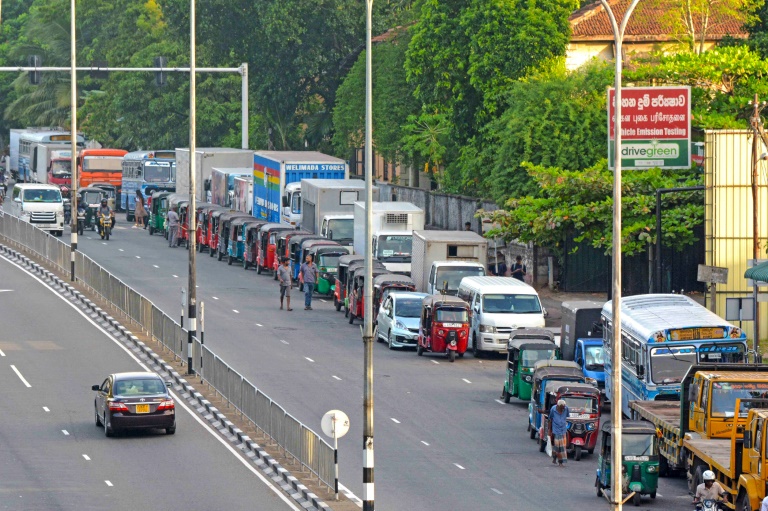
Petrol and diesel queues snaked through the capital for kilometres, though most pumping stations have been without fuel for days.

Energy minister Kanchana Wijesekera said petrol reserves in the country were about 4,000 tonnes, just below one day’s worth of consumption.

“The next petrol shipment is expected between the 22nd and 23rd (of July),” Wijesekera told reporters in Colombo. 

“We have contacted other suppliers, but we can’t confirm any new supplies before the 22nd.”

Last week, cash-strapped Sri Lanka announced a two-week halt to all fuel sales except for essential services to save petrol and diesel for emergencies.

Most shops were closed Sunday, with the situation expected to worsen when banks and offices reopen on Monday. 

Desperate people were seen trying to flag down the few vehicles on the road hoping for a ride.

Privately owned buses, which account for two-thirds of the country’s fleet, said they operated a skeleton service on Sunday as they were badly affected by the fuel shortage.

“We operated about 1,000 busses across the country out of the 20,000 owned by our members,” Private Bus Operators Association chairman Gemunu Wijeratne said.

“The situation will certainly get worse tomorrow because we have no way of getting diesel.”   

He said services would be curtailed further on Monday and saw no immediate solution.

Three-wheel taxis — a popular last-mile transport — were also off the streets, with most seen in days-long queues to get a ration of six litres of petrol.

A shortage of foreign currency to finance even the most essential imports has led to the country’s worst economic crisis, with its 22 million people facing severe hardships daily.

The country has also faced record-high inflation and lengthy power blackouts since late last year.

All non-essential government institutions and schools have been ordered shut until July 10 to reduce commuting and save energy. 

Local media reported there had been sporadic clashes outside fuel stations. 

Last week, troops opened fire to disperse a mob protesting against the military jumping the queue.

Sri Lanka is currently in talks with the International Monetary Fund for a possible bailout after the country defaulted on its $51 billion external debt in April.

Fossil discovery solves mystery of how pandas became vegetarian

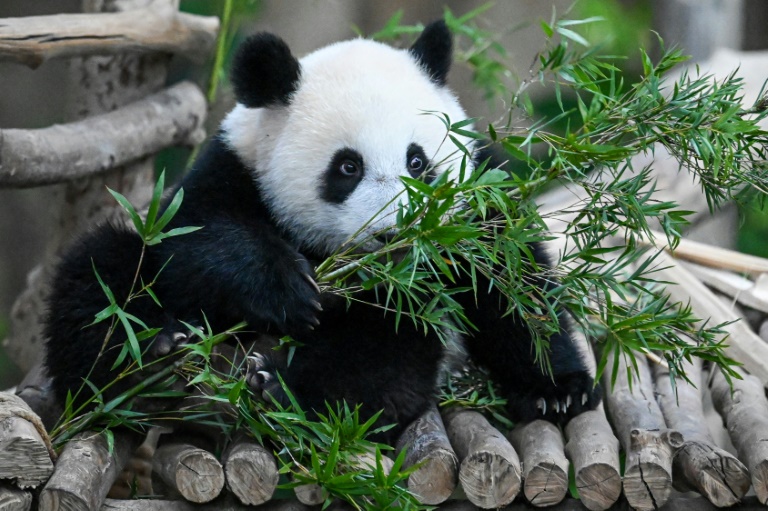
The discovery of panda fossils in China has helped researchers solve the mystery of how the giant species developed a “false thumb” and became the only dedicated vegetarian in the bear family.

Fossils dating back about six million years found in southwest China’s Yunnan province included a greatly enlarged wrist bone called a radial sesamoid.

It is the oldest known evidence of the modern giant panda’s false thumb that allows it to grip and break heavy bamboo stems, scientists wrote on a research paper published in the latest edition of the Scientific Reports.

The fossils belong to the now-extinct ancient relative of the panda called an Ailurarcto that lived in China six to eight million years ago.

“The giant panda is… a rare case of a large carnivore with a short, carnivorous digestive tract… that has become a dedicated herbivore,” Wang Xiaoming, curator of vertebrate palaeontology at the Natural History Museum of Los Angeles County, said.

“The false thumb in Ailurarctos shows… for the first time, the likely timing and steps in the evolution of bamboo feeding in pandas.”

Researchers had known about the panda’s false thumb, which works similar to a human thumb, for about a century. But the lack of fossil evidence had left unanswered questions about how and when the extra digit — not seen in any other bear — evolved.

“While the giant panda’s false thumb is not the most elegant or dexterous… even a small, protruding lump at the wrist can be a modest help in preventing bamboo from slipping off bent fingers,” Wang wrote.

The fossils found near Zhaotong city in the north of Yunnan included a false thumb that was longer than that found in modern pandas, but without an inward hook on the end.

The hook and a fleshy pad around the based of the thumb evolved over time since it had to “bear the burden of considerable body weight”, the paper said.

Pandas traded the high-protein, omnivorous diet of their ancestors for bamboo, that is low in nutrients available year-round in South China millions of years ago. 

They eat for up to 15 hours a day and an adult panda can consume 45kg of bamboo a day. While their diet is mostly vegetarian, wild panda are known to occasionally hunt small animals.

DR Congo drug manufacturing plan sparks safety concerns

Sitting at his desk overlooking a pharmaceutical factory floor on the outskirts of the Congolese capital Kinshasa, Joss Ilunga Dijimba, 52, cracked a jovial smile.

“It’s not easy doing business in Congo,” he said.

His family was forced to relocate the factory in the 1990s to survive bouts of mass looting. And nowadays, there are onerous taxes, customs duties, and problems retaining talented staff. 

His company, which employs about 40 people and produces generics such as paracetamol, is one of a tiny number of drug manufacturers in the Democratic Republic of Congo, an impoverished nation roughly the size of Western Europe. 

But a government plan to require hospitals and NGOs to buy more locally produced drugs could soon boost the fledgling pharmaceutical industry — despite fears in some quarters that safety standards are far below international norms.

Several NGOs, some of which provide medical care in the DRC’s conflict-torn east, have requested opt-outs.

At the small Pharmagros plant, behind barbed-wire walls near the Congo river, men in hairnets and white coats formulate medicines with imported precursor using lab equipment in airconditioned rooms. 

“Promoting local industry’s a good thing,” said Dijimba, a University of Texas graduate, insisting that several Congolese firms, including his, maintained high standards. 

“It could grow the middle class.”

About 73 percent of the DRC’s population of 90 million lives on under $1.9 a day, according to the World Bank. Most products in the African country are imported.

– ‘At your own peril’ –

The Congolese government has designated 35 drug molecules, including paracetamol, that medical facilities will be required to purchase in locally made form.

The government wants to stimulate business without banning imports, said Donatien Kabamb Kabey, the pharmaceuticals director at the DRC’s health ministry.

He explained that all the molecules can be replaced with imported equivalents, suggesting that ibuprofen could replace paracetamol, for example.

Although not yet implemented, the policy already appears to be working.

Fifteen new pharma businesses are setting up in the DRC ahead of the new rules, Kabey said, which will add to the existing 24.

The policy was partly designed to encourage factories to return after fleeing the country in the 1990s, he added, when unpaid soldiers went on the rampage towards the end of ex-dictator Mobutu Sese Seko’s reign. 

But experts warn that Congolese-made medicines face a major challenge: reassuring doctors and patients that they meet regulatory standards.

“When you go to the private sector in Congo, you do it at your own peril,” said Ed Vreeke, who runs the Belgium-based independent pharmaceutical auditing firm Quamed.

“They know darn well that the quality they produce is not good.”

Vreeke said Congolese regulators had improved, but the country lacked the massive resources needed to properly perform audits, check labels, and inspect the chemical composition of drugs for safety.

Kabey, whose department at the health ministry oversees inspections, said standards had improved “enormously” in recent years, but did not provide further details.

He said the government was establishing a national quality-control lab.

– ‘A huge thing’ –

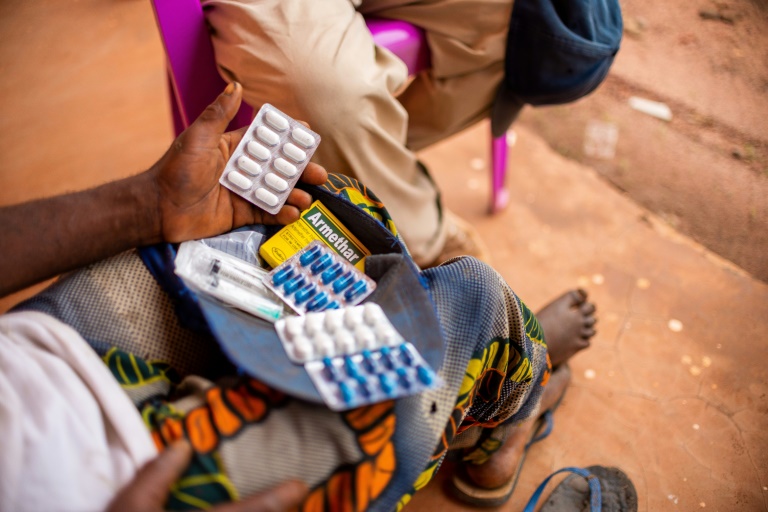
Shoddy or falsified medicines kill hundreds of thousands of people every year, according to the World Health Organization, mostly in poor countries. 

The DRC’s hot and humid climate also poses storage problems.

A 2021 study of both imported and locally produced eye drops sold in Kinshasa, for example, showed that three out of the seven products tested were substandard. The one sample manufactured in the DRC was contaminated.

Outside a pharmacy in Kinshasa’s upmarket Gombe district, clutching a bag of medicines, 29-year-old corporate lawyer Joelle Mamputu said she didn’t pay attention to where drugs were made but said she had “no prejudice”. 

However, a 52-year-old public servant named Olivier said there was “quite a difference” between Congolese and foreign drugs. 

He added he would buy Congolese drugs were the quality the same.

Despite official assurances, major international NGOs such as Doctors Without Borders (MSF) and Medecins du Monde (MDM) have requested opt-outs from the purchasing  requirements, several humanitarian workers said.

MSF declined to comment.

MDM confirmed it had asked for an exemption due to concerns over quality and capacity to meet demand.

“It’s a huge thing,” said one humanitarian who asked for anonymity, explaining that the new rules will affect all non-governmental organisations, hospitals and pharmacies. 

Many aid workers understand the need to promote enterprise, he said, but there are internal disagreements about whether to compromise on quality.

“We need to have high quality standards for everyone, but the reality of the country is that sometimes it’s impossible”.

Mixed fortunes of celebrities who leapt on NFT craze

Sports, film and music stars have all flocked to the NFT market to buy pictures of apes, endorse corporate partners or even launch their own art collections.

Even as the crypto sector suffers a rout with sales and values plunging and scams proliferating, celebrities continue to sign up to the craze for so-called Non-Fungible Tokens.

– Gone Ape –

The Bored Ape Yacht Club is the ground zero of NFT “collectables”. 

It features cartoon images replicated thousands of times with algorithm-generated variations.

The initial collection of 10,000 computer generated images has been followed by several other generations and many millions of fakes.

To fans, they are a status symbol, a key to an exclusive club where ordinary folk can mix with the famous and wealthy.

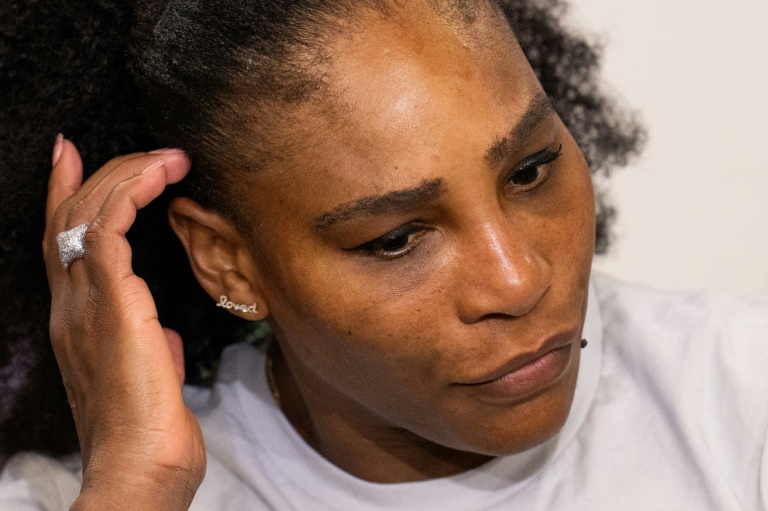
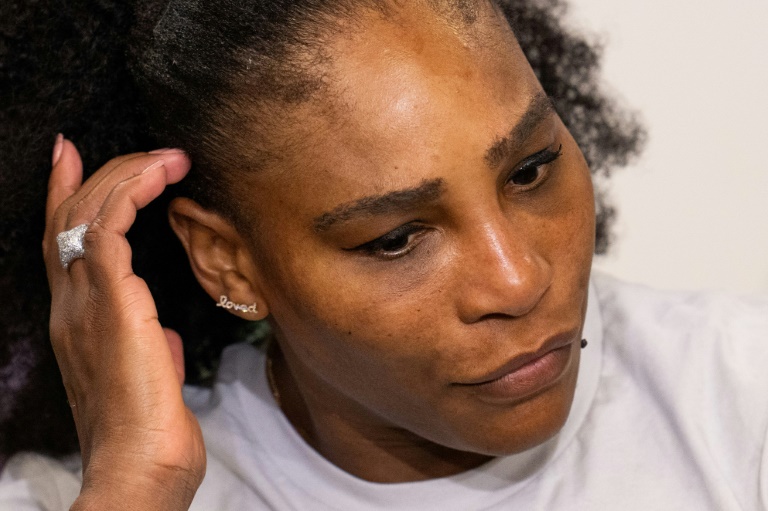
Brazilian footballer Neymar and tennis legend Serena Williams tweeted out their ape images on the same day in January.

US talk show host Jimmy Fallon and socialite Paris Hilton showed off their apes on TV.

Madonna declared on Instagram in March that she had “entered the MetaVerse” with a purchase of an ape, reportedly for more than $500,000.

She was following the likes of musicians Justin Bieber, Eminem and Snoop Dogg, basketball luminaries Shaquille O’Neal and Stephen Curry, and actors including Gwyneth Paltrow. 

To NFT critics, these apes symbolise all that is wrong in the crypto world — fundamentally worthless yet selling for vast sums with valuations based on hype.

And ultimately these celebrities don’t own the ape pictures in any traditional sense — anyone can download and use the images.

What they own is essentially a digital receipt linked to the picture.

But celebrity backing is vital.

The apes, along with cartoon collections like CryptoPunks, appear to be weathering the crash better than other parts of the crypto sector.

– Solo missions –

Celebrity NFT enthusiasts have gone a lot deeper into the industry than just buying ape images — plenty have created their own NFT collections, with mixed results.

US musician Grimes got in early, managing to bag almost $6 million for some fantasy-inspired art last year.

However, many of these NFTs are now all but worthless, selling for fractions of their original prices — when they sell at all.

Other collections have failed even to get off the ground. Wrestler John Cena sold just a handful of NFTs from a collection he put together last year with the WWE.

He admitted it was a “catastrophic failure”.

Skateboarder Tony Hawk has been more successful with sales, but at the cost of the admiration of some of his fans.

He announced on Twitter last year he would sell versions of his famous tricks as NFTs, prompting responses ranging from “Stop this Tony” to “Tony, no, not you too”.

Hawk has not mentioned the project on Twitter since, though he has continued to deal in NFTs.

– Just business –

One of the mainstays of the celebrity-NFT relationship is the old-fashioned brand endorsement. 

This week, French megastar footballer Kylian Mbappe became the latest star to sign on as an “ambassador” and invest in French start-up Sorare.

The firm runs a fantasy football game where players can buy sports-card style NFTs.

Serena Williams, along with footballers Gerard Pique and Rio Ferdinand, have already invested in the game.

And not to be outdone, the world’s most famous footballer, Cristiano Ronaldo, last week announced a partnership with Binance, the world’s biggest crypto firm.

The offerings will apparently include designs created in collaboration with Ronaldo, who said in a statement he looked forward to “bringing unprecedented experiences and access through this NFT platform”.

Mixed fortunes of celebrities who leapt on NFT craze

Sports, film and music stars have all flocked to the NFT market to buy pictures of apes, endorse corporate partners or even launch their own art collections.

Even as the crypto sector suffers a rout with sales and values plunging and scams proliferating, celebrities continue to sign up to the craze for so-called Non-Fungible Tokens.

– Gone Ape –

The Bored Ape Yacht Club is the ground zero of NFT “collectables”. 

It features cartoon images replicated thousands of times with algorithm-generated variations.

The initial collection of 10,000 computer generated images has been followed by several other generations and many millions of fakes.

To fans, they are a status symbol, a key to an exclusive club where ordinary folk can mix with the famous and wealthy.

Brazilian footballer Neymar and tennis legend Serena Williams tweeted out their ape images on the same day in January.

US talk show host Jimmy Fallon and socialite Paris Hilton showed off their apes on TV.

Madonna declared on Instagram in March that she had “entered the MetaVerse” with a purchase of an ape, reportedly for more than $500,000.

She was following the likes of musicians Justin Bieber, Eminem and Snoop Dogg, basketball luminaries Shaquille O’Neal and Stephen Curry, and actors including Gwyneth Paltrow. 

To NFT critics, these apes symbolise all that is wrong in the crypto world — fundamentally worthless yet selling for vast sums with valuations based on hype.

And ultimately these celebrities don’t own the ape pictures in any traditional sense — anyone can download and use the images.

What they own is essentially a digital receipt linked to the picture.

But celebrity backing is vital.

The apes, along with cartoon collections like CryptoPunks, appear to be weathering the crash better than other parts of the crypto sector.

– Solo missions –

Celebrity NFT enthusiasts have gone a lot deeper into the industry than just buying ape images — plenty have created their own NFT collections, with mixed results.

US musician Grimes got in early, managing to bag almost $6 million for some fantasy-inspired art last year.

However, many of these NFTs are now all but worthless, selling for fractions of their original prices — when they sell at all.

Other collections have failed even to get off the ground. Wrestler John Cena sold just a handful of NFTs from a collection he put together last year with the WWE.

He admitted it was a “catastrophic failure”.

Skateboarder Tony Hawk has been more successful with sales, but at the cost of the admiration of some of his fans.

He announced on Twitter last year he would sell versions of his famous tricks as NFTs, prompting responses ranging from “Stop this Tony” to “Tony, no, not you too”.

Hawk has not mentioned the project on Twitter since, though he has continued to deal in NFTs.

– Just business –

One of the mainstays of the celebrity-NFT relationship is the old-fashioned brand endorsement. 

This week, French megastar footballer Kylian Mbappe became the latest star to sign on as an “ambassador” and invest in French start-up Sorare.

The firm runs a fantasy football game where players can buy sports-card style NFTs.

Serena Williams, along with footballers Gerard Pique and Rio Ferdinand, have already invested in the game.

And not to be outdone, the world’s most famous footballer, Cristiano Ronaldo, last week announced a partnership with Binance, the world’s biggest crypto firm.

The offerings will apparently include designs created in collaboration with Ronaldo, who said in a statement he looked forward to “bringing unprecedented experiences and access through this NFT platform”.

In mine-infested sea, Romania aims to cut Russia gas reliance

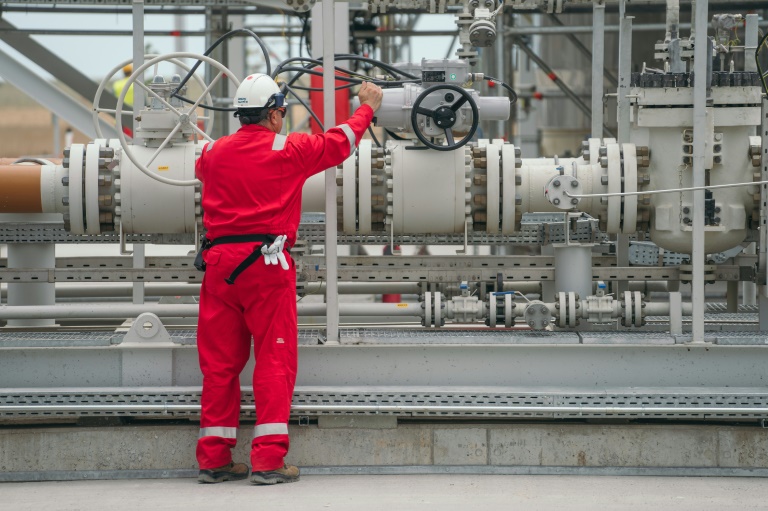
Gas now flows to Romania from a new Black Sea platform operating in waters where mines and warships have been spotted.

The dangerous reminders of the war raging nearby in Ukraine underscore Romania’s determination to cut its reliance on Russian natural gas imports.

With fears growing across the European Union that Moscow will cut gas shipments in retaliation for EU support to Ukraine, countries are scrambling to find alternative supplies.

“Romania is taking a decisive step to ensure its energy security… at a time when international gas supplies are threatened by the war in Ukraine,” Prime Minister Nicolae Ciuca said on Tuesday as he inaugurated a processing plant belonging to Black Sea Oil & Gas (BSOG) in the southeastern village of Vadu.

While Romania has significant reserves on land and at sea, it still has to turn to Russia in winter to cover around 20 percent of its consumption.

Backed by American private equity firm Carlyle Group LP and the European Bank for Reconstruction and Development, BSOG began two weeks ago to tap into underwater deposits, becoming the first new offshore Black Sea development in the past 30 years.

The $400-million platform extracts three million cubic metres of gas per day. It is due to recover one billion cubic metres per year for 10 years, or around 10 percent of Romania’s needs.

“Today we are facing an emergency in terms of energy supply. We must put our old devils in the closet… and start producing locally,” said Thierry Bros, an expert on energy and the climate at Sciences Po university.

“We must relaunch the projects in the Black Sea, relaunch the growth of production in Norway, in the United Kingdom we must think of launching the production of shale gas and in France the production of mine gas” he told AFP.

– Mines and warships –

In Vadu, BSOG CEO Mark Beacom said he hopes that the “state-of-the-art” infrastructure put in place by his company will be used for future gas or renewable energy projects in the Black Sea.

But the invasion of neighbouring Ukraine by Russia has complicated the situation. 

“We are not in a war zone, but we are close enough and it clearly has an impact,” he said.

“We’ve had mines detected close to the platform, we’ve had warships that go close to our platform and we’ve had airplanes circling our platform,” he added.

BSOG holds two concessions about 120 kilometres (65 nautical miles) from the Romanian coast, part of which, ironically, was recovered in 2009 by Bucharest from Ukraine, following a decision by the International Court of Justice in The Hague. 

While Romania is counting on offshore gas reserves estimated at 200 billion cubic metres of gas, investors nevertheless remain cautious. 

The Austrian group OMV and its Romanian partner Romgaz have yet to decide whether they will go ahead with the Neptun Deep project to tap between 42 billion and 84 billion cubic metres of gas. 

– End of guaranteed energy? –

Bucharest hopes the two groups will launch extraction as soon as 2026, which would allow Romania to “become completely independent in terms of gas” and export the excess to its neighbours, said Energy Minister Virgil Popescu.

According to a 2018 study by auditing firm Deloitte, offshore gas could bring in $26 billion in tax revenue to Romania’s government over a planned 23-year period of operation. 

After much delay, parliament finally amended in May a law unfavourable to offshore investments, which had notably prompted ExxonMobil to withdraw from the Neptun Deep project at the end of 2021, after having invested around $2 billion there jointly with OMV.

“If we want to win against the Russians, we need energy,” said Bros, warning that the time when “energy was guaranteed” within the EU may be over.

US funds software for Russians to slip past censors

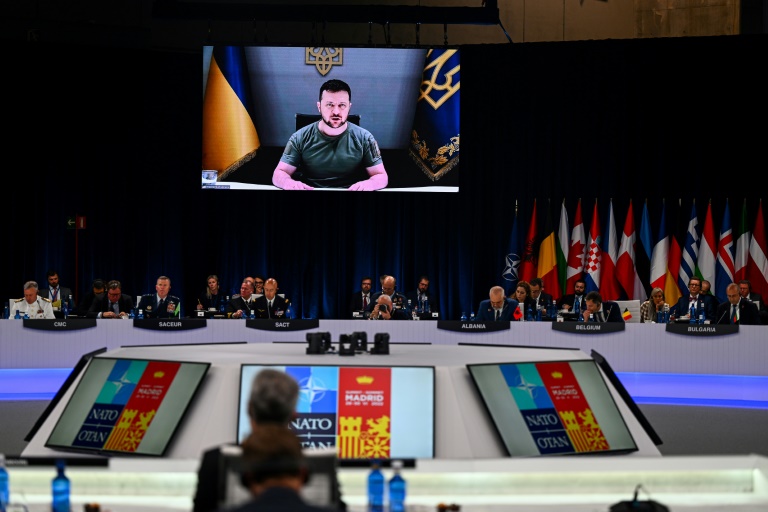
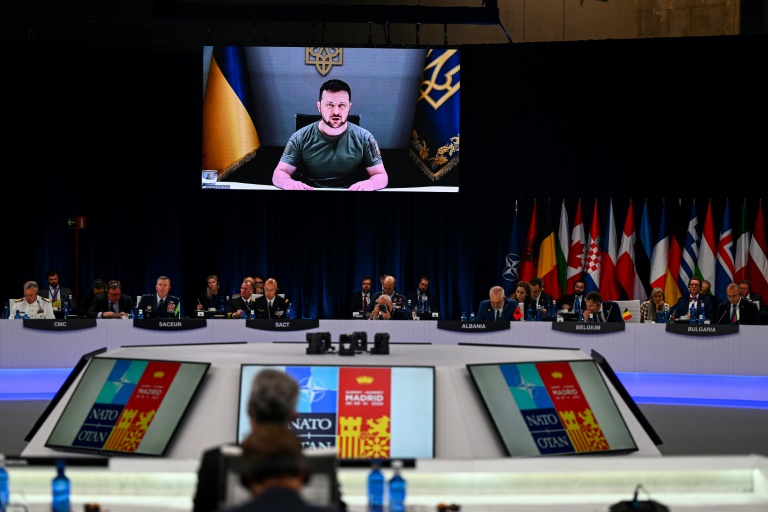
A US-backed campaign is giving Russians access to anti-censor software to dodge Moscow’s crackdown on dissent against its invasion of Ukraine, involved groups told AFP.

Russia has intensified its restrictions on independent media since attacking its neighbor in February, with journalists under threat of prosecution for criticizing the invasion or for even referring to it as a war.

The US government-backed Open Technology Fund is paying out money to a handful of American firms providing virtual private networks (VPNs) free of charge to millions of Russians, who can then use them to visit websites blocked by censors. 

Traditional VPN software creates what is effectively a private tunnel on the internet for data, typically encrypted, to flow safeguarded from snooping — and their use has boomed in Russia since the invasion.

“Our tool is primarily used by people trying to access independent media, so that funding by the OTF has been absolutely critical,” said a spokesman for Lantern, one of the involved companies.

Tech firms Psiphon and nthLink have also been providing sophisticated anti-censorship applications to people in Russia, with OTF estimating that some four million users in Russia have received VPNs from the firms.

Psiphon saw a massive surge in Russian users, with the number soaring from about 48,000 a day prior to the February 24 invasion to more than a million a day by mid-March, said a company senior advisor Dirk Rodenburg.

The firm’s tools in Russian now average nearly 1.5 million users daily, he added.

While some, like Ukraine’s leadership, have called for Russia to be cut off from the internet, others have noted access is key for opposition groups. 

“It’s so very important for Russians to be connected to the whole world wide web, to keep resistance going,” said Natalia Krapiva, tech legal counsel at rights group Access Now, which is not involved in the OTF effort.

“All kinds of initiatives are happening and to keep them alive you need the internet because you can’t gather in person, or because activists are scattered around the world,” she added.

Keeping VPNs running and accessible was relatively straightforward in the early days of the war, said Lucas, the spokesman for Lantern, who spoke on condition that only his first name be used.

“They weren’t ready to block anything,” Lucas said. “Over time, Russia learned how to block the easy stuff but Lantern and Psiphon are still up and running.”

– Lesson from China, Myanmar –

Censors try to cut VPN software off from servers they rely on to function or stop people from getting to websites where the tools can be downloaded.

As a result, crackdowns on internet freedom typically result in people sharing VPNs through guerrilla tactics such as word-of-mouth.

However, groups like Lantern have adopted methods like hiding VPN installers in online platforms too vital for the government to block, and building a network so users can share the technology with others, Lucas said.

“Lantern and Psiphon are different in that we do all sorts of much more sophisticated stuff to hide our traffic and get around our servers being detected,” he said.

People in Russia are benefitting from the VPN makers honing their tools while battling censorship in countries such as China and Myanmar.

“There was a moment about two years ago when China really upped the level of their game, when it came to the lengths they were going to block stuff,” Lucas said. 

“We raised the level of our game a whole lot,” he added.

US government funding provided through OTF has been important to the operations since costs jumped and revenue vanished for VPN makers in Russia, as sanctions kicked in and companies pulled out of the country.

OTF said it typically spends $3-4 million annually funding VPNs, but that figure was ramped up due to censorship in Russia.

Psiphon has been receiving US government funding for more than 14 years, with the money generally going to improve tools to counter new tactics used by authoritarian regimes, the company told AFP.

Despite the efforts to get VPN technology to those who want it, many people still don’t have access.

“The use of virtual private networks and other methods have increased significantly in Russia, but it still only represents a small percentage of the population,” Krapiva, from Access Now, told AFP.

US funds software for Russians to slip past censors

A US-backed campaign is giving Russians access to anti-censor software to dodge Moscow’s crackdown on dissent against its invasion of Ukraine, involved groups told AFP.

Russia has intensified its restrictions on independent media since attacking its neighbor in February, with journalists under threat of prosecution for criticizing the invasion or for even referring to it as a war.

The US government-backed Open Technology Fund is paying out money to a handful of American firms providing virtual private networks (VPNs) free of charge to millions of Russians, who can then use them to visit websites blocked by censors. 

Traditional VPN software creates what is effectively a private tunnel on the internet for data, typically encrypted, to flow safeguarded from snooping — and their use has boomed in Russia since the invasion.

“Our tool is primarily used by people trying to access independent media, so that funding by the OTF has been absolutely critical,” said a spokesman for Lantern, one of the involved companies.

Tech firms Psiphon and nthLink have also been providing sophisticated anti-censorship applications to people in Russia, with OTF estimating that some four million users in Russia have received VPNs from the firms.

Psiphon saw a massive surge in Russian users, with the number soaring from about 48,000 a day prior to the February 24 invasion to more than a million a day by mid-March, said a company senior advisor Dirk Rodenburg.

The firm’s tools in Russian now average nearly 1.5 million users daily, he added.

While some, like Ukraine’s leadership, have called for Russia to be cut off from the internet, others have noted access is key for opposition groups. 

“It’s so very important for Russians to be connected to the whole world wide web, to keep resistance going,” said Natalia Krapiva, tech legal counsel at rights group Access Now, which is not involved in the OTF effort.

“All kinds of initiatives are happening and to keep them alive you need the internet because you can’t gather in person, or because activists are scattered around the world,” she added.

Keeping VPNs running and accessible was relatively straightforward in the early days of the war, said Lucas, the spokesman for Lantern, who spoke on condition that only his first name be used.

“They weren’t ready to block anything,” Lucas said. “Over time, Russia learned how to block the easy stuff but Lantern and Psiphon are still up and running.”

– Lesson from China, Myanmar –

Censors try to cut VPN software off from servers they rely on to function or stop people from getting to websites where the tools can be downloaded.

As a result, crackdowns on internet freedom typically result in people sharing VPNs through guerrilla tactics such as word-of-mouth.

However, groups like Lantern have adopted methods like hiding VPN installers in online platforms too vital for the government to block, and building a network so users can share the technology with others, Lucas said.

“Lantern and Psiphon are different in that we do all sorts of much more sophisticated stuff to hide our traffic and get around our servers being detected,” he said.

People in Russia are benefitting from the VPN makers honing their tools while battling censorship in countries such as China and Myanmar.

“There was a moment about two years ago when China really upped the level of their game, when it came to the lengths they were going to block stuff,” Lucas said. 

“We raised the level of our game a whole lot,” he added.

US government funding provided through OTF has been important to the operations since costs jumped and revenue vanished for VPN makers in Russia, as sanctions kicked in and companies pulled out of the country.

OTF said it typically spends $3-4 million annually funding VPNs, but that figure was ramped up due to censorship in Russia.

Psiphon has been receiving US government funding for more than 14 years, with the money generally going to improve tools to counter new tactics used by authoritarian regimes, the company told AFP.

Despite the efforts to get VPN technology to those who want it, many people still don’t have access.

“The use of virtual private networks and other methods have increased significantly in Russia, but it still only represents a small percentage of the population,” Krapiva, from Access Now, told AFP.

'They're everywhere': microplastics in oceans, air and human body

From ocean depths to mountain peaks, humans have littered the planet with tiny shards of plastic. We have even absorbed these microplastics into our bodies — with uncertain implications.

Images of plastic pollution have become familiar: a turtle suffocated by a shopping bag, water bottles washed up on beaches, or the monstrous “Great Pacific Garbage Patch” of floating detritus.

Millions of tonnes of plastic produced every year, largely from fossil fuels, make their way into the environment and degrade into smaller and smaller pieces.

“We did not imagine 10 years ago that there could be so many small microplastics, invisible to the naked eye, and that they were everywhere around us,” said Jean-Francois Ghiglione, a researcher at the Laboratory of Microbial Oceanography in France.

“And we could not yet envisage finding them in the human body”.

Now scientific studies are increasingly detecting microplastics in some human organs — including “the lungs, spleen, kidneys, and even the placenta,” Ghiglione told AFP.

It may not come as much of a shock that we breathe in these particles present in the air, in particular microfibres from synthetic clothing.

“We know that there’s microplastics in the air, we know it’s all around us,” said Laura Sadofsky, from the Hull York Medical School in the UK.

Her team found polypropylene and PET (polyethylene terephthalate) in lung tissue, identifying fibres from synthetic fabrics. 

“The surprise for us was how deep it got into the lungs and the size of those particles,” she told AFP.

In March, another study reported the first traces of PET found in the blood.

Given the small sample of volunteers, some scientists say it is too early to draw conclusions, but there are concerns that if plastics are in the bloodstream they could be transported to all organs.

– Breathing in plastics for years –

In 2021, researchers found microplastics in both maternal and foetal placental tissue, expressing “great concern” over the possible consequences on the development of the foetus. 

But concern is not the same as a proven risk.

“If you ask a scientist if there is a negative effect, he or she would say ‘I don’t know’,” said Bart Koelmans, professor in Aquatic Ecology and Water Quality at Wageningen University.

“It’s potentially a big problem, but we don’t have the scientific evidence to positively confirm what are the effects, if any.”

One hypothesis is that microplastics could be responsible for certain syndromes that weaken human health.

While scientists have recently identified their presence in the body, it is likely that humans have been eating, drinking and breathing in plastics for years.

In 2019, a shock report by the environmental charity WWF estimated that people are ingesting and inhaling up to five grams of plastic per week — enough to make a credit card.

Koelmans, who contests the methodology and results of that study, has calculated the amount is closer to a grain of salt.

“Over a lifetime, a grain of salt per week is still quite something,” he told AFP.

While health studies on humans have yet to be developed, toxicity in certain animals reinforces concerns.

“Small microplastics invisible to the naked eye have deleterious effects on all the animals that we have studied in the marine environment, or on land,” said Ghiglione.

He added that the array of chemicals found in these materials — including dyes, stabilisers, flame retardants — can affect growth, metabolism, blood sugar, blood pressure and even reproduction.  

The researcher said there should be a “precautionary” approach, urging consumers to reduce the number of plastic-packaged products they buy, particularly bottles.

Earlier this year, the United Nations began a process to develop an internationally binding treaty to tackle the global plastic scourge.

It has warned that the world is facing a pollution crisis to match the biodiversity and climate crises.

While the health implications from plastics are not known, scientists do know the impacts of indoor and outdoor air pollution, which experts from the Lancet Commission on pollution and health have estimated caused 6.7 million people to suffer an early death in 2019.

Some 460 million tonnes of plastics were used in 2019, twice as much as 20 years earlier. Less than 10 percent was recycled.

Annual production of fossil-fuel-based plastics is set to top 1.2 billion tonnes by 2060, with waste exceeding one billion tonnes, the Organisation for Economic Co-operation and Development said last month.

“People cannot stop breathing, so even if you change your eating habits you will still inhale them,” said Koelmans.

“They’re everywhere.”

Close Bitnami banner
Bitnami