AFP

Asian markets drop with traders gripped by recession fear

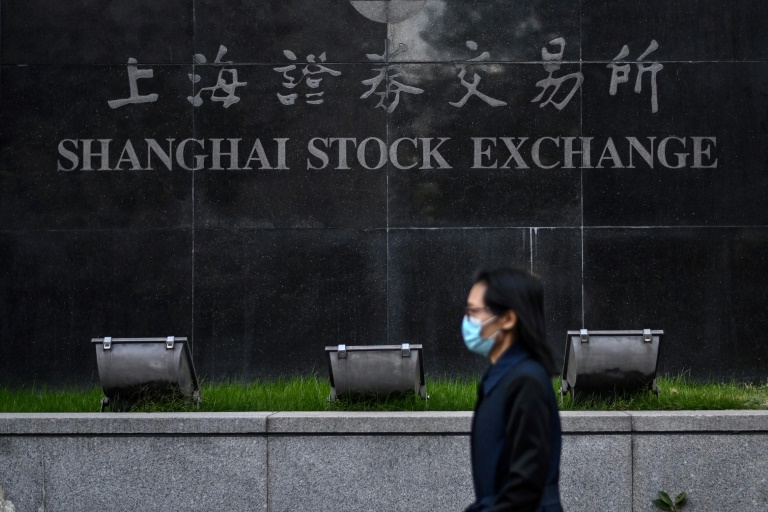
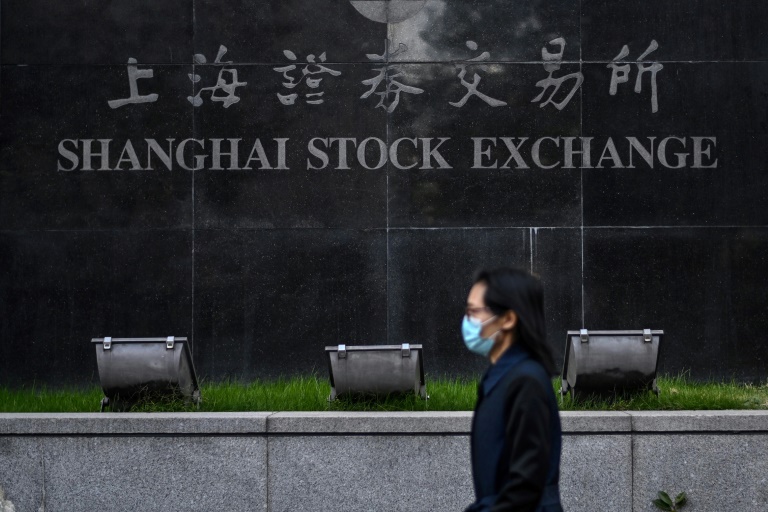
Asian markets struggled again Friday following another selloff on Wall Street fuelled by recession fears, with warnings of a bleak outlook for the global economy as central banks slam on the brakes to battle soaring inflation.

Data showing US consumers — the backbone of the world’s top economy — were growing increasingly reticent about spending dealt a fresh blow to equities Thursday, with the S&P 500 suffering its worst January-June since 1970.

With the war in Ukraine showing no sign of ending — keeping energy costs elevated — there is an expectation that borrowing costs will continue to rise and send economies into recession.

“If anyone thinks that equities can rally into the back of the year, they are making the assumption that the Fed is going to let go of its entire focus on price stability and step back from that,” Seema Shah, at Principal Global Investors, told Bloomberg Television.

“We have a very different view. We think things are going to get pretty tough.”

After a broad retreat on Thursday in Asia, markets battled to recover but with little conviction.

Tokyo, Shanghai, Seoul, Sydney, Mumbai, Singapore, Jakarta and Wellington all fell, though there were small gains in Bangkok.

Taipei shed more than three percent to fall into a bear market — a 20 percent drop from its recent peak.

Hong Kong was closed for a holiday.

London, Paris and Frankfurt extended losses at the open.

Losses across world markets this week come after a rally last week fuelled by hopes that an economic slowdown or signs of recession would lead central banks to ease off their monetary tightening drive.

But comments from top finance chiefs, including Federal Reserve boss Jerome Powell, suggest they are willing to endure the pain of a contraction as long as they can rein in prices — which are rising at their fastest pace in 40 years.

“With central banks shifting towards accepting that monetary tightening is impossible without some economic damage, the market narrative has swung 180 degrees this week,” said SPI Asset Management’s Stephen Innes.

He added that sharp rate hikes by the Fed and other central banks were being front-loaded in the hope inflation will ease earlier and allow them to cut borrowing costs more quickly.

“The hope is that by the November midterm elections, when the economy has chilled enough, it will be possible to pause or at least significantly slow further hikes to allow investors to enjoy a Santa Claus rally; otherwise, it could be a winter of discontent,” Innes said.

But markets strategist Louis Navellier suggested that the economy was not in as bad a shape as feared.

“The amazing thing is that we are not in an ‘earnings recession’ and the analyst community remains largely positive,” he said in a note.

“Frankly, the analyst community is smarter than the macro strategists that keep calling for a recession. The bottom line is fear sells, so negative news continues to overpower positive analyst comments.”

Oil prices fell, putting the commodity on course for a third successive week of losses owing to concerns that a recession will hit demand.

That has overshadowed a tight market caused by sanctions on Russia over its Ukraine invasion and an expected jump in demand from China as it emerges from its Covid lockdowns.

Innes added: “With energy bulls having a good run this year, investors seem more inclined to take money off the table in the face of growing uncertainty as the energy crisis moves onto the global recession phase.

“As the adage goes, the best cure for high prices is high prices.”

The grim economic outlook also weighed on Bitcoin, which was struggling below $20,000, having fallen as low as $18,632 earlier.

– Key figures at around 0720 GMT –

Tokyo – Nikkei 225: DOWN 1.7 percent at 25,935.62 (close)

Shanghai – Composite: DOWN 0.3 percent at 3,387.64 (close)

London – FTSE 100: DOWN 0.8 percent at 7,112.31

Hong Kong – Hang Seng Index: Closed for a holiday

West Texas Intermediate: DOWN 0.6 percent at $105.16 per barrel

Brent North Sea crude: DOWN 0.4 percent at $108.59 per barrel

Dollar/yen: DOWN at 134.85 yen from 135.75 yen Thursday

Euro/dollar: DOWN at $1.0453 from $1.0487 

Pound/dollar: DOWN at $1.2115 from $1.2177

Euro/pound: UP at 86.25 pence from 86.08 pence

New York – Dow: DOWN 0.8 percent at 30,775.43 (close)
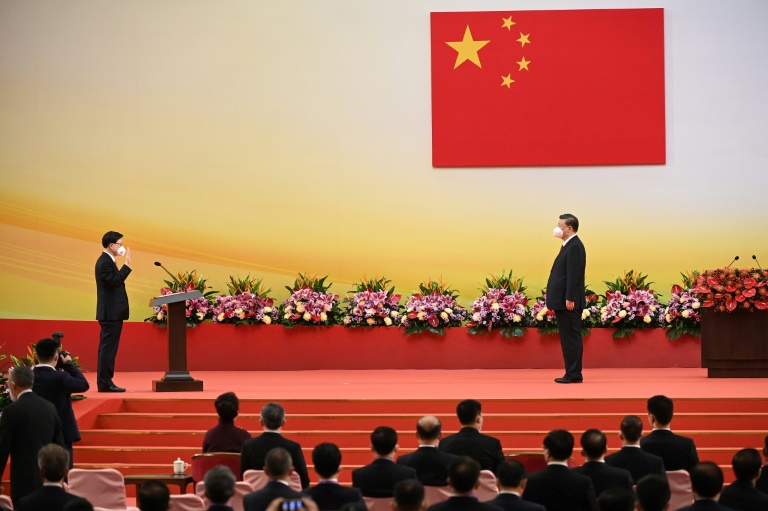
John Lee: the former Hong Kong cop Beijing trusts is sworn in

John Lee, a former beat cop who became Hong Kong’s security chief and played a key role in suppressing democracy protests, became the business hub’s new leader on Friday in a ceremony overseen by Chinese President Xi Jinping.

“It is the greatest honour for me today to shoulder this historic mission given to me by the central authorities and the people of Hong Kong,” Lee said in his inauguration speech, thanking Beijing for its support. 

Lee, 64, was anointed as Hong Kong’s next chief executive by a small committee in May, winning 99 percent of the votes in a choreographed, Beijing-blessed race in which no other candidates stood. 

Xi later said Lee’s government would deliver a “new chapter” for Hong Kong.

Lee’s elevation caps a remarkable rise for a man whose police career lifted him from a working-class family to the upper echelons of Hong Kong’s political establishment.

It also places a security official in the city’s top job for the first time, a man who was pivotal in the quashing of huge democracy protests in 2019 and Beijing’s subsequent political crackdown.

Insiders say Lee’s unwavering commitment to that role won China’s confidence at a time when other Hong Kong elite were seen as insufficiently loyal or competent.

“John Lee is the one that the central government knows the best, because he was in constant contact and interaction with the mainland,” pro-establishment lawmaker and prominent business figure Michael Tien told AFP earlier this year.

Lee, who is under US sanctions, spent 35 years in the police before jumping to the government in 2012, followed by a swift rise to the top.

Law and order remained his portfolio, with him serving in the Security Bureau and then leading it before becoming the city’s number two official last year.

– Flares and long hair –

Lee, a Catholic, grew up poor in Sham Shui Po — one of wealthy Hong Kong’s working-class districts — but made his way to an elite boys’ school run by Jesuits.

Peter Lai, a former banker and classmate, described him as a clever and fashionable teenager who grew long hair and wore flared trousers.

Most of his contemporaries went to university, but Lee turned down an offer to study engineering to join the police.

He later told a pro-Beijing newspaper he was motivated by being bullied by neighbourhood hooligans.

Two former classmates gave a more practical reason — the police force offered a stable career for Lee and his pregnant wife Janet.

Lee has not spoken much about his family and has dodged questions about whether his wife and two sons still hold British nationality, something he renounced when he joined the government.

As events began on Friday morning, Lee’s new social media accounts posted a picture of his wife fixing his tie, thanking her for “silently supporting me and taking care of the family over the years”.

– Business acumen? –

Given his security background, it seems unlikely Lee will reverse Beijing’s campaign against dissent.

Where he will enter less familiar territory is the world of business.

Hong Kong, once a vibrant, multicultural business hub, has been cut off internationally during the pandemic as it shadows Beijing’s strict zero-Covid strategy.

Its economy is struggling and there has been an exodus of talent. 

Danny Lau, a small business association leader, said Lee was not an ideal candidate but that he would reserve judgement.

“I hope he can consider Hong Kong’s international competitiveness and does not waste time on making laws unhelpful for the city’s economy,” Lau told AFP.

But others say Lee’s appointment confirms that China now puts Hong Kong’s political security ahead of business and livelihood issues. 

“In the past, China might compromise for some economic benefits,” Charles Mok, a former pro-democracy lawmaker now living overseas, told AFP.

“But now it seems Beijing wants its people to feel that the world is full of threats and it’s only safe to stick closely to the (Communist) Party.”

Bankrupt Sri Lanka's inflation jumps beyond 50%

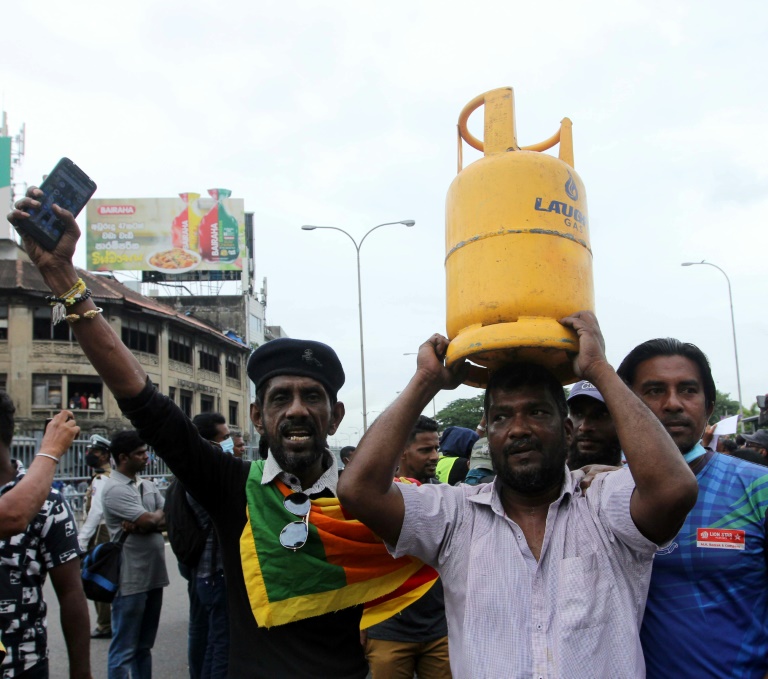
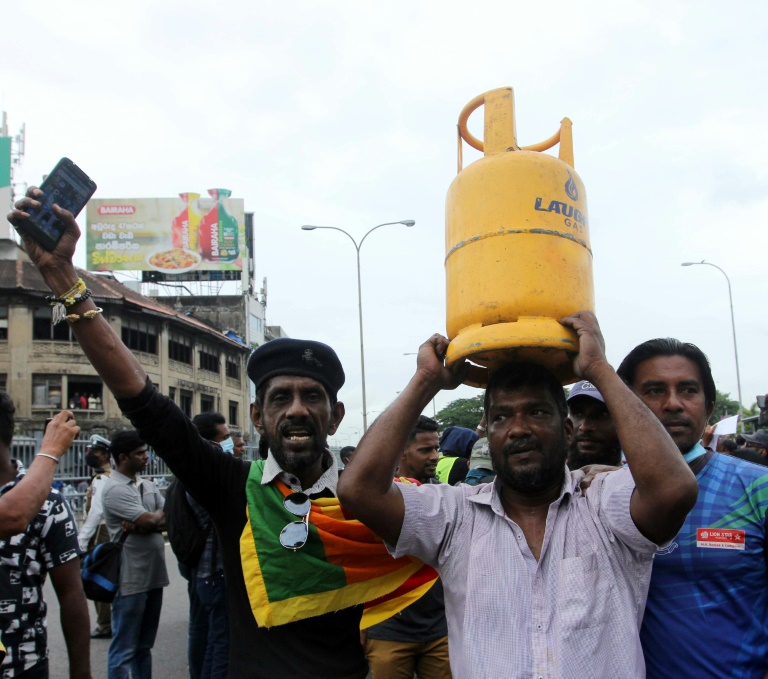
Sri Lanka’s inflation hit a ninth consecutive record in June, official data showed Friday, rising to 54.6 percent a day after the IMF asked the bankrupt nation to rein in galloping prices and corruption.

It was the first time the increase in the Colombo Consumer Price Index (CCPI) crossed the psychologically important 50 percent mark, according to the department of census and statistics.

The figures came hours after the International Monetary Fund urged Sri Lanka to contain spiralling inflation and address corruption as part of efforts to salvage the troubled economy, which has been ravaged by a foreign exchange crisis.

The IMF ended 10 days of in-person discussions with Sri Lankan authorities in Colombo on Thursday following the country’s request for a possible bailout.

The CCPI has been setting new monthly highs since October, when year-on-year inflation stood at just 7.6 percent. In May it reached 39.1 percent.

The rupee has lost more than half its value against the US dollar this year.

Private economists say consumer prices are rising even faster than shown in official statistics.

According to an economist at Johns Hopkins university, Steve Hanke, who tracks price increases in the world’s troublespots, Sri Lanka’s current inflation is 128 percent, second only to Zimbabwe’s 365 percent.

Faced with an acute energy shortage, Sri Lanka is observing a shutdown of non-essential state institutions for two weeks, along with the closure of schools to reduce commuting.

The country’s 22 million people have been enduring acute shortages of essentials — including food, fuel and medicines — for months.

Protests are continuing outside President Gotabaya Rajapaksa’s office demanding his resignation over the unprecedented economic turmoil and his mismanagement.

Sri Lanka went to the IMF in April after the country defaulted on its $51 billion external debt.

Bankrupt Sri Lanka's inflation jumps beyond 50%

Sri Lanka’s inflation hit a ninth consecutive record in June, official data showed Friday, rising to 54.6 percent a day after the IMF asked the bankrupt nation to rein in galloping prices and corruption.

It was the first time the increase in the Colombo Consumer Price Index (CCPI) crossed the psychologically important 50 percent mark, according to the department of census and statistics.

The figures came hours after the International Monetary Fund urged Sri Lanka to contain spiralling inflation and address corruption as part of efforts to salvage the troubled economy, which has been ravaged by a foreign exchange crisis.

The IMF ended 10 days of in-person discussions with Sri Lankan authorities in Colombo on Thursday following the country’s request for a possible bailout.

The CCPI has been setting new monthly highs since October, when year-on-year inflation stood at just 7.6 percent. In May it reached 39.1 percent.

The rupee has lost more than half its value against the US dollar this year.

Private economists say consumer prices are rising even faster than shown in official statistics.

According to an economist at Johns Hopkins university, Steve Hanke, who tracks price increases in the world’s troublespots, Sri Lanka’s current inflation is 128 percent, second only to Zimbabwe’s 365 percent.

Faced with an acute energy shortage, Sri Lanka is observing a shutdown of non-essential state institutions for two weeks, along with the closure of schools to reduce commuting.

The country’s 22 million people have been enduring acute shortages of essentials — including food, fuel and medicines — for months.

Protests are continuing outside President Gotabaya Rajapaksa’s office demanding his resignation over the unprecedented economic turmoil and his mismanagement.

Sri Lanka went to the IMF in April after the country defaulted on its $51 billion external debt.

India bans many single-use plastics to tackle waste

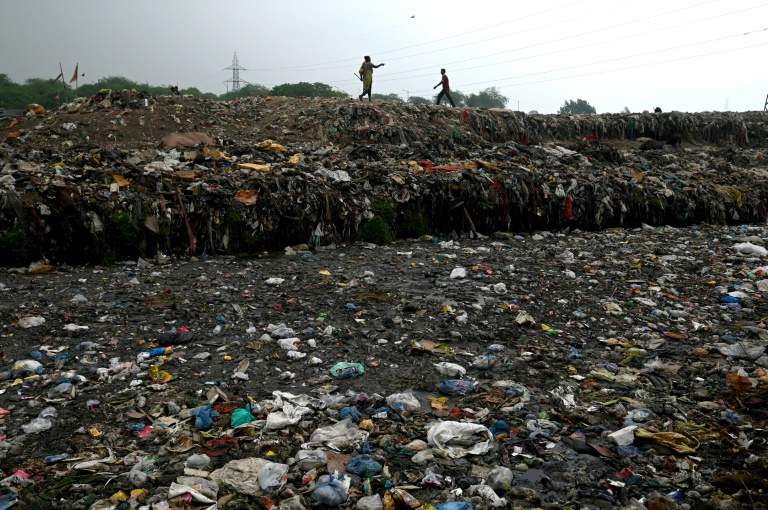
India imposed a ban on many single-use plastics on Friday in a bid to tackle waste choking rivers and poisoning wildlife, but experts say it faces severe headwinds from unprepared manufacturers and consumers unwilling to pay more.

The country generates around four million tonnes of plastic waste per year, about a third of which is not recycled and ends up in waterways and landfills that regularly catch fire and exacerbate air pollution.

Stray cows munching on plastic are a common sight in Indian cities and a recent study found traces in the dung of elephants in the northern forests of Uttarakhand state.

Estimates vary but around half comes from items used once, and the new ban covers the production, import and sale of ubiquitous objects like straws and cups made of plastic as well as wrapping on cigarette packets.

Exempt for now are products such as plastic bags below a certain thickness and so-called multi-layered packaging.

Authorities have promised to crack down hard after the ban — first announced in 2018 by Prime Minister Narendra Modi — came into effect.

Inspectors are set to fan out from Friday checking that no suppliers or distributors are flouting the rules at risk of a maximum fine of 100,000 rupees ($1,265) or five-year jail sentence.

– Industry lobbying –

Around half of India’s regions have already sought to impose their own regulations but as the state of rivers and landfill sites testifies, success has been mixed.

Firms in the plastics industry, which employs millions of people, say that alternatives are expensive and they have been lobbying the government for a delay to the ban.

Pintu, who earns his living hacking the top of coconuts with a machete and serving them to customers with a plastic straw, doesn’t know what he will do.

Switching to “expensive paper straws will be tough. I will likely pass the cost to the customers,” he told AFP in New Delhi.

“I’ve heard it’ll help the environment but I don’t see how it’ll change anything for us,” he added.

GlobalData analysts said small packs with plastic straws make up 35 percent of soft drinks volumes, meaning manufacturers will be “badly hit”.

“(The) price-sensitive masses are unable to foot the bill for eco-friendly alternatives,” Bobby Verghese from GlobalData added.

– ‘Resistance’ –

Jigish N. Doshi, president of industry group Plastindia Foundation, expects “temporary” job losses but said the bigger issue was firms “which had invested huge capital for machines that may not be useful” after the ban. 

“It’s not easy to make different products from machines and the government could help by offering some subsidies and helping develop and purchase alternative products,” Doshi told AFP.

Satish Sinha from environmental group Toxics Link told AFP that “there will be initial resistance” as finding replacements may be hard but it was a “very welcome step”.

“There will be difficulties and we may pay the price but if you’re serious about the environment, this is an important issue that needs a concerted push,” he said.

One young company trying to be part of the change is Ecoware, which makes disposable bio-degradable products at its factory outside Delhi.

Chief executive Rhea Mazumdar Singhal told AFP that the appalling state of landfills and widespread plastic consumption inspired her venture.

“We’ve seen plenty of bans before, but as citizens the power lies with us,” Singhal said.

World Bank creates fund to better prevent, respond to pandemics

The World Bank’s board on Thursday approved creation of a fund meant to finance investments in strengthening the fight against pandemics.

The fund will support prevention, preparedness and response (PPR), with a focus on low- and middle-income countries, the bank said in a statement.

“The devastating human, economic, and social cost of Covid-19 has highlighted the urgent need for coordinated action to build stronger health systems and mobilize additional resources,” it said.

The World Bank added that the fund, which it aims to open later this year, was developed under the leadership of the United States, Italy and Indonesia as part of their G20 presidencies, and with broad support from the G20.

It will be used in a number of areas, including disease surveillance, with more than $1 billion in commitments already announced.

“The World Bank is the largest provider of financing for PPR with active operations in over 100 developing countries to strengthen their health systems,” World Bank President David Malpass said in the statement.

The so-called financial intermediary fund (FIF) will provide financing to “complement the work of existing institutions in supporting low- and middle-income countries and regions to prepare for the next pandemic,” the World Bank said.

The World Health Organization is a stakeholder in the project and will provide technical expertise, its president Tedros Adhanom Ghebreyesus said.

US President Joe Biden said more than 1 million Americans and millions of people around the world have lost their lives to Covid-19, underscoring the importance of boosting investment in pandemic preparedness.

“When it comes to preparing for the next pandemic, the cost of inaction is greater than the cost of action,” Biden said in a statement late Thursday. “Investing in preparedness now is the right thing and the smart thing to do.”

In a separate statement earlier in the day, US Treasury Secretary Janet Yellen called the fund “a major achievement that will help low- and middle-income countries be better prepared for the next pandemic.”

“Even as we continue to work to end Covid-19, today’s decision by World Bank shareholders will help bolster capacity to prevent, detect, and respond to future pandemics,” she said.

A spokesperson for the World Bank told AFP that if the Covid-19 pandemic is still ongoing when the fund is implemented, it could be used to provide support against the current as well as future pandemics.

World Bank creates fund to better prevent, respond to pandemics

The World Bank’s board on Thursday approved creation of a fund meant to finance investments in strengthening the fight against pandemics.

The fund will support prevention, preparedness and response (PPR), with a focus on low- and middle-income countries, the bank said in a statement.

“The devastating human, economic, and social cost of Covid-19 has highlighted the urgent need for coordinated action to build stronger health systems and mobilize additional resources,” it said.

The World Bank added that the fund, which it aims to open later this year, was developed under the leadership of the United States, Italy and Indonesia as part of their G20 presidencies, and with broad support from the G20.

It will be used in a number of areas, including disease surveillance, with more than $1 billion in commitments already announced.

“The World Bank is the largest provider of financing for PPR with active operations in over 100 developing countries to strengthen their health systems,” World Bank President David Malpass said in the statement.

The so-called financial intermediary fund (FIF) will provide financing to “complement the work of existing institutions in supporting low- and middle-income countries and regions to prepare for the next pandemic,” the World Bank said.

The World Health Organization is a stakeholder in the project and will provide technical expertise, its president Tedros Adhanom Ghebreyesus said.

US President Joe Biden said more than 1 million Americans and millions of people around the world have lost their lives to Covid-19, underscoring the importance of boosting investment in pandemic preparedness.

“When it comes to preparing for the next pandemic, the cost of inaction is greater than the cost of action,” Biden said in a statement late Thursday. “Investing in preparedness now is the right thing and the smart thing to do.”

In a separate statement earlier in the day, US Treasury Secretary Janet Yellen called the fund “a major achievement that will help low- and middle-income countries be better prepared for the next pandemic.”

“Even as we continue to work to end Covid-19, today’s decision by World Bank shareholders will help bolster capacity to prevent, detect, and respond to future pandemics,” she said.

A spokesperson for the World Bank told AFP that if the Covid-19 pandemic is still ongoing when the fund is implemented, it could be used to provide support against the current as well as future pandemics.

Asian markets struggle as traders gripped by recession fear

Asian markets struggled again Friday following another selloff on Wall Street fuelled by recession fears, with warnings of a bleak outlook for the global economy as central banks slam on the brakes to battle soaring inflation.

Data showing US consumers — the backbone of the world’s top economy — were growing increasingly reticent about spending dealt a fresh blow to equities Thursday, with the S&P 500 suffering its worst January-June since 1970.

With the war in Ukraine showing no sign of ending — keeping energy costs elevated — there is an expectation that borrowing costs will continue to rise and send economies into recession.

“If anyone thinks that equities can rally into the back of the year, they are making the assumption that the Fed is going to let go of its entire focus on price stability and step back from that,” Seema Shah, at Principal Global Investors, told Bloomberg Television.

“We have a very different view. We think things are going to get pretty tough.”

After a broad retreat on Thursday in Asia, markets battled to recover but with little conviction.

Tokyo, Shanghai, Seoul, Taipei and Bangkok all fell, though there were small gains in Sydney, Singapore, Manila and Jakarta.

Hong Kong was closed for a holiday.

Losses across world markets this week come after a rally last week fuelled by hopes that an economic slowdown or signs of recession would lead central banks to ease off their monetary tightening drive.

But comments from top finance chiefs, including Federal Reserve boss Jerome Powell, suggest they are willing to endure the pain of a contraction as long as they can rein in prices — which are rising at their fastest pace in 40 years.

“With central banks shifting towards accepting that monetary tightening is impossible without some economic damage, the market narrative has swung 180 degrees this week,” said SPI Asset Management’s Stephen Innes.

He added that sharp rate hikes by the Fed and other central banks were being front-loaded in the hope inflation will ease earlier and allow them to cut borrowing costs more quickly.

“The hope is that by the November midterm elections, when the economy has chilled enough, it will be possible to pause or at least significantly slow further hikes to allow investors to enjoy a Santa Claus rally; otherwise, it could be a winter of discontent,” Innes said.

However, markets strategist Louis Navellier suggested that the economy was not in as bad a shape as feared.

“The amazing thing is that we are not in an ‘earnings recession’ and the analyst community remains largely positive,” he said in a note.

“Frankly, the analyst community is smarter than the macro strategists that keep calling for a recession. The bottom line is fear sells, so negative news continues to overpower positive analyst comments.”

Oil prices ticked higher but still headed for a third successive week of losses owing to concerns that a recession will hit demand.

That has overshadowed a tight market caused by sanctions on Russia over its Ukraine invasion and an expected jump in demand from China as it emerges from its Covid lockdowns.

Innes added: “With energy bulls having a good run this year, investors seem more inclined to take money off the table in the face of growing uncertainty as the energy crisis moves onto the global recession phase.

“As the adage goes, the best cure for high prices is high prices.”

– Key figures at around 0230 GMT –

Tokyo – Nikkei 225: DOWN 0.9 percent at 26,159.53 (break)

Shanghai – Composite: DOWN percent at 3,394.99

Hong Kong – Hang Seng Index: Closed for a holiday

West Texas Intermediate: UP 0.5 percent at $106.26 per barrel

Brent North Sea crude: UP 0.6 percent at $119.66 per barrel

Dollar/yen: DOWN at 135.32 yen from 135.75 yen Thursday

Euro/dollar: DOWN at $1.0465 from $1.0487 

Pound/dollar: DOWN at $1.2144 from $1.2177

Euro/pound: UP at 86.18 pence from 86.08 pence

New York – Dow: DOWN 0.8 percent at 30,775.43 (close)
London – FTSE 100: DOWN 2.0 percent at 7,169.28 (close) 

Asian markets struggle as traders gripped by recession fear

Asian markets struggled again Friday following another selloff on Wall Street fuelled by recession fears, with warnings of a bleak outlook for the global economy as central banks slam on the brakes to battle soaring inflation.

Data showing US consumers — the backbone of the world’s top economy — were growing increasingly reticent about spending dealt a fresh blow to equities Thursday, with the S&P 500 suffering its worst January-June since 1970.

With the war in Ukraine showing no sign of ending — keeping energy costs elevated — there is an expectation that borrowing costs will continue to rise and send economies into recession.

“If anyone thinks that equities can rally into the back of the year, they are making the assumption that the Fed is going to let go of its entire focus on price stability and step back from that,” Seema Shah, at Principal Global Investors, told Bloomberg Television.

“We have a very different view. We think things are going to get pretty tough.”

After a broad retreat on Thursday in Asia, markets battled to recover but with little conviction.

Tokyo, Shanghai, Seoul, Taipei and Bangkok all fell, though there were small gains in Sydney, Singapore, Manila and Jakarta.

Hong Kong was closed for a holiday.

Losses across world markets this week come after a rally last week fuelled by hopes that an economic slowdown or signs of recession would lead central banks to ease off their monetary tightening drive.

But comments from top finance chiefs, including Federal Reserve boss Jerome Powell, suggest they are willing to endure the pain of a contraction as long as they can rein in prices — which are rising at their fastest pace in 40 years.

“With central banks shifting towards accepting that monetary tightening is impossible without some economic damage, the market narrative has swung 180 degrees this week,” said SPI Asset Management’s Stephen Innes.

He added that sharp rate hikes by the Fed and other central banks were being front-loaded in the hope inflation will ease earlier and allow them to cut borrowing costs more quickly.

“The hope is that by the November midterm elections, when the economy has chilled enough, it will be possible to pause or at least significantly slow further hikes to allow investors to enjoy a Santa Claus rally; otherwise, it could be a winter of discontent,” Innes said.

However, markets strategist Louis Navellier suggested that the economy was not in as bad a shape as feared.

“The amazing thing is that we are not in an ‘earnings recession’ and the analyst community remains largely positive,” he said in a note.

“Frankly, the analyst community is smarter than the macro strategists that keep calling for a recession. The bottom line is fear sells, so negative news continues to overpower positive analyst comments.”

Oil prices ticked higher but still headed for a third successive week of losses owing to concerns that a recession will hit demand.

That has overshadowed a tight market caused by sanctions on Russia over its Ukraine invasion and an expected jump in demand from China as it emerges from its Covid lockdowns.

Innes added: “With energy bulls having a good run this year, investors seem more inclined to take money off the table in the face of growing uncertainty as the energy crisis moves onto the global recession phase.

“As the adage goes, the best cure for high prices is high prices.”

– Key figures at around 0230 GMT –

Tokyo – Nikkei 225: DOWN 0.9 percent at 26,159.53 (break)

Shanghai – Composite: DOWN percent at 3,394.99

Hong Kong – Hang Seng Index: Closed for a holiday

West Texas Intermediate: UP 0.5 percent at $106.26 per barrel

Brent North Sea crude: UP 0.6 percent at $119.66 per barrel

Dollar/yen: DOWN at 135.32 yen from 135.75 yen Thursday

Euro/dollar: DOWN at $1.0465 from $1.0487 

Pound/dollar: DOWN at $1.2144 from $1.2177

Euro/pound: UP at 86.18 pence from 86.08 pence

New York – Dow: DOWN 0.8 percent at 30,775.43 (close)
London – FTSE 100: DOWN 2.0 percent at 7,169.28 (close) 

California passes sweeping law to reduce non-recyclable plastic

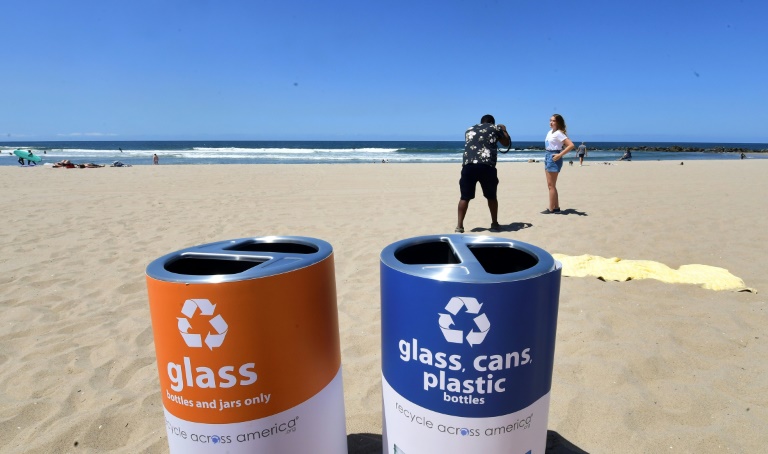
Garbage be gone: California Thursday passed an ambitious law mandating reduction of non-recyclable plastic by at least 30 percent in six years, while also placing responsibility on producers.

The measure is meant to tackle the persistent problem of plastic refuse — in California, about 85 percent of plastic waste ends up in landfills, according to the CalMatters publication.

“California won’t tolerate plastic waste that’s filling our waterways and making it harder to breathe. We’re holding polluters responsible and cutting plastics at the source,” Governor Gavin Newsom said after he signed the law Thursday.

Earlier in the day the bill had passed the state Senate unanimously and had passed the Assembly the day before.

The measure mandates that at least 30 percent of plastic packaging in the state be recyclable by January 1, 2028, and raises the amount to 65 percent by 2032.

It also requires a 25 percent reduction in non-recyclable expanded polystyrene, colloquially known as styrofoam, in three years, with a total ban to go in place if this goal is not met.

Single-use plastic containers, meanwhile, must decrease by 25 percent by 2032.

“This is the most comprehensive plastic waste reduction legislation in the nation,” The Nature Conservancy environmental nonprofit said.

The law, officially titled SB54, shifts the onus of responsibility for the plastic waste from users to producers, a move applauded by environmental organizations.

It clearly states that companies that do not comply with the measures will be fined up to $50,000 per day.

“Reducing plastic pollution at the source will cut emissions to air & water and reduce plastic that gets in our ocean,” tweeted the Oceana nonprofit.

“Countless hours of work have led to this moment,” state senator and bill author Ben Allen tweeted following his chamber’s vote.

“It’s time for California to lead the nation and world in curbing the plastic crisis. Our planet cannot wait.”

Close Bitnami banner
Bitnami