AFP

Samsung begins production of advanced 3nm chips

Samsung Electronics became the first chipmaker in the world to mass produce advanced 3-nanometre microchips, the company said Thursday, as it seeks to catch up with Taiwan’s TSMC.

The new chips will be smaller, more powerful and efficient, and will be used in high-performance computing applications before being put into gadgets such as mobile phones.

“Compared to 5nm process, the first-generation 3nm process can reduce power consumption by up to 45%, improve performance by 23% and reduce area by 16%,” Samsung said in a statement.

The South Korean conglomerate last month announced a five-year plan to invest 450 trillion won (US$356 billion), saying it would “bring forward the mass production of chips based on the 3-nanometer process”.

The vast majority of the world’s most advanced microchips are made by just two companies — Samsung and Taiwan’s TSMC — both of which are running at full capacity to alleviate a global shortage.

Samsung is the market leader in memory chips but it has been scrambling to catch up with TSMC in the advanced foundry business.

TSMC dominates more than half of the global foundry market, with clients including Apple and Qualcomm, while Samsung trails with around 16 percent market share, according to TrendForce.

TSMC plans to begin volume production of 3-nanometre technology in the second half of this year, and entered the development stage of 2-nanometre technology last year, according to the company’s 2021 annual report.

Japan's Kirin offloads Myanmar beer business over coup

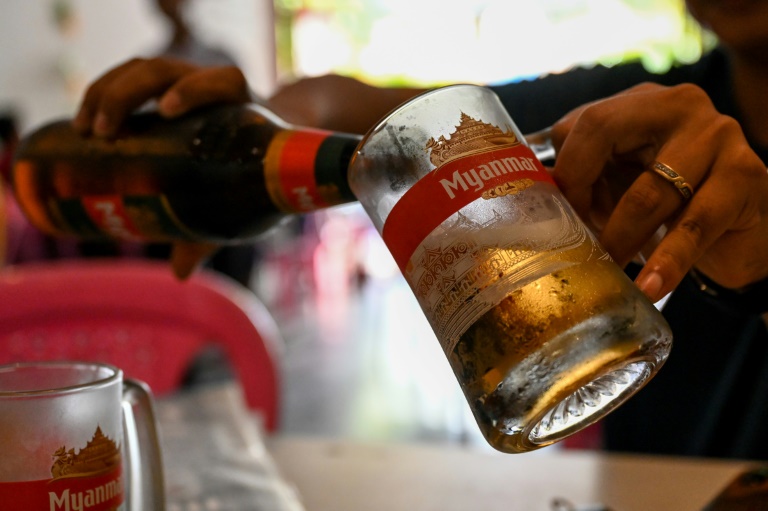
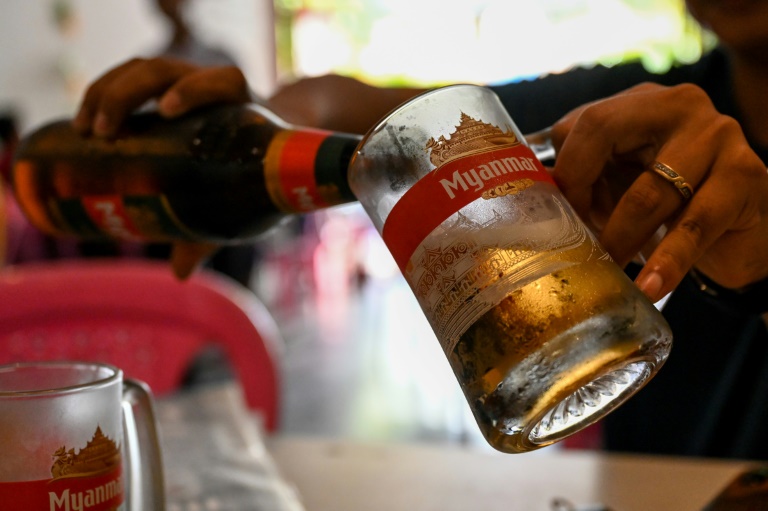
Japanese drinks giant Kirin said Thursday it has agreed to a buyout of its shares in a Myanmar joint venture with a junta-linked conglomerate, completing its exit from the market over the 2021 coup.

Days after the putsch in February 2021, Kirin announced it would end its joint venture Myanmar Brewery with the junta-linked MEHPCL, saying it was “deeply concerned by the recent actions of the military in Myanmar”.

But it struggled to disentangle itself from the secretive conglomerate and contested a bid by MEHPCL to dissolve the joint venture as it feared liquidation proceedings would not be fair.

Kirin said Thursday that a share buyback agreement worth about 22.4 billion yen ($164 million) had been reached to transfer its 51 percent stake back into the subsidiary, ending the joint venture.

“We are relieved to settle this matter within the announced deadline by the most appropriate means among several options,” Yoshinori Isozaki, Kirin’s president and CEO, said in a statement.

According to figures published by Kirin in 2018, Myanmar Brewery — whose beverages include the ubiquitous Myanmar Beer brand — boasted a market share of nearly 80 percent.

But Kirin had been under pressure even before the coup over its ties to the military, and launched an investigation after rights groups called for transparency into whether money from its joint venture had funded rights abuses.

Investors piled into Myanmar after the military relaxed its iron grip in 2011, paving the way for democratic reforms and economic liberalisation.

They poured money into telecoms, infrastructure, manufacturing and construction projects — before the coup upended the democratic interlude and damaged the economy.

But a raft of foreign companies have exited the market since the military seized power from Aung San Suu Kyi’s government, including oil giants TotalEnergies and Chevron and Norwegian telecoms operator Telenor.

Kirin’s Myanmar business generated 32.6 billion yen ($240 million at today’s rates) in revenue in 2019-20, less than two percent of the firm’s annual sales.

Japan's Kirin offloads Myanmar beer business over coup

Japanese drinks giant Kirin said Thursday it has agreed to a buyout of its shares in a Myanmar joint venture with a junta-linked conglomerate, completing its exit from the market over the 2021 coup.

Days after the putsch in February 2021, Kirin announced it would end its joint venture Myanmar Brewery with the junta-linked MEHPCL, saying it was “deeply concerned by the recent actions of the military in Myanmar”.

But it struggled to disentangle itself from the secretive conglomerate and contested a bid by MEHPCL to dissolve the joint venture as it feared liquidation proceedings would not be fair.

Kirin said Thursday that a share buyback agreement worth about 22.4 billion yen ($164 million) had been reached to transfer its 51 percent stake back into the subsidiary, ending the joint venture.

“We are relieved to settle this matter within the announced deadline by the most appropriate means among several options,” Yoshinori Isozaki, Kirin’s president and CEO, said in a statement.

According to figures published by Kirin in 2018, Myanmar Brewery — whose beverages include the ubiquitous Myanmar Beer brand — boasted a market share of nearly 80 percent.

But Kirin had been under pressure even before the coup over its ties to the military, and launched an investigation after rights groups called for transparency into whether money from its joint venture had funded rights abuses.

Investors piled into Myanmar after the military relaxed its iron grip in 2011, paving the way for democratic reforms and economic liberalisation.

They poured money into telecoms, infrastructure, manufacturing and construction projects — before the coup upended the democratic interlude and damaged the economy.

But a raft of foreign companies have exited the market since the military seized power from Aung San Suu Kyi’s government, including oil giants TotalEnergies and Chevron and Norwegian telecoms operator Telenor.

Kirin’s Myanmar business generated 32.6 billion yen ($240 million at today’s rates) in revenue in 2019-20, less than two percent of the firm’s annual sales.

India's women water warriors transform parched lands

As the monsoon storms bear down on India, a dedicated group of women hope that after years of backbreaking labour, water shortages will no longer leave their village high and dry.

The world’s second-most populous country is struggling to meet the water needs of its 1.4 billion people — a problem worsening as climate change makes weather patterns more unpredictable. 

Few places have it tougher than Bundelkhand, a region south of the Taj Mahal, where scarce water supplies have pushed despairing farmers on the plains to give up their lands and take up precarious work in the cities. 

“Our elders say that this stream used to run full throughout the year, but now there is not a single drop,” said Babita Rajput while guiding AFP past a bone-dry fissure in the earth near her village.

“There is a water crisis in our area,” she added. “All our wells have dried up.”

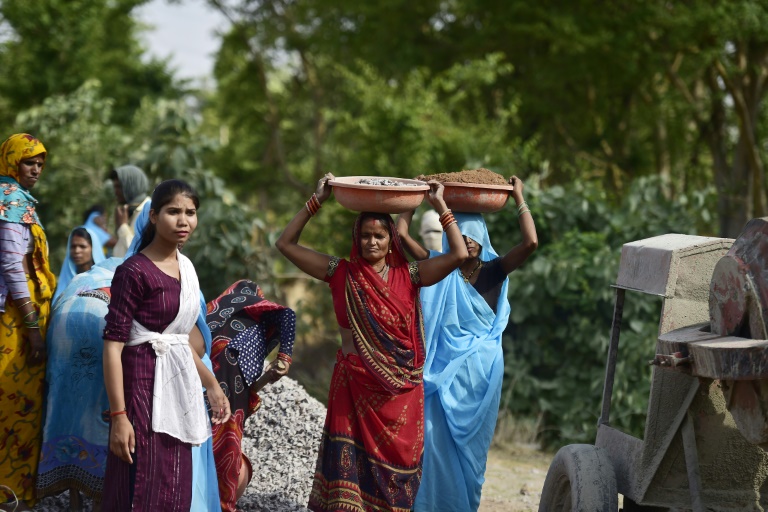
Three years ago, Rajput joined Jal Saheli (“Friends of Water”), a volunteer network of around 1,000 women working across Bundelkhand to rehabilitate and revive disappeared water sources. 

Together they carry rocks and mix concrete to build dams, ponds and embankments to catch the fruits of the June monsoon, a season which accounts for about 75 percent of India’s annual rainfall. 

Agrotha, where Rajput lives, is one of more than 300 villages where women are chalking out plans for new catchment sites, reservoirs and waterway revitalisations. 

Rajput said their work had helped them retain monsoon rainwater for longer and revive half a dozen water bodies around their village.

Though not yet self-sufficient, Agrotha’s residents are no longer among the roughly 600 million Indians that a government think-tank says face acute water shortages daily. 

The women’s efforts provide a rare glimmer of hope as national shortages worsen.

Water utilities in the capital New Delhi fail to meet demand in summer, with trucks regularly travelling into slums to supply residents unable to draw water from their taps.

India’s NITI Aayog public policy centre forecasts that around 40 percent of the country’s population could be without access to drinking water by the end of the decade.

– ‘Government has failed’ –

Erratic rainfall patterns and extreme heat have been linked to climate change in Bundelkhand, which has suffered several long dry spells since a drought was declared at the turn of the century.

Civil society activist Sanjay Singh helped train women in Agrotha to harvest and store rainwater after the surrounding land was desiccated by drought.

By doing so he helped the village rediscover knowledge that was lost decades earlier, when water went from being a community-managed resource to one administered by India’s government.  

“But government has failed to ensure water to every citizen, particularly in rural areas, pushing villagers to go back to the old practice,” he told AFP.

Before Agrotha’s irrigation project began, women had to walk miles every day in a desperate and often fruitless search for a well that was not dry.

In India’s villages, fetching water is traditionally the responsibility of women, several of whom have faced violence from their husbands after being unable to find enough for their households, Singh said.  

He added that drought had brought big social changes to the region, pushing men to move to cities and leave their families behind. 

But since it was founded in 2005, the Jal Saheli initiative has helped more than 110 villages become self-reliant for their water needs and aided in reversing the outward flow of people. 

– Dust bowl to oasis –

In the nearby Lalitpur district, the elderly Srikumar has seen the initiative transform her community from a dust bowl into an oasis.

She heard about the volunteer group a decade ago after suffering through years of water shortages, by the end of which every well and hand pump in her village of 500 people had run dry. 

Most of the farms in the area had turned barren because of a lack of irrigation, and dehydrated cattle herds were dying in summer temperatures close to 50 degrees Celsius (122 degrees Fahrenheit). 

“Villagers suffered a lot during those days,” Srikumar said. “Farming was impossible and men were fleeing their homes to cities to earn a living.”

With the help of Singh’s charity, Srikumar and a dozen other volunteers dug a football field-sized reservoir near the village that holds up to 10 feet (three metres) of water after the monsoon rains arrive.

The village now has enough water reserves to meet its needs year-round and replenish the earth that had dried out before their intervention.

“Things have changed for good. We have enough water now, not just for our homes but also for our cattle,” she told AFP. 

“Our lives would have been miserable without this pond,” she added. “It would have been very difficult to survive.”

Japan's Kirin offloads Myanmar beer business over coup

Japanese drinks giant Kirin said Thursday it has agreed to a buyout of its shares in a Myanmar joint venture with a junta-linked conglomerate, completing its exit from the market over the 2021 coup.

Days after the putsch in February 2021, Kirin announced it would end its joint venture Myanmar Brewery with the junta-linked MEHPCL, saying it was “deeply concerned by the recent actions of the military in Myanmar”.

But it struggled to disentangle itself from the secretive conglomerate and contested a bid by MEHPCL to dissolve the joint venture as it feared liquidation proceedings would not be fair.

Kirin said Thursday that a share buyback agreement worth about 22.4 billion yen ($164 billion) had been reached to transfer its 51 percent stake back into the subsidiary, ending the joint venture.

“We are relieved to settle this matter within the announced deadline by the most appropriate means among several options,” Yoshinori Isozaki, Kirin’s president and CEO, said in a statement.

According to figures published by Kirin in 2018, Myanmar Brewery — whose beverages include the ubiquitous Myanmar Beer brand — boasted a market share of nearly 80 percent.

But Kirin had been under pressure even before the coup over its ties to the military, and launched an investigation after rights groups called for transparency into whether money from its joint venture had funded rights abuses.

Investors piled into Myanmar after the military relaxed its iron grip in 2011, paving the way for democratic reforms and economic liberalisation.

They poured money into telecoms, infrastructure, manufacturing and construction projects — before the coup upended the democratic interlude and damaged the economy.

But a raft of foreign companies have exited the market since the military seized power from Aung San Suu Kyi’s government, including oil giants TotalEnergies and Chevron and Norwegian telecoms operator Telenor.

Kirin’s Myanmar business generated 32.6 billion yen ($240 million at today’s rates) in revenue in 2019-20, less than two percent of the firm’s annual sales.

Japan's Kirin offloads Myanmar beer business over coup

Japanese drinks giant Kirin said Thursday it has agreed to a buyout of its shares in a Myanmar joint venture with a junta-linked conglomerate, completing its exit from the market over the 2021 coup.

Days after the putsch in February 2021, Kirin announced it would end its joint venture Myanmar Brewery with the junta-linked MEHPCL, saying it was “deeply concerned by the recent actions of the military in Myanmar”.

But it struggled to disentangle itself from the secretive conglomerate and contested a bid by MEHPCL to dissolve the joint venture as it feared liquidation proceedings would not be fair.

Kirin said Thursday that a share buyback agreement worth about 22.4 billion yen ($164 billion) had been reached to transfer its 51 percent stake back into the subsidiary, ending the joint venture.

“We are relieved to settle this matter within the announced deadline by the most appropriate means among several options,” Yoshinori Isozaki, Kirin’s president and CEO, said in a statement.

According to figures published by Kirin in 2018, Myanmar Brewery — whose beverages include the ubiquitous Myanmar Beer brand — boasted a market share of nearly 80 percent.

But Kirin had been under pressure even before the coup over its ties to the military, and launched an investigation after rights groups called for transparency into whether money from its joint venture had funded rights abuses.

Investors piled into Myanmar after the military relaxed its iron grip in 2011, paving the way for democratic reforms and economic liberalisation.

They poured money into telecoms, infrastructure, manufacturing and construction projects — before the coup upended the democratic interlude and damaged the economy.

But a raft of foreign companies have exited the market since the military seized power from Aung San Suu Kyi’s government, including oil giants TotalEnergies and Chevron and Norwegian telecoms operator Telenor.

Kirin’s Myanmar business generated 32.6 billion yen ($240 million at today’s rates) in revenue in 2019-20, less than two percent of the firm’s annual sales.

Services, manufacturing rebound in China after Covid curbs eased

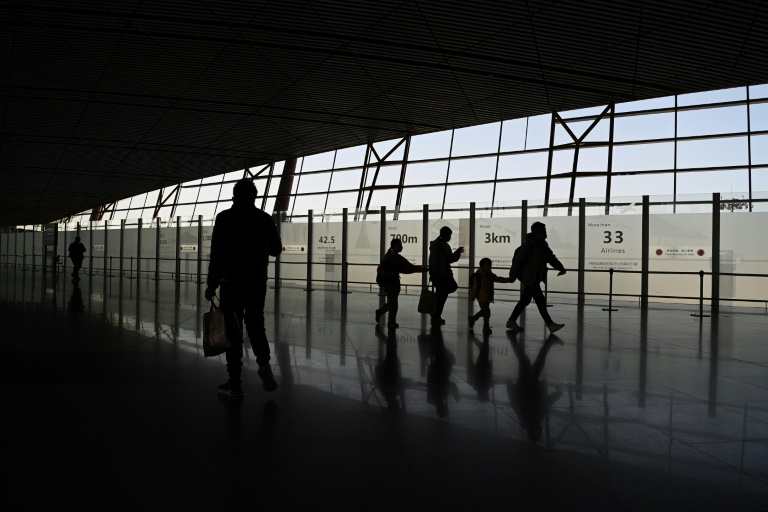
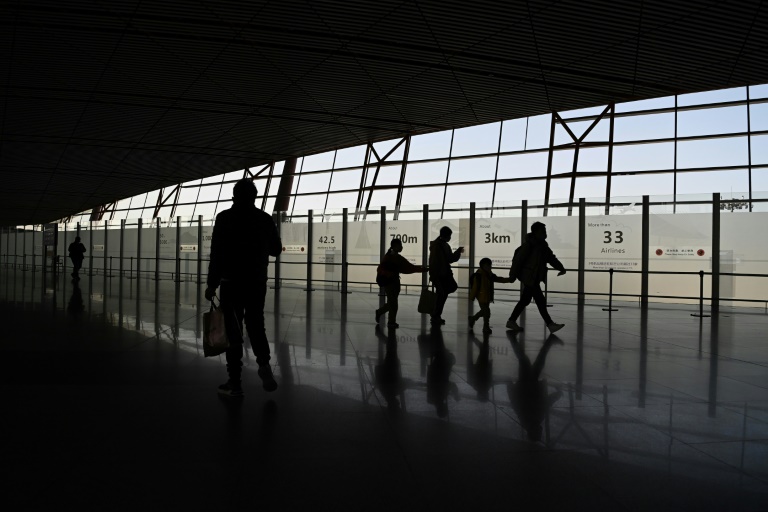
China’s factory and services activity picked up in June, official data showed Thursday, fuelled by the easing of Covid-19 restrictions in major cities such as Shanghai and Beijing.

The non-manufacturing Purchasing Managers’ Index (PMI), a key gauge of activity in the world’s second-biggest economy, defied expectations and surged to 54.7 points in June after three months of sluggish performance.

It was the first time since February that the reading was above the 50-point mark separating growth from contraction. It sat at 47.8 in May.

“As the situation of domestic epidemic prevention and control continued to improve and a package of policies… to stabilise the economy was implemented at a quicker pace, the overall recovery of our country’s economy has accelerated,” National Bureau of Statistics (NBS) senior statistician Zhao Qinghe said in a statement.

In particular, business activity in industries severely hit by the pandemic such as rail and air transport picked up in June, the statement said.

Construction activity also helped fuel the PMI boost.

But the “surprisingly rapid recovery in services” likely reflects a one-off boost from reopening, said Julian Evans-Pritchard, senior China economist at Capital Economics.

Manufacturing PMI rose to 50.2 points in June — similar to analyst expectations — up from 49.6 in May.

As work resumed after Covid lockdowns, production and demand in the sector picked up and delivery times improved, according to the NBS.

China is the only major economy still pursuing a zero-Covid approach of eliminating outbreaks as they emerge, using snap lockdowns and mass testing.

While the country is shortening quarantine times for new international arrivals, President Xi Jinping warned this week that China “would have faced unimaginable consequences” had it adopted a herd immunity or hands-off approach, signalling the government would persist with its current policy.

The approach has taken a harsh toll on the economy, with shops and factories forced to stop operations and supply chains strained.

The non-manufacturing rebound in June was “mainly due to more construction activity”, said Iris Pang, chief economist for Greater China at ING.

“We think that it will be challenging for the government to achieve the 5.5 percent GDP target set in March. There will need to be a lot more infrastructure activity if the government is to achieve this target.”

Services, manufacturing rebound in China after Covid curbs eased

China’s factory and services activity picked up in June, official data showed Thursday, fuelled by the easing of Covid-19 restrictions in major cities such as Shanghai and Beijing.

The non-manufacturing Purchasing Managers’ Index (PMI), a key gauge of activity in the world’s second-biggest economy, defied expectations and surged to 54.7 points in June after three months of sluggish performance.

It was the first time since February that the reading was above the 50-point mark separating growth from contraction. It sat at 47.8 in May.

“As the situation of domestic epidemic prevention and control continued to improve and a package of policies… to stabilise the economy was implemented at a quicker pace, the overall recovery of our country’s economy has accelerated,” National Bureau of Statistics (NBS) senior statistician Zhao Qinghe said in a statement.

In particular, business activity in industries severely hit by the pandemic such as rail and air transport picked up in June, the statement said.

Construction activity also helped fuel the PMI boost.

But the “surprisingly rapid recovery in services” likely reflects a one-off boost from reopening, said Julian Evans-Pritchard, senior China economist at Capital Economics.

Manufacturing PMI rose to 50.2 points in June — similar to analyst expectations — up from 49.6 in May.

As work resumed after Covid lockdowns, production and demand in the sector picked up and delivery times improved, according to the NBS.

China is the only major economy still pursuing a zero-Covid approach of eliminating outbreaks as they emerge, using snap lockdowns and mass testing.

While the country is shortening quarantine times for new international arrivals, President Xi Jinping warned this week that China “would have faced unimaginable consequences” had it adopted a herd immunity or hands-off approach, signalling the government would persist with its current policy.

The approach has taken a harsh toll on the economy, with shops and factories forced to stop operations and supply chains strained.

The non-manufacturing rebound in June was “mainly due to more construction activity”, said Iris Pang, chief economist for Greater China at ING.

“We think that it will be challenging for the government to achieve the 5.5 percent GDP target set in March. There will need to be a lot more infrastructure activity if the government is to achieve this target.”

Asian markets mostly down but China data offers some light

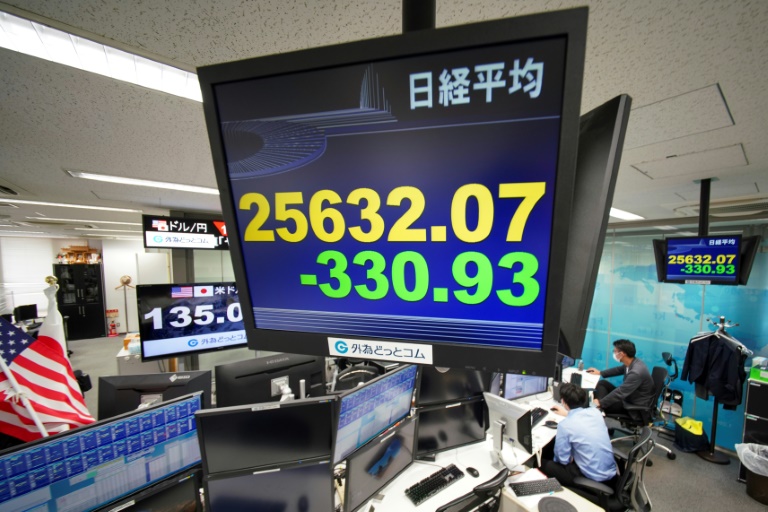
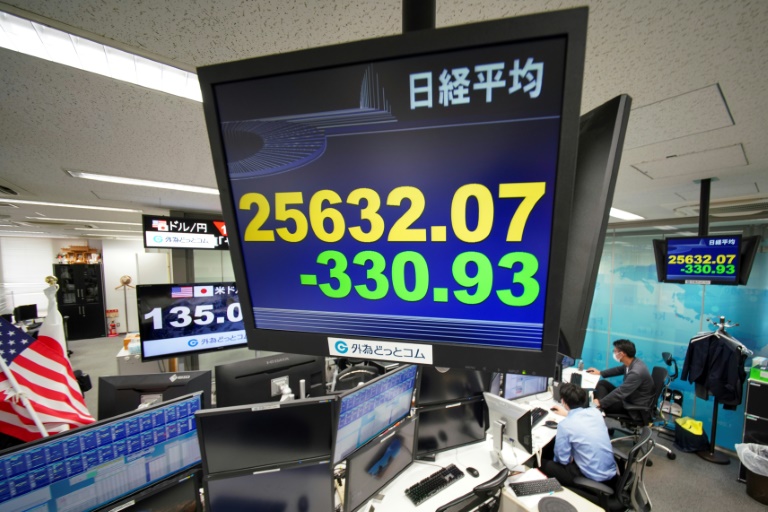
Most Asian markets fell again Thursday as traders fear that hefty rate hikes to rein in soaring inflation will spark a recession, though a slight improvement in Chinese data did provide some cheer.

The rally enjoyed across the world last week appears to have given way to nervousness about the economic outlook, while the Ukraine war continues to sow uncertainty.

The surge in inflation to multi-decade highs has forced central banks to swiftly tighten pandemic-era monetary policies, dealing a hefty blow to equities, particularly tech firms who are susceptible to higher borrowing costs.

The Federal Reserve has already sharply lifted rates and is expected to announce a second successive 75-basis-point lift next month.

There had been hope that policymakers would ease off their hikes as economies show signs of slowing, but analysts say some officials are less concerned about a recession than letting prices run out of control.

Fed boss Jerome Powell this month admitted the moves could lead to a contraction, suggesting he was not averse to it.

On Wednesday, Cleveland Fed chief Loretta Mester said was keen to see the benchmark rate hit 3-3.5 percent this year and “a little bit above four percent next year”.

“There are risks of recession,” she told CNBC. “We’re tightening monetary policy. My baseline forecast is for growth to be slower this year.”

The threat of an extended period of elevated inflation and rate hikes has left traders weary, and markets in the red.

While Wall Street ended on a tepid note Wednesday it was unable to bounce back from the previous day’s plunge.

And Asia also struggled, with Tokyo, Sydney, Seoul, Singapore, Taipei, Manila and Wellington all down.

– China support hope –

However, Hong Kong and Shanghai edged up. That came after official figures showed a forecast-beating improvement in China’s services sector thanks to the easing of painful Covid-19 restrictions in major cities including Shanghai and Beijing.

The non-manufacturing Purchasing Managers’ Index surged to 54.7 points in June, the first time it has been above the 50-point growth mark since February.

The manufacturing gauge hit 50.2, which was also its first time in growth since February and provided some hope that the world’s number two economy could be picking up after the pain caused by lockdowns.

“As the situation of domestic epidemic prevention and control continued to improve and a package of policies… to stabilise the economy was implemented at a quicker pace, the overall recovery of our country’s economy has accelerated,” National Bureau of Statistics statistician Zhao Qinghe said.

And SPI Asset Management strategist Stephen Innes added that the government and People’s Bank of China could now have some room to provide growth support.

“With (consumer price) inflation low in China relative to its peers, there is plenty of scope for monetary and fiscal conditions to loosen in the second half of the year, supporting activity,” he said in a note.

Crude fluctuated after dropping on Wednesday as data showed demand in the United States appeared to be softening even as the driving season gets under way, and as recession fears begin to kick in.

“The higher price environment appears to be doing its job when it comes to demand,” Warren Patterson, of ING Groep NV, said.

The drop comes as OPEC and other major producers including Russia prepare to meet on their output agreement, with most predicting they are unlikely to open the taps further.

“I am not expecting any surprises from the group. I would imagine it will be a fairly quick meeting,” Patterson said.

– Key figures at around 0300 GMT –

Tokyo – Nikkei 225: DOWN 0.9 percent at 26,561.05 (break)

Hong Kong – Hang Seng Index: UP 0.3 percent at 22,048.60

Shanghai – Composite: UP 0.8 percent at 3,387.96

West Texas Intermediate: UP 0.2 percent at $109.95 per barrel

Brent North Sea crude: DOWN 0.4 percent at $115.77 per barrel

Dollar/yen: DOWN at 136.56 yen from 136.66 yen Wednesday

Euro/dollar: UP at $1.0456 from $1.0444 

Pound/dollar: UP at $1.2139 from $1.2119

Euro/pound: DOWN at 86.13 pence from 86.15 pence

New York – Dow: UP 0.3 percent at 31,029.31 (close)

London – FTSE 100: DOWN 0.2 percent at 7,312.32 (close)

Asian markets mostly down but China data offers some light

Most Asian markets fell again Thursday as traders fear that hefty rate hikes to rein in soaring inflation will spark a recession, though a slight improvement in Chinese data did provide some cheer.

The rally enjoyed across the world last week appears to have given way to nervousness about the economic outlook, while the Ukraine war continues to sow uncertainty.

The surge in inflation to multi-decade highs has forced central banks to swiftly tighten pandemic-era monetary policies, dealing a hefty blow to equities, particularly tech firms who are susceptible to higher borrowing costs.

The Federal Reserve has already sharply lifted rates and is expected to announce a second successive 75-basis-point lift next month.

There had been hope that policymakers would ease off their hikes as economies show signs of slowing, but analysts say some officials are less concerned about a recession than letting prices run out of control.

Fed boss Jerome Powell this month admitted the moves could lead to a contraction, suggesting he was not averse to it.

On Wednesday, Cleveland Fed chief Loretta Mester said was keen to see the benchmark rate hit 3-3.5 percent this year and “a little bit above four percent next year”.

“There are risks of recession,” she told CNBC. “We’re tightening monetary policy. My baseline forecast is for growth to be slower this year.”

The threat of an extended period of elevated inflation and rate hikes has left traders weary, and markets in the red.

While Wall Street ended on a tepid note Wednesday it was unable to bounce back from the previous day’s plunge.

And Asia also struggled, with Tokyo, Sydney, Seoul, Singapore, Taipei, Manila and Wellington all down.

– China support hope –

However, Hong Kong and Shanghai edged up. That came after official figures showed a forecast-beating improvement in China’s services sector thanks to the easing of painful Covid-19 restrictions in major cities including Shanghai and Beijing.

The non-manufacturing Purchasing Managers’ Index surged to 54.7 points in June, the first time it has been above the 50-point growth mark since February.

The manufacturing gauge hit 50.2, which was also its first time in growth since February and provided some hope that the world’s number two economy could be picking up after the pain caused by lockdowns.

“As the situation of domestic epidemic prevention and control continued to improve and a package of policies… to stabilise the economy was implemented at a quicker pace, the overall recovery of our country’s economy has accelerated,” National Bureau of Statistics statistician Zhao Qinghe said.

And SPI Asset Management strategist Stephen Innes added that the government and People’s Bank of China could now have some room to provide growth support.

“With (consumer price) inflation low in China relative to its peers, there is plenty of scope for monetary and fiscal conditions to loosen in the second half of the year, supporting activity,” he said in a note.

Crude fluctuated after dropping on Wednesday as data showed demand in the United States appeared to be softening even as the driving season gets under way, and as recession fears begin to kick in.

“The higher price environment appears to be doing its job when it comes to demand,” Warren Patterson, of ING Groep NV, said.

The drop comes as OPEC and other major producers including Russia prepare to meet on their output agreement, with most predicting they are unlikely to open the taps further.

“I am not expecting any surprises from the group. I would imagine it will be a fairly quick meeting,” Patterson said.

– Key figures at around 0300 GMT –

Tokyo – Nikkei 225: DOWN 0.9 percent at 26,561.05 (break)

Hong Kong – Hang Seng Index: UP 0.3 percent at 22,048.60

Shanghai – Composite: UP 0.8 percent at 3,387.96

West Texas Intermediate: UP 0.2 percent at $109.95 per barrel

Brent North Sea crude: DOWN 0.4 percent at $115.77 per barrel

Dollar/yen: DOWN at 136.56 yen from 136.66 yen Wednesday

Euro/dollar: UP at $1.0456 from $1.0444 

Pound/dollar: UP at $1.2139 from $1.2119

Euro/pound: DOWN at 86.13 pence from 86.15 pence

New York – Dow: UP 0.3 percent at 31,029.31 (close)

London – FTSE 100: DOWN 0.2 percent at 7,312.32 (close)

Close Bitnami banner
Bitnami