AFP

Philippines' Ressa says 'business as usual' despite news outlet's shutdown order

Philippine journalist Maria Ressa’s news company Rappler was continuing to work “as usual”, the Nobel Peace Prize winner said on Wednesday, after it was ordered to shut down by authorities ahead of President Rodrigo Duterte’s last day in office.

Ressa has been a vocal critic of Duterte and the deadly drug war he launched in 2016, triggering what media advocates say is a grinding series of criminal charges, probes and online attacks against her and Rappler.

The latest blow was delivered by the Philippine Securities and Exchange Commission. 

In a statement Wednesday, it confirmed the “revocation of the certificates of incorporation” of Rappler for violating “constitutional and statutory restrictions on foreign ownership in mass media”.

Rappler said the decision  “effectively confirmed the shutdown” of the company and vowed to appeal, describing the proceedings as “highly irregular”.

But Ressa was characteristically defiant, vowing the news site would continue to operate as they followed the legal process.

“We continue to work, it is business as usual,” Ressa told reporters, adding “we can only hope for the best” under Duterte’s successor Ferdinand Marcos Jr.

Marcos Jr, the son of the Philippines’ former dictator who presided over widespread human rights abuses and corruption, takes over from Duterte on Thursday.

Activists fear Marcos Jr’s presidency could worsen the situation for human rights and freedom of speech in the country.

– ‘Retaliation’ –

Rappler has had to fight for survival as Duterte’s government accused it of violating a constitutional ban on foreign ownership in securing funding, as well as tax evasion. 

It has also been accused of cyber libel — a new criminal law introduced in 2012, the same year Rappler was founded.

Duterte has attacked the website by name, calling it a “fake news outlet”, over a story about one of his closest aides.

The news organisation is accused of allowing foreigners to take control of its website through its parent company Rappler Holdings’ issuance of “depositary receipts”.

Under the constitution, investment in media is reserved for Filipinos or Filipino-controlled entities.

The case springs from a 2015 investment from the US-based Omidyar Network, which was established by eBay founder Pierre Omidyar.  

Omidyar Network later transferred its investment in Rappler to the site’s local managers to stave off efforts by Duterte to shut it down.

“Let the law take its course, and allow the Securities and Exchange Commission (to) perform its mandate,” presidential spokesman Martin Andanar said.

“Rappler may avail of remedies accorded to it by law.”

Ressa, who is also a US citizen, and Russian journalist Dmitry Muratov were awarded the Nobel Peace Prize in October for their efforts to “safeguard freedom of expression”.

Ressa is fighting at least seven court cases, including an appeal against a conviction in a cyber libel case, for which she is on bail and faces up to six years in prison. 

Rappler faces about eight cases, Ressa said.

– ‘Legal harassment’ –

Human Rights Watch said the website was facing “retaliation for its fearless reporting”.

The International Center For Journalists (ICFJ) urged the Philippine government to reverse its order to shut down Rappler. 

“This legal harassment not only costs Rappler time, money and energy. It enables relentless and prolific online violence designed to chill independent reporting,” ICFJ said on Twitter. 

The future of Rappler and its battle in the country’s highly politicised legal system under Marcos Jr’s presidency is uncertain. 

The president-elect has given few clues about his views on the website and the broader issue of freedom of speech. 

He has largely shunned media interviews and press conferences, preferring to communicate via his press secretary and through social media.

US Second Gentleman Douglas Emhoff, who is heading a delegation to the Philippines for Marcos Jr’s inauguration, would not comment on the Rappler case.

He told reporters in Manila that the US administration had a “deep commitment towards freedom of speech, freedom of expression, human rights”.
Aquaculture drives aquatic food yields to new high

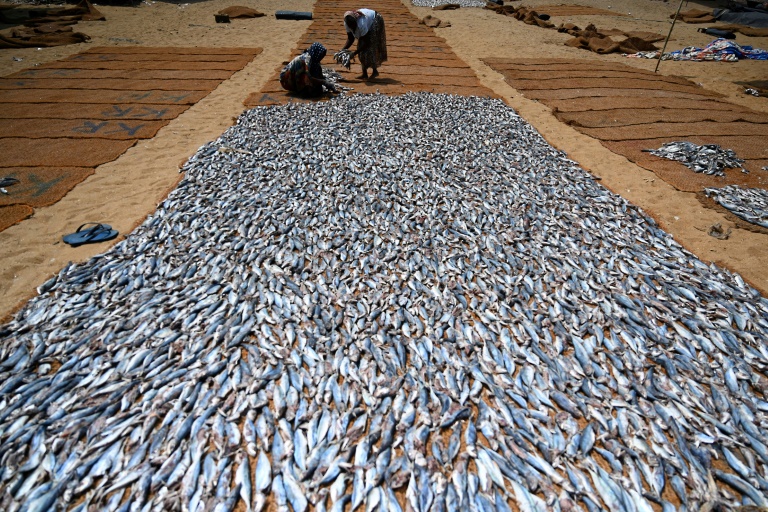
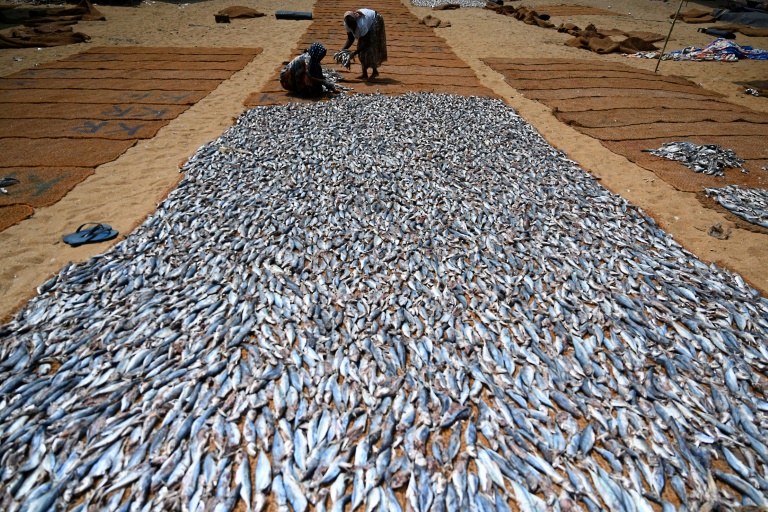
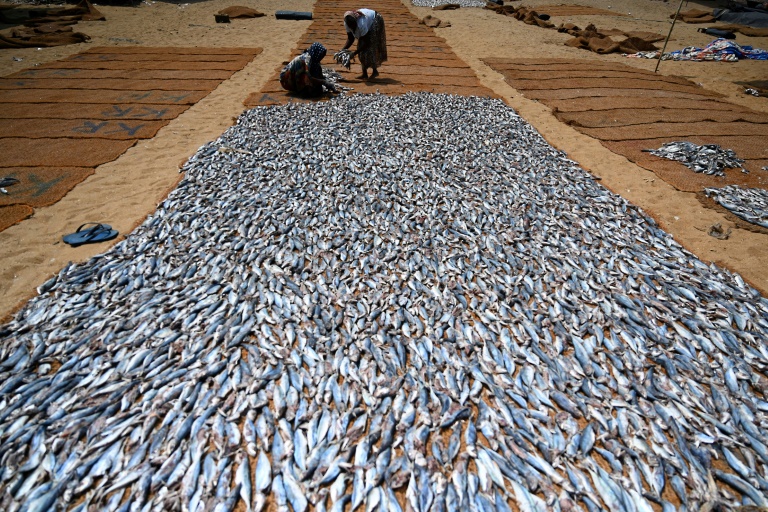
The production of wild and farm-raised fish, shellfish and algae reached record levels in 2020, and future increases could be vital to fighting world hunger, the Food and Agriculture Organization said Wednesday.

Driven by sustained growth in aquaculture, global fisheries and aquatic farming together hauled in 214 million tonnes, the UN agency said in a report.

The total first-sale value of 2020 production topped $400 million, with $265 million coming from aquaculture, a sector poised for further expansion.

These trend lines are good news for a world facing price hikes and food shortages due to the war in Ukraine, disrupted supply chains, and inflation. 

“The growth of fisheries and aquaculture is vital in our efforts to end global hunger and malnutrition,” said FAO director Qu Dongyu. 

But overfished oceans, climate change and pollution — if left unaddressed — could threaten that potential, the UN agency warned.

“Aquaculture growth has often occurred at the expense of the environment,” Qu noted. 

Many shrimp farms in Vietnam, China and Cambodia, for example, have displaced mangrove forests that are nurseries for marine life and critical barriers against storm surges. 

Climate change poses additional challenges, experts say. 

“Warming waters will create environments where there’s more likelihood of bacterial disease,” said Josh Madeira, director of fisheries and aquaculture policy at the Monterey Bay Aquarium.

That means a sector already highly reliant on antibiotics will likely become even more so, he told AFP.

Production of aquatic animals in 2020 — totalling 178 million tonnes — was evenly divided between fisheries and aquaculture, according to the FAO report.

The remaining 36 million tonnes was algae production.

– Overfished stocks –

Yields of fish, shrimp and other shellfish destined for human consumption are more than 60 percent higher than during the 1990s, far outpacing population growth, according to the report, released during the UN Ocean Conference in Lisbon.

On average, people worldwide consume over 20 kilos (44 pounds) of aquatic foods per year today, more than double the amount 50 years ago.

Globally, 17 percent of the protein consumed by humans comes from aquatic sources. In many Asian and African countries, that figure rises to more than 50 percent.

Wild and farmed food from the seas and inland waters are also a critical source of essential omega-3 fatty acids and micronutrients, recent research has shown.

“Aquatic foods are increasingly recognised for their key role in food security and nutrition,” Qu said. 

Nearly 90 percent of aquatic animal production is for human consumption, with the rest destined for non-food uses such as fishmeal and fish oil.

Asian countries were the source of 70 percent of the world’s fisheries and aquaculture of aquatic animals in 2020.

China remaines by far the top fisheries producer, followed by Indonesia, Peru, Russia, the United States and Vietnam.

So-called capture fisheries of commercial species in the wild — including tuna, cod, salmon and especially anchoveta — dropped by four percent in 2020 compared to the average of the previous three years.

Part of the drop can be attributed to covid-related disruptions, but long-term decline is due to the pressures of overfishing, experts say. 

Catch levels peaked in the mid-1990s, and have — with fluctuations — stagnated since then.

“The FAO estimates that 34 percent of caught fish come from overfished stocks,” University of British Columbia economist and fisheries expert Rashid Sumaila told AFP.

“But they are very conservative,” he added. “Independent studies put that figure at 50 percent.”

Aggravating the problem is some $34 billion dollars annually in government subsidies. 

Earlier this month, the World Trade Organization (WTO) took preliminary steps to reduce these handouts to industry, but experts say the measures will have limited effect and take years to implement.

Aquaculture drives aquatic food yields to new high

The production of wild and farm-raised fish, shellfish and algae reached record levels in 2020, and future increases could be vital to fighting world hunger, the Food and Agriculture Organization said Wednesday.

Driven by sustained growth in aquaculture, global fisheries and aquatic farming together hauled in 214 million tonnes, the UN agency said in a report.

The total first-sale value of 2020 production topped $400 million, with $265 million coming from aquaculture, a sector poised for further expansion.

These trend lines are good news for a world facing price hikes and food shortages due to the war in Ukraine, disrupted supply chains, and inflation. 

“The growth of fisheries and aquaculture is vital in our efforts to end global hunger and malnutrition,” said FAO director Qu Dongyu. 

But overfished oceans, climate change and pollution — if left unaddressed — could threaten that potential, the UN agency warned.

“Aquaculture growth has often occurred at the expense of the environment,” Qu noted. 

Many shrimp farms in Vietnam, China and Cambodia, for example, have displaced mangrove forests that are nurseries for marine life and critical barriers against storm surges. 

Climate change poses additional challenges, experts say. 

“Warming waters will create environments where there’s more likelihood of bacterial disease,” said Josh Madeira, director of fisheries and aquaculture policy at the Monterey Bay Aquarium.

That means a sector already highly reliant on antibiotics will likely become even more so, he told AFP.

Production of aquatic animals in 2020 — totalling 178 million tonnes — was evenly divided between fisheries and aquaculture, according to the FAO report.

The remaining 36 million tonnes was algae production.

– Overfished stocks –

Yields of fish, shrimp and other shellfish destined for human consumption are more than 60 percent higher than during the 1990s, far outpacing population growth, according to the report, released during the UN Ocean Conference in Lisbon.

On average, people worldwide consume over 20 kilos (44 pounds) of aquatic foods per year today, more than double the amount 50 years ago.

Globally, 17 percent of the protein consumed by humans comes from aquatic sources. In many Asian and African countries, that figure rises to more than 50 percent.

Wild and farmed food from the seas and inland waters are also a critical source of essential omega-3 fatty acids and micronutrients, recent research has shown.

“Aquatic foods are increasingly recognised for their key role in food security and nutrition,” Qu said. 

Nearly 90 percent of aquatic animal production is for human consumption, with the rest destined for non-food uses such as fishmeal and fish oil.

Asian countries were the source of 70 percent of the world’s fisheries and aquaculture of aquatic animals in 2020.

China remaines by far the top fisheries producer, followed by Indonesia, Peru, Russia, the United States and Vietnam.

So-called capture fisheries of commercial species in the wild — including tuna, cod, salmon and especially anchoveta — dropped by four percent in 2020 compared to the average of the previous three years.

Part of the drop can be attributed to covid-related disruptions, but long-term decline is due to the pressures of overfishing, experts say. 

Catch levels peaked in the mid-1990s, and have — with fluctuations — stagnated since then.

“The FAO estimates that 34 percent of caught fish come from overfished stocks,” University of British Columbia economist and fisheries expert Rashid Sumaila told AFP.

“But they are very conservative,” he added. “Independent studies put that figure at 50 percent.”

Aggravating the problem is some $34 billion dollars annually in government subsidies. 

Earlier this month, the World Trade Organization (WTO) took preliminary steps to reduce these handouts to industry, but experts say the measures will have limited effect and take years to implement.

Aquaculture drives aquatic food yields to new high

The production of wild and farm-raised fish, shellfish and algae reached record levels in 2020, and future increases could be vital to fighting world hunger, the Food and Agriculture Organization said Wednesday.

Driven by sustained growth in aquaculture, global fisheries and aquatic farming together hauled in 214 million tonnes, the UN agency said in a report.

The total first-sale value of 2020 production topped $400 million, with $265 million coming from aquaculture, a sector poised for further expansion.

These trend lines are good news for a world facing price hikes and food shortages due to the war in Ukraine, disrupted supply chains, and inflation. 

“The growth of fisheries and aquaculture is vital in our efforts to end global hunger and malnutrition,” said FAO director Qu Dongyu. 

But overfished oceans, climate change and pollution — if left unaddressed — could threaten that potential, the UN agency warned.

“Aquaculture growth has often occurred at the expense of the environment,” Qu noted. 

Many shrimp farms in Vietnam, China and Cambodia, for example, have displaced mangrove forests that are nurseries for marine life and critical barriers against storm surges. 

Climate change poses additional challenges, experts say. 

“Warming waters will create environments where there’s more likelihood of bacterial disease,” said Josh Madeira, director of fisheries and aquaculture policy at the Monterey Bay Aquarium.

That means a sector already highly reliant on antibiotics will likely become even more so, he told AFP.

Production of aquatic animals in 2020 — totalling 178 million tonnes — was evenly divided between fisheries and aquaculture, according to the FAO report.

The remaining 36 million tonnes was algae production.

– Overfished stocks –

Yields of fish, shrimp and other shellfish destined for human consumption are more than 60 percent higher than during the 1990s, far outpacing population growth, according to the report, released during the UN Ocean Conference in Lisbon.

On average, people worldwide consume over 20 kilos (44 pounds) of aquatic foods per year today, more than double the amount 50 years ago.

Globally, 17 percent of the protein consumed by humans comes from aquatic sources. In many Asian and African countries, that figure rises to more than 50 percent.

Wild and farmed food from the seas and inland waters are also a critical source of essential omega-3 fatty acids and micronutrients, recent research has shown.

“Aquatic foods are increasingly recognised for their key role in food security and nutrition,” Qu said. 

Nearly 90 percent of aquatic animal production is for human consumption, with the rest destined for non-food uses such as fishmeal and fish oil.

Asian countries were the source of 70 percent of the world’s fisheries and aquaculture of aquatic animals in 2020.

China remaines by far the top fisheries producer, followed by Indonesia, Peru, Russia, the United States and Vietnam.

So-called capture fisheries of commercial species in the wild — including tuna, cod, salmon and especially anchoveta — dropped by four percent in 2020 compared to the average of the previous three years.

Part of the drop can be attributed to covid-related disruptions, but long-term decline is due to the pressures of overfishing, experts say. 

Catch levels peaked in the mid-1990s, and have — with fluctuations — stagnated since then.

“The FAO estimates that 34 percent of caught fish come from overfished stocks,” University of British Columbia economist and fisheries expert Rashid Sumaila told AFP.

“But they are very conservative,” he added. “Independent studies put that figure at 50 percent.”

Aggravating the problem is some $34 billion dollars annually in government subsidies. 

Earlier this month, the World Trade Organization (WTO) took preliminary steps to reduce these handouts to industry, but experts say the measures will have limited effect and take years to implement.

World equities slide on recession fear

Global stock markets nursed steep losses Wednesday on resurgent fear that sharp interest rate hikes, aimed at tackling runaway inflation, could spark recession, dealers said.

Asia and Europe slumped after a gloomy US consumer confidence report had sent Wall Street tumbling on Tuesday.

European sentiment was rocked also by data showing Spanish inflation rocketed to a 37-year peak of 10.2 percent in June on rising energy and food prices. 

The news sent the Madrid stock market down 1.8 percent, mirroring losses in Frankfurt and Hong Kong.

“So much for the big stock market comeback. Another day, another sea of red on the market,” said AJ Bell investment director Russ Mould.

The selloff followed more than a week of global gains caused by hopes that any signs of contraction could give central banks room to ease up on their pace of monetary tightening.

But New York stocks tanked Tuesday on data showing confidence among US consumers — a key driver of the world’s top economy — had fallen to its lowest level in more than a year.

The data re-ignited stubborn worries over the strength of the world economy, and eclipsed news of a surprise move by China to slash the quarantine period for incoming travellers.

That had raised hopes for further relaxations that can allow the country’s giant economy to recover more quickly.

– ‘Down the drain’ –

“With signs that consumer confidence is seeping away, worries that global growth will go down the drain have returned to rattle financial markets,” said Susannah Streeter, senior investment and markets analyst at Hargreaves Lansdown.

“Covid restrictions may have eased for international travellers to China as infections rates slow, but one global problem is being replaced by another — fear that recessions are looming around the world.”

Fed officials on Tuesday tried to play down the chances of a recession, expressing hope of a soft landing.

Oil prices advanced on expectations of demand growth as China lifts Covid restrictions and owing to tight supplies following bans on Russian imports.

Observers warned that G7 plans for a price cap on Russian crude was unlikely to have a massive impact on benchmark values.

– Key figures at around 1100 GMT –

London – FTSE 100: DOWN 0.5 percent at 7,288.04 points

Frankfurt – DAX: DOWN 1.9 percent at 12,985.01

Paris – CAC 40: DOWN 1.2 percent at 6,012.53

EURO STOXX 50: DOWN 1.3 percent at 3,504.94

Tokyo – Nikkei 225: DOWN 0.9 percent at 26,804.60 (close)

Hong Kong – Hang Seng Index: DOWN 1.9 percent at 21,996.89 (close)

Shanghai – Composite: DOWN 1.4 percent at 3,361.52 (close)

New York – Dow: DOWN 1.6 percent at 30,946.99 (close)

Brent North Sea crude: UP 0.6 percent at $118.65 per barrel

West Texas Intermediate: UP 0.7 percent at $112.55 per barrel

Euro/dollar: UP at $1.0525 from $1.0519 Tuesday

Pound/dollar: DOWN at $1.2159 from $1.2184

Euro/pound: UP at 86.57 pence from 86.33 pence

Dollar/yen: UP at 136.48 yen from 136.14 yen

World equities slide on recession fear

Global stock markets nursed steep losses Wednesday on resurgent fear that sharp interest rate hikes, aimed at tackling runaway inflation, could spark recession, dealers said.

Asia and Europe slumped after a gloomy US consumer confidence report had sent Wall Street tumbling on Tuesday.

European sentiment was rocked also by data showing Spanish inflation rocketed to a 37-year peak of 10.2 percent in June on rising energy and food prices. 

The news sent the Madrid stock market down 1.8 percent, mirroring losses in Frankfurt and Hong Kong.

“So much for the big stock market comeback. Another day, another sea of red on the market,” said AJ Bell investment director Russ Mould.

The selloff followed more than a week of global gains caused by hopes that any signs of contraction could give central banks room to ease up on their pace of monetary tightening.

But New York stocks tanked Tuesday on data showing confidence among US consumers — a key driver of the world’s top economy — had fallen to its lowest level in more than a year.

The data re-ignited stubborn worries over the strength of the world economy, and eclipsed news of a surprise move by China to slash the quarantine period for incoming travellers.

That had raised hopes for further relaxations that can allow the country’s giant economy to recover more quickly.

– ‘Down the drain’ –

“With signs that consumer confidence is seeping away, worries that global growth will go down the drain have returned to rattle financial markets,” said Susannah Streeter, senior investment and markets analyst at Hargreaves Lansdown.

“Covid restrictions may have eased for international travellers to China as infections rates slow, but one global problem is being replaced by another — fear that recessions are looming around the world.”

Fed officials on Tuesday tried to play down the chances of a recession, expressing hope of a soft landing.

Oil prices advanced on expectations of demand growth as China lifts Covid restrictions and owing to tight supplies following bans on Russian imports.

Observers warned that G7 plans for a price cap on Russian crude was unlikely to have a massive impact on benchmark values.

– Key figures at around 1100 GMT –

London – FTSE 100: DOWN 0.5 percent at 7,288.04 points

Frankfurt – DAX: DOWN 1.9 percent at 12,985.01

Paris – CAC 40: DOWN 1.2 percent at 6,012.53

EURO STOXX 50: DOWN 1.3 percent at 3,504.94

Tokyo – Nikkei 225: DOWN 0.9 percent at 26,804.60 (close)

Hong Kong – Hang Seng Index: DOWN 1.9 percent at 21,996.89 (close)

Shanghai – Composite: DOWN 1.4 percent at 3,361.52 (close)

New York – Dow: DOWN 1.6 percent at 30,946.99 (close)

Brent North Sea crude: UP 0.6 percent at $118.65 per barrel

West Texas Intermediate: UP 0.7 percent at $112.55 per barrel

Euro/dollar: UP at $1.0525 from $1.0519 Tuesday

Pound/dollar: DOWN at $1.2159 from $1.2184

Euro/pound: UP at 86.57 pence from 86.33 pence

Dollar/yen: UP at 136.48 yen from 136.14 yen

US boosts Europe forces as expanding NATO squares up to Russia

The United States will reinforce Europe’s defences with a wave of new military deployments, President Joe Biden announced Wednesday, as more Russian missiles smashed into Ukrainian cities.

News of the US plan came as NATO leaders met to welcome Sweden and Finland as candidates to join the alliance, a double blow to Russia’s President Vladimir Putin and his bid to redraw Europe’s security map.

Biden boasted that the US announcement was exactly what Putin “didn’t want” and Moscow reacted with predictable fury, denouncing Sweden and Finland’s entry plan as “destabilising” and accusing an “aggressive” NATO of seeking to contain Russia.

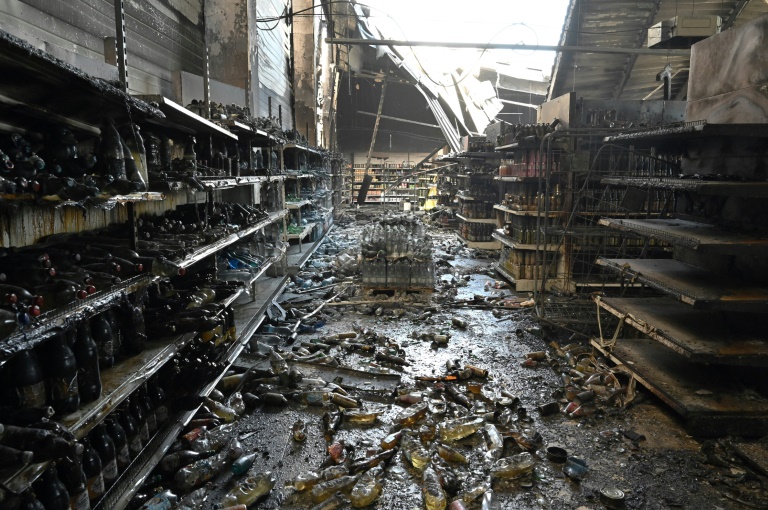
As Western leaders met in Madrid, in Ukraine officials complained that Russian missiles had hit civilian housing and businesses in and around the cities of Dnipro, Mykolaiv and Kharkiv, leaving at least seven dead and 14 wounded.

In Kremenchuk, the town where a Russian missile on Monday destroyed a shopping centre and — according to local officials — killed at least 18 civilians, clearing operations continued.

A giant crane was working near the near the site of the impact and in the rubble-strewn parking area shopping trolleys piled with clothes and household goods lay abandoned.

Western leaders have dubbed the Kremenchuk strike a war crime, and Ukraine’s President Volodymyr Zelensky has demanded that UN investigators visit. Russia said it targeted a Ukrainian depot storing Western arms. 

– ‘What needs to be done’ –

The Russian defence ministry said it had inflicted severe casualties on Ukrainian troops defending the town of Lysychansk, in the eastern Donbas region, and said the Kharkiv attack had hit Ukrainian command centres and a training base for foreign “mercenaries”.

Moscow’s February 24 invasion of pro-Western Ukraine triggered massive economic sanctions and a wave of support for Zelensky’s government, including deliveries of advanced weapons. 

At this week’s summit, two formerly neutral European countries — Sweden and Russia’s north-western neighbour Finland — will be accepted as candidates to join NATO and Washington has announced that it will shift the headquarters of its 5th Army Corps to Poland.

An army brigade will rotate in and out of Romania, two squadrons of F-35 fighters will deploy to Britain, US air defence systems will be sent to Germany and Italy and the fleet of US Navy destroyers in Spain will grow from four to six.

“That’s exactly what he didn’t want but exactly what needs to be done to guarantee security for Europe,” Biden said, of Putin’s efforts to roll back Western influence and re-establish influence or control over territories of the former Russian empire.

NATO Secretary General Jens Stoltenberg said NATO’s expansion was “the opposite” of what Putin hoped for, and said that the leaders meeting at the summit would “state clearly that Russia poses a direct threat to our security”.

Moscow rose to the bait.

– Weapons shipments –

“The summit in Madrid confirms and consolidates this bloc’s policy of aggressive containment of Russia,” Deputy Foreign Minister Sergei Ryabkov said, Russian news agencies reported. 

“We consider the expansion of the North Atlantic alliance to be a purely destabilising factor in international affairs.”

The Swedish and Finnish leaders are to be welcomed as candidates for full membership in the alliance, after Turkey’s President Recep Tayyip Erdogan agreed to lift his threat of a veto — the NATO ally accuses Stockholm and Helsinki of harbouring wanted Kurdish militants.

Turkey announced Wednesday that it would request the extradition of 33 alleged “terrorists” under the terms of the agreement signed Tuesday with Sweden and Finland to allow them to make membership bids.

On Tuesday, Zelensky addressed the NATO summit via video link, asking for modern artillery and financial support.

“We need much more modern systems, modern artillery,” he said, calling financial support “no less important than aid with weapons”.

NATO countries, which have already committed billions of dollars in military assistance to Kyiv, will agree a large military and economic support package to help them fend off the Russian invasion.

A sanctions task force of leading Ukraine allies has frozen more than $330 billion in financial resources owned by Russia’s elite and its central bank since Moscow’s invasion, it announced Wednesday. 

– Missile artillery –

The Russian Elites, Proxies, and Oligarchs Task Force (REPO) said the allies had blocked $30 billion in assets belonging to Russian oligarchs and officials, and immobilised $300 billion owned by the Russian central bank.

Norway said it would donate three multiple-launch rocket systems to Ukraine, following similar decisions made by Britain, Germany and the United States.

Kyiv wants the long-range missile artillery to counter Russia’s superiority in shorter range canons on Ukraine’s eastern battlefield.

Earlier this week, at their summit in Germany, the G7 leaders of the world’s richest democracies agreed to impose new sanctions targeting Moscow’s defence industry, raising tariffs and banning gold imports from the country.

But the Kremlin was unfazed, insisting that Ukrainian forces had to surrender to end the fighting.

“The Ukrainian side can stop everything before the end of today,” Kremlin spokesman Dmitry Peskov said.

“An order for the nationalist units to lay down their arms is necessary,” he said, adding Kyiv had to fulfil a list of Moscow’s demands.

burs-dc/jm

Turkey seeks extraditions from Finland, Sweden under NATO deal

Turkey said Wednesday it would seek the extradition of 33 alleged Kurdish militants from Sweden and Finland under a deal to secure Ankara’s support for the Nordic countries’ NATO membership bids.

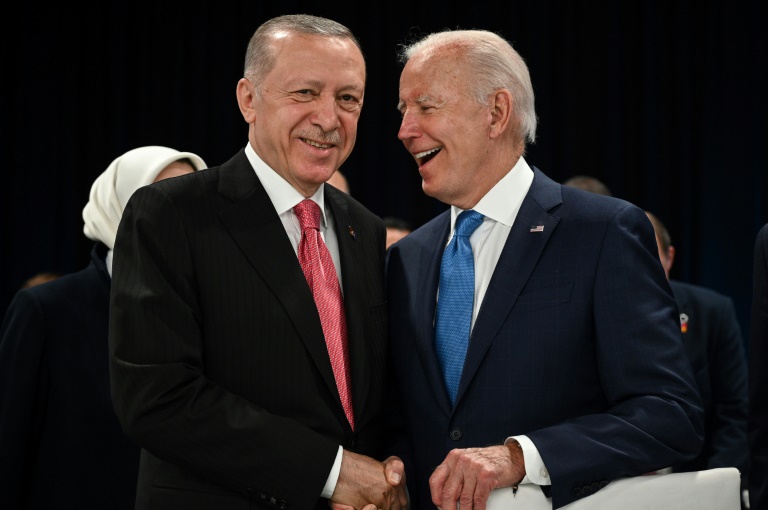
President Recep Tayyip Erdogan dropped weeks of resistance to the two countries’ NATO ambitions at crunch talks held on the eve of an alliance summit Wednesday focused on Russia’s invasion of Ukraine.

Erdogan emerged from the meeting declaring victory after securing a 10-point agreement under which the two countries vowed to join Turkey’s fight against outlawed Kurdish militants and to quickly extradite suspects.

Turkey put the deal to the immediate test by announcing that it would seek the extradition of 12 suspects from Finland and 21 from Sweden.

“We will seek the extradition of terrorists from the relevant countries within the framework of the new agreement,” Justice Minister Bekir Bozdag said in a statement.

“We ask them to fulfil their promises.”

The unnamed suspects were identified as being members of the outlawed Kurdistan Workers’ Party (PKK) and a group led by a US-based Muslim preacher that Erdogan blames for a failed 2016 coup attempt.

The European Union and Washington both recognise the PKK as a terrorist organisation because of the brutal tactics it employed during a decades-long insurgency against the Turkish state.

But the agreement also stipulates that Sweden and Finland vow to “not provide support” to the YPG — a PKK offshoot in Syria that played an instrumental role in the US-led alliance against the Islamic State group.

Sweden and Finland abandoned decades of military non-alignment in response to Russia’s invasion of Ukraine and asked to join the US-led alliance in May.

– ‘Got what it wanted’ –

Their applications appeared to be headed for swift approval until Erdogan stepped in.

The Turkish leader accused Finland and particularly Sweden of providing a haven to Kurdish fighters and financing terror.

Erdogan also wanted the two countries to lift embargoes on weapons deliveries they imposed in response to Turkey’s 2019 military incursion into Syria.

The memorandum appears to address many of Erdogan’s concerns.

It says Finland and Sweden pledge to “address Turkey’s pending deportation or extradition requests of terror suspects expeditiously and thoroughly”.

“Finland and Sweden confirm that the PKK is a proscribed terrorist organisation,” says the agreement.

“Finland and Sweden commit to prevent activities of the PKK and all other terrorist organisations and their extensions, as well as activities by individuals… linked to these terrorist organisations.”

Erdogan’s office hailed the agreement as a full victory.

“Turkey got what it wanted,” his office declared in a statement.

Erdogan also secured the promise of a long-sought meeting with US President Joe Biden on the sidelines of the NATO talks.

A US officials told reporters that Biden was “keen” to improve relations with Turkey after a difficult spell caused in part by Turkey’s crackdown on human rights.

Germany plans return to debt-limit rules in 2023

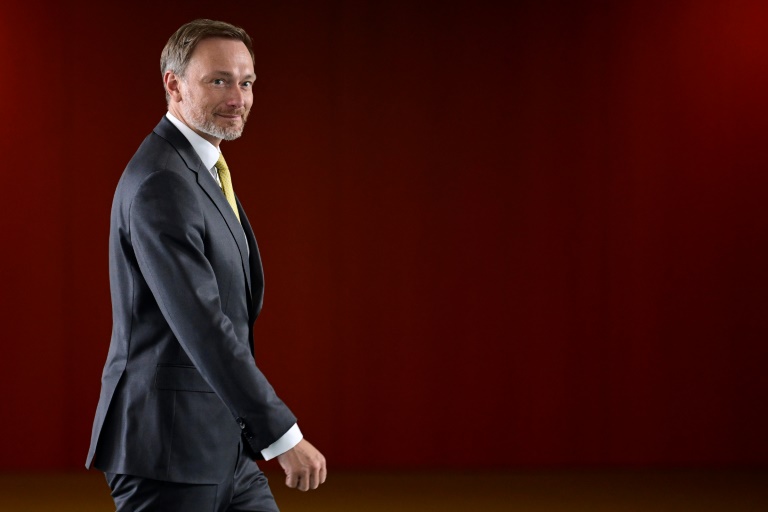
Germany will reinstate its so-called debt brake in 2023 after suspending it for three years to cope with the impact of the coronavirus pandemic, sources in the finance ministry said Wednesday.

The government will borrow 17.2 billion euros ($18.1 million) next year, adhering to the rule enshrined in the constitution that normally limits Germany’s public deficit to 0.35 percent of overall annual economic output, despite new spending as a result of Russia’s war in Ukraine, the sources said.

The new borrowing set out in a draft budget to be presented to the cabinet on Friday is almost 10 billion euros higher than a previous figure for 2023 announced in April.

However, “despite a considerable increase in costs, the debt brake will be respected,” one of the sources said.

After taking on almost 140 billion euros of new debt in 2022, Germany will next year benefit from the end of many expenses related to the coronavirus pandemic, as well as higher tax revenues, the sources added.

Although Germany is traditionally a frugal nation, the government broke its own debt rules at the start of the coronavirus pandemic and unleashed vast financial aid to steer the economy through the crisis.

The government has this year unveiled a multi-billion-euro support package to help companies in Europe’s biggest economy weather the fallout from the Ukraine war and sanctions against Russia.

Berlin has also spent billions to diversify its energy supply to reduce its dependence on Russia, as well as investing heavily in plans to tackle climate change and push digital technology.

– ‘Wrong instrument’ –

The pledge to return to the debt brake from 2023 was a key point in the coalition agreement signed by the Social Democrats (SPD), the Greens and the liberal FDP as they formed a government in late 2021.

The policy was a key demand of the FDP’s Christian Lindner, now finance minister.

But pressure has mounted in recent weeks for the rule to be suspended for longer — even from within the coalition government. 

“We need to discuss the debt brake,” SPD co-president Saskia Esken said last week, calling for the rule to be waived into 2023.

“In times of crisis, austerity is the wrong instrument,” said the Green party’s Sven-Christian Kindler, who sits on the Bundestag’s budget committee. 

However, Lindner insisted this week in an interview with the ZDF broadcaster that “the return to the debt brake is not negotiable”. 

The minister pointed to rising interest rates in Europe, which is expected to cost Germany an extra 12 billion euros in 2023. 

Discussions on the draft budget in parliament, which are due to begin in September, are set to be heated.

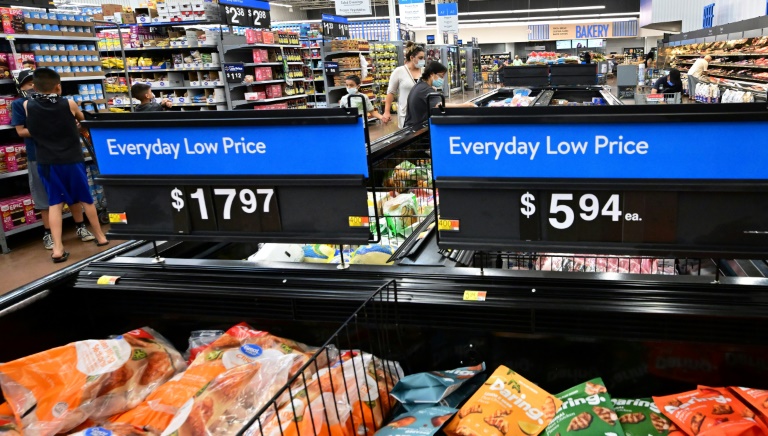
How long will it take to get over the inflation hump?

Inflation has surged back to levels not seen in many developed economies since the 1970s and 1980s. Economists and central bankers at the European Cental Bank’s conference in Portugal warn it will take time before price rises cool.

– How did we get here? –

For the ECB, established in 1998 to oversee the European single currency, the burst of inflation is without precedent.

“The current levels of food and industrial goods inflation have not been seen since the mid-1980s,” ECB President Christine Lagarde said in her remarks at the conference on Tuesday.

Likewise, the “increase in the relative price of energy in recent months is much higher than the individual spikes that occurred in the 1970s” during the oil shock, Lagarde said.

The take-off in inflation, over eight percent in the eurozone in May, was at the end of a “a sequence that happens in a chaotic world”, Richard Baldwin, an economics professor at the Graduate Institute of Geneva, told AFP.

The supply shock caused by the the outbreak of the coronavirus pandemic in 2020 had been followed by a “demand twist” where people used their money more on goods, Baldwin said.

Instead of seeing this fading, the Russian invasion in Ukraine is causing “a huge spike in fuel and food prices” and heaping pressure on inflation, he said.

But it is not just energy. As health restrictions fall away, consumers are turning back to services, while the pent-up demand for tourism is being released, Lagarde noted.

“There is no playbook for this inflation,” said economist Baldwin.

– How long will it stay like this? –

With no end in sight for the war in Ukraine, the disruptions caused to the supply of energy could keep prices high for some time to come.

Domestic factors could also prop up high inflation rates, with workers demanding higher and higher compensation to make up for the rising cost of living.

Adding to the pressure are low unemployment rates, handing more leverage to workers looking for pay rises.

– What can central banks do? – 

The message put out by central banks is one of their most powerful tools to calm markets and control prices.

But the task at hand “has become quite difficult in view of high inflation numbers” and as “people feel high inflation every day when they’re buying food or going to the gas station”, Isabel Schnabel, a member of the ECB’s executive board, told AFP.

“We can do little about current inflation, but we will take decisive measures so that inflation returns to our (two-percent) target over the medium term,” Schnabel said.

“Once inflation is there and it starts to increase the expectations and wages, monetary policy should act,” Sebnem Kalemli-Ozcan, an economic professor at the University of Maryland, told AFP.

That is what the ECB has planned to do, announcing an interest rate hike for July, its first in over a decade. But the Frankfurt-based institution has to be careful not to completely choke off sputtering growth.

“The question is not if the prices will go down after some time, but what will happen to growth,” Kalemli-Ozcan said.

That is why comparisons are being made with the 1970s and the “stagflation type of situation” where inflation persisted while growth rates faltered, she said. “In Europe there is a risk of stagflation.”

Close Bitnami banner
Bitnami