AFP

Philippines' Ressa says 'business as usual' despite news outlet's shutdown order

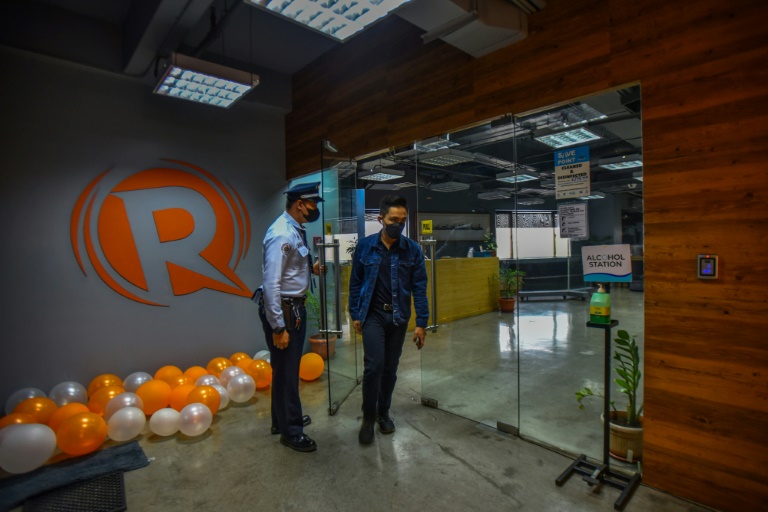
Philippine Nobel Peace Prize winner Maria Ressa’s news company Rappler was ordered Wednesday to shut down, a day before President Rodrigo Duterte is due to leave office, but she vowed to keep the site running.

Ressa has been a vocal critic of Duterte and the deadly drug war he launched in 2016, triggering what media advocates say is a grinding series of criminal charges, probes and online attacks against her and Rappler.

The latest blow was delivered by the Philippine Securities and Exchange Commission. 

In a statement Wednesday, it confirmed the “revocation of the certificates of incorporation” of Rappler for violating “constitutional and statutory restrictions on foreign ownership in mass media”.

Rappler said the decision “effectively confirmed the shutdown” of the company and vowed to appeal, describing the proceedings as “highly irregular”.

But Ressa was characteristically defiant, vowing the news site would continue to operate as they followed the legal process.

“We continue to work, it is business as usual,” Ressa told reporters, adding “we can only hope for the best” under Duterte’s successor Ferdinand Marcos Jr.

Marcos Jr, the son of the Philippines’ former dictator who presided over widespread human rights abuses and corruption, takes over from Duterte on Thursday.

Activists fear Marcos Jr’s presidency could worsen the situation for human rights and freedom of speech in the country.

– ‘Retaliation’ –

Rappler has had to fight for survival as Duterte’s government accused it of violating a constitutional ban on foreign ownership in securing funding, as well as tax evasion. 

It has also been accused of cyber libel — a new criminal law introduced in 2012, the same year Rappler was founded.

Duterte has attacked the website by name, calling it a “fake news outlet”, over a story about one of his closest aides.

The news organisation is accused of allowing foreigners to take control of its website through its parent company Rappler Holdings’ issuance of “depositary receipts”.

Under the constitution, investment in media is reserved for Filipinos or Filipino-controlled entities.

The case springs from a 2015 investment from the US-based Omidyar Network, which was established by eBay founder Pierre Omidyar.  

Omidyar Network later transferred its investment in Rappler to the site’s local managers to stave off efforts by Duterte to shut it down.

Ressa, who is also a US citizen, and Russian journalist Dmitry Muratov were awarded the Nobel Peace Prize in October for their efforts to “safeguard freedom of expression”.

Ressa is fighting at least seven court cases, including an appeal against a conviction in a cyber libel case, for which she is on bail and faces up to six years in prison. 

Rappler faces about eight cases, Ressa said.

– ‘Legal harassment’ –

Human Rights Watch said the website was facing “retaliation for its fearless reporting”.

The International Center For Journalists (ICFJ) urged the Philippine government to reverse its order to shut down Rappler. 

“This legal harassment not only costs Rappler time, money and energy. It enables relentless and prolific online violence designed to chill independent reporting,” ICFJ said on Twitter. 

The future of Rappler and its battle in the country’s highly politicised legal system under Marcos Jr’s presidency is uncertain. 

The president-elect has given few clues about his views on the website and the broader issue of freedom of speech. 

He has largely shunned media interviews and press conferences, preferring to communicate via his press secretary and through social media.

US Second Gentleman Douglas Emhoff, who is heading a delegation to the Philippines for Marcos Jr’s inauguration, would not comment on the Rappler case.

He told reporters in Manila that the US administration had a “deep commitment towards freedom of speech, freedom of expression, human rights”.
US opens probe after 51 migrants die in sweltering trailer

The death toll of undocumented migrants who were abandoned in a scorching-hot trailer in Texas rose to 51 Tuesday, as President Joe Biden blamed “criminal” professional smugglers for the tragedy.

Rebeca Clay-Flores, a Bexar County official, reported the new tally of “39 men and 12 women” dead, following the Monday discovery of the tractor-trailer on an isolated road in her district.

She did not say how many survivors remained in hospital, but the number could be around 11 based on initial figures that officials gave, including possibly four children.

The Department of Homeland Security announced it had opened a criminal investigation, as Biden took aim at human smuggling gangs.

“The tragic loss of life in San Antonio, Texas that took place yesterday is horrifying and heartbreaking,” he said in a statement.

“This incident underscores the need to go after the multi-billion dollar criminal smuggling industry preying on migrants and leading to far too many innocent deaths,” he said.

– Intense heat –

Federal law enforcement agents on Tuesday arrested two men at the address linked to the tractor-trailer’s registration, court documents showed.

Juan Francisco D’Luna-Bilbao and Juan Claudio D’Luna-Mendez, both Mexican nationals whose US tourist visas had expired, were illegally in possession of multiple firearms, the documents alleged.

A third person, suspected of being the driver of the tractor-trailer, was arrested nearby while “very high on meth,” reported the local daily San Antonio Express-News, citing a law enforcement officer.

According to Mexican President Andres Manuel Lopez Obrador, of the dead whose identities are known, 22 were from Mexico, seven from Guatemala and two from Honduras.

“It’s a tremendous misfortune,” he told reporters.

It was the deadliest single incident involving migrants along the southern border in memory, and drew more attention to the risks that hundreds of thousands of people face seeking to enter the United States from Mexico without permission.

On Monday, the high temperature in San Antonio was 103 degrees Fahrenheit (39.4 degrees Celsius), and the temperature in the unvented trailer would have been much higher.

By Tuesday afternoon, authorities had removed the trailer from where it had been abandoned with its human cargo, on a narrow road sandwiched between train tracks and auto junkyards.

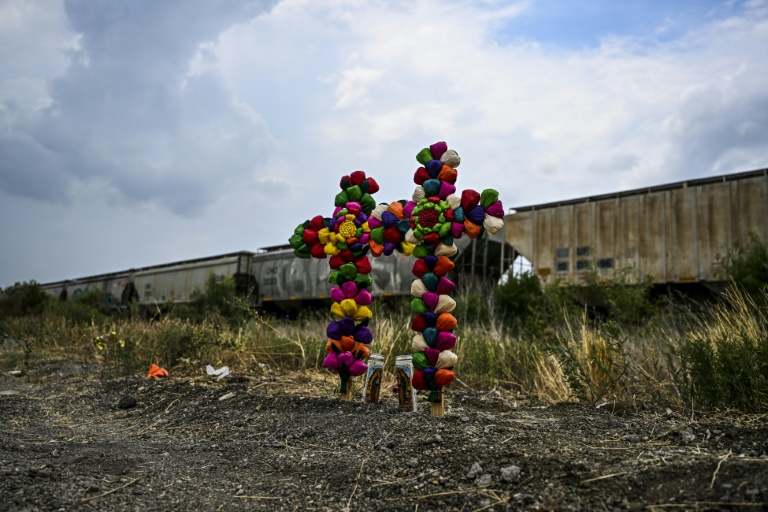
Replacing it were makeshift crosses adorned with artificial flowers.

“I feel that if these people walk hundreds of miles to get over here, it wouldn’t hurt us to walk maybe one mile to put the crosses and candles,” said Angelita Olvera, who lives nearby.

“Hopefully, whoever had them in the trailer will pay the consequences,” she said.

– Common route –

San Antonio Police Chief William McManus said authorities were first alerted to the trailer by an emergency call at about 5:50 pm local time (2250 GMT) on Monday.

“A worker who works in one of the buildings up here behind me heard a cry for help,” he told reporters. 

The worker “came out to investigate, found a trailer with the doors partially open, opened them up to take a look, and found a number of deceased individuals inside,” McManus said.

The tragedy came five years after 10 migrants were found dead in a trailer with broken air conditioning and clogged ventilation holes near San Antonio. 

In recent weeks Border Patrol officers have discovered other attempts to bring undocumented travelers into the country in large trucks.

On June 14, 80 people from Mexico, Guatemala, Honduras and El Salvador were discovered inside a tractor-trailer when it was inspected by agents at a highway checkpoint north of Laredo, a border hub in south Texas.

Three weeks earlier, agents intercepted a trailer with 48 people inside near Sierra Blanca in western Texas.

Jesus Thompson, 60, lives just across the train track from where the people in the trailer were found.

“People from Mexico and Guatemala come here to seek the American dream,” he said. 

“I would tell the people who are there and who are fleeing to think about it before coming here, because there is a tremendous risk, and especially now that the weather is very hot.”

– Political issue –

The case immediately became a focus of politics when Republicans attacked Democratic President Biden for allegedly being soft on immigration.

“These deaths are on Biden. They are a result of his deadly open border policies,” said Texas Governor Greg Abbott.

Under Biden, more than 200,000 people attempting to enter the country illegally have been interdicted at the border each month and sent back.

But there is no good estimate of the thousands more that succeed in staying inside the country.

Biden said he had already launched an anti-smuggling campaign that focused on the networks and arrested 2,400 people in recent months.

“Exploiting vulnerable individuals for profit is shameful, as is political grandstanding around tragedy,” he said.

The migration issue will be a key agenda item when Biden hosts his Mexican counterpart Lopez Obrador for talks on July 12.

Hong Kong's blurring border with China a sign of things to come

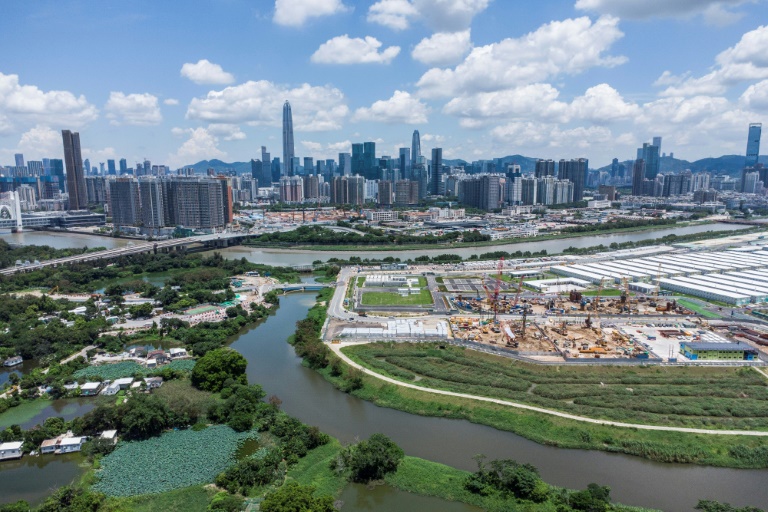
From the hill in northernmost Hong Kong where Jasper Law stood, the border with China was obvious — a narrow river dividing farmlands and fishponds from the gleaming skyscrapers of megacity Shenzhen.

Friday is the 25th anniversary of Hong Kong’s transition from British to Chinese rule.

While the view from the hilltops of Lok Ma Chau suggests Hong Kong remains clearly distinct from mainland China, the territory is fast being subsumed into Beijing’s blueprint for southern China.

And as the border is chipped away, the lack of public consultation has done little to ease the lingering discomfort some Hong Kongers feel about living on the mainland’s doorstep.

“In the 25 years since the handover, the border has become more and more blurry,” said Law, a pro-democracy politician from the border area.

The softening boundary has preoccupied many Hong Kongers.

And it was one of the catalysts for the huge democracy protests in the finance hub three years ago, a movement initially triggered by an attempt to allow extraditions to China’s mainland.

Beijing’s subsequent crackdown has only sped up Hong Kong’s absorption.

– Security agents roam free –

The integration of Hong Kong’s population and economy with mainland China has been under way for decades.

Between 1997 and 2021, more than 1.1 million people migrated from China via a limited-quota “one-way permit” scheme, almost a seventh of Hong Kong’s current population.

Mandarin was increasingly pushed in schools, sparking resentment among those who felt the city’s distinct Cantonese culture was being eroded. 

Hong Kong’s borders were also tweaked, most notably in the 2010s with an expansion of China’s high-speed rail into the city.

Part of the terminus in Hong Kong came under Chinese jurisdiction, meaning the mainland’s Communist Party-controlled legal system applied there.

Beijing’s imposition of a sweeping national security law to curb dissent following the 2019 protests has further eroded the legal firewall between Hong Kong and the mainland.

Under the law, which was imposed by Beijing directly rather than passed through the legislature, the mainland’s security agents can now operate freely in Hong Kong, immune from the city’s laws.

Beijing says it can now also try the most serious national security offences in mainland China.

And the Covid-19 pandemic has further whittled away at the boundaries.

While the border has been mostly closed under China’s strict zero-Covid rules, mainland medics were granted exemptions to work in Hong Kong’s hospitals.

Construction teams were also sent across the border to build emergency health facilities, even constructing a new bridge with Shenzhen to ease their travel.

– ‘Power imbalance’ –

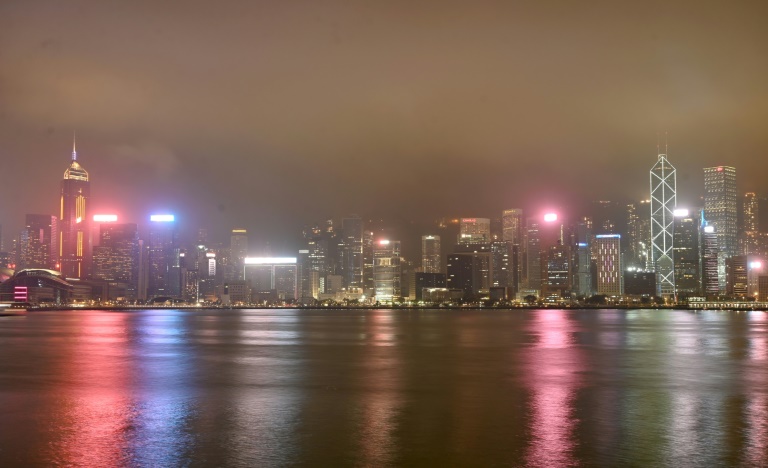
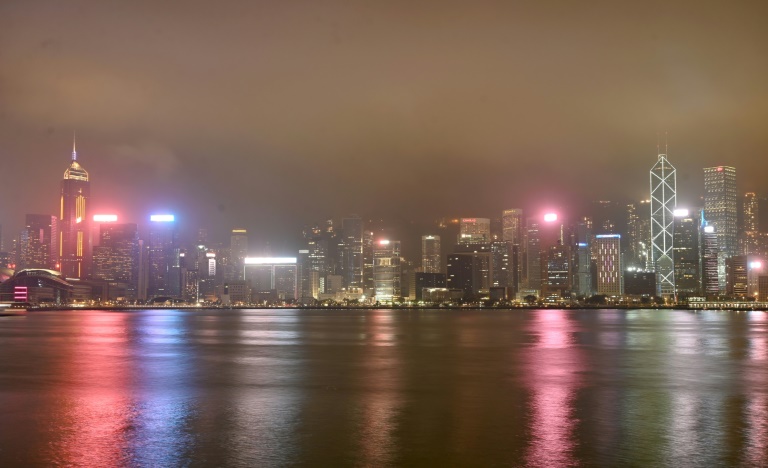
Hong Kong’s government now plans to transform the border area with a two-decade plan that will place integration with Shenzhen at the heart of economic development in the city’s northernmost areas, shifting focus away from Hong Kong’s glitzy Victoria Harbour.

Dubbed the “Northern Metropolis”, the HK$100 billion ($12.7 billion) project envisages building a new megacity next to Shenzhen — a new node in Beijing’s “Greater Bay Area” ambitions to create a Chinese Silicon Valley connecting Hong Kong and multiple cities in neighbouring Guangdong province.

The government says the new metropolis will create 650,000 new jobs as well as much-needed new homes in one of the world’s least affordable cities.

Veteran urban planner Kenneth To said he thought the government’s vision was far from coherent, and bemoaned the small circle of vested interests that dominated discussion on development in Hong Kong. 

“The power imbalance is worrying,” he told AFP.

But Jack Lam, a mobile phone accessories seller who lives in a district near the border, was more upbeat. 

“When the population increases, you can expect more development to come, there will be more people starting businesses for sure,” the 35-year-old said.

Hong Kong's blurring border with China a sign of things to come

From the hill in northernmost Hong Kong where Jasper Law stood, the border with China was obvious — a narrow river dividing farmlands and fishponds from the gleaming skyscrapers of megacity Shenzhen.

Friday is the 25th anniversary of Hong Kong’s transition from British to Chinese rule.

While the view from the hilltops of Lok Ma Chau suggests Hong Kong remains clearly distinct from mainland China, the territory is fast being subsumed into Beijing’s blueprint for southern China.

And as the border is chipped away, the lack of public consultation has done little to ease the lingering discomfort some Hong Kongers feel about living on the mainland’s doorstep.

“In the 25 years since the handover, the border has become more and more blurry,” said Law, a pro-democracy politician from the border area.

The softening boundary has preoccupied many Hong Kongers.

And it was one of the catalysts for the huge democracy protests in the finance hub three years ago, a movement initially triggered by an attempt to allow extraditions to China’s mainland.

Beijing’s subsequent crackdown has only sped up Hong Kong’s absorption.

– Security agents roam free –

The integration of Hong Kong’s population and economy with mainland China has been under way for decades.

Between 1997 and 2021, more than 1.1 million people migrated from China via a limited-quota “one-way permit” scheme, almost a seventh of Hong Kong’s current population.

Mandarin was increasingly pushed in schools, sparking resentment among those who felt the city’s distinct Cantonese culture was being eroded. 

Hong Kong’s borders were also tweaked, most notably in the 2010s with an expansion of China’s high-speed rail into the city.

Part of the terminus in Hong Kong came under Chinese jurisdiction, meaning the mainland’s Communist Party-controlled legal system applied there.

Beijing’s imposition of a sweeping national security law to curb dissent following the 2019 protests has further eroded the legal firewall between Hong Kong and the mainland.

Under the law, which was imposed by Beijing directly rather than passed through the legislature, the mainland’s security agents can now operate freely in Hong Kong, immune from the city’s laws.

Beijing says it can now also try the most serious national security offences in mainland China.

And the Covid-19 pandemic has further whittled away at the boundaries.

While the border has been mostly closed under China’s strict zero-Covid rules, mainland medics were granted exemptions to work in Hong Kong’s hospitals.

Construction teams were also sent across the border to build emergency health facilities, even constructing a new bridge with Shenzhen to ease their travel.

– ‘Power imbalance’ –

Hong Kong’s government now plans to transform the border area with a two-decade plan that will place integration with Shenzhen at the heart of economic development in the city’s northernmost areas, shifting focus away from Hong Kong’s glitzy Victoria Harbour.

Dubbed the “Northern Metropolis”, the HK$100 billion ($12.7 billion) project envisages building a new megacity next to Shenzhen — a new node in Beijing’s “Greater Bay Area” ambitions to create a Chinese Silicon Valley connecting Hong Kong and multiple cities in neighbouring Guangdong province.

The government says the new metropolis will create 650,000 new jobs as well as much-needed new homes in one of the world’s least affordable cities.

Veteran urban planner Kenneth To said he thought the government’s vision was far from coherent, and bemoaned the small circle of vested interests that dominated discussion on development in Hong Kong. 

“The power imbalance is worrying,” he told AFP.

But Jack Lam, a mobile phone accessories seller who lives in a district near the border, was more upbeat. 

“When the population increases, you can expect more development to come, there will be more people starting businesses for sure,” the 35-year-old said.

Ukraine war set to dominate crucial NATO summit

The Ukraine war will take centre stage at a NATO summit in Madrid on Wednesday, while Finland and Sweden will be formally invited to join the alliance after Turkey dropped its opposition. 

Four months after Russia invaded Ukraine, upending the European security landscape, more than 40 leaders will gather for what NATO chief Jens Stoltenberg called a “pivotal summit” for the alliance’s future. 

Ukrainian President Volodymyr Zelensky has been invited to participate and will speak twice via videolink, as Kyiv pushes for accelerated weapons deliveries from its allies. 

NATO countries, which have already committed billions of dollars in military assistance to Kyiv, will agree a “comprehensive assistance package to Ukraine, to help them uphold the right for self-defence”, said Stoltenberg.

“It is extremely important that we are ready to continue to provide support because Ukraine now faces brutality which we haven’t seen in Europe since the Second World War.” 

At the end of a G7 summit in Germany, French President Emmanuel Macron urged NATO allies to show they were united.

“The message that should come out of Madrid is a message of unity and strength for member countries, as well as for those that wish to join and whose applications we are supporting,” he said.

British Prime Minister Boris Johnson will urge his NATO allies to boost their defence spending in response to Russia’s invasion “to restore deterrence and ensure defence in the decade ahead”, his office said.

– Turkey drops opposition –

Beyond Ukraine, the summit will see a revamp of NATO’s strategic concept — which outlines its main security tasks, but has not been revised since 2010 — to mention challenges posed by China for the first time.

Finland and Sweden will be invited to join the alliance at the summit after Turkish President Recep Tayyip Erdogan on Tuesday lifted his opposition following crunch talks with the leaders of the two Nordic countries in Madrid.

Erdogan had stubbornly refused to back the applications from the Nordic pair — lodged in response to Russia’s war on Ukraine — despite pressure for a change of course from his NATO allies.

But Erdogan’s office said it had agreed to support them as Ankara had “got what it wanted”.

Ankara had accused Finland, and especially Sweden, of offering a safe haven to Kurdish militants who have been waging decades-long insurgency against the Turkish state.

US President Joe Biden congratulated Turkey, Finland and Sweden on reaching an agreement. 

“As we begin this historic NATO summit in Madrid, our alliance is stronger, more united and more resolute than ever,” he said in a statement. 

But it will still take months for Finland and Sweden to officially join NATO, as their entry into the alliance needs to be ratified by the parliaments of the 30 member states. 

– ‘Stop Russian terror’ –

The summit comes as war rages across Ukraine, particularly in the eastern Donbas region where Moscow has been focusing its offensive after failing to capture Kyiv in the conflict’s early days. 

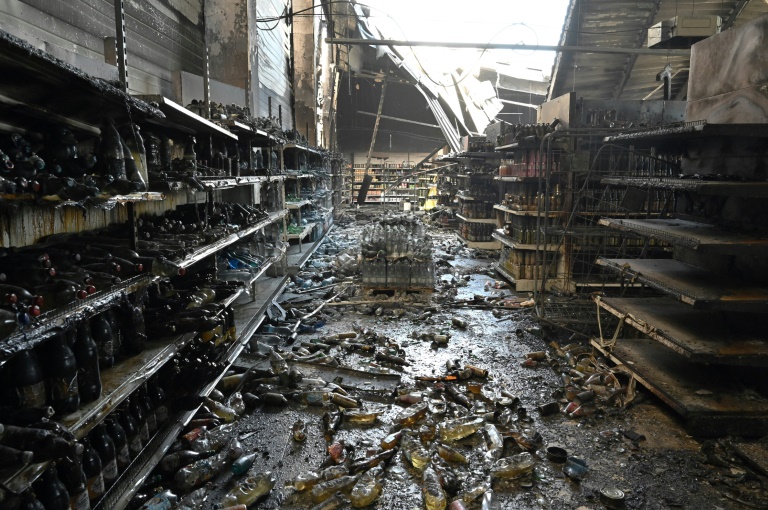
There was global outrage Monday after a missile strike on a shopping mall in the central city of Kremenchuk killed at least 18 people and injured dozens. 

Russia claims its missile salvo was aimed at an arms depot. But AFP talked to civilians in Kremenchuk, and none of them knew of any weapons store in the neighbourhood.

“Everything burned, really everything, like a spark to a touchpaper. I heard people screaming. It was horror,” witness Polina Puchintseva said.

All that was left of the mall was charred debris, chunks of blackened walls and lettering from a smashed storefront.

“Only total insane terrorists, who should have no place on Earth, can strike missiles at civilian objects,” said Zelensky on his social media channels. 

“Russia must be recognised as a state sponsor of terrorism. The world can and therefore must stop Russian terror,” he added.

Addressing the UN Security Council Tuesday, Zelensky called for the United Nations to visit the site so they can independently assess whether the destruction was caused by a Russian missile strike.

At their summit in Germany, G7 leaders agreed to impose new sanctions targeting Moscow’s defence industry, raising tariffs and banning gold imports from the country.

But the Kremlin was unfazed, insisting that Ukrainian forces had to surrender to end the fighting.

“The Ukrainian side can stop everything before the end of today,” Kremlin spokesman Dmitry Peskov said.

“An order for the nationalist units to lay down their arms is necessary,” he said, adding Kyiv had to fulfil a list of Moscow’s demands.

burs-sr/je

Uber inks deal for Australian gig worker rights

Uber has reached a deal with a powerful Australian union after years of legal battles, campaigns and negotiations that will offer 100,000 drivers and food delivery workers more protections.

The Transport Workers Union — one of Uber’s most vocal critics — reached the agreement with the rideshare giant late Tuesday, with both sides backing minimum standards for all gig economy workers and the right to unionise.

In a joint statement, Uber and the union said they also supported the setting up of an independent body by the Australian government to create standards across the sector.

The “gig economy” — which uses temporary independent contractors for short-term tasks — has grown rapidly since Uber’s launch in 2009 and is promoted as a flexible way for people to earn money without the constraints of a full-time job.

But there has been growing backlash in Australia about the conditions and dangers gig workers face, particularly after a spate of delivery driver deaths during the Covid-19 pandemic when demand spiked.

A 2020 survey by the Transport Workers Union found 73 percent of food delivery drivers were worried about “being seriously injured or killed at work” — although safety concerns are not limited to Australia, or Uber.

In the United States, according to the advocacy group Gig Workers Rising, more than 50 drivers working for companies including Uber and Lyft have been killed on the job since 2017.

An Australian court last week ruled slain gig worker Xiaojun Chen, who was killed on the job in 2020 while working for food delivery service Hungry Panda, was an employee, not a contractor.

His family was awarded an A$830,000 (US$573,000) compensation payment, believed to be the first of its kind for a gig worker in Australia.

Uber’s general manager in Australia, Dom Taylor, conceded that the company and the union “may not seem like obvious allies”, but the deal struck between the two would “improve workers’ protections”.

“We want to see a level playing field for the industry and preserve the flexibility that gig workers value most,” he said.

The deal comes in the wake of Australia’s May election of a centre-left Labor government that has previously supported reforms to protect gig workers.

Uber inks deal for Australian gig worker rights

Uber has reached a deal with a powerful Australian union after years of legal battles, campaigns and negotiations that will offer 100,000 drivers and food delivery workers more protections.

The Transport Workers Union — one of Uber’s most vocal critics — reached the agreement with the rideshare giant late Tuesday, with both sides backing minimum standards for all gig economy workers and the right to unionise.

In a joint statement, Uber and the union said they also supported the setting up of an independent body by the Australian government to create standards across the sector.

The “gig economy” — which uses temporary independent contractors for short-term tasks — has grown rapidly since Uber’s launch in 2009 and is promoted as a flexible way for people to earn money without the constraints of a full-time job.

But there has been growing backlash in Australia about the conditions and dangers gig workers face, particularly after a spate of delivery driver deaths during the Covid-19 pandemic when demand spiked.

A 2020 survey by the Transport Workers Union found 73 percent of food delivery drivers were worried about “being seriously injured or killed at work” — although safety concerns are not limited to Australia, or Uber.

In the United States, according to the advocacy group Gig Workers Rising, more than 50 drivers working for companies including Uber and Lyft have been killed on the job since 2017.

An Australian court last week ruled slain gig worker Xiaojun Chen, who was killed on the job in 2020 while working for food delivery service Hungry Panda, was an employee, not a contractor.

His family was awarded an A$830,000 (US$573,000) compensation payment, believed to be the first of its kind for a gig worker in Australia.

Uber’s general manager in Australia, Dom Taylor, conceded that the company and the union “may not seem like obvious allies”, but the deal struck between the two would “improve workers’ protections”.

“We want to see a level playing field for the industry and preserve the flexibility that gig workers value most,” he said.

The deal comes in the wake of Australia’s May election of a centre-left Labor government that has previously supported reforms to protect gig workers.

Hong Kong economy faces uncertain future 25 years after handover

When Hong Kong transitioned from British to Chinese rule, Edmond Hui was a floor trader at the bustling stock exchange, witnessing the roaring growth of a city at the crossroads of the West and Asia.

Under a deal signed with Britain ahead of the 1997 handover, China promised Hong Kong could keep its capitalist system for 50 years, an arrangement that helped the city thrive as one of the world’s top financial hubs.

Friday marks the halfway point of that experiment, with uncertainty clouding the economic future of Hong Kong — a city reliant on an increasingly isolated China, struggling to shake off the reputational damage from political unrest and pandemic-induced border closures.

Hui, now the chief executive of a mid-tier stockbroker with nearly 300 employees, said post-handover markets have undergone a drastic shift, becoming more China-focused than ever.

“Before 1997, foreign capital propped up half of the market,” he said. “After 1997, things changed gradually until the whole market was held up by Chinese capital.”

China’s meteoric rise in the past two decades yielded vast benefits for Hong Kong, which became the gateway for mainland firms to raise funds and for foreign businesses to access what is today the world’s second-largest economy.

“Hong Kong was sort of a poster child of free trade and open markets,” veteran pro-Beijing Hong Kong politician Regina Ip told AFP.

But the interlocking of its fate with China has also led to warnings about overreliance and complacency.

Chinese companies made up around 80 percent of the market capitalisation in Hong Kong’s stock market this year, up from 16 percent in 1997.

And Chinese firms now account for seven of the top 10 holdings of the benchmark Hang Seng Index, which used to be anchored by homegrown brands such as Cathay Pacific and Television Broadcasts Limited.

Hong Kong’s GDP, meanwhile, has gone from being equivalent to 18 percent of mainland China’s in 1997 to less than three percent in 2020.

Hui greeted this comprehensive shift with a mild shrug.

“It’s just a matter of changing who’s boss,” he said.

“We can only hope that our country’s momentum will surpass that of Europe and the United States.”

– ‘The gateway to China’ –

As China’s economic and political power has grown over the last few decades, so have tensions with Western nations — which has also affected Hong Kong.

Beijing cracked down on dissent in the city after massive democracy protests in 2019, prompting the United States to revoke Hong Kong’s preferential trade status on the grounds that it was no longer autonomous enough.

Washington also sanctioned some Hong Kong officials.  

“Back in 1997, we were able to play the role of a very important middleman. But now… everyone has more doubts about our background,” Yan Wai-hin, an economics lecturer at the Chinese University of Hong Kong, told AFP.

“If a trading partner feels that (Hong Kong) isn’t a neutral middleman… then the mutual trust might be lost.”

Yan said regional rivals such as Singapore were looking to capitalise on what they saw as an opening to supplant Hong Kong.  

Adding to that pressure, the tightening of political control has also meant Hong Kong has stuck to mainland China’s zero-Covid policy.

Stringent travel restrictions have kept the business hub cut off both from China and the world for the last two years, with authorities acknowledging it has prompted a talent exodus. 

But Ip said once restrictions were lifted, Hong Kong would recover.

“Our extremely advantageous geographical location is still there,” she said.

“We’re still the gateway to China.”

– ‘Complacent and insular’ –

Some industries other than finance, though, have struggled after the handover. 

“In the past 10 years or so, our GDP growth has lost steam and I think this had to do with Hong Kongers being complacent and insular,” said Simon Ho, president of the Hang Seng University of Hong Kong.

The city’s port, for instance, was among the world’s busiest for decades but has slipped in the rankings after peaking in 2004.

“The government took a neoliberal, non-interventionist approach, and there was no blueprint for developing industries and the economy,” Ho added.

He said authorities had devoted resources to sectors such as research and development, but that the results were “half-baked” and not competitive enough when compared with neighbouring tech hub Shenzhen.

“Hong Kong needs to figure out its role,” Ho said.

“In the past, we didn’t know how to complement the mainland, and in some cases even competed with it. In the long run, that will only get harder.” 

Hong Kong economy faces uncertain future 25 years after handover

When Hong Kong transitioned from British to Chinese rule, Edmond Hui was a floor trader at the bustling stock exchange, witnessing the roaring growth of a city at the crossroads of the West and Asia.

Under a deal signed with Britain ahead of the 1997 handover, China promised Hong Kong could keep its capitalist system for 50 years, an arrangement that helped the city thrive as one of the world’s top financial hubs.

Friday marks the halfway point of that experiment, with uncertainty clouding the economic future of Hong Kong — a city reliant on an increasingly isolated China, struggling to shake off the reputational damage from political unrest and pandemic-induced border closures.

Hui, now the chief executive of a mid-tier stockbroker with nearly 300 employees, said post-handover markets have undergone a drastic shift, becoming more China-focused than ever.

“Before 1997, foreign capital propped up half of the market,” he said. “After 1997, things changed gradually until the whole market was held up by Chinese capital.”

China’s meteoric rise in the past two decades yielded vast benefits for Hong Kong, which became the gateway for mainland firms to raise funds and for foreign businesses to access what is today the world’s second-largest economy.

“Hong Kong was sort of a poster child of free trade and open markets,” veteran pro-Beijing Hong Kong politician Regina Ip told AFP.

But the interlocking of its fate with China has also led to warnings about overreliance and complacency.

Chinese companies made up around 80 percent of the market capitalisation in Hong Kong’s stock market this year, up from 16 percent in 1997.

And Chinese firms now account for seven of the top 10 holdings of the benchmark Hang Seng Index, which used to be anchored by homegrown brands such as Cathay Pacific and Television Broadcasts Limited.

Hong Kong’s GDP, meanwhile, has gone from being equivalent to 18 percent of mainland China’s in 1997 to less than three percent in 2020.

Hui greeted this comprehensive shift with a mild shrug.

“It’s just a matter of changing who’s boss,” he said.

“We can only hope that our country’s momentum will surpass that of Europe and the United States.”

– ‘The gateway to China’ –

As China’s economic and political power has grown over the last few decades, so have tensions with Western nations — which has also affected Hong Kong.

Beijing cracked down on dissent in the city after massive democracy protests in 2019, prompting the United States to revoke Hong Kong’s preferential trade status on the grounds that it was no longer autonomous enough.

Washington also sanctioned some Hong Kong officials.  

“Back in 1997, we were able to play the role of a very important middleman. But now… everyone has more doubts about our background,” Yan Wai-hin, an economics lecturer at the Chinese University of Hong Kong, told AFP.

“If a trading partner feels that (Hong Kong) isn’t a neutral middleman… then the mutual trust might be lost.”

Yan said regional rivals such as Singapore were looking to capitalise on what they saw as an opening to supplant Hong Kong.  

Adding to that pressure, the tightening of political control has also meant Hong Kong has stuck to mainland China’s zero-Covid policy.

Stringent travel restrictions have kept the business hub cut off both from China and the world for the last two years, with authorities acknowledging it has prompted a talent exodus. 

But Ip said once restrictions were lifted, Hong Kong would recover.

“Our extremely advantageous geographical location is still there,” she said.

“We’re still the gateway to China.”

– ‘Complacent and insular’ –

Some industries other than finance, though, have struggled after the handover. 

“In the past 10 years or so, our GDP growth has lost steam and I think this had to do with Hong Kongers being complacent and insular,” said Simon Ho, president of the Hang Seng University of Hong Kong.

The city’s port, for instance, was among the world’s busiest for decades but has slipped in the rankings after peaking in 2004.

“The government took a neoliberal, non-interventionist approach, and there was no blueprint for developing industries and the economy,” Ho added.

He said authorities had devoted resources to sectors such as research and development, but that the results were “half-baked” and not competitive enough when compared with neighbouring tech hub Shenzhen.

“Hong Kong needs to figure out its role,” Ho said.

“In the past, we didn’t know how to complement the mainland, and in some cases even competed with it. In the long run, that will only get harder.” 

Sony launches PC gaming gear, expanding beyond PlayStation

Japan’s Sony is launching a new brand that will offer PC gaming gear, the company announced Wednesday, as it tries to compete for a share of the lucrative gaming peripherals market.

Sony is looking to expand beyond its flagship PlayStation console and boost revenue from other sectors, including PC and mobile gaming.

The gaming peripherals market of items used by players was valued at $3.88 billion globally in 2019 according to Grand View Research.

Sony’s first offerings from its new Inzone brand will be three wireless headsets and two monitors, the priciest of which will retail for a suggested $899.99 in the United States.

“The market has been expanding with a higher interest in gaming with the spread of esports tournaments and the advancement of gaming entertainment,” said Yukihiro Kitajima, head of Sony’s game business and marketing office, in a statement.

Sony is “very late” to the “hopelessly crowded” sector, said Serkan Toto, CEO of game industry consultancy Kantan Games.

Rival Microsoft is already well-positioned, along with competitors like Razer, though Sony will bring unique hardware features, he told AFP.

The firm’s decision to enter the market now is linked to its “aggressive plan to boost sales from PC and mobile for its PlayStation unit to around 50 percent by fiscal 2025,” Toto said.

It “apparently believes that the goal is easier to achieve by leveraging its position in hardware to raise awareness among PC gamers.”

Close Bitnami banner
Bitnami