AFP

Global stocks split on China, US consumer confidence

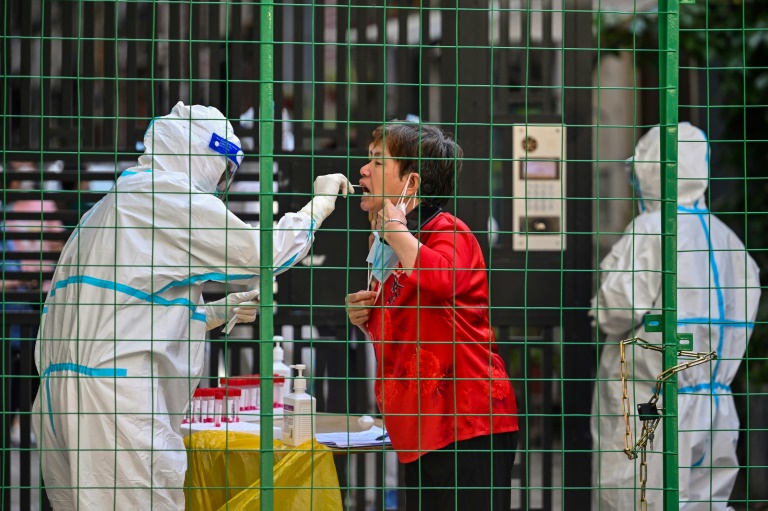
European and Asian stocks climbed Tuesday and oil prices rallied as China relaxed hard-line Covid-19 policies, but Wall Street equities tumbled following weak consumer confidence data.

In a major shift, Chinese authorities shortened quarantine for inbound travelers to just 10 days instead of three weeks, fueling hopes of recovery for the world’s second largest economy.

The cities of Beijing and Shanghai also reported no Covid cases on Tuesday, suggesting they had largely contained outbreaks that forced tens of millions to stay home and snarled up global supply chain chains.

“The Covid crisis appears to be rapidly retreating in China,” noted Susannah Streeter, senior investment and markets analyst at Hargreaves Lansdown.

“The prospects of rapid recovery for the world’s second largest economy is helping lift miners, as metals prices rise in expectation of a surge in demand in the commodity-hungry economy.”

Asian equity markets closed higher, with both Hong Kong and Shanghai rising 0.9 percent.

Traders also digested comments from European Central Bank President Christine Lagarde, who said the ECB would go “as far as necessary” to fight inflation that is set to remain “undesirably high.”

Paris rose 0.6 percent and Frankfurt added 0.4 percent. London climbed 0.9 percent.

US stocks also opened solidly higher but dropped into negative territory soon thereafter following a consumer confidence reading at its lowest level in more than a year on surging inflation.

The downcast report was due in part to the feeling higher prices would persist, suggesting consumers aren’t sure the Federal Reserve’s aggressive efforts to tame inflation will work.

“We could have some difficult days ahead of us,” said Gregori Volokhine of Meeschaert Financial Services.

Dana Peterson, The Conference Board’s chief economist, warned the United States will likely see a recession in late 2022.

“We are anticipating a brief yet shallow recession starting in the fourth quarter of this year and extending into the first quarter of next year,” she said during a Politico event.

US selling accelerated throughout the day, with the broad-based S&P 500 finishing two percent lower. 

US equities also fell on Monday after last week’s strong gains in a rally that some are now doubting.

“It looks like investors are potentially underestimating the big macro risks facing them by bidding up equity prices over the last few days,” City Index analyst Fawad Razaqzada told AFP.

“It is far too early to be optimistic that this latest recovery will hold.”

Oil prices, a major driver of the soaring inflation, rose again on fears of further supply tightening, in addition to prospects for higher Chinese demand.

This comes after G7 leaders agreed to work on a price cap for Russian oil, a US official said Tuesday, as part of efforts to cut the Kremlin’s revenues.

– Key figures at around 2030 GMT –

New York – Dow: DOWN 1.6 percent at 30,946.99 (close)

New York – S&P 500: DOWN 2.0 percent at 3,821.55 (close)

New York – Nasdaq: DOWN 3.0 percent at 11,181.54 (close)

London – FTSE 100: UP 0.9 percent at 7,323.41 (close) 

Frankfurt – DAX: UP 0.4 percent at 13,231.82 (close)

Paris – CAC 40: UP 0.6 percent at 6,086.02 (close)

EURO STOXX 50: UP 0.3 percent at 3,549.29 (close)

Tokyo – Nikkei 225: UP 0.7 percent at 27,049.47 (close)

Hong Kong – Hang Seng Index: UP 0.9 percent at 22,418.97 (close)

Shanghai – Composite: UP 0.9 percent at 3,409.21 (close)

Brent North Sea crude: UP 2.5 percent at $117.98 per barrel

West Texas Intermediate: UP 2.0 percent at $111.76 per barrel

Euro/dollar: DOWN at $1.0525 from $1.0584 Monday

Pound/dollar: DOWN at $1.2187 from $1.2265

Euro/pound: UP at 86.32 pence from 86.29 pence

Dollar/yen: UP at 136.20 yen from 135.46 yen

burs-jmb
US boy, 8, shoots dead baby girl with father's gun

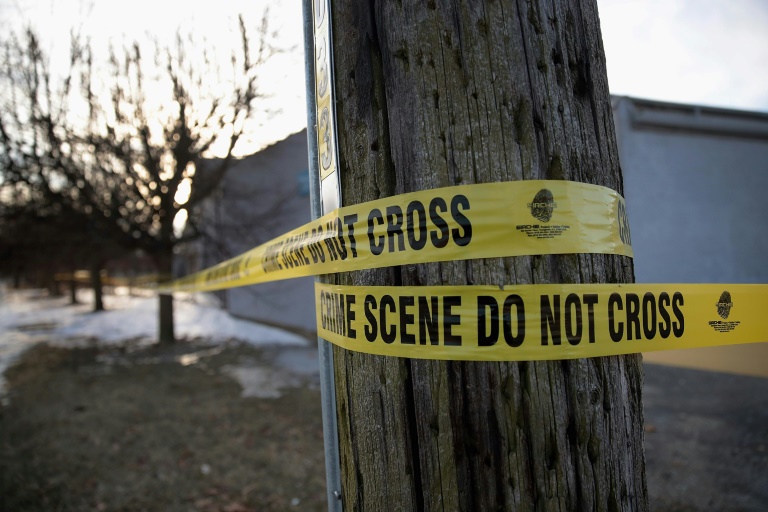
An eight-year-old boy shot dead a baby and wounded her toddler sister while playing with his father’s gun in Florida last weekend, police said.

The father, 45-year-old Roderick Randall, was arrested and charged with culpable negligence, unlawful possession of a firearm and concealment of evidence, Escambia County Sheriff Chip Simmons said. 

The tragedy — all too common in a country awash with firearms — took place in a motel where Randall, who has a criminal record that forbade him from owning a gun, met with his girlfriend.

He had brought his son, while his girlfriend had brought along her two-year-old twins and her one-year-old daughter.

At one point, Randall went out and left his weapon “in the closet,” said the sheriff during a press conference. Knowing where it was hidden, his son took it out and started playing with it while the girls’ mother was asleep.

“He pulls the gun from the holster, starts playing with it and fires a round into the one-year-old toddler, ultimately killing the one year old. The bullet then goes through and strikes one of the two year old toddlers who’s injured but is expected to recover.”

When the father returned, he took the gun and an unidentified substance that may have been drugs, out of the room before the police arrived. 

The baby girl’s death is the latest in a staggering series of similar accidents.

“Every year, hundreds of children in the United States gain access to unsecured, loaded guns in closets and nightstand drawers, in backpacks and purses, or just left out,” according to a recent report by Everytown For Gun Safety.

“With tragic regularity, children find these unsecured guns and unintentionally shoot themself or someone else.”  

The organization, which advocates for increased regulation of firearms, estimates that these “unintentional shootings” by minors cause an average of 350 deaths each year. 

More generally, firearms cause approximately 40,000 deaths a year in the United States, including suicides, according to the Gun Violence Archive website.

Oceans key to global warming fight: US climate envoy  

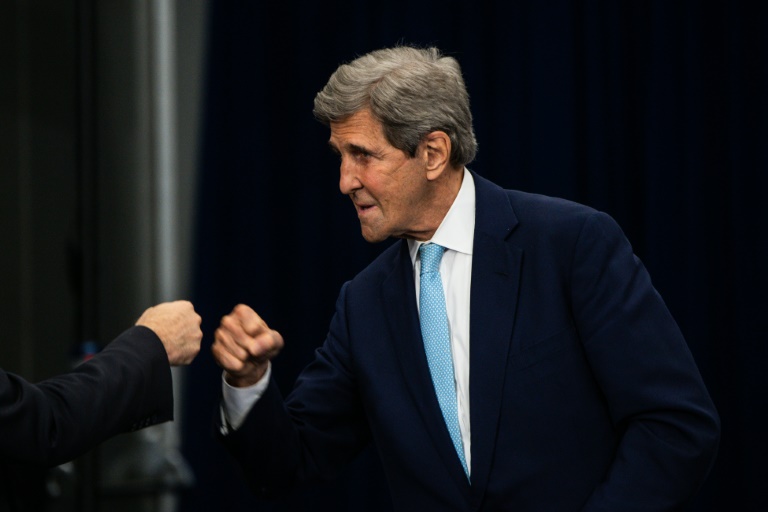
Safeguarding the world’s oceans will be fundamental to tackling global warming, US climate envoy John Kerry told AFP on Tuesday, warning that war in Ukraine and its economic fallout meant efforts to curb dangerous carbon pollution were facing “powerful headwinds”.

The interview, on the margins of the UN Ocean Conference in Lisbon, has been edited for length.

Q. This meeting has no negotiating agenda. How will it feed into critical year-end summits on biodiversity and climate change?

You cannot solve the problem of the climate crisis without dealing with the ocean, which is a critical as a sink for carbon dioxide. And you can’t solve the problems in the oceans without dealing with climate, because greenhouse gas emissions are acidifying and warming ocean waters.

We just discussed this at a high-level session with a cross-section of countries. Everybody was in complete agreement about the priority of the oceans being integrated into the Sharm el-Sheikh COP (the November UN climate summit in Egypt).

Whether it is the green shipping corridors initiative (for carbon-free shipping); the memorandum that President Biden signed today to combat illegal, unreported and unregulated fishing on the high seas; or setting aside 30 percent of nations’ exclusive economic zones as protected areas — every step of the way, there are linkages between the ocean and what we need to do on climate.

Q: Does the US support a call made here by the leaders of Palau and Fiji for a moratorium on deep sea mining for minerals used in making electric car batteries?

We haven’t taken an official position on it. But we have expressed deep concerns about adequately researching the impacts of any deep-sea mining, and we have not approved any. 

Q. Maritime shipping accounts for about three percent of global greenhouse gas emissions — just over a billion tonnes of C02 — per year. The International Maritime Organization (IMO) has set a goal of cutting those emissions 50 percent by 2050 from 2008 levels. Is that good enough?

No. We want zero-emissions for that sector no later than 2050. That includes compatible goals for 2030 and 2040 in order to reach that. The next months are critical.

Q. The war in Ukraine has seen an upsurge in shipping liquified natural gas (LNG). Is there not a danger of creating a temporary solution for energy that becomes a permanent problem for climate?

It depends what rules are established for the transition. We are not in favour of building out 20-, 30- and 40-year LNG infrastructure without it being green-hydrogen ready, ammonia ready. You have to stay on a track to hit net-zero by 2050. That includes gas. So we’re going to have to be able to capture carbon and store or utilise it.

Preparing for the G7 summit (June 26-28 in Germany), I just viewed language (of the draft communique) that specifically says any replacement gas for Russia has to stay within the bounds of the climate goals accepted in Glasgow and Paris. Nobody is talking about stepping outside of that. 

Ukraine is not an excuse to suddenly turn away and not adhere to the promises made. If we do not reduce enough between 2020 and 2030, you cannot reach net zero by 2050 –- it’s just that simple.

Q. A minister from a Caribbean nation — whose portfolio includes managing subsidies — told me this morning that in a period of inflation and recession, climate priorities come last. Are we headed for rough weather?

Yes. There are very powerful headwinds right now. But we have to keep our eye on the ball. If the economic transition gets the investment it needs -– and that’s what we’re working on — there will be a huge number of jobs, supply chains will improve, and inflation can come down.

The climate crisis is not going away. If you think it’s expensive today to deal with climate wait until we see tens of millions of people who have to move from somewhere because of the extreme heat, or the breadbasket of a particular country has completely imploded as a result of drought. 

None of this is going to get easier. Damage from the climate crisis is going to now grow for literally centuries. That’s the predicament we have already put ourselves in by not facing up to the need for clean energy.

Ghislaine Maxwell sentenced to 20 years for sex crimes

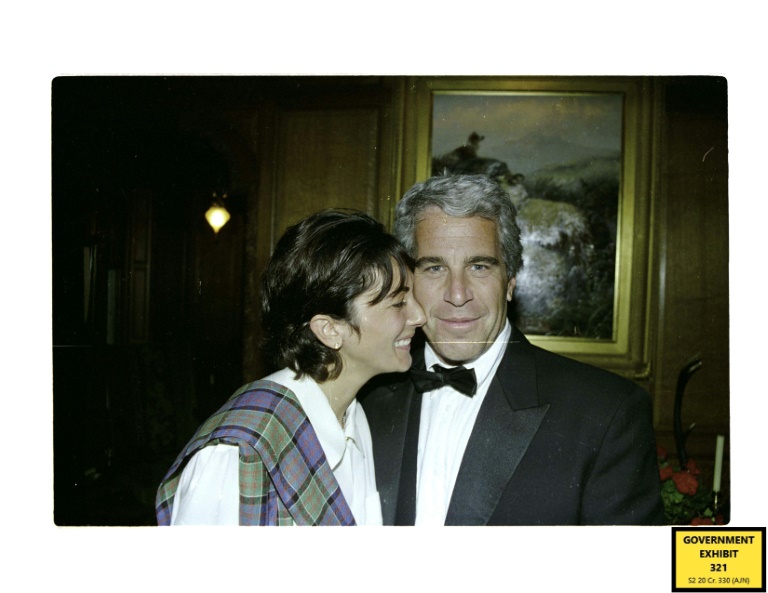
Ghislaine Maxwell was sentenced to 20 years in prison by a New York judge Tuesday for helping the late disgraced financier Jeffrey Epstein sexually abuse girls.

The term, handed down in the Manhattan federal court, means the 60-year-old former socialite will spend much of the rest of her life in jail.

The Oxford-educated daughter of the late British press baron Robert Maxwell was convicted late last year on five of six counts, the most serious for sex trafficking minors.

Her lawyers had argued for leniency, citing a traumatic childhood and claiming that Maxwell was being unfairly punished because Epstein escaped trial.

They had asked for a maximum of five years while prosecutors had called for between 30 and 55 years in jail.

In the end, judge Alison Nathan went with 20, the amount of time recommended by the US probation office.

During Maxwell’s high-profile trial in late 2021, prosecutors successfully proved that she was “the key” to Epstein’s scheme of enticing young girls to give him massages, during which he would sexually abuse them.

Two of Epstein’s victims, identified as “Jane” and “Carolyn,” testified that they were as young as 14 when Maxwell began grooming them.

Maxwell’s lawyers said their client had “a difficult, traumatic childhood with an overbearing, narcissistic, and demanding father.”

“It made her vulnerable to Epstein, whom she met right after her father’s death,” they wrote in submissions filed earlier this month.

Money manager Epstein killed himself in prison in 2019 aged 66 while awaiting his own sex crimes trial in New York.

“Ms Maxwell cannot and should not bear all the punishment for which Epstein should have been held responsible,” her attorneys pleaded.

-‘Devastating harm’ –

But the prosecution contended in its own court filing last week that Maxwell “was an adult who made her own choices.”

They argued that she had shown an “utter lack of remorse” for her crimes, committed between 1994 and 2004.

“Today’s sentence holds Ghislaine Maxwell accountable for perpetrating heinous crimes against children,” Damian Williams, the US attorney for the Southern District of New York, said.

“This sentence sends a strong message that no one is above the law and it is never too late for justice,” he added.

Maxwell has already been held in detention for some two years following her arrest in New Hampshire in the summer of 2020.

“Ghislaine must die in prison,” Maxwell and Epstein accuser Sarah Ransome told reporters outside court.

Maxwell’s sentencing caps a dramatic fall for the former international jetsetter who grew up in wealth and privilege as a friend to royalty.

Her circle included Britain’s Prince Andrew, former US president and real estate baron Donald Trump and the Clinton family.

In February, Prince Andrew settled a sexual abuse lawsuit with Virginia Giuffre, who said she had been trafficked to the royal by Epstein and Maxwell.

In April, Nathan rejected a request by Maxwell for a new trial. 

She unsuccessfully argued that a juror, who had boasted of helping convince fellow panelists to convict Maxwell by recalling his own experiences as a sex abuse victim, had biased the jury.

Trump tried to force limo to Capitol on day of riot: WH aide

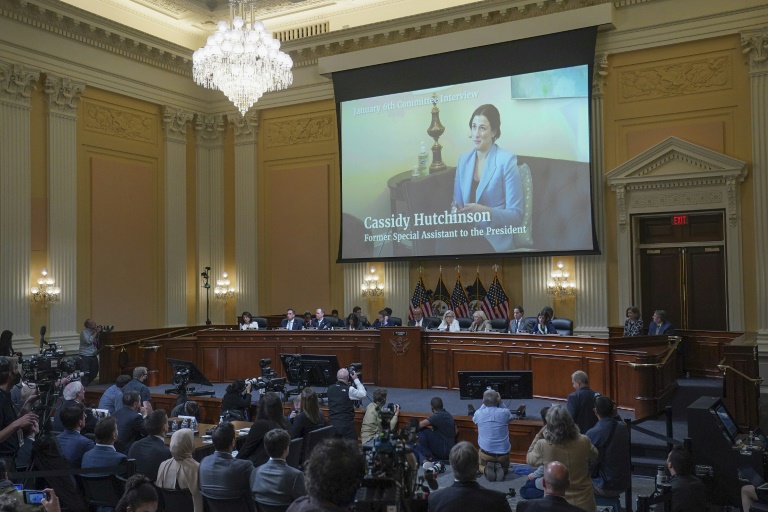
Former US president Donald Trump tried to take the steering wheel from his Secret Service limousine driver in a bid to join the crowd marching on the US Capitol, a top aide in his administration testified Tuesday.

Trump got into his car after addressing his supporters at a rally near the White House on January 6, 2021, Cassidy Hutchinson told a congressional panel, and was told he couldn’t be with his supporters who were gathering ahead of the protest that turned into a deadly insurrection. 

“I’m the effing president, take me up to the Capitol now,” Trump said, according to Hutchinson, who said the story was relayed to her by another administration official.

White House counsel Pat Cipollone had voiced legal concerns about Trump marching to the Capitol alongside his supporters, Hutchinson said. 

“We’re going to get charged with every crime imaginable if we make that happen,” Hutchison recalled Cipollone warning.

Hutchinson, a former top White House aide with unique access to Trump and the inner workings of the West Wing, was testifying at the sixth June hearing of the House committee probing the attack on the US Capitol.

An executive assistant to Trump’s chief of staff Mark Meadows, she was a central figure in the White House around the period of the insurrection on January 6 last year.

In some of the most explosive testimony from the hearings so far, Hutchinson said Trump and some of his top lieutenants were aware of the possibility of violence ahead of the attack — contradicting claims that the assault was spontaneous and had nothing to do with the administration.

– ‘Things might get real’ –

Hutchinson said she recalled her boss saying four days before the insurrection: “Things might get real, real bad on January 6.”

Hutchinson had sought out Meadows, she said, after a White House meeting involving Trump’s lawyer Rudy Giuliani. 

As they were heading to Giuliani’s car, he asked her if she was “excited” for January 6, she testified. 

When she asked what was happening on that day, Hutchinson testified that Giuliani “responded something to the effect of, ‘We’re going to the Capitol,'” Hutchinson said.

“‘It’s going to be great. The president’s going to be there. He’s going to look powerful. He’s going to be with the members. He’s going to be with the senators. Talk to the chief about it. Talk to the chief about it. He knows about it.'”

She told Meadows what Giuliani had said, she testified.

“He didn’t look up from his phone and said something to the effect of, ‘There’s a lot going on, Cass, but I don’t know. Things might get real, real bad on January 6,'” Hutchinson told the hearing.

“When hearing Rudy’s take on January 6, and then Mark’s response, that was the first moment that I remember feeling scared and nervous for what could happen on January 6,” she added.

Hutchinson told the committee that she heard the names of far right groups the Oath Keepers and Proud Boys discussed in the White House as January 6 approached.

Meadows and Trump were aware of the possibility of violence, including that members of the pro-Trump mob were armed when they gathered on the Ellipse that day, Hutchinson said.  

– ‘Lack of reaction’ –

When she told Meadows violence had erupted, Meadows “almost had a lack of reaction,” Hutchinson said.

Vice chair Liz Cheney said the committee had obtained police reports that people at the Trump rally on the Ellipse had knives, Tasers, pepper spray and blunt objects that could be used as weapons.

Police transmissions played at the hearing showed that others outside the rally had firearms including AR-15 semi-automatic rifles.

Hutchinson has already been the source of several blockbuster revelations, appearing in videotaped depositions at two previous hearings and memorably naming a group of House Republicans who sought pardons from Trump following the violence.

She was also in contact with officials in the battleground state of Georgia, where Trump infamously pressured officials to “find” enough votes to overcome Biden’s victory margin in a phone call that is the subject of a criminal probe.

It was Hutchinson, according to CNN, who told the select committee that Trump voiced approval for the “hang Mike Pence” chants from rioters at the Capitol — an allegation that was among the many eye-popping claims to come out of the opening hearing on June 9.

Meadows himself has refused to testify before the panel since handing over thousands of text messages and other documents in the early stages of the investigation.

The House of Representatives held Meadows in contempt in December but the Justice Department decided not to charge him.

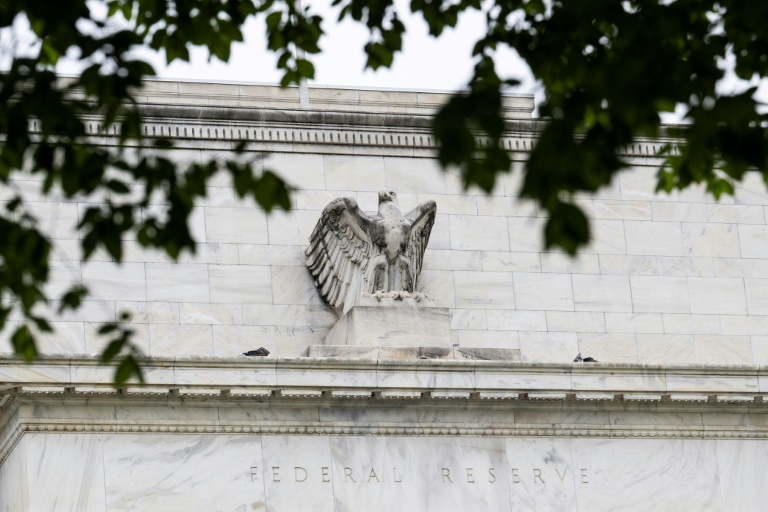
US likely to avoid recession, but rates need to climb: Fed official

The US economy will slow this year as intended and is expected to avoid a downturn, but the Federal Reserve will have to raise borrowing rates quickly, a top central bank official said Tuesday.

“Recession is not my base case right now. I think the economy is strong,” New York Fed President John Williams said on CNBC.

But he said policymakers need to hike rates “expeditiously” to tamp down inflationary pressures and get the key policy interest rate to 3.0-3.5 percent by later this year.

With American families struggling in the face of soaring gas and food prices, the Fed has shifted into high gear, implementing the biggest rate hike in nearly 30 years earlier this month to try to cool the economy and rein in inflation.

The Fed since March has raised the benchmark borrowing rate 1.5 percentage points, from zero where it had been since the start of the Covid-19 pandemic, and is expected to announce another three-quarter-point increase at its July policy meeting, with further hikes coming.

That has raised fears the campaign to quell the highest inflation in four decades will tumble the world’s largest economy into recession.

But Williams echoed the cautiously optimistic view of Fed chief Jerome Powell, saying there is a path forward that avoids a contraction.

“I’m expecting growth to slow this year quite a bit relative to what we had last year,” with GDP expanding by 1.0 to 1.5 percent, he said.

“It’s not a recession, it’s a slowdown that we need to see in the economy to reduce the inflationary pressures and bring inflation down.”

However, other economists are not as sanguine.

Dana Peterson, chief economist of The Conference Board, said the United States will likely face a short downturn.

“We are anticipating a brief yet shallow recession starting in the fourth quarter of this year and extending into the first quarter of next year,” she said during a Politico event on Tuesday.

Williams noted that the main risks to the US economy “are coming from abroad.”

The Russian invasion of Ukraine has been a major factor contributing to rising food and oil prices worldwide.

He said it was “perfectly reasonable” to expect the Fed to raise the policy rate to 3.5-4.0 percent next year, but that the final path will depend on the economic data.

“We need to raise interest rates quite a bit this year and into next year,” he said. “We’ve got to get interest rates higher and we have to do that expeditiously.”

US likely to avoid recession, but rates need to climb: Fed official

The US economy will slow this year as intended and is expected to avoid a downturn, but the Federal Reserve will have to raise borrowing rates quickly, a top central bank official said Tuesday.

“Recession is not my base case right now. I think the economy is strong,” New York Fed President John Williams said on CNBC.

But he said policymakers need to hike rates “expeditiously” to tamp down inflationary pressures and get the key policy interest rate to 3.0-3.5 percent by later this year.

With American families struggling in the face of soaring gas and food prices, the Fed has shifted into high gear, implementing the biggest rate hike in nearly 30 years earlier this month to try to cool the economy and rein in inflation.

The Fed since March has raised the benchmark borrowing rate 1.5 percentage points, from zero where it had been since the start of the Covid-19 pandemic, and is expected to announce another three-quarter-point increase at its July policy meeting, with further hikes coming.

That has raised fears the campaign to quell the highest inflation in four decades will tumble the world’s largest economy into recession.

But Williams echoed the cautiously optimistic view of Fed chief Jerome Powell, saying there is a path forward that avoids a contraction.

“I’m expecting growth to slow this year quite a bit relative to what we had last year,” with GDP expanding by 1.0 to 1.5 percent, he said.

“It’s not a recession, it’s a slowdown that we need to see in the economy to reduce the inflationary pressures and bring inflation down.”

However, other economists are not as sanguine.

Dana Peterson, chief economist of The Conference Board, said the United States will likely face a short downturn.

“We are anticipating a brief yet shallow recession starting in the fourth quarter of this year and extending into the first quarter of next year,” she said during a Politico event on Tuesday.

Williams noted that the main risks to the US economy “are coming from abroad.”

The Russian invasion of Ukraine has been a major factor contributing to rising food and oil prices worldwide.

He said it was “perfectly reasonable” to expect the Fed to raise the policy rate to 3.5-4.0 percent next year, but that the final path will depend on the economic data.

“We need to raise interest rates quite a bit this year and into next year,” he said. “We’ve got to get interest rates higher and we have to do that expeditiously.”

Early human ancestors one million years older than thought

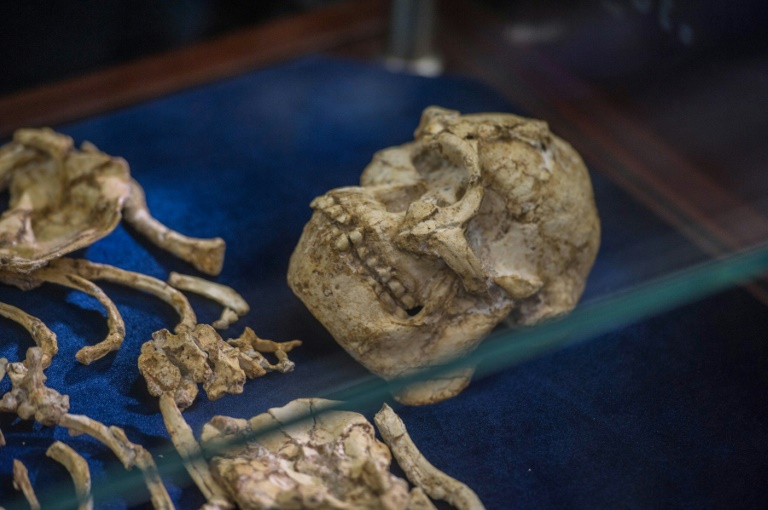
The fossils of our earliest ancestors found in South Africa are a million years older than previously thought, meaning they walked the Earth around the same time as their East African relatives like the famous “Lucy”, according to new research.

The Sterkfontein caves at the Cradle of Humankind world heritage site southwest of Johannesburg have yielded more Australopithecus fossils than any other site in the world.

Among them was “Mrs Ples”, the most complete skull of an Australopithecus africanus found in South Africa in 1947.

Based on previous measurements, Mrs Ples and other fossils found at a similar depth of the cave were estimated to be between 2.1 and 2.6 million years old.

But “chronologically that didn’t fit,” said French scientist Laurent Bruxelles, one of the authors of a study published Monday in the PNAS science journal.

“It was bizarre to see some Australopithecus lasting for such a long time,” the geologist told AFP. 

Around 2.2 million years ago the Homo habilis — the earliest species of the Homo genus that includes Homo sapiens — was already roaming the region.

But there were no signs of Homo habilis at the depth of the cave where Mrs Ples was found.

– ‘Contemporaries’ –

Also casting doubt on Mrs Ples’s age was recent research showing that the almost-complete skeleton of an Australopithecus known as “Little Foot” was 3.67 million years old.

Such a big gap in ages between Mrs Ples and Little Foot seemed unlikely given they were separated by so few sedimentary layers.

Because the fossils are too old and fragile to test, scientists analyse the sediment near where they were found.

The previous dates underestimated the age of the fossils because they measured calcite flowstone mineral deposits, which were younger than the rest of that cave section, the study said.

For the latest study, the researchers used a technique called cosmogenic nuclide dating, which looked at levels of rare isotopes created when rocks containing quartz were hit by high-speed particles that arrived from outer space.

“Their radioactive decay dates when the rocks were buried in the cave when they fell in the entrance together with the fossils,” said the study’s lead author, Darryl Granger of Purdue University in the US.

The researchers found that Mrs Ples and other fossils near her were between 3.4 and 3.7 million years old.

This means that members of Australopithecus africanus like Mrs Ples were “contemporaries” of East Africa’s Australopithecus afarensis, including 3.2-million-year-old Lucy who was found in Ethiopia, said Dominic Stratford, director of research at the caves and one of study’s authors.

– Our family tree ‘more like a bush’ –

It could also possibly alter our understanding of our ancestral history.

The South African Australopithecus had previously been considered “too young” to be the ancestor of the Homo genus, Stratford said. That meant that Lucy’s home of East Africa was thought to be the more likely place where the Homo genus evolved.

But the new research shows that the South African Australopithecus had almost a million years to evolve into our Homo ancestor.

Or they could have worked on it together.

“Over a timeframe of millions of years, at only 4,000 kilometres (2,500 miles) away, these species had plenty of time to travel, to breed with each other… so we can largely imagine a common evolution across Africa,” Bruxelles said.

The research showed that the history of hominids was “more complex than linear evolution”, he added.

Our family tree is in fact “more like a bush, to use the words of our late friend Yves Coppens,” Bruxelles said, referring to the French palaeontologist credited with co-discovering Lucy. Coppens died last week.

“He had long understood the pan-African nature of evolution,” Bruxelles said.

Nearly 1 in 4 globally at risk from severe flooding: study

Almost a quarter of the world’s population are exposed to significant flood risks, according to new research published Tuesday, which warned those in poorer countries were more vulnerable.

Inundations from heavy rainfall and storm surges affect millions of people every year and cause billions of dollars of damage to homes, infrastructure and economies. 

And the risks are rising as climate change causes more extreme precipitation and sea level rise, as exposed populations swell. 

The new study, published in the journal Nature Communications, looked at global data on flood risks from the sea, rivers and rainfall, as well as population distribution and poverty estimates from the World Bank.

It found about 1.81 billion people — or 23 percent of the people on the planet — are directly exposed to floods of over 15 centimetres (six inches) in 1-in-100-year flooding. 

“This would pose significant risks to lives and livelihoods, especially of vulnerable population groups,” the study said. 

Overall, nearly 90 percent of those exposed to inundations live in lower or middle income countries, according to the study.

It also concluded the number of people living in poverty and under severe flood risk is “substantially higher than previously thought”. 

Researchers found some $9.8 trillion of economic activity globally — around 12 percent of the global gross domestic product in 2020 — is located in areas exposed to severe flooding.

But they said concentrating simply on a monetary value could cause a bias of attention towards higher income countries and economic hubs.

“By accounting for the poverty levels of exposed populations, we show that low-income countries are disproportionately exposed to flood risks, while being more vulnerable to disastrous long-term impacts,” said the study by Jun Rentschler of the World Bank and colleagues.  

– Growing risks –

Overall, the study estimated most people exposed to flooding — 1.24 billion — are in South and East Asia, with China and India accounting for over a third of the global total.

Some 780 million people living on under $5.50 a day are at risk from once-in-a-hundred-year floods, it found.

The research provides “the first global estimates of the interaction between exposure to flood risk, and poverty”, said Thomas McDermott, of the National University of Ireland Galway, in a linked commentary published in Nature Communications.

The authors said previous studies were often limited by geography or the type of flood risk assessed and had underestimated just how many people across the world are exposed.

“Climate change and risky urbanisation patterns are expected to further aggravate these risks in coming years,” they added.

According to World Weather Attribution, a network of scientists tracing the impacts of climate change, global warming has made extreme rainfall more common and more intense across most of the world.

This has likely made flooding more severe in these areas, although scientists stress the other human factors also play a part, such as decisions about where homes and infrastructure are built. 

This month, record floods in southern China displaced more than half a million people. 

In Bangladesh, the Red Cross said Tuesday seven million people are still in “desperate” need of shelter and aid after some of the heaviest rains in a century swelled rivers to record levels and inundated rural villages.

Erdogan in crunch NATO expansion talks at Madrid summit

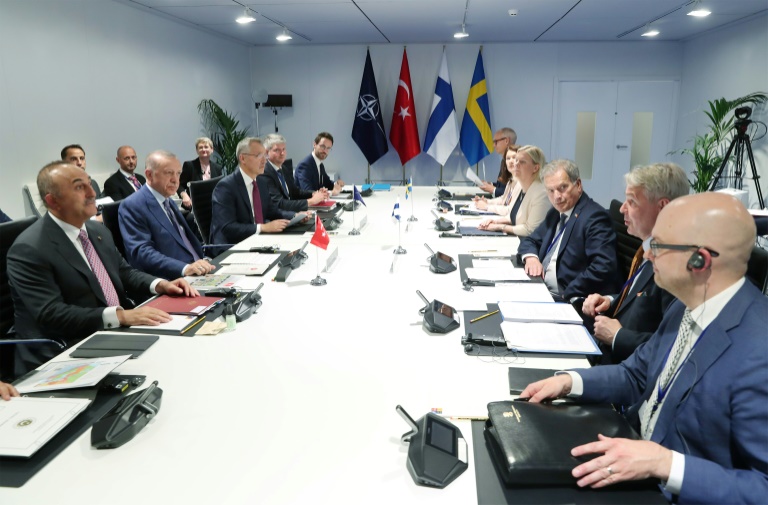
The leaders of Finland and Sweden met Turkish President Recep Tayyip Erdogan on Tuesday ahead of a NATO summit in Madrid in a bid to get him to drop objections to them joining.

Erdogan has stubbornly refused to greenlight the applications from the Nordic pair — lodged in response to Russia’s war on Ukraine — despite calls from his NATO allies to clear the path for them to enter.

He was expected to meet with US President Joe Biden on Wednesday on the sidelines of the gathering focused on responding to the Kremlin’s invasion of its pro-Western neighbour.

Turkey can essentially veto Finland and Sweden from joining NATO since all members must agree to taking on new members.

Ankara has accused Finland and especially Sweden of offering a safe haven to Kurdish militants who have been waging decades-long insurgency against the Turkish state.

The Turkish leader has also called on the two countries to lift arms embargoes imposed on Turkey in 2019 over Ankara’s military offensive in Syria.

NATO Secretary General Jens Stoltenberg, who is mediating the talks, said he hoped to make “progress” on the issue at the summit which ends on Thursday.

The talks would continue after a dinner on Tuesday for the national leaders taking part in the summit, the Turkish government said.

Sweden and Finland went into the NATO meeting open to the possibility that Turkey might only lift its objections after the summit concludes on Thursday.

“We have made progress. That is definitely the case,” said Swedish Foreign Minister Ann Linde.

Finnish President Sauli Niinisto said he was neither “optimistic nor pessimistic at this stage”.

But Erdogan said on Monday before flying to Madrid that Turkey does “not want empty words. We want results”.

– ‘Interest of the alliance´-

Speaking to reporters aboard Air Force One, US National Security Advisor Jake Sullivan said Biden and Erdogan would “at some point” meet on Wednesday on the sidelines of the summit.

But he stressed the United States was not adopting a “brokering role” and would leave the NATO secretary general in charge.

“Rather, we’re going to do what many other allies have done which is indicate publicly and privately that we believe it is in the interest of the alliance to get this done,” he added.

“And we also believe that Finland and Sweden have taken significant steps forward in terms of addressing Turkey’s concerns.”

Analysts believe the meeting between Erdogan and Biden could play a crucial role in breaking down Turkey’s resistance to bids by Sweden and Finland to join the Western defence alliance in response to the war.

The two leaders have had a chilly relationship since Biden’s election because of US concerns about human rights under Erdogan.

Biden and Erdogan last met briefly in October on the sidelines of a G20 summit in Rome.

– Fighter jet talks –

Erdogan’s ability to maintain a close working relationship with Russian President Vladimir Putin while supporting Ukraine’s war effort has made him an important player in the conflict.

But those ties have also complicated his relations with Biden and NATO.

Washington has sanctioned Ankara for taking delivery of an advanced Russian missile defence system in 2019.

The purchase saw the United States drop Turkey from the F-35 joint strike fighter programme and impose trade restrictions on its military procurement agency.

But Washington has signalled it may be willing to move past the dispute.

Biden’s administration has dangled the possibility of supplying Ankara with older-generation F-16 jets that could replenish Turkey’s ageing air force fleet.

“The most important issue is the F-16 issue. It is still on the table,” Erdogan said of his upcoming talks with Biden.

burs-ds/raz

Close Bitnami banner
Bitnami