AFP

US high court denies Bayer bid to block Roundup weedkiller lawsuits

The US Supreme Court on Tuesday declined an appeal from Bayer-owned Monsanto that aimed to challenge thousands of lawsuits claiming its weedkiller Roundup causes cancer — a potentially costly ruling.

The high court did not explain its decision not to take the case, which left intact a $25 million ruling in favor of a California man who alleged he developed cancer after using the chemical for years.

The decision marks a major blow to the German conglomerate’s legal fight against some 31,000 Roundup-related cases.

“Bayer respectfully disagrees with the Supreme Court’s decision,” the company said in a statement.

“The company believes that the decision undermines the ability of companies to rely on official actions taken by expert regulatory agencies,” it added, referring to a 2020 federal finding that Roundup’s active ingredient is not risky.

Plaintiffs’ attorneys welcomed the justices’ decision as setting a clear path for people to seek compensation in these cases.

Matthew Stubbs said his firm Duncan Stubbs “continues to represent thousands of Roundup plaintiffs, with a wave of cases set for trial in the coming months and more behind them for as long as Bayer wants to delay.”

Bayer has been plagued by problems since it bought Monsanto, which owns Roundup, in 2018 for $63 billion and inherited its legal woes around the chemical’s ingredient glyphosate.

The German firm says it has not committed any wrongdoing, and maintains that scientific studies and regulatory approvals show glyphosate is safe.

Glyphosate is nonetheless classified as a “probable carcinogen” by the International Agency for Research on Cancer at the World Health Organization (WHO).

However, the United States Environmental Protection Agency, on its website, says “there are no risks of concern to human health when glyphosate is used in accordance with its current label.”

A California-based appeals court last week ordered the EPA to reconsider that finding.

– Billions at stake –

The Supreme Court’s ruling not to intervene leaves in place a judgment in the lawsuit filed by Edwin Hardeman, who was diagnosed with non-Hodgkin’s lymphoma in 2015.

In addition to the some 31,000 cases about alleged health problems against the weedkiller, Bayer’s own shareholders have taken legal action as well.

Investors are seeking 2.2 billion euros ($2.5 billion) in damages in a German court for losses incurred following its troubled takeover of Monsanto, their lawyers said in January.

The investors accuse Bayer of having “misled capital markets about the economic risks from pending consumer lawsuits in the United States in connection with glyphosate and the herbicide Roundup,” law firm Tilp said in a statement.

Tilp said around 320 investors have submitted complaints, most of them institutional investors such as banks, wealth managers, insurers and pension funds.

In the United States, Bayer signed a $10 billion settlement with plaintiffs in June 2020, with the parties agreeing to add $2 billion to settle future claims, but this part of the agreement was rejected by a California judge. 

In an attempt to put an end to all proceedings, the firm presented a five-point plan in the summer of 2021 stating that if it lost the Hardeman case in the Supreme Court, it would begin discussions on the claims not included in the 2020 agreement.

Bayer said it is transitioning its glyphosate-based products in the US residential market to new formulations that have alternative active ingredients beginning in 2023.

“The company is taking this action exclusively to manage litigation risk in the US and not because of any safety concerns,” it said in a statement.

Bayer says it has resolved around 107,000 of a total of 138,000 cases related to the herbicide.

Bayer’s share price closed down about two percent after the court’s decision on Tuesday.
US jury finds Bill Cosby sexually assaulted teen in 1970s

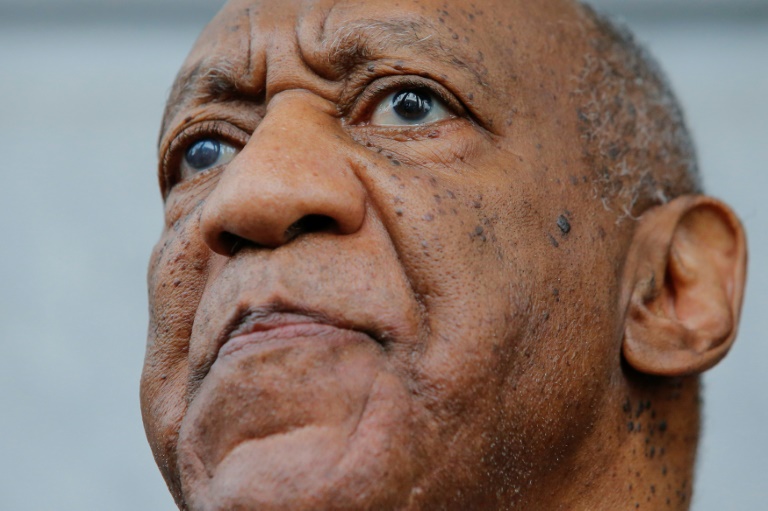
Bill Cosby sexually assaulted a teenager at the Playboy Mansion almost 50 years ago, a jury in California found Tuesday, in the first civil ruling against the veteran entertainer following dozens of allegations.

Judy Huth, now aged 64, was awarded $500,000 in damages after the jury in Santa Monica determined that Cosby had molested her in 1975 when she was just 16 years old after meeting her on a movie set and plying her with alcohol.

The case is the only successful legal action against Cosby, 84, who has been accused of using his fame to prey on women over several decades.

The man formerly known as “America’s Dad” was jailed in Pennsylvania for drugging and molesting a woman in a separate criminal case in 2018, but was freed last year when his conviction was overturned on a technicality.

Over a two-week civil hearing, which Cosby did not attend, lawyers said he escorted Huth and her then-17-year-old friend, Donna Samuelson, to Hugh Hefner’s mansion after meeting them on a movie set.

The jury heard how when Huth was alone with Cosby, the actor began kissing her and tried to put his hands inside her clothes.

They were told how he then allegedly pulled down his own trousers and forced her to perform a sex act on him.

Lawyer Nathan Goldberg said for many years Huth had repressed memories of the assault but that it came to the fore for her when other women began accusing him of assaulting them.

– Much-loved star –

“It was like a cork popped out of a bottle,” said Goldberg at the start of the case. “Memories came rushing to the surface… she became overwhelmed by memories of Mr Cosby and what he had done.”

She originally filed her lawsuit in December 2014, but the case was put on hold while various criminal investigations played out.

The civil trial was shown a videotaped deposition of Cosby taken in 2015 in which he denied the assault, and insisted that he would never engage in sexual activity with an underage girl.  

His lawyers made much of apparent discrepancies in Huth’s story, including that both teens spent up to 12 hours at the mansion after the alleged assault.

They also argued that Huth originally claimed the attack happened in 1974 when she was 15, but later said it had happened the following year.

The case was never prosecuted criminally as the statute of limitations had passed by the time Huth spoke to police.

California law allows adults who say they were sexually abused as minors, but have only recently become aware of the damage, to bring civil cases years after the statute of limitations would normally have expired.

Cosby was a towering figure in late-20th century American popular culture, and hit the big time as affable obstetrician and father Cliff Huxtable on “The Cosby Show,” which ran from 1984-92.

But around 60 women, many of them onetime aspiring actresses and models, have publicly branded Cosby a calculating, serial predator who plied victims with sedatives and alcohol to bed them over four decades.

US jury finds Bill Cosby sexually assaulted teen in 1970s

A jury in California found Tuesday that entertainer Bill Cosby sexually assaulted a teenager at the Playboy Mansion almost five decades ago.

Judy Huth, now aged 64, was awarded $500,000 in damages after the jury in Santa Monica determined that Cosby had molested her in 1975 when she was just 16 years old.

The case is one of the few remaining legal actions against Cosby, 84, who has been accused of assault by dozens of women. 

He was jailed in Pennsylvania in a separate criminal case in 2018, but was freed last year when his conviction was overturned on a technicality.

Over a two-week civil hearing, which Cosby did not attend, lawyers said the man once known as “America’s Dad” escorted Huth and her then-17-year-old friend, Donna Samuelson, to the mansion after meeting them on a movie set.

Cosby denied any wrongdoing, and his lawyers made much of apparent discrepancies in Hutch’s story, including that both teens spent up to 12 hours at the mansion after the alleged assault.

They also argued that Huth originally claimed the attack happened in 1974 when she was 15, but later said it had happened the following year.

The case was never prosecuted criminally as the statute of limitations had passed by the time Huth spoke to police.

Huth was able to bring the civil suit under a California law allowing adults who say they were victims of sexual abuse as minors, but repressed what happened to them for years, to pursue such cases.

Long wait over as US vaccinates youngest against Covid

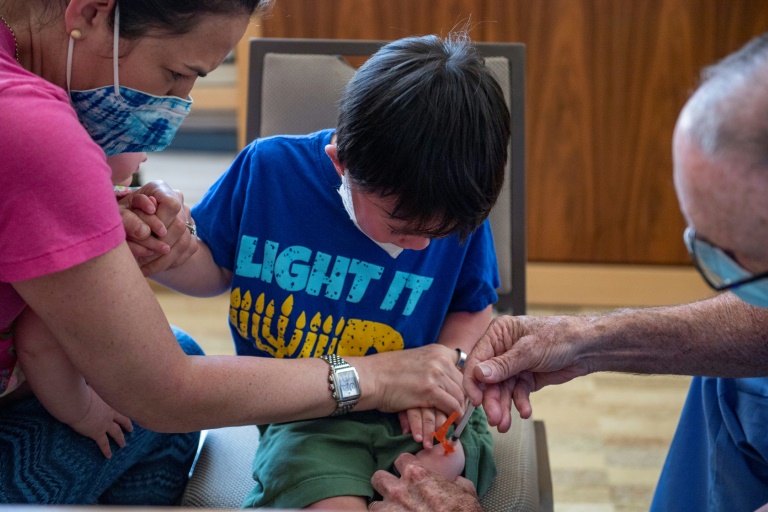
US hospitals, clinics and pharmacies began vaccinating the nation’s youngest children against Covid-19 on Tuesday, a milestone that was welcomed by parents eager to protect kids from the worst impacts of the virus.

Rollout of millions of shots was underway across the country, 18 months after the elderly became the first group eligible for immunization. 

Children aged from six months through four years aren’t at as great a risk as adults. 

But the sheer level of infections has seen more than 45,000 hospitalizations and nearly 500 deaths in the 0-4 group in America since the start of the pandemic — outcomes that vaccination could have prevented in many cases.

“We’re super thrilled,” said Amisha Vakil, mother of two three-year-old boys, who wore matching Spiderman tee shirts as they got their Moderna shots at Texas Children’s Hospital in Houston.

One of the twins had three open heart surgeries within his first five months. 

“He’s super high risk so you know, we’ve been living in a little bubble,” said Vakil.  “Now he has little armor that helps a lot.”

The moment was also hailed by President Joe Biden, whose administration made 10 million shots of the Moderna and Pfizer vaccines available to states after they were authorized last week.

“The United States is now the first country in the world to offer safe and effective Covid-19 Vaccines for children as young as six months old,” said Biden, calling it a “monumental step forward.”

A handful of other countries and territories including Argentina, Bahrain, Chile, China, Cuba, Hong Kong and Venezuela were previously offering Covid shots for toddlers, but these did not include mRNA vaccines, regarded as the leading technology for the purpose.

The European Medicines Agency is reviewing the Moderna vaccine for use in under-sixes and could follow the US decision. 

– Born in pandemic –

Many children being brought in Tuesday were born after the pandemic started and had only known a life of restrictions.

Anna Farrow, who came to the same hospital with her husband Luke, said she saw a new start for their son George, aged three, and Hope, aged 10 months.

“This is sort of the beginning of a regular childhood. And we’re very excited about that,” she said.

On the other side of the country in Needham, Massachusetts, Ellen Dietrick, an administrator at Temple Beth Shalom was preparing to welcome 300 children on the first day.

Daniel Grieneisen, the father of a three-year-old girl who got the vaccine, said: “It means that we are now just a couple weeks from being able to take her indoors places, and kind of get back to living our lives, it’s pretty exciting.”

Last week, a panel of experts called by the Food and Drug Administration reviewed data from clinical trials involving thousands of children that were conducted by Pfizer and Moderna, and deemed both of the vaccines safe and effective.

However, a survey carried out by the Kaiser Family Foundation in May found only one-in-five parents of children under five were eager to get them vaccinated right away. A slightly higher proportion, 38 percent, said they would wait and see how well the vaccine worked for others.

New Yorker Rita Saeed, 29, said she was concerned about side effects and planned to wait a couple of years before deciding whether to vaccinate her two-year-old son.

“Each to their own, I think it should be optional, not mandatory,” she said, pushing her son in a stroller through Central Park.

Hal Moore, a 32-year-old teacher who lives in New York City, said he was “definitely relieved” that he will be able to vaccinate his 10-month-old daughter Lucy, but “we’ll probably wait until her next normal appointment to get it.”

In a sign of the ongoing politicization surrounding vaccines in America, Florida governor and possible Republican presidential candidate Ron DeSantis refused to place an order with the federal government for vaccines for the youngest children, leaving private practices and parents to fend for themselves.

“These are the people who have zero risk of getting anything,” he said at a press conference last week.

burs-ia/jh

Russia warns Lithuania, pushes into Ukraine's Donbas

Moscow on Tuesday warned Lithuania of “serious” consequences over its restriction of rail traffic to Russia’s Kaliningrad exclave, as Kremlin forces made gains in Ukraine’s strategic Donbas region.

The row over Lithuania, the arrival of sophisticated German weaponry in Ukraine’s arsenal and an imminent decision on Kyiv’s candidacy to join the European Union threaten to further ratchet up tensions between the West and Moscow.

Kremlin troops were meanwhile gaining ground in the Donbas, causing “catastrophic destruction” in Lysychansk, an industrial city at the forefront of recent clashes, the region’s governor said. Ukraine confirmed Russia had taken the frontline village of Toshkivka.

Governor Sergiy Gaiday said “every town and village” in Ukrainian hands in the Lugansk region was “under almost non-stop fire”. 

Since being repelled from Kyiv and other parts of Ukraine following its invasion in February, Moscow has been focusing its offensive on the Donbas region.

In the eastern city of Sloviansk, which could become a flashpoint as Russian troops advance from the north, local people were preparing to withstand attacks and the authorities said the community would defend itself.

“We believe they’ll beat the Russian scum,” resident Valentina, 63, said of local Ukrainian forces.

– ‘Serious’ consequences –

Russia’s war of words with EU member Lithuania escalated on Tuesday, with Moscow vowing “serious” consequences over Vilnius’ restrictions on rail traffic to the exclave of Kaliningrad that borders Lithuania and Poland. 

Lithuania says it is simply adhering to EU-wide sanctions on Moscow but Russia countered, accusing Brussels of “escalation”.

Moscow summoned the EU’s ambassador to Russia. Its foreign ministry said Lithuania’s actions “violate the relevant legal and political obligations of the European Union”.

“Russia will certainly respond to such hostile actions,” security council chief Nikolai Patrushev said at a regional security meeting in Kaliningrad.

The United States made clear its commitment to Lithuania as an ally in NATO, which considers an attack against one member an attack on all.

“We stand by our NATO allies and we stand by Lithuania,” State Department spokesman Ned Price told reporters in Washington.

With US-Russia tensions soaring, the State Department on Tuesday confirmed a second American, 52-year-old Stephen Zabielski, was killed fighting for Ukraine.

Two other Americans were captured last week in eastern Ukraine. 

A White House spokesman, John Kirby, voiced alarm at Russian statements that it would not apply the Geneva Conventions on the humane treatment of prisoners to the pair.

“It’s appalling that a public official in Russia would even suggest the death penalty for two American citizens that were in Ukraine,” Kirby told reporters.

Spain also said one of its citizens fighting for Ukraine had been killed, without giving further detail.

Ukraine has been seeking membership in the European Union after earlier failing to join NATO.

Ministers on Tuesday were united in granting candidate status to Ukraine as well as Moldova before a formal greenlight later this week, said France’s Europe minister, Clement Beaune, whose country holds the EU’s rotating presidency

Ukrainian President Volodymyr Zelensky, who has found hero status in Europe for resisting the invasion, said that he was working the phones to drum up support for EU membership.

“I will do everything for a historic decision of the European Union to be approved. It is important for us,” he said in a daily address.

– ‘Significant losses’ –

Western nations have been pumping billions of dollars of weapons into Ukraine, where Defence Minister Oleksiy Reznikov tweeted that powerful German-made Panzerhaubitze 2000 howitzer artillery pieces had reached his country’s forces.

Russia said Tuesday it had repelled a Ukrainian attempt to retake the symbolic Snake Island, a small territory in the Black Sea captured by Russian forces on the first day of the invasion. 

In addition to Toshkivka, Ukraine said it had lost control of the eastern village of Metyolkine, a settlement adjacent to Severodonetsk, which has been a focus of fighting for weeks and is now largely under Russian control.

A chemical plant in Severodonetsk where hundreds of civilians are said to be sheltering was being shelled constantly, Ukrainian officials said.

But defence ministry spokesman Oleksandr Motuzyanyk told Ukrainian television that Russian forces had suffered “significant losses” in the area of Severodonetsk.

Ukraine on Tuesday said it struck a Black Sea oil drilling platform off the Crimea peninsula because Russia was using it as a military installation. 

The rig had Russian garrisons and equipment for air defence, radar warfare and reconnaissance, Sergiy Bratchuk of Odessa’s regional military administration told an online briefing.

Russian shelling killed 15 people including an eight-year-old in eastern Ukraine’s Kharkiv region on Tuesday, its governor said.

On the sea, Russia’s navy is blockading ports, which Ukraine says is preventing millions of tonnes of grain from being shipped to world markets, contributing to soaring food prices.

Prior to the war, Ukraine was a major exporter of wheat, corn and sunflower oil.

Moscow denies Western charges it is responsible for the disruption to deliveries.

Turkish media reported that Russian, Ukrainian and UN officials would meet in Istanbul next week to try to unblock Black Sea grain exports.

– Search for accountability –

Ukraine, its Western backers and the International Criminal Court have all vowed to seek accountability over the war.

A search for bodies remains underway in the Kyiv region, where the police chief said that 1,333 civilians have been discovered and 300 people remain missing.

US Attorney General Merrick Garland visited Ukraine on Tuesday to discuss prosecution of individuals involved in war crimes.

“There is no place to hide,” Garland said.

Ukraine’s Prosecutor General Iryna Venediktova said Kyiv was looking for special equipment and expertise from the United States, including in recovering assets.

Legal support is just as needed “as the supply of arms to fight with the Russian Federation, which commits unprecedented, large-scale atrocities against the civilian population of our state,” she wrote on Facebook. 

Denmark and Sweden meanwhile became the latest European countries to warn of potential gas supply problems. 

Ukraine has called the reasons given for Russia’s reduction of gas supply to European customers “far-fetched” and “illegal”.

burs-sr-sct/bfm

Facebook agrees to safeguards in ad discrimination case

Facebook owner Meta has agreed to change its ad targeting technology and pay $115,000 to settle US government allegations the social media giant allowed discrimination in who saw housing advertisements, authorities said Tuesday. 

Under terms of a deal that must still be approved by a court, Meta will use artificial intelligence to make sure ads cross demographics to reach people regardless of age, gender or race.

“We will be introducing a new method designed to make sure the audience that ends up seeing a housing ad more closely reflects the eligible targeted audience for that ad,” Meta deputy general counsel Roy Austin said in a post.

The Department of Housing and Urban Development had charged in 2019 that Facebook “unlawfully discriminates based on race, color, national origin, religion, familial status, sex and disability” by restricting who can view housing-related ads.

Facebook has become a multi-billion dollar advertising juggernaut with its large amounts of user data that allow companies to more precisely target certain demographics, but which have also prompted allegations of privacy infringement and discrimination.

While HUD accusations focused on housing ads, Meta will also put the new system to use to make sure ads for jobs or credit don’t discriminate, Austin added.

Meta has been working with HUD on a “variance reduction system” to prevent discrimination in ad targeting on its platform.

Meta had already made changes to address housing ad discrimination concerns, and those will remain in effect, the proposed settlement stated.

Facebook announced early in 2019 that it was revamping how it uses targeted advertising in a settlement with activist groups alleging it discriminated in messages on jobs, housing, credit and other services.

By the end of this year, Meta will stop allowing ads to be targeted using a pair of “special audience” tools it offers that could carve out certain groups of people, the settlement said.

Meta will also pay a civil penalty of $115,000 and let an independent third-party check to make sure it is abiding by the terms of the settlement, court documents stated.

Trump pressure to flip election 'upended' lives, hearing told

US state lawmakers and poll workers described Tuesday how their lives had been upended by threats of violence as Donald Trump singled them out in his bid to overturn the 2020 US election.

Trump was personally involved in an intense campaign of pressure on officials in key swing states he had lost to Joe Biden, the fourth congressional hearing into the former president’s bid to cling to power after his defeat was told.

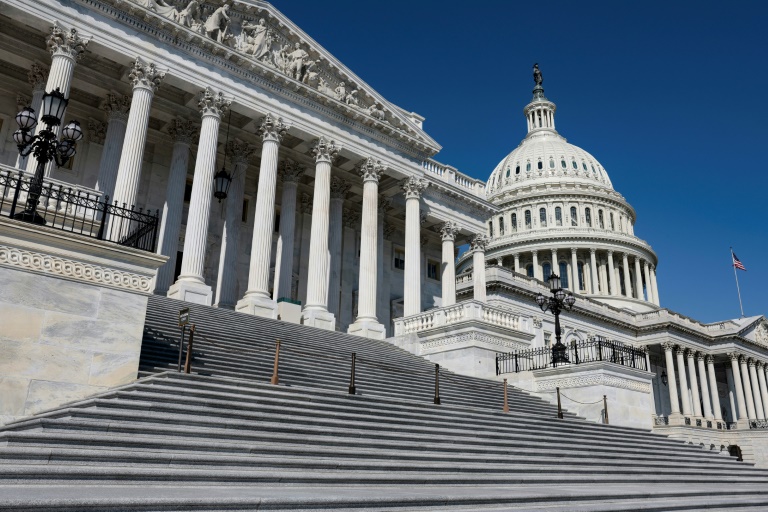
Members of the committee probing the January 2021 assault on the US Capitol that followed the election have spent much of June setting out their initial findings that Trump led a multi-pronged conspiracy to overturn the results, culminating in the insurrection in Washington.

On Tuesday they heard from poll worker Shaye Moss, who was falsely accused by Trump and his lawyer Rudy Giuliani alongside her mother Ruby Freeman of “rigging” the election count in Georgia with “suitcases” full of ballots for Biden. 

Moss, who is Black, described people making “hateful” and “racist” threats of violence following the baseless accusations, including one message saying: “Be glad it’s 2020 and not 1920.”

“This turned my life upside down. I no longer give out my business card, I don’t transfer calls,” Moss testified.

“I don’t want anyone knowing my name… I don’t go to the grocery store. Haven’t been anywhere at all.”

Freeman said in her deposition she had lost her good name and sense of security because “number 45 and his ally Rudy Giuliani decided to scapegoat me and my daughter Shaye, to push their own lies about how the presidential election was stolen.”

The mother and daughter were among poll workers or election officials in several states who found themselves pressured to thwart the will of millions of voters based on bogus claims of fraud, the panel said.

Rusty Bowers, speaker of the Arizona House of Representatives, testified that he asked Giuliani “on multiple occasions” for evidence of his stolen election claims.

He told committee members Giuliani said “we’ve got lots of theories, we just don’t have the evidence.”

Trump issued a statement, read out during the hearing, attempting to discredit Bowers, calling him a “RINO” — Republican In Name Only — and claiming that the lawmaker had told Trump the election was rigged and that Trump had in fact won Arizona.

Bowers said both claims were false.

– ‘Part of the playbook’ –

Committee chairman Bennie Thompson had started the hearing by asserting that Trump “pressuring public servants into betraying (their) oath was a fundamental part of the playbook.”

Liz Cheney, the committee’s vice chair, said Trump was aware that his false claims of fraud could lead to violence, but he assumed a “direct and personal role” in the disinformation campaign anyway.

US presidents are not elected directly by citizens, but chosen by “electors” named to a body called the electoral college by the party that wins the presidential vote in each state.

The committee says a key plank of the plot to subvert the 2020 election was getting pro-Trump Republicans in swing states won by Biden to submit official-looking but fake certificates claiming they were the legitimate electors.

The committee says Trump pressed his vice president Mike Pence to accept these “fake electors” when he was overseeing certification of Biden’s victory on January 6, 2021. 

Pence ultimately refused to recognize the pro-Trump slates and the president’s supporters rioted for hours at the Capitol in unprecedented scenes of brutality that led to at least five deaths.

– Sexualized threats –

At one point after the election, Trump personally called Republican National Committee chairwoman Ronna McDaniel to get involved in his pressure campaign, according to videotaped testimony by McDaniel.

Trump put on his lawyer John Eastman, McDaniel said, “to talk about the importance of the RNC helping the campaign gather these contingent electors.”

The exchange is crucial because the committee has promised to provide evidence of a direct link between Trump and the scheme to put forward the false electors.

In-person witnesses included Georgia secretary of state Brad Raffensperger, whom Trump pushed to “find” enough votes to overcome Biden’s lead in the battleground state in a phone call that is the subject of a state-level criminal probe.

Raffensperger revealed that 28,000 Republicans voted down-ballot in Georgia in 2020 but skipped the presidential race, which Biden won by just 12,000 votes.

The official described being inundated with vile messages and said his wife began receiving “sexualized” threats after Trump made them briefly infamous among his supporters. 

He also described a break-in at his widowed daughter-in-law’s home sparked by the election fraud claims.

“Moments require you to stand up and take the shots, and do your job, which is what we did,” he told the hearing.

Global stocks bounce after sharp selloff; yen falls

Stock markets rose Tuesday as calm returned following last week’s rout, but analysts warned that recession fears have not gone away and will cause more turmoil.

After a three-day holiday weekend, Wall Street burst higher, with major indices finishing more than two percent higher after spending the entire session in positive territory.

European equities rose for a second straight day, but pared down some of their gains from the morning.

Oil prices extended gains on hopes of improving energy demand in key consumers China and the United States, while the euro climbed on the prospect of rising eurozone borrowing costs.

“Risk appetite has managed to recover for now, perhaps because we get a much needed-break from central bank decisions this week,” IG analyst Chris Beauchamp told AFP.

“But while a bounce is overdue, it is probably only temporary.”

There remains an overarching sense of gloom as traders speculate that the sharp rise in borrowing costs around the world will tip economies into recession.

The focus this week is on Federal Reserve boss Jerome Powell’s two days of testimony to lawmakers in Washington, which will be closely watched for clues regarding the bank’s plans for fighting surging consumer.

“Where we go from here depends largely on whether Federal Reserve Chair Powell spooks the markets with his pre-released comments and what inflation data from the UK shows tomorrow (Wednesday),” City Index analyst Fiona Cincotta told AFP.

The Fed announced a hefty interest rate hike last week, days after inflation data had smashed forecasts and returning to a four-decade high. 

Several officials — including at the Fed, Bank of England, Reserve Bank of Australia and European Central Bank — have come out in recent days to flag a further tightening of borrowing costs.

Inflation has rocketed to multi-decade highs around the world on a host of factors, including the global supply crunch and the Ukraine conflict, which has fueled surging food and energy prices.

“These small recoveries in stock markets shouldn’t provide any comfort,” said Craig Erlam, senior analyst at OANDA trading platform.

“Recession is increasingly becoming the base case and so equities are vulnerable to further losses,” he said.

In currencies, the yen struck a fresh 24-year low against the US dollar following comments by Prime Minister Fumio Kishida that it “is up to the central bank” how to maintain its easy money policy while central banks elsewhere are raising rates. 

“The market is clearly looking to test the resolve of the Bank of Japan in terms of how much they are prepared to tolerate further currency weakness,” said analyst Michael Hewson at CMC Markets UK.

In corporate news, shares in German chemicals group Bayer fell by 4.7 percent following the US Supreme Court declining to hear an appeal from Bayer-owned Monsanto to quash lawsuits claiming its weedkiller Roundup causes cancer, before clawing back part of the drop.

The decision marks a major blow to the German conglomerate’s legal fight against Roundup-related cases, and Bayer has set aside more than $15 billion to deal with a wave of US lawsuits linked to the weedkiller.

– Key figures at around 1530 GMT –

New York – Dow: UP 2.2 percent at 30,530.25 (close)

New York – S&P 500: UP 2.5percent at 3,764.79 (close)

New York – Nasdaq: UP 2.5 percent at 11,069.30 (close)

London – FTSE 100: UP 0.4 percent at 7,152.05 (close)

Frankfurt – DAX: UP 0.2 percent at 13,292.40 (close)

Paris – CAC 40: UP 0.8 percent at 5,964.66 (close)

EURO STOXX 50: UP 0.7 percent at 3,494.00 (close)

Tokyo – Nikkei 225: UP 1.8 percent at 26,246.31 (close)

Hong Kong – Hang Seng Index: UP 1.9 percent at 21,559.59 (close)

Shanghai – Composite: DOWN 0.3 percent at 3,306.72 (close)

Euro/dollar: UP at $1.0535 from $1.0511 late Monday

Pound/dollar: UP at $1.2273 from $1.2253

Euro/pound: UP at 85.80 pence from 85.78 pence

Dollar/yen: UP at 136.64 yen from 135.07 yen

Brent North Sea crude: UP 0.5 percent at $114.65 per barrel

West Texas Intermediate: UP 1.0 percent at $110.65 per barrel

burs-jmb/hs

Kellogg pops as it plans spin-off of legacy cereal business

Iconic breakfast food brand Kellogg became the latest US corporate giant to announce a breakup, unveiling plans Tuesday to split into three companies in a move that lifted its share price.

The company — known for such ubiquitous brands as Corn Flakes and Pop-Tarts — will spin off its North American cereal business into a new company, while a second venture will house Kellogg’s plant-based businesses.

The remaining corporation will be positioned as a higher-growth snacks business with exposure to emerging markets. This unit — which will also house the international cereal operation — accounted for roughly 80 percent of Kellogg’s $14.1 billion in 2021 revenues.

“This will unlock and create opportunity for all three businesses,” Kellogg Chief Executive Steve Cahillane said on a conference call with analysts.

The yet-to-be-named entities will initially be known as Global Snacking Co., North America Cereal Co., and Plant Co. The latter two will be created through tax-free spin-offs.

North American Cereal, covering the United States, Canada and the Caribbean, “will be solely dedicated to winning cereal and will not have to compete for resources with a fast-growing snack business,” said Cahillane, who will lead the new snacks company. 

North American Cereal and Plant Co. would remain headquartered in Battle Creek, Michigan, while Global Snacking will have dual headquarters — in Battle Creek and Chicago.

Leadership for the other two ventures has not yet been announced.

Kellogg’s announcement comes on the heels of earlier corporate break-ups including General Electric’s November 2021 announcement of a split into three ventures, which was followed a few weeks later and by Johnson & Johnson saying it will break in two.

– Growth markets –

The company’s origins date to 1894 when WK Kellogg created Corn Flakes breakfast cereal, launching the Kellogg company 12 years later in Battle Creek, Michigan. 

Subsequent products included Rice Krispies, released in 1928, and Frosted Flakes, which was unveiled in 1952 with the Tony the Tiger character on the box, which became famous for his “They’re gr-r-reat!” tagline.

But the bulk of the company’s revenues now come from global snacks, where about 50 percent of sales come from emerging markets and developed international markets.

Snack brands include Pringles, Pop-Tarts and Rice Krispies Treats, while the group also houses Eggo and other frozen breakfasts and products such as noodles in Africa, which Kellogg described as a “rapidly expanding business.”

Kellogg is aiming to complete the split by late 2023, subject to approval by US regulators.

Kellogg will continue to report as one company throughout 2022, said Chief Financial Officer Amit Banati.

The company expects to produce the required three years of audited financial statements for each of the ventures in the second half 2023.

Cahillane said it will be “business as usual over the next 18 months” while the company moves through the process.

He said Plant Co., which will house the MorningStar Farms alternative meat products, could also be acquired by another company if such an option arises and is better than an initial public offering.

Briefing.com praised the move, saying the cereal business had  “weighed down” the higher-margin snack business and adding, “we also think that Kellogg’s promising plant business has sort of been buried.”

Shares rose 2.0 percent to finish the day at $68.86.

Kellogg pops as it plans spin-off of legacy cereal business

Iconic breakfast food brand Kellogg became the latest US corporate giant to announce a breakup, unveiling plans Tuesday to split into three companies in a move that lifted its share price.

The company — known for such ubiquitous brands as Corn Flakes and Pop-Tarts — will spin off its North American cereal business into a new company, while a second venture will house Kellogg’s plant-based businesses.

The remaining corporation will be positioned as a higher-growth snacks business with exposure to emerging markets. This unit — which will also house the international cereal operation — accounted for roughly 80 percent of Kellogg’s $14.1 billion in 2021 revenues.

“This will unlock and create opportunity for all three businesses,” Kellogg Chief Executive Steve Cahillane said on a conference call with analysts.

The yet-to-be-named entities will initially be known as Global Snacking Co., North America Cereal Co., and Plant Co. The latter two will be created through tax-free spin-offs.

North American Cereal, covering the United States, Canada and the Caribbean, “will be solely dedicated to winning cereal and will not have to compete for resources with a fast-growing snack business,” said Cahillane, who will lead the new snacks company. 

North American Cereal and Plant Co. would remain headquartered in Battle Creek, Michigan, while Global Snacking will have dual headquarters — in Battle Creek and Chicago.

Leadership for the other two ventures has not yet been announced.

Kellogg’s announcement comes on the heels of earlier corporate break-ups including General Electric’s November 2021 announcement of a split into three ventures, which was followed a few weeks later and by Johnson & Johnson saying it will break in two.

– Growth markets –

The company’s origins date to 1894 when WK Kellogg created Corn Flakes breakfast cereal, launching the Kellogg company 12 years later in Battle Creek, Michigan. 

Subsequent products included Rice Krispies, released in 1928, and Frosted Flakes, which was unveiled in 1952 with the Tony the Tiger character on the box, which became famous for his “They’re gr-r-reat!” tagline.

But the bulk of the company’s revenues now come from global snacks, where about 50 percent of sales come from emerging markets and developed international markets.

Snack brands include Pringles, Pop-Tarts and Rice Krispies Treats, while the group also houses Eggo and other frozen breakfasts and products such as noodles in Africa, which Kellogg described as a “rapidly expanding business.”

Kellogg is aiming to complete the split by late 2023, subject to approval by US regulators.

Kellogg will continue to report as one company throughout 2022, said Chief Financial Officer Amit Banati.

The company expects to produce the required three years of audited financial statements for each of the ventures in the second half 2023.

Cahillane said it will be “business as usual over the next 18 months” while the company moves through the process.

He said Plant Co., which will house the MorningStar Farms alternative meat products, could also be acquired by another company if such an option arises and is better than an initial public offering.

Briefing.com praised the move, saying the cereal business had  “weighed down” the higher-margin snack business and adding, “we also think that Kellogg’s promising plant business has sort of been buried.”

Shares rose 2.0 percent to finish the day at $68.86.

Close Bitnami banner
Bitnami