AFP

NASA Moon rocket test met 90% of objectives

NASA’s fourth attempt to complete a critical test of its Moon rocket achieved around 90 percent of its goals, but there’s still no firm date for the behemoth’s first flight, officials said Tuesday.

Known as the “wet dress rehearsal” because it involves loading liquid propellant, it is the final item to cross off the checklist before the Artemis-1 mission slated for this summer: an uncrewed lunar flight that will eventually be followed by Moon boots on the ground, likely no sooner than 2026.

Teams at the Kennedy Space Center began their latest effort to complete the exercise on Saturday. 

Their objectives were to load propellant into the rocket’s tanks, conduct a launch countdown and simulate contingency scenarios, then drain the tanks.

Three previous bids, starting in March, were plagued by glitches and failed to fuel up the rocket with hundreds of thousands of gallons of supercooled liquid hydrogen and liquid oxygen.

On Monday, engineers finally succeeded in fully loading up the tanks. But they also encountered a new hydrogen leak issue they were unable to resolve.

“I would say we’re in the 90th percentile in terms of where we need to be overall,” Artemis mission manager Mike Sarafin told reporters Tuesday.

He added NASA was still deciding whether it needed another rehearsal, or could proceed straight to launch. The agency previously said an August window for Artemis-1 was possible.

NASA officials have repeatedly emphasized that delays involving the testing of new systems was common during the Apollo and Space Shuttle era, and the issues affecting SLS are not of major concern.

With the Orion crew capsule fixed on top, the Space Launch System (SLS) Block 1 stands 322 feet (98 meters) high — taller than the Statue of Liberty, but a little smaller than the 363 feet Saturn V rockets that powered the Apollo missions to the Moon.

It will produce 8.8 million pounds of maximum thrust (39.1 Meganewtons), 15 percent more than the Saturn V, meaning it’s expected to be the world’s most powerful rocket at the time it begins operating.

Artemis-1 is set to journey around the far side of the Moon sometime this summer on a test flight.

Artemis-2 will be the first crewed test, flying around the Moon but not landing, while Artemis-3 will see the first woman and first person of color touch down on the lunar south pole.

NASA wants to build a permanent presence on the Moon, and use it as a proving ground for technologies necessary for a Mars mission, sometime in the 2030s.

NASA Moon rocket test met 90% of objectives

NASA’s fourth attempt to complete a critical test of its Moon rocket achieved around 90 percent of its goals, but there’s still no firm date for the behemoth’s first flight, officials said Tuesday.

Known as the “wet dress rehearsal” because it involves loading liquid propellant, it is the final item to cross off the checklist before the Artemis-1 mission slated for this summer: an uncrewed lunar flight that will eventually be followed by Moon boots on the ground, likely no sooner than 2026.

Teams at the Kennedy Space Center began their latest effort to complete the exercise on Saturday. 

Their objectives were to load propellant into the rocket’s tanks, conduct a launch countdown and simulate contingency scenarios, then drain the tanks.

Three previous bids, starting in March, were plagued by glitches and failed to fuel up the rocket with hundreds of thousands of gallons of supercooled liquid hydrogen and liquid oxygen.

On Monday, engineers finally succeeded in fully loading up the tanks. But they also encountered a new hydrogen leak issue they were unable to resolve.

“I would say we’re in the 90th percentile in terms of where we need to be overall,” Artemis mission manager Mike Sarafin told reporters Tuesday.

He added NASA was still deciding whether it needed another rehearsal, or could proceed straight to launch. The agency previously said an August window for Artemis-1 was possible.

NASA officials have repeatedly emphasized that delays involving the testing of new systems was common during the Apollo and Space Shuttle era, and the issues affecting SLS are not of major concern.

With the Orion crew capsule fixed on top, the Space Launch System (SLS) Block 1 stands 322 feet (98 meters) high — taller than the Statue of Liberty, but a little smaller than the 363 feet Saturn V rockets that powered the Apollo missions to the Moon.

It will produce 8.8 million pounds of maximum thrust (39.1 Meganewtons), 15 percent more than the Saturn V, meaning it’s expected to be the world’s most powerful rocket at the time it begins operating.

Artemis-1 is set to journey around the far side of the Moon sometime this summer on a test flight.

Artemis-2 will be the first crewed test, flying around the Moon but not landing, while Artemis-3 will see the first woman and first person of color touch down on the lunar south pole.

NASA wants to build a permanent presence on the Moon, and use it as a proving ground for technologies necessary for a Mars mission, sometime in the 2030s.
UK hit by biggest rail strike in over 30 years

Travel across British railway stations ground to a halt Tuesday as widespread strike action billed as the biggest in more than three decades plunged commuters into chaos and persuaded many to stay at home.

The RMT rail union argues the strikes are necessary as wages have failed to keep pace with UK inflation, which has hit a 40-year high and is on course to keep rising.

Last-ditch talks to avert the work stoppage broke down Monday, prompting more than 50,000 RMT members to walk out.

But negotiations will resume Wednesday, the RMT announced. Network Rail, which looks after the country’s rail tracks, told AFP discussions would begin at 10:00 am (0900 GMT).

Railway and London Underground stations, normally a sea of people for the morning and evening rush hours, were deserted or even locked, with just a skeleton service running on many networks across the country.

Passengers were warned not to travel all week, with two more days of strike action scheduled for Thursday and Saturday playing havoc with schedules.

Cab firms reported a surge in demand, while the main roads were packed with buses and cars, with cyclists weaving in between.

Long queues formed at bus stops on the outskirts of London shortly after 6:00 am (0500 GMT), but many gave up as services carried on without stopping, already full.

Commuters trying to make their way home faced similar struggles.

– ‘Frustrating’ –

Amber Zito, 24, a canine hydrotherapist from Holmfirth, West Yorkshire, called the strikes “frustrating” after missing her morning train, but supported the rail workers. 

“Everything is kind of going tits up at the moment — planes, trains, everything.

“I blame the government. I don’t blame the people who work for train companies at all, they are only trying to do what everyone wants for their job.”

The country appeared divided over the strikes, with 37 percent in favour this week compared with 45 percent against, according to a snap YouGov survey.

The government maintains the issue must be resolved by the private train operators and the unions.

Transport Secretary Grant Shapps said he “deplored” the strikes, which he said evoked the “bad old days of the 1970s” when industrial action was far more common.

“The people that are hurting are people who physically need to turn up for work, maybe on lower pay, perhaps the cleaners in hospitals,” he told Sky News. 

– ‘Stay the course’ – 

Prime Minister Boris Johnson, addressing his cabinet, urged “the union barons to sit down with Network Rail and the train companies” to thrash out a deal.

The country needed to “stay the course”, defending reforms to the rail network as needed and in the public interest.

RMT general-secretary Mick Lynch has described as “unacceptable” offers of below-inflation pay rises by both overground train operators and London Underground, which runs the Tube in the capital.

The walkouts risk causing significant disruption to major events including the Glastonbury music festival.

Thousands of teenagers taking national school exams were also hit. Some decided to leave at least an hour earlier to make it in time, while others took taxis.

The strikes are the biggest dispute on Britain’s railway network since 1989, according to the RMT. And rail operators warn of disruption throughout the week.

Only about 20 percent of services are running during the walkouts and half of all lines are closed. Those lines that are still open are running at reduced capacity.

And as well as the above-ground rail strike, RMT members on the London Underground are staging a 24-hour Tube train stoppage Tuesday.

Service is expected to reach 60 percent Wednesday, threatening further disruption.

– Teachers, lawyers, NHS –

Countries around the world are being hit by decades-high inflation as the Ukraine war and the easing of Covid restrictions fuel energy and food price hikes.

Unions also warn railway jobs are at risk, with passenger traffic yet to fully recover after the lifting of coronavirus pandemic lockdowns.

The strikes are compounding wider travel chaos after airlines were forced to cut flights owing to staff shortages, causing long delays and frustration for passengers.

Thousands of workers were sacked in the aviation industry during the pandemic, and the sector is struggling to recruit workers back as travel demand rebounds following the lifting of lockdowns.

The Criminal Bar Association, representing senior lawyers in England and Wales, have voted to strike from next week in a row over legal aid funding.

Teaching staff, workers in the state-run National Health Service and the postal service are also mulling strike action.

US to drastically reduce nicotine content in cigarettes: reports

President Joe Biden’s administration is set to announce a new policy requiring cigarette producers to reduce nicotine to non-addictive levels, US media reported Tuesday — a move that would deal a powerful blow to the tobacco industry.

If successful, the policy could save millions of lives by the end of the century, and shape a future where cigarettes are no longer responsible for addiction and debilitating disease.

The initiative could be announced as soon as Tuesday, the Washington Post said, quoting a person familiar with the matter. 

It would require the Food and Drug Administration to develop and then publish a rule, which could then be contested by industry, added the Wall Street Journal, which first reported on the issue.

The entire effort is expected to take several years and could be delayed or derailed by litigation, or reversed by a future administration unsympathetic to its aims.

Nicotine is the “feel good” chemical that hooks millions to tobacco products. Thousands of other chemicals contained in tobacco and its smoke are responsible for diseases such as cancer, heart disease, stroke, lung diseases, diabetes and more.

Though smoking is less prevalent in the United States than Europe and has been declining for years, it is still responsible for 480,000 deaths a year in the country, according to the Centers for Disease Control and Prevention.

Some 13.7 percent of all US adults are current cigarette smokers, according to CDC data.

Reducing the nicotine content of cigarettes has been a topic under discussion for years among US authorities.

Former FDA commissioner Scott Gottlieb in 2017 announced he wanted to move forward on the issue, and funded a study published in the New England Journal of Medicine in 2018 that found “reduced-nicotine cigarettes versus standard-nicotine cigarettes reduced nicotine exposure and dependence and the number of cigarettes smoked.”

The FDA found that if the policy were enacted in 2020, it would prevent eight million premature deaths from tobacco by 2100.

The tobacco industry rejects the findings and says people would in fact smoke more.

Biden has made a “cancer moonshot” a centerpiece of his agenda and nicotine-reduction policy would fit within its goals, at minimal cost.

The total economic cost of smoking is more than $300 billion a year, according to the CDC, including more than than $225 billion in direct medical care for adults, and more than $156 billion in lost productivity due to premature death and exposure to secondhand smoke.

US confirms death of second citizen in Ukraine

The United States on Tuesday confirmed that a second American was killed fighting for Ukraine, as it warned of risks amid worries over two other US citizens captured battling Russia.

The State Department said that 52-year-old Stephen Zabielski died in Ukraine and that it was providing his family with consular assistance.

“We once again reiterate US citizens should not travel to Ukraine due to the active armed conflict and the singling out of US citizens in Ukraine by Russian government security officials,” a State Department spokesperson said.

The spokesperson called on US citizens in Ukraine to “depart immediately if it is safe to do so using any commercial or other privately available ground transportation options.”

Zabielski is the second American known to be killed fighting for Ukraine since Russia attacked its neighbor in February.

A 22-year-old former Marine, Willy Joseph Cancel, was confirmed as the first American killed fighting for Ukraine in late April.

A newspaper in upstate New York, where Zabielski used to live, ran an obituary saying that he died on May 15 “while fighting the war in Village of Dorozhniank, Ukraine.”

Zabielski, who went by Steve, was employed in construction for 30 years and was survived by a wife and five stepchildren, said the obituary in The Recorder.

“Steve enjoyed life to the fullest. He enjoyed hunting, fishing, & riding his Harley,” it said.

The obituary said that he was born in Amsterdam, New York, near the state capital Albany, and lived in the area until 2018 before moving to Florida.

The death was confirmed amid US concerns about two US military veterans volunteering for Ukraine who were captured earlier this month in the east of the war-wracked country.

Alexander Drueke and Andy Huynh, who had both been living in Alabama, were seen in videos aired by Russian state media but it was unclear where they were being held.

The State Department has said that Russia is required to treat volunteers humanely as they would other prisoners of war in accordance with the Geneva Conventions.

Kremlin spokesman Dmitry Peskov, in an interview with NBC News released on Monday, called them “soldiers of fortune” and said they should be “held responsible for those crimes that they have committed.”

Peskov also said the Geneva Conventions would not apply to the pair.

Reacting to Peskov’s remarks, a senior US official said Tuesday, “We obviously disagree vigorously.”

The official said that Russia has not yet provided any information directly about the pair.

In communication with Russia, the official said, “One of the asks was — who have you got, if any, and where are they? And if you’ve got anybody, you’re obliged to treat them consistently with the Geneva Conventions.”

Reversing Trump, US reimposes near total ban on landmine use

The United States said Tuesday it will return to a ban on landmines other than on the Korean peninsula, reversing course from former president Donald Trump as it drew a contrast with Russia’s use of the explosives in Ukraine.

President Joe Biden’s administration said it would stop the use and production of anti-personnel landmines, which kill thousands of civilians a year.

It said it will destroy the US stockpile of three million mines except when judged to be needed in Korea.

“The administration’s actions today are in sharp contrast to Russia’s actions in Ukraine,” senior State Department official Stanley Brown told reporters.

In Ukraine, “there’s compelling evidence that Russian forces are using explosive munitions including landmines in an irresponsible manner, which is causing extensive harm to civilians and damage to vital civilian infrastructure there,” he said.

The policy shift puts the United States closer to compliance but still outside the 1997 Ottawa Convention that banned anti-personnel landmines — a treaty rejected by US adversaries Russia and China as well as historic enemies India and Pakistan.

The Biden administration returned to a policy of former president Barack Obama and reversed the position of Trump, who in 2020 gave the green light again to use and produce landmines, saying the United States had put itself at a competitive disadvantage.

The changes reflect Biden’s “belief that these weapons have disproportionate impact on civilians, including children, long after fighting has stopped,” a White House statement said.

Adrienne Rich, spokeswoman for the National Security Council, said that the United States has invested more than $4.2 billion since 1993 to destroy landmines and other conventional weapons.

“We will continue this important work as we take another step to reclaim American leadership on the world stage,” she said in a statement.

– Korean exception –

The major exception is on the Korean peninsula, where many of North Korea’s 1.2 million troops are stationed near the Demilitarized Zone just 50 kilometers (30 miles) north of Seoul, the South’s capital and a global economic hub.

“The unique circumstances on the Korean peninsula and the US commitment to the defense of the Republic of Korea preclude the United States from changing anti-personnel landmine policy on the Korean peninsula at this time,” the White House said.

The United States does not actively control minefields on the peninsula as it has transferred control to South Korea, which is not party to the Ottawa Convention.

The Trump administration argued that the United States could develop smarter landmines that could be deactivated remotely.

But anti-mine campaigners — who famously included Princess Diana — have long pointed to the deaths and maiming of civilians years after conflicts.

In 2019, landmines killed at least 2,170 people and injured another 3,357 people, nearly half of them believed to be children, according to the annual Landmine Monitor researched by non-governmental groups.

Non-governmental group Humanity and Inclusion praised the Biden shift but called on the United States to join the Ottawa treaty.

“Civilians can breathe a little easier today, because the leader of one of the world’s largest militaries just promised to avoid future use of these weapons outside of the Korean peninsula,” said Jeff Meer, the group’s US executive director.

But the US refusal to join the treaty — even though it has not used antipersonnel mines since the 1991 Gulf War — “is an ironic and historical oddity” that “leaves thousands of lives at risk,” Meer said.

– Mines in Ukraine —

Human Rights Watch in a recent report said that Russia has deployed at least seven kinds of mines in Ukraine since invading, including new types making their battlefield debut.

The landmines include booby-traps laid as Russian forces retreat that are set off by victims, it said.

The mines have stopped Ukrainian civilians — whose own country is party to the Ottawa Convention — from accessing homes and fields, it said.

The United States has shipped Claymore mines — designed to ambush enemy infantry — to Ukraine.

Brown argued that Claymore mines comply with the Ottawa Convention as they are detonated by command of a person.

US high court denies Bayer bid to block Roundup weedkiller lawsuits

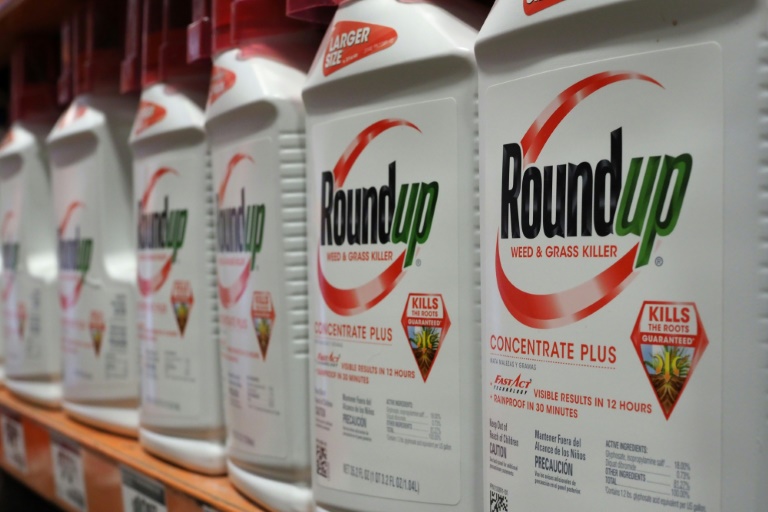
The US Supreme Court on Tuesday declined to hear a bid from Bayer-owned Monsanto that aimed to challenge thousands of lawsuits claiming its weedkiller Roundup causes cancer — a potentially costly ruling.

The high court did not explain its decision, which left intact a $25 million ruling in favor of a California man who alleged he developed cancer after using the chemical for years.

The decision marks a major blow to the German conglomerate’s legal fight against Roundup-related cases, and Bayer has set aside more than $15 billion to deal with a wave of US lawsuits linked to the weedkiller.

“Bayer respectfully disagrees with the Supreme Court’s decision,” the company said in a statement.

“The company believes that the decision undermines the ability of companies to rely on official actions taken by expert regulatory agencies,” it added, referring to a 2020 federal finding that Roundup’s active ingredient is not risky.

Bayer has been plagued by problems since it bought Monsanto, which owns Roundup, in 2018 for $63 billion and inherited its legal woes around the chemical’s ingredient glyphosate.

The German firm says it has not committed any wrongdoing, and maintains that scientific studies and regulatory approvals show glyphosate is safe.

Glyphosate is nonetheless classified as a “probable carcinogen” by the International Agency for Research on Cancer at the World Health Organization (WHO).

– Billions in claims –

However, the United States Environmental Protection Agency, on its website, says “there are no risks of concern to human health when glyphosate is used in accordance with its current label.”

The Supreme Court’s decision not to intervene leaves in place Monsanto’s appellate conviction in the lawsuit filed by Edwin Hardeman, who was diagnosed with non-Hodgkin’s lymphoma in 2015.

In addition to the some 30,000 cases about health problems allegations against the weedkiller, Bayer’s own shareholders have taken legal action as well.

Investors are seeking 2.2 billion euros ($2.5 billion) in damages in a German court for losses incurred following its troubled takeover of Monsanto, their lawyers said in January.

The investors accuse Bayer of having “misled capital markets about the economic risks from pending consumer lawsuits in the United States in connection with glyphosate and the herbicide Roundup,” law firm Tilp said in a statement.

Tilp said around 320 investors have submitted complaints, most of them institutional investors such as banks, wealth managers, insurers and pension funds.

Some three-quarters of the claims targeting Roundup originate with residential consumers, and not large-scale farmers.

Bayer executives have argued that its agricultural users know the proper use of the product better than residential ones.

The firm said it is transitioning its glyphosate-based products in the US residential market to new formulations that have alternative active ingredients beginning in 2023.

“The company is taking this action exclusively to manage litigation risk in the US and not because of any safety concerns,” it said in a statement.

Bayer says it has resolved around 107,000 of a total of 138,000 cases related to the herbicide.

Bayer’s share price was down just under two percent after the court’s decision on Tuesday.

US high court denies Bayer bid to block Roundup weedkiller lawsuits

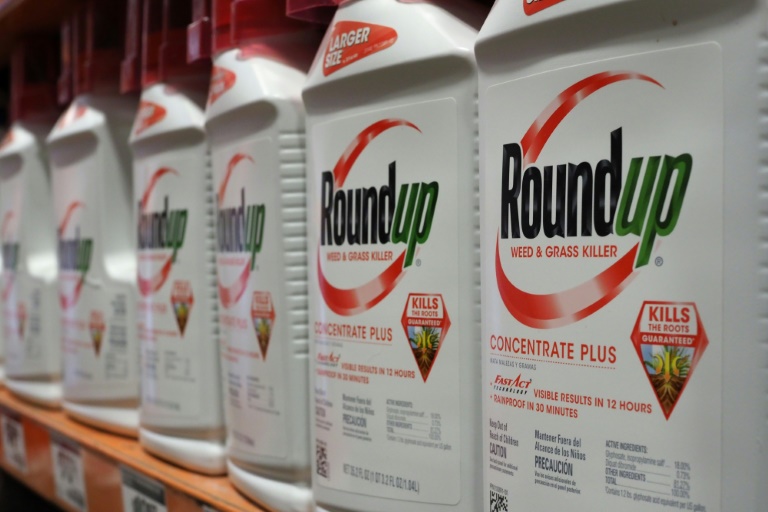
The US Supreme Court on Tuesday declined to hear a bid from Bayer-owned Monsanto that aimed to challenge thousands of lawsuits claiming its weedkiller Roundup causes cancer — a potentially costly ruling.

The high court did not explain its decision, which left intact a $25 million ruling in favor of a California man who alleged he developed cancer after using the chemical for years.

The decision marks a major blow to the German conglomerate’s legal fight against Roundup-related cases, and Bayer has set aside more than $15 billion to deal with a wave of US lawsuits linked to the weedkiller.

“Bayer respectfully disagrees with the Supreme Court’s decision,” the company said in a statement.

“The company believes that the decision undermines the ability of companies to rely on official actions taken by expert regulatory agencies,” it added, referring to a 2020 federal finding that Roundup’s active ingredient is not risky.

Bayer has been plagued by problems since it bought Monsanto, which owns Roundup, in 2018 for $63 billion and inherited its legal woes around the chemical’s ingredient glyphosate.

The German firm says it has not committed any wrongdoing, and maintains that scientific studies and regulatory approvals show glyphosate is safe.

Glyphosate is nonetheless classified as a “probable carcinogen” by the International Agency for Research on Cancer at the World Health Organization (WHO).

– Billions in claims –

However, the United States Environmental Protection Agency, on its website, says “there are no risks of concern to human health when glyphosate is used in accordance with its current label.”

The Supreme Court’s decision not to intervene leaves in place Monsanto’s appellate conviction in the lawsuit filed by Edwin Hardeman, who was diagnosed with non-Hodgkin’s lymphoma in 2015.

In addition to the some 30,000 cases about health problems allegations against the weedkiller, Bayer’s own shareholders have taken legal action as well.

Investors are seeking 2.2 billion euros ($2.5 billion) in damages in a German court for losses incurred following its troubled takeover of Monsanto, their lawyers said in January.

The investors accuse Bayer of having “misled capital markets about the economic risks from pending consumer lawsuits in the United States in connection with glyphosate and the herbicide Roundup,” law firm Tilp said in a statement.

Tilp said around 320 investors have submitted complaints, most of them institutional investors such as banks, wealth managers, insurers and pension funds.

Some three-quarters of the claims targeting Roundup originate with residential consumers, and not large-scale farmers.

Bayer executives have argued that its agricultural users know the proper use of the product better than residential ones.

The firm said it is transitioning its glyphosate-based products in the US residential market to new formulations that have alternative active ingredients beginning in 2023.

“The company is taking this action exclusively to manage litigation risk in the US and not because of any safety concerns,” it said in a statement.

Bayer says it has resolved around 107,000 of a total of 138,000 cases related to the herbicide.

Bayer’s share price was down just under two percent after the court’s decision on Tuesday.

US Supreme Court says state cannot deny public funds to religious schools

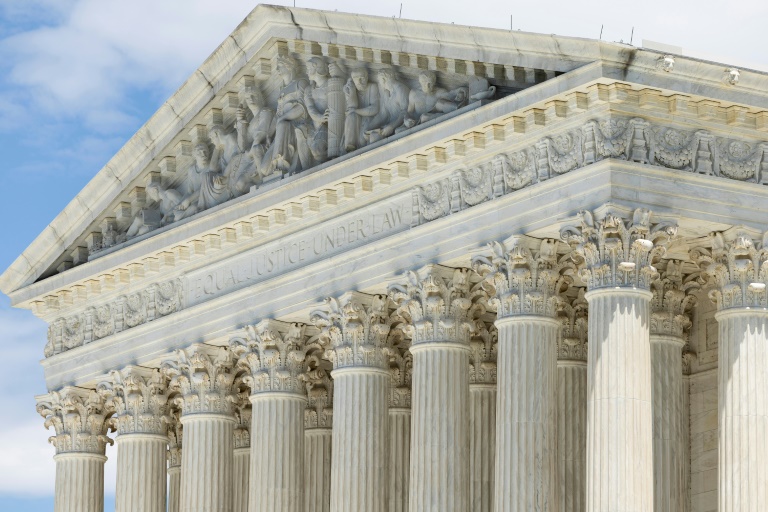
The US Supreme Court ruled on Tuesday that public funds can be used to support families sending their children to religious schools, in a case that challenged longstanding principles of separation of church and state.

The case was brought by two evangelical Christian families in the northeastern state of Maine who sued to be able to use state-provided education subsidy funds to send their kids to schools with religion as the basis of their teachings.

In a 6-3 ruling, the court said religious schools cannot be excluded from the tuition assistance program.

“There is nothing neutral about Maine’s program,” Chief Justice John Roberts wrote in an opinion joined by the other five conservative justices.

“The State pays tuition for certain students at private schools — so long as the schools are not religious. That is discrimination against religion,” Roberts said.

As Maine is sparsely populated, more than half of its school districts have no publicly funded high schools.

So families receive subsidies that allow them to send their children to schools of their choice, including privately-run schools.

But schools where religious beliefs are at the core of instruction are not covered in the aid program, because, under the regulations for the program — and those similar in other states — the teaching is “sectarian.”

One of the families wanted to send their children to a school that was disqualified because, local authorities argued, it “teaches children that the husband is the leader of the household” and encourages kids to recognize “God as Creator of the world.” 

The school chosen by the second family in the case makes use of the Bible in all academic subjects. 

And both schools do not accept LGBTQ students or employees.

The parents who sued — with the backing of Republican senators, 20-odd conservative-led states and many religious institutions — argued that the Constitution’s First Amendment freedom of religion clause gives them the right to choose a school that reflects their values.

If they are denied the subsidies, they claimed, they are suffering discrimination because of their religious views.

The state of Maine argued that under the Constitution government funds cannot be used to support religious schools that discriminate, for example, against LGBTQ students.

– ‘Social conflict’ –

The administration of President Joe Biden, Democratic-run states and teachers and human rights associations backed Maine.

The three liberal justices on the Supreme Court dissented with Justice Stephen Breyer saying there would be an “increased risk of religiously based social conflict when government promotes religion in its public school system.”

Sonia Sotomayor, another liberal, said “what a difference five years makes.

“In 2017, I feared that the Court was ‘leading us … to a place where separation of church and state is a constitutional slogan, not a constitutional commitment,” she said.

“Today, the Court leads us to a place where separation of church and state becomes a constitutional violation.”

The case is a part of a much wider US debate on the role of parents and school choice in education, and how tax funds dedicated to schools are allocated.

Issues of Covid-19 policies, acceptance of transgender students, and teaching about African-American history have deepened divides and encouraged some parents to look to private and religious schools for their children.

Markets climb as calm returns after sharp selloff

Stock markets rose Tuesday as calm returned following last week’s rout, but analysts warned that recession fears have not gone away and will cause more turmoil.

After a three-day holiday weekend, Wall Street burst higher, with the Dow up 1.9 percent while the broad-based S&P 500 gained 2.6 percent and the tech-heavy Nasdaq shot up 3.2 percent in late morning trading.

European equities rose for a second straight day, but pared down some of their gains from the morning.

Oil prices extended gains on hopes of improving energy demand in key consumers China and the United States, while the euro climbed on the prospect of rising eurozone borrowing costs.

“Risk appetite has managed to recover for now, perhaps because we get a much needed-break from central bank decisions this week,” IG analyst Chris Beauchamp told AFP.

“But while a bounce is overdue, it is probably only temporary.”

There remains an overarching sense of gloom as traders speculate that the sharp lift in borrowing costs around the world will tip economies into recession.

The focus this week is on Federal Reserve boss Jerome Powell’s two days of testimony to lawmakers in Washington, which will be closely watched for clues regarding the bank’s plans for fighting surging consumer prices.

“Where we go from here depends largely on whether Federal Reserve Chair Powell spooks the markets with his pre-released comments and what inflation data from the UK shows tomorrow (Wednesday),” City Index analyst Fiona Cincotta told AFP.

The Fed announced a hefty interest rate hike last week, days after inflation data had smashed forecasts and hit a four-decade high. 

Several officials — including at the Fed, Bank of England, Reserve Bank of Australia and European Central Bank — have come out in recent days to flag a further tightening of borrowing costs.

Inflation has rocketed to multi-decade highs around the world on a host of factors, including the global supply crunch and the Ukraine conflict, which has fuelled strong gains for food and energy prices.

“These small recoveries in stock markets shouldn’t provide any comfort,” said Craig Erlam, senior analyst at OANDA trading platform.

“Recession is increasingly becoming the base case and so equities are vulnerable to further losses,” he said.

In currency trading, the yen struck a 24-year dollar low of 136.34 yen following comments by Prime Minister Fumio Kishida that it “is up to the central bank” how to maintain its easy money policy while central banks elsewhere are raising rates. 

“The market is clearly looking to test the resolve of the Bank of Japan in terms of how much they are prepared to tolerate further currency weakness,” said market analyst Michael Hewson at CMC Markets UK.

In corporate news, shares in German chemicals group Bayer fell by 4.7 percent following the US Supreme Court declining to hear a bid from Bayer-owned Monsanto to quash lawsuits claiming its weedkiller Roundup causes cancer, before clawing back part of the drop.

The decision marks a major blow to the German conglomerate’s legal fight against Roundup-related cases, and Bayer has set aside more than $15 billion to deal with a wave of US lawsuits linked to the weedkiller.

– Key figures at around 1530 GMT –

New York – Dow: UP 1.9 percent at 30,445.23 points

EURO STOXX 50: UP 0.7 percent at 3,494.00

London – FTSE 100: UP 0.4 percent at 7,152.05 (close)

Frankfurt – DAX: UP 0.2 percent at 13,292.40 (close)

Paris – CAC 40: UP 0.8 percent at 5,964.66 (close)

Tokyo – Nikkei 225: UP 1.8 percent at 26,246.31 (close)

Hong Kong – Hang Seng Index: UP 1.9 percent at 21,559.59 (close)

Shanghai – Composite: DOWN 0.3 percent at 3,306.72 (close)

Euro/dollar: UP at $1.0558 from $1.0511 late Monday

Pound/dollar: UP at $1.2276 from $1.2253

Euro/pound: UP at 86.00 pence from 85.78 pence

Dollar/yen: UP at 136.18 yen from 135.07 yen

Brent North Sea crude: UP 0.6 percent at $114.84 per barrel

West Texas Intermediate: UP 1.4 percent at $111.13

burs-rl/lth

Close Bitnami banner
Bitnami