AFP

Europe braces for blistering June weekend heat

France, Spain and other western European nations braced on Saturday for a sweltering June weekend that is set to break records and sparked concern about forest fires and the effects of climate change.

The weather on Saturday will represent a peak of a June heatwave that is in line with warnings from scientists that such phenomena will now hit earlier than usual thanks to climate change.

Temperatures already nudged over 40 degrees Celsius (104 degrees Fahrenheit) in parts of France on Friday.

But they are due to relent slightly from Sunday with thunderstorms forecast in parts of France and elsewhere in Europe.

French state weather forecaster Meteo France said June temperature records had already been beaten in 11 areas on Friday and could reach as high as 42 Celsius in some areas on Saturday.

“This is the earliest heatwave ever recorded in France” since 1947, said Matthieu Sorel, a climatologist at Meteo France.

With “many monthly or even all-time temperature records likely to be beaten in several regions,” he called the weather a “marker of climate change”.

In Spain, forest fires burned nearly 9,000 hectares (22,240 acres) of land in the northwest Sierra de la Culebra region on Friday, forcing some 200 people from their homes, regional authorities said.

And more than 3,000 people were evacuated from the Puy du Fou theme park in central Spain due to a fierce fire nearby.

Firefighters were battling fires in several other regions, including woodlands in Catalonia where weather conditions complicated the fight. 

Temperatures were above 35 Celsius on Friday in most parts of the country.

– Hospitals full –

More than half of French departments were at the highest or second-highest heat alert level by the afternoon on Friday. 

“Hospitals are at capacity, but are keeping up with demand,” Health Minister Brigitte Bourguignon told reporters in Vienne, near Lyon in the southeast.

Schoolchildren were told to stay at home in departments at alert level “red” and the health ministry activated a special heatwave hotline.

The Red Cross also organised efforts to distribute water to the homeless community in Toulouse, where temperatures are expected to soar to 38 degrees Celsius on Saturday. 

“There are more deaths of people in the streets in the summer than in the winter,” said volunteer Hugues Juglair, 67.

Meanwhile rock and metal fans at the music festival Hellfest in western France were sprayed with water from hoses and enormous vaporisers in front of the stage as they headbanged or bounced to an opening-day line-up including Deftones and The Offspring.

Several towns in northern Italy have announced water rationing and the Lombardy region may declare a state of emergency as a record drought threatens harvests.

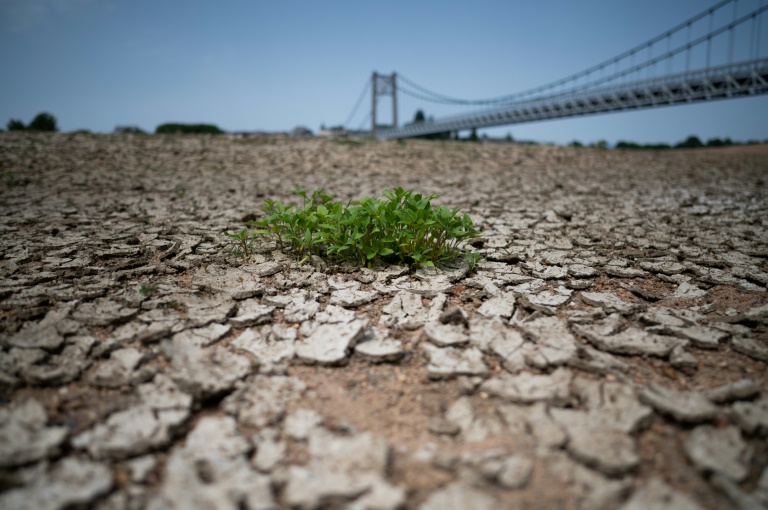
Ibrahim Thiaw, executive secretary of the UN convention charged with reversing land degradation, on Friday warned drought was “set to increase in severity and frequency”.

“The consequences of droughts could affect up to three-quarters of humanity by 2050,” he said during a speech in Madrid.

The UK recorded its hottest day of the year on Friday with temperatures reaching over 30 Celsius in the early afternoon, meteorologists said. 

It was the third day in a row that temperature records had been broken in the UK, where it was over 28 Celsius on Wednesday and 29.5 Celsius on Thursday.

– Climate change –

Experts warned the high temperatures were caused by worrying climate change trends.  

“As a result of climate change, heatwaves are starting earlier,” said Clare Nullis, a spokeswoman for the World Meteorological Organization in Geneva.

“What we’re witnessing today is unfortunately a foretaste of the future” if concentrations of greenhouse gases in the atmosphere continue to rise and push global warming towards 2 Celsius from pre-industrial levels, she added.

In France, special measures have been taken in care homes for elderly people, still marked by the memory of a deadly 2003 heatwave that claimed at least 15,000 lives.

Buildings are being sprayed down with water to cool them and residents are being rotated through air-conditioned rooms.

In the Gironde department, which includes Bordeaux, authorities said all public events outdoors or in non-air-conditioned venues would be banned from 2:00 pm (1200 GMT) on Friday, a measure set to be broadened across the region.

And speed limits in several regions, including around Paris, have been reduced to limit the concentration of harmful smog or ozone in the heat.

Paris police chief Didier Lallement said only the least polluting vehicles would be allowed to drive in the capital on Saturday due to fine particle pollution.

Electric grid operator RTE said increased use of fans and air-conditioners was also driving up power consumption.

burs-tgb-sjw/raz/kjm
Russian state TV airs videos of two missing Americans in Ukraine

A Russian state TV channel aired videos on social media of two Americans who went missing last week while fighting alongside the Ukrainian army, stating they had been captured by Russian forces. 

United States President Joe Biden had said earlier Friday he did not know the whereabouts of Alexander Drueke and Andy Huynh, both US military veterans whose relatives lost contact with the pair.

The missing Americans — including a third identified as a former US Marines captain — are believed to be part of an unknown number of mostly military veterans who have joined other foreigners to volunteer alongside Ukrainian troops.

On Friday evening, Russian journalist Roman Kosarev — who works with state TV RT channel — posted a video on messaging platform Telegram of Drueke speaking facing the camera.

“Mom, I just want to let you know that I’m alive and I hope to be back home as soon as I can be,” said Drueke, who was seated in what appeared to be an office and dressed in military fatigues.

“Love Diesel for me, love you,” he said, concluding his brief video with a quick wink. Reports in the United States say Diesel was Drueke’s dog.

RT’s official Telegram channel also posted an interview with Huynh, in which he said the duo had been “engaged in combat with Russian troops” near Ukraine’s flashpoint Kharkiv area.

After the pair retreated and hid for hours, they surrendered themselves to Russian troops, Huynh said.

The pair were also filmed in separate RT videos — directly facing a camera angled from above — saying “I’m against the war”, in poor Russian. 

The circumstances under which the two men were speaking were not fully clear, nor who specifically was holding them.

A US State Department spokesperson on Saturday confirmed American authorities had seen the photos and videos of the two US citizens “reportedly captured by Russia’s military forces in Ukraine”. 

“We are closely monitoring the situation and our hearts go out to their families during this difficult time,” the spokesperson told AFP.

– Worried families –

Drueke’s mother Lois had told CNN Thursday that her son went to Ukraine after discussing it with her for about a month.

“I want everyone to know… we don’t want one to come home without the other. They were best buddies there and we want everybody to remember it’s not just one person there,” she said. 

Huynh’s fiance Joy Black said in the same interview that she last heard from him on June 8. 

“He told me he loved me very much and that he would be unavailable for two, three days… he was trying not to worry me,” Black said, in tears. 

“I just want to see him back safely.” 

During a White House briefing on Friday, Biden urged US citizens not to go to Ukraine. 

“Americans should not be going to Ukraine now. I’ll say it again: Americans should not be going to Ukraine,” he said.

The Russian proxy authorities in the so-called Donetsk People’s Republic, a Moscow-controlled swath of eastern Ukraine, have sentenced to death two British men and a Moroccan captured earlier in fighting.

In a parched land, Iraqi gazelles dying of hunger

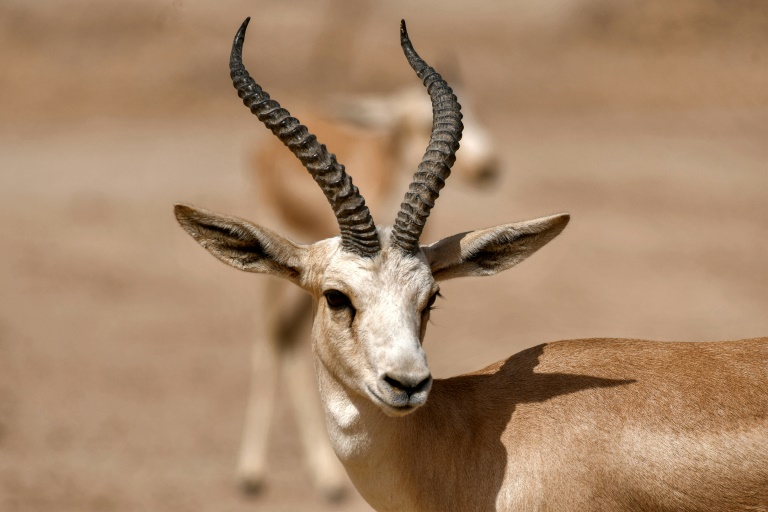
Gazelles at an Iraqi wildlife reserve are dropping dead from hunger, making them the latest victims in a country where climate change is compounding hardships after years of war.

In little over one month, the slender-horned gazelle population at the Sawa reserve in southern Iraq has plunged from 148 to 87.

Lack of funding along with a shortage of rain has deprived them of food, as the country’s drought dries up lakes and leads to declining crop yields.

President Barham Saleh has warned that tackling climate change “must become a national priority for Iraq as it is an existential threat to the future of our generations to come”.

The elegant animals, also known as rhim gazelles, are recognisable by their gently curved horns and sand-coloured coats. The International Union for Conservation of Nature classes the animals as endangered on its Red List.

Outside Iraq’s reserves, they are mostly found in the deserts of Libya, Egypt and Algeria but are unlikely to number “more than a few hundred” there, according to the Red List.

Turki al-Jayashi, director of the Sawa reserve, said gazelle numbers there plunged by around 40 percent in just one month to the end of May.

“They no longer have a supply of food because we have not received the necessary funds” which had come from the government, Jayashi said.

Iraq’s finances are under pressure after decades of war in a poverty-stricken country needing agricultural and other infrastructure upgrades.

It is grappling with corruption, a financial crisis and political deadlock which has left Iraq without a new government months after October elections.

“The climate has also strongly affected the gazelles,” which lack forage in the desert-like region, Jayashi added.

– Barren soil –

At three other Iraqi reserves further north, the number of rhim gazelles has fallen by 25 percent in the past three years to 224 animals, according to an agriculture ministry official who asked to remain anonymous.

He blamed the drop at the reserves in Al-Madain near Baghdad, and in Diyala and Kirkuk on a “lack of public financing”.

At the Sawa reserve, established in 2007 near the southern city of Samawah, the animals pant under the scorching sun.

The brown and barren earth is dry beyond recovery, and meagre shrubs that offer slight nourishment are dry and tough.

Some gazelles, including youngsters still without horns, nibble hay spread out on the flat ground.

Others take shelter under a metal roof, drinking water from a trough.

Summer hasn’t even begun but temperatures have already hit 50 degrees Celsius (122 Fahrenheit) in parts of the country.

The effects of drought have been compounded by dramatic falls in the level of some rivers due to dams upstream and on tributaries in Turkey and Iran.

Desertification affects 39 percent of Iraqi land, the country’s president has warned.

“Water scarcity negatively affects all our regions. It will lead to reduced fertility of our agricultural lands because of salination,” Saleh said.

He has sent 100 million dinars (over $68,000) in an effort to help save the Sawa reserve’s rhim gazelles, Jayashi said.

But the money came too late for some.

Five more have just died, their carcasses lying together on the brown earth.

Seaweed and 3D printers: Chile's innovative approach to feeding kids

Some dehydrated “cochayuyo” seaweed, some instant mashed potatoes and hot water: these are the ingredients for a nutritious menu of 3D printed food that nutritional experts in Chile hope will revolutionize the food market, particularly for children.

With a 3D food printer and a modern twist on the traditional use of cochayuyo, an algae typically found in Chile, New Zealand and the South Atlantic, Roberto Lemus, a professor at the University of Chile and several students, have managed to create nutritious and edible figures that they hope kids will love to eat. 

Pokemon figures, or any type of animal imaginable, are all fed into the 3D printer, together with the gelatinous mixture, and the food is “printed” out seven minutes later. 

“We looking for different figures, fun figures…visual, colors, taste, flavors, smells,” Lemus told AFP. 

But, he stressed, the main focus is on nutritional content. “The product has to be highly nutritious for people, but it also has to be tasty,” he said. 

3D food printers are expensive, costing from $4,000 to more than $10,000, but Lemus hopes that as technology advances, their cost will come down and reach more people. 

The technology is developing in the culinary field in dozens of countries, and 3D food printers are used to design sweets, pasta and other foods. 

NASA already tested it in 2013 with the idea of expanding the variety of foods that astronauts dine on in space.

– Superpower algae –

Chile is making progress with cochayuyo seaweed, one of the typical ingredients of the coastal nation’s cuisine, and which is rich amino acids, minerals and iodine, according to Alonso Vasquez, a 25-year-old postgraduate student who is writing his thesis on the subject. 

The young researcher takes dehydrated cochayuyo, cuts it and grinds it to create cochayuyo flour which he then mixes with instant mashed potato powder. 

He then adds hot water to the mixture to create a gelatinous and slimy substance that he feeds into the printer. 

“It occurred to me to use potatoes, rice flour, all of which have a lot of starch. The starch of these raw materials combined with the cochayuyo alginate is what generates stabilization within the 3D printing,” he says, waiting for the printer to finish creating a Pikachu figure of about two centimeters (just under one inch) and a taste of mashed potatoes and the sea. 

The project has been underway for two years and is still in its infancy, but the idea is to apply ingredients such as edible flowers or edible dyes to the menu to make them more attractive to children.

Seaweed and 3D printers: Chile's innovative approach to feeding kids

Some dehydrated “cochayuyo” seaweed, some instant mashed potatoes and hot water: these are the ingredients for a nutritious menu of 3D printed food that nutritional experts in Chile hope will revolutionize the food market, particularly for children.

With a 3D food printer and a modern twist on the traditional use of cochayuyo, an algae typically found in Chile, New Zealand and the South Atlantic, Roberto Lemus, a professor at the University of Chile and several students, have managed to create nutritious and edible figures that they hope kids will love to eat. 

Pokemon figures, or any type of animal imaginable, are all fed into the 3D printer, together with the gelatinous mixture, and the food is “printed” out seven minutes later. 

“We looking for different figures, fun figures…visual, colors, taste, flavors, smells,” Lemus told AFP. 

But, he stressed, the main focus is on nutritional content. “The product has to be highly nutritious for people, but it also has to be tasty,” he said. 

3D food printers are expensive, costing from $4,000 to more than $10,000, but Lemus hopes that as technology advances, their cost will come down and reach more people. 

The technology is developing in the culinary field in dozens of countries, and 3D food printers are used to design sweets, pasta and other foods. 

NASA already tested it in 2013 with the idea of expanding the variety of foods that astronauts dine on in space.

– Superpower algae –

Chile is making progress with cochayuyo seaweed, one of the typical ingredients of the coastal nation’s cuisine, and which is rich amino acids, minerals and iodine, according to Alonso Vasquez, a 25-year-old postgraduate student who is writing his thesis on the subject. 

The young researcher takes dehydrated cochayuyo, cuts it and grinds it to create cochayuyo flour which he then mixes with instant mashed potato powder. 

He then adds hot water to the mixture to create a gelatinous and slimy substance that he feeds into the printer. 

“It occurred to me to use potatoes, rice flour, all of which have a lot of starch. The starch of these raw materials combined with the cochayuyo alginate is what generates stabilization within the 3D printing,” he says, waiting for the printer to finish creating a Pikachu figure of about two centimeters (just under one inch) and a taste of mashed potatoes and the sea. 

The project has been underway for two years and is still in its infancy, but the idea is to apply ingredients such as edible flowers or edible dyes to the menu to make them more attractive to children.

No petrol, no cars: Cubans turn to electric transport

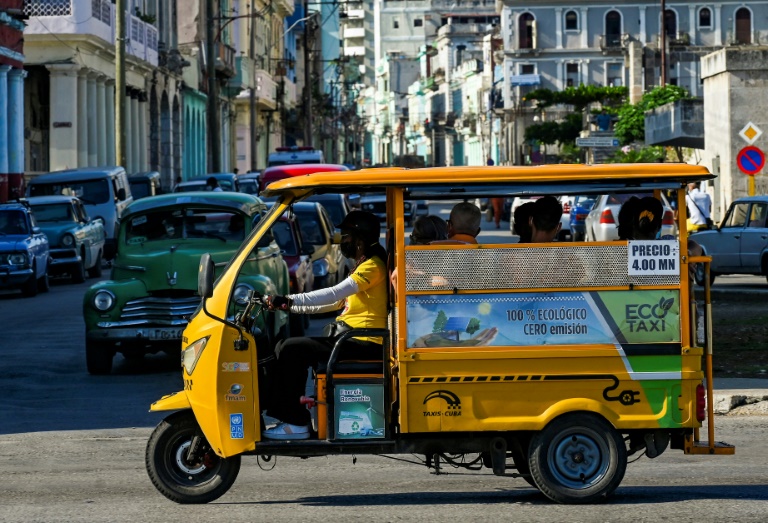
There is a new sight on the streets of Havana: increasing numbers of electric vehicles whizzing among the old American cars so emblematic of the Cuban capital.  

As fuel shortages and US sanctions take their toll, and even though electricity generation can be spotty, Cubans are turning to smaller, cheaper, plug-in alternatives.

“Gasoline? Imagine. After 50 years battling to get hold of it, I don’t even want to smell it anymore!” taxi driver Sixto Gonzalez, 58, told AFP atop the shining, electric-blue quadricycle with which he moves through the streets at a top speed of about 40 kilometers (25 miles) per hour.

Gonzalez has abandoned his old, combustion-engine car — one of about 600,000 registered on the island of 11.2 million people, according to official data.

The last time he tried to fill it up, he stood in a queue for eight hours.

By far the majority of cars in circulation in Cuba are American models from the 1950s — before sanctions started — and compact Ladas from the Soviet era.

Newer models are practically impossible to lay one’s hands on and come with a hefty price tag of between about $20,000 and $100,000.

The quadricycle Gonzalez bought, by comparison, can be obtained for between $4,000 and $8,000 and though slower, can get four or five people from Point A to Point B.

Also increasingly popular are electric motorbikes — of which there are an estimated 40,000 to 50,000 in Cuba — and three-wheelers all the more frequently seen dragging a carriage full of passengers or goods.

– ‘Museum on wheels’ –

In a once-abandoned Soviet-era truck factory in the central city of Santa Clara, about 100 workers of the company Minerva assemble electric vehicles with parts imported from China or Vietnam.

The objective for 2022 is to produce 10,000 electric motorbikes, Minerva boss Elier Perez told AFP — double the factory’s previous record — as well as 2,000 three-wheelers.

“I had to buy one because the fuel ran out and the queues are endless,” said Raul Suarez, a 52-year-old security guard who got himself an electric motorbike.

“I have to be able to get around.”

Not only are cars prohibitively expensive and scarce, but public transport in the capital is a daily ordeal for many.

Half of buses are out of service for a lack of tires and batteries that cannot be imported due to US sanctions, said transport ministry official Guillermo Gonzalez.

Havanans sometimes wait for hours for a bus to get to work or back home.

At the same time, fuel shortages have worsened since the US reinforced its six-decade-old economic blockade of the communist island in 2019, preventing the arrival of fuel tankers from Venezuela, a Cuban ally.

Petrol supply plummeted from 100,000 barrels a day to about 56,000 barrels per day on average in 2021, said Jorge Pinon, a Cuban energy policy expert at the University of Texas. 

Three years ago, the government began to promote the use of electric cars, introducing them to state-owned companies to be used by workers.

“Cuba is a museum on wheels,” said Gonzalez of the abundance of decades-old gas guzzlers.

It is hoped that a rollout of electric cars will lower “fuel consumption… and at the same time reduce pollution,” he added.

– Like a fridge –

But electricity supply, too, is a concern.

For weeks now, Cubans have had to deal with regular cuts, sometimes lasting hours at a time, due to generation failures and maintenance work on thermoelectric plants.

And in a bid to make up some of the shortage, the authorities have turned to generators that use up much of the limited diesel stock.

“There has never been a situation as difficult as the one we have now, and there are still three months of summer to come,” said Pinon, alluding to the annual warm-weather rise in demand for energy to run air conditioners.

Ramses Calzadilla, director of strategy at Cuba’s energy ministry, said he was confident that electricity generation would be restored to full capacity shortly and insisted the situation did not threaten the burgeoning electric vehicle sector.

“An electric motorcycle uses about as much energy as a refrigerator,” he told AFP, and can be charged quickly and cheaply between programmed power cuts.

YouTube pulls video posted by US Capitol riot probe

YouTube on Friday pulled a video posted by the congressional committee probing last year’s attack on the US Capitol because it contained election misinformation spread by then president Donald Trump.

“Our election integrity policy prohibits content advancing false claims that widespread fraud, errors or glitches changed the outcome of the 2020 US presidential election, if it does not provide sufficient context,” YouTube spokesperson Ivy Choi said in response to an AFP inquiry.

“We enforce our policies equally for everyone, and have removed the video uploaded by the January 6th Committee channel.”

The committee, which is in the middle of a series of public hearings investigating the attack on the seat of US government on January 6, 2021 in a bid to overturn the presidential election results in Trump’s favor, did not immediately respond to a request for comment. 

YouTube did not specify which video was taken down at the channel, but media reports indicated the nixed clip contained Trump making baseless claims challenging the integrity of the election.

Trump pressured his vice president Mike Pence to go along with an illegal plot to overturn the 2020 US election and whipped up a mob that put his deputy’s life in danger when he refused, congressional investigators and former administration aides said Thursday.

The committee probing the attack detailed how the former president berated Pence for not going along with the scheme both knew to be unlawful — even after being told violence had erupted as Congress was meeting to certify Democrat Joe Biden’s victory.

At its third public hearing into the insurrection, the panel detailed a “relentless” pressure campaign by Trump on Pence — as cornerstone of a criminal conspiracy to keep the defeated president in power.

The committee maintains that Trump’s pursuit of this scheme led to the violence at the Capitol, which was linked to at least five deaths.

California to rename 'Negro Bar' park after years of debate

A California park called Negro Bar will finally be renamed after years of debate over its racist origins, state officials said Friday.

The park in Folsom, a predominantly white city near state capital Sacramento, was originally named after Black miners who worked the California gold rush in the area in the late 1840s.

It was frequently referred to by locals and even the San Francisco Chronicle by the even more offensive N-word slur until around a century ago.

In a new report, California’s park department called the controversy “one of the more long-standing park facility naming issues” it faces as it moves to “identify and remove residual derogatory place names.”

The department had ruled against renaming the park in 1999, with some reportedly raising concerns that a change would mean “loss of recognition… to African American presence and participation in the California Gold Rush.”

But an online petition launched by a food delivery app driver who spotted a roadside sign four years ago prompted renewed action.

“I couldn’t believe that I had actually seen a sign that read ‘Negro Bar,'” wrote Uber Eats driver Phaedra Jones. 

“Maybe because I prefer not to be called a negro in this day and age.”

“When I saw that sign, I IMMEDIATELY felt uncomfortable, my stomach started hurting, I rolled up my windows and made sure I looked in my mirrors every 10 seconds.

“I couldn’t wait to find the nearest freeway out of that town.”

On Friday, two days before the Juneteenth anniversary of the emancipation of US slaves, the California State Park and Recreation Commission voted unanimously to rename the park, it said in a statement to AFP.

The park will temporarily be known as Black Miners Bar. Historians will be given a year to research “viable long-term naming options,” and input from community members and tribal leaders will be encouraged.

The park — located on a sandbar — contains campsites, nature trails, a paddle sports concession, and a training center for a junior lifeguard program.

“This park is so beautiful and many people enjoy it,” wrote Jones, in the online petition.

“I just hate that this park that was meant to honor African American miners, still has to be called (an) offensive name.”

SpaceX fires workers behind letter criticizing Musk

Elon Musk’s SpaceX has fired several employees behind a letter critical of the outspoken billionaire’s public behavior, the aerospace firm said in a message to staff confirmed by AFP on Friday.

A “small group” of employees sought their colleagues’ signatures in a show of support for the letter and participation in a survey, SpaceX chief operating officer Gwynne Shotwell wrote in an email late Thursday. 

The mercurial billionaire regularly uses Twitter to provoke, speak directly to customers as well as fans and sometimes offend with unfiltered or crude comments.

Shotwell’s message said some workers felt “uncomfortable, intimidated and bullied, and/or angry because the letter pressured them to sign onto something that did not reflect their views.”

“We have too much critical work to accomplish and no need for this kind of overreaching activism,” she added.

After conducting an investigation, the company “terminated a number of employees involved,” Shotwell said, without specifying how many.  

The workers’ letter, first reported by website The Verge, criticized Musk’s behavior in public, as well as recent accusations of sexual harassment against him, as “a frequent source of distraction and embarrassment for us.” 

“As our CEO and most prominent spokesperson, Elon is seen as the face of SpaceX — every Tweet that Elon sends is a de facto public statement by the company,” the letter added.

Musk, who also heads electric car maker Tesla, is in the midst of roller-coaster $44 billion bid to buy Twitter that has brought even more attention to the entrepreneur.

SpaceX fires workers behind letter criticizing Musk

Elon Musk’s SpaceX has fired several employees behind a letter critical of the outspoken billionaire’s public behavior, the aerospace firm said in a message to staff confirmed by AFP on Friday.

A “small group” of employees sought their colleagues’ signatures in a show of support for the letter and participation in a survey, SpaceX chief operating officer Gwynne Shotwell wrote in an email late Thursday. 

The mercurial billionaire regularly uses Twitter to provoke, speak directly to customers as well as fans and sometimes offend with unfiltered or crude comments.

Shotwell’s message said some workers felt “uncomfortable, intimidated and bullied, and/or angry because the letter pressured them to sign onto something that did not reflect their views.”

“We have too much critical work to accomplish and no need for this kind of overreaching activism,” she added.

After conducting an investigation, the company “terminated a number of employees involved,” Shotwell said, without specifying how many.  

The workers’ letter, first reported by website The Verge, criticized Musk’s behavior in public, as well as recent accusations of sexual harassment against him, as “a frequent source of distraction and embarrassment for us.” 

“As our CEO and most prominent spokesperson, Elon is seen as the face of SpaceX — every Tweet that Elon sends is a de facto public statement by the company,” the letter added.

Musk, who also heads electric car maker Tesla, is in the midst of roller-coaster $44 billion bid to buy Twitter that has brought even more attention to the entrepreneur.

Close Bitnami banner
Bitnami