AFP

Deal reached on US 5G antennas near airports: FAA

The Federal Aviation Authority said Friday that mobile operators AT&T and Verizon have reached an agreement with airlines for the gradual deployment of additional 5G antennas around US airports. 

“We believe we have identified a path that will continue to enable aviation and 5G C-band wireless to safely co-exist,” said the FAA’s acting administrator Billy Nolen in a statement. 

Tensions between the two sectors flared at the end of 2021 when the FAA voiced concerns about possible interference between the altimeters of some aircraft — vital instruments for landing in certain weather conditions — and the deployment of 5G frequencies for which AT&T and Verizon shelled out tens of billions of dollars. 

AT&T and Verizon finally agreed in January to delay by six months the activation of mobile phone antennas around certain airport runways. 

As the end of that voluntary moratorium approaches, companies have agreed to a “gradual” approach. 

The regional companies most exposed to possible interference have agreed to modify their radio altimeters by the end of the year. 

Telephone operators have at the same time agreed to further delay the activation of 5G antennas located around the airports most likely to be affected for another 12 months, with a gradual lifting of restrictions. 

“Through close coordination with the FAA over the last several months, we have developed a more tailored approach to controlling signal strength around runways that allows us to activate more towers and increase signal strength,” an AT&T spokesperson said. 

The company chose to act “in good faith” by agreeing not to deploy all of its antennas right away “so that airlines have additional time to retrofit equipment,” he added.

Deal reached on US 5G antennas near airports: FAA

The Federal Aviation Authority said Friday that mobile operators AT&T and Verizon have reached an agreement with airlines for the gradual deployment of additional 5G antennas around US airports. 

“We believe we have identified a path that will continue to enable aviation and 5G C-band wireless to safely co-exist,” said the FAA’s acting administrator Billy Nolen in a statement. 

Tensions between the two sectors flared at the end of 2021 when the FAA voiced concerns about possible interference between the altimeters of some aircraft — vital instruments for landing in certain weather conditions — and the deployment of 5G frequencies for which AT&T and Verizon shelled out tens of billions of dollars. 

AT&T and Verizon finally agreed in January to delay by six months the activation of mobile phone antennas around certain airport runways. 

As the end of that voluntary moratorium approaches, companies have agreed to a “gradual” approach. 

The regional companies most exposed to possible interference have agreed to modify their radio altimeters by the end of the year. 

Telephone operators have at the same time agreed to further delay the activation of 5G antennas located around the airports most likely to be affected for another 12 months, with a gradual lifting of restrictions. 

“Through close coordination with the FAA over the last several months, we have developed a more tailored approach to controlling signal strength around runways that allows us to activate more towers and increase signal strength,” an AT&T spokesperson said. 

The company chose to act “in good faith” by agreeing not to deploy all of its antennas right away “so that airlines have additional time to retrofit equipment,” he added.

Assange's family say counting on Europe to block his extradition to US

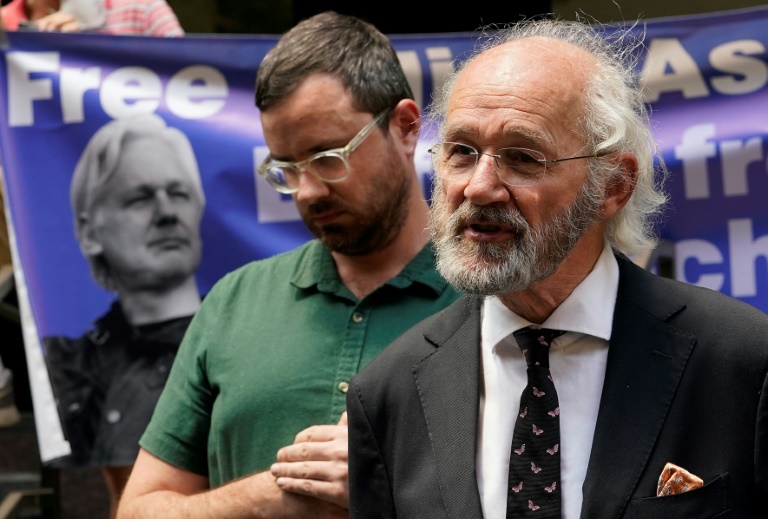
Julian Assange’s father and brother said Friday they were counting on European lawmakers to stop Britain from extraditing the WikiLeaks founder to the United States, and welcomed a promise of citizenship by French leftist politician Jean-Luc Melenchon. 

“I think there’s a great chance of stopping this extradition. We have great support among the European nations,” said Gabriel Shipton, Assange’s brother, at a press briefing outside the British consulate in New York City. 

The Assange case has become a cause celebre for media freedom and his supporters accuse Washington of trying to muzzle reporting of legitimate security concerns.

He is wanted to face trial for violating the US Espionage Act by publishing military and diplomatic files in 2010 and could face up to 175 years in jail if found guilty, although the exact sentence is difficult to estimate.

On Friday the British government approved his extradition to the United Sates, to the dismay of his supporters and free press campaigners. He has 14 days to appeal.

Shipton welcomed the support from parliamentary groups across Europe, and cited comments by Melenchon made in Paris on Friday. 

“If I am prime minister on Monday, Mr Julian Assange — I believe he has already asked for it — will be naturalized as French and we will ask for him to be sent to us,” Melenchon told reporters ahead of parliamentary elections this weekend.

“So there is great support in Europe and I think (the) European Court of Human Rights will stand up for the principles in this case, which is press freedom,” Shipton said. 

The charges, he said, are “an expansion of the Espionage Act to attack the First Amendment (of the US Constitution) to limit the freedom of the press.”

His father John Shipton, also at the press briefing, added that “every single parliament in Europe” as well as nations in South America, as well as Mexico, has lawmakers who support Assange.

Assange has been held on remand at a top-security jail in southeast London since 2019 for jumping bail in a previous case accusing him of sexual assault in Sweden.

Before that he spent seven years at Ecuador’s embassy in London to avoid being removed to Sweden.

He was arrested when the government changed in Quito and his diplomatic protection was removed.

'Game of Thrones' Jon Snow spin-off in early development: reports

A “Game of Thrones” sequel focused on the fan-favorite, impossible-to-kill character Jon Snow is in early development at HBO, according to Hollywood trade reports.

Kit Harington — whose stoic warrior Snow was last seen banished from Westeros in the “Thrones” finale — is attached to star if the spin-off series goes ahead, the Hollywood Reporter and Variety said, citing anonymous sources.

HBO declined to comment, and Harington’s representatives did not immediately respond to an AFP request for comment.

If the show gets a green light, it would be the latest in a rapidly expanding television universe based on George RR Martin’s fantasy novels.

Three live-action prequel series are already in the works — including “House of the Dragon,” which hits screens this August — as well as three animated prequels.

But the purported Jon Snow series would be the first to be set after the events of smash hit “Game of Thrones,” which bowed out with a deeply divisive final season in 2019.

While several major characters died, Snow — who was revealed to be Aegon Targaryen, a potential heir to the Iron Throne — left Westeros in exile, headed for the icy and wild North. 

His character had already been brought back from death after being betrayed earlier in the show’s run.

News of the possible spin-off drew mixed reaction from fans online, with some delighted to see more of arguably the standout character from “Thrones,” and others questioning the logic of picking up from the original show’s disappointing finale.

“Bro just re-do the last season at this point… We ain’t gonna get mad at you and you get to make all that money again and have a chance at a competent ending,” said one popular post on Reddit.

During its eight-year run from 2011, “Thrones” was a global phenomenon, scooping a record 59 Emmys with its warring families and fire-breathing dragons, medieval violence and non-stop sex.

Martin signed a five-year deal with HBO in 2021, reportedly worth “mid-eight figures” in dollars, to develop shows both within and beyond the “Thrones” universe.

EU backs Ukraine's 'European dream' as Russia cuts gas supplies

Europe sent a powerful symbol of solidarity with Ukraine on Friday as Brussels backed Kyiv’s bid for EU candidate status, a decision Russian President Vladimir Putin said he had “nothing against”.

With the European Commission’s backing, Ukraine could join the list of countries vying for membership as early as next week, when member state leaders meet at their Brussels summit. 

All 27 leaders have to agree to the candidacy, but the heads of the bloc’s biggest members — France, Germany and Italy — gave full-throated support to the idea on Thursday, on a trip to a war-torn Kyiv suburb.

On Friday, the European Commission gave formal backing to the bid, and EU chief Ursula von der Leyen made her position clear by donning a striking jacket in Ukraine’s national colours.

“We all know that Ukrainians are ready to die for the European perspective. We want them to live with us for the European dream,” she said.

Ukraine’s President Volodymyr Zelensky immediately welcomed the decision as a “first step on the EU membership path that’ll certainly bring our victory closer”.

He thanked von der Leyen for the commission’s “historic decision” and said he expected that EU leaders would give Ukraine a “positive result” at the June 23-24 summit.

Putin said Russia had “nothing against” Ukraine joining the EU, saying it was “their sovereign decision to join economic unions or not” — unlike the security risk he sees in Kyiv joining NATO.

But he said membership of the European Union would turn Ukraine into a “semi-colony” of the West.

Russia had earlier said the West was “manipulating” Ukraine with promises of integration.

As Brussels celebrated their breakthrough, British Prime Minister Boris Johnson returned to Kyiv for his second visit since Russia’s February 24 invasion. 

“Many days of this war have proved that Great Britain’s support for Ukraine is firm and resolute,” Zelensky wrote on social media. 

Johnson’s office tweeted a picture of the premier meeting the Ukrainian leader, carrying a stack of books and paperwork under one arm.

“My visit today, in the depths of this war, is to send a clear and simple message to the Ukrainian people: the UK is with you, and we will be with you until you ultimately prevail,” Johnson said.

According to Downing Street, Johnson offered to launch a major training operation for Ukrainian forces, to train up to 10,000 soldiers every 120 days and “change the equation of the war”.

Each Ukrainian soldier would spend three weeks on the British training course, learning combat tactics, basic medical skills, cybersecurity and counter explosive tactics.

– Russian bombardment –

Once Ukraine joins the EU candidates’ list — alongside several countries in the western Balkans — it could still take years to meet all the formal membership requirements, even if Kyiv prevails in the war.

“Ukraine should be welcomed as a candidate country — this is based on the understanding that good work has been done but important work also remains to be done,” von der Leyen said.

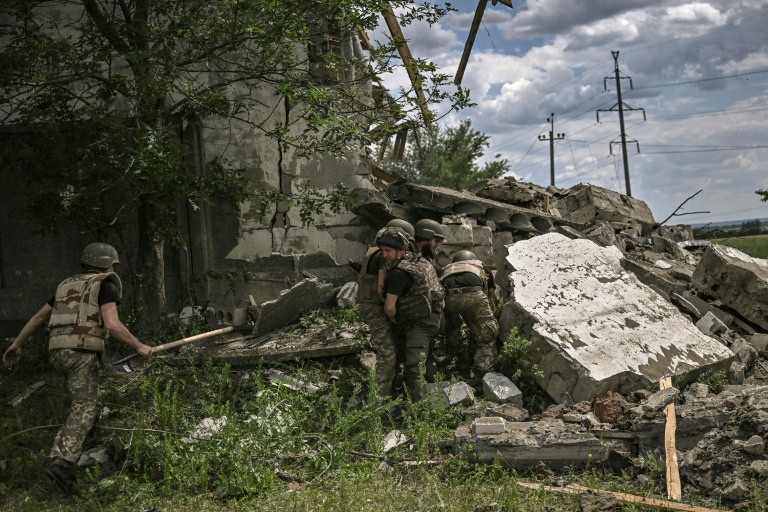
And in the meantime, the fighting continues, with Russian forces bombarding pockets of Ukrainian resistance in frontline Severodonetsk, including civilians holed up in a chemical plant in the eastern Ukrainian city.

Moscow turned up the pressure on Western allies, sharply reducing flows of natural gas in its pipelines to western Europe, driving up energy prices.

France’s network provider said it had not received any Russian gas by pipeline from Germany since June 15, and Italy’s Eni said it expected Russian firm Gazprom to cut its supplies by half on Friday.

Several European countries, including Italy and Germany, are highly reliant upon Russian gas for their energy needs and, as the West sides with Ukraine, Moscow is cutting supplies.

– ‘Extremely alarming’ –

Berlin and Rome have rejected Russia’s argument that technical issues have caused the drop in supplies, arguing that state-owned Gazprom’s move is political.

But western Europe is sweltering in a heatwave and energy prices are already soaring, adding to runaway inflation and industrial action in several economies.

The situation is, of course, starker in Ukraine itself, where Russian troops have occupied a swathe of the south and east of the country during the 113-day war, including much of the Donbas region.

“The humanitarian situation across Ukraine — particularly in the eastern Donbas — is extremely alarming and continues to deteriorate rapidly,” the UN humanitarian agency, OCHA, said.

The statement said the situation is “particularly worrying in and around Severodonetsk” — where bloody battles have raged for weeks. 

Severodonetsk is in the Lugansk region, where governor Sergiy Gaiday called for a ceasefire, stating hundreds of civilians were trapped in the besieged Azot chemical plant in the city.  

“It is now impossible and physically dangerous to get out of the plant due to constant shelling and fighting. There are 568 people in the shelter, including 38 children,” he said.

– ‘God’s will’ –

Gaiday said earlier this week that around 10,000 civilians remained in the city, which is controlled mostly by Russian forces.

In the frontline Donbas village of Adamivka near the city of Sloviansk, a community of Orthodox nuns have seen a rocket hole blasted into the wall of their well-tended garden.

Under near-constant bombardment by Russian forces, Sister Anastasi and a group of other black-clad nuns and pilgrims live day-to-day, praying for deliverance.

“We are all alive, yes. No one has left. This is our home,” she said quietly, her face framed by a black veil, as shells crashed in the distance.

“We trust in God’s will, in God’s help, in the help of all the saints and the Holy Virgin. This is our home, we have nowhere else to go.” 

At least two people were killed and 20 injured in a Russian strike on a residential area in the southern Ukrainian city of Mykolaiv, the local governor said.

Separately, Zelensky announced an end to the visa-free travel that Russian citizens, many of whom have Ukrainian relatives, have enjoyed since Ukraine became independent from the Soviet Union in 1991.

burs-dc/imm

TikTok says Oracle to keep US user data safe

TikTok on Friday said Oracle will store all the data from its US users, in a bid to allay fears about its safety in the hands of a platform owned by ByteDance in China.

The popular video snippet sharing service will continue to use its own datacenters in Virginia and Singapore to backup information as it works to “fully pivot” to relying on Oracle in the United States, TikTok said in a post.

“We know we are among the most scrutinized platforms from a security standpoint, and we aim to remove any doubt about the security of US user data,” said Albert Calamug, who handles US security public policy at TikTok.

President Joe Biden last year revoked executive orders from his predecessor Donald Trump seeking to ban Chinese-owned apps TikTok and WeChat from US markets on national security concerns.

Trump had given his blessing to a plan that would have given TikTok to US tech giant Oracle with investments from retail powerhouse Walmart, but that deal failed to win approval in Beijing.

Biden’s new executive order nixed the unimplemented ban and called for “an evidence-based analysis to address the risks” from internet applications controlled by foreign entities.

WeChat, part of Chinese tech giant Tencent, is a “super app” which includes social networking, messaging, e-commerce and more.

TikTok revealed late last year that it had a billion users worldwide.

“Today, 100 percent of US user traffic is being routed to Oracle Cloud Infrastructure,” Calamug said.

“In addition, we’re working closely with Oracle to develop data management protocols that Oracle will audit and manage to give users even more peace of mind.”

TikTok says Oracle to keep US user data safe

TikTok on Friday said Oracle will store all the data from its US users, in a bid to allay fears about its safety in the hands of a platform owned by ByteDance in China.

The popular video snippet sharing service will continue to use its own datacenters in Virginia and Singapore to backup information as it works to “fully pivot” to relying on Oracle in the United States, TikTok said in a post.

“We know we are among the most scrutinized platforms from a security standpoint, and we aim to remove any doubt about the security of US user data,” said Albert Calamug, who handles US security public policy at TikTok.

President Joe Biden last year revoked executive orders from his predecessor Donald Trump seeking to ban Chinese-owned apps TikTok and WeChat from US markets on national security concerns.

Trump had given his blessing to a plan that would have given TikTok to US tech giant Oracle with investments from retail powerhouse Walmart, but that deal failed to win approval in Beijing.

Biden’s new executive order nixed the unimplemented ban and called for “an evidence-based analysis to address the risks” from internet applications controlled by foreign entities.

WeChat, part of Chinese tech giant Tencent, is a “super app” which includes social networking, messaging, e-commerce and more.

TikTok revealed late last year that it had a billion users worldwide.

“Today, 100 percent of US user traffic is being routed to Oracle Cloud Infrastructure,” Calamug said.

“In addition, we’re working closely with Oracle to develop data management protocols that Oracle will audit and manage to give users even more peace of mind.”

WTO fishing deal hailed as historic though 'not perfect'

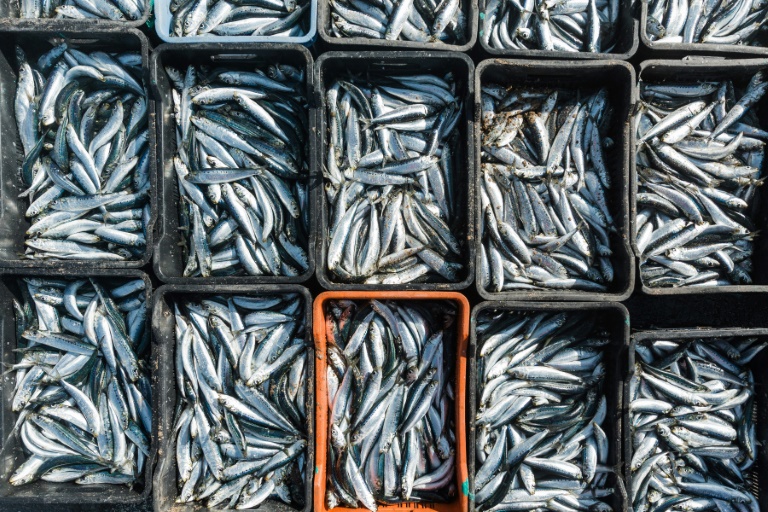
A WTO deal aimed at curbing overfishing was hailed by conservation groups as a major turning point, even if it was the result of compromises to seal the long-sought agreement.

Negotiations towards banning subsidies that encourage overfishing and threaten the sustainability of the planet’s fish stocks had been going on at the World Trade Organization since 2001.

The text was watered down compared to what had originally been envisaged, but WTO chief Ngozi Okonjo-Iweala insisted it was better to get an agreement rather than keep negotiating for years to come.

The fishing agreement was part of a clutch of deals that were struck after marathon talks in Geneva to tackle food insecurity and place a waiver on Covid vaccine patents.

The deal on fishing subsidies had “environmental sustainability at its heart”, Okonjo-Iweala said.

The deal, she said, targets subsidies that contribute to illegal, undeclared and unregulated fishing, and bans support to fishing in areas where fish stocks are overstretched.

The agreement, she added, marks “a first but significant step forward” towards reducing the fishery subsidies that contribute to overfishing on unregulated high seas.

Non-government organisations agreed.

“The new agreement is the product of compromise among 164 countries, so it’s not perfect,” said Marco Lambertini, director general of WWF International. 

“But the ocean needs help now, and marine ecosystems as well as coastal communities cannot wait for a perfect solution,” he said. 

“What the WTO has delivered is an agreement that should be a catalyst for further subsidy and fisheries reform.”

Another NGO, Bloom, called it a “first historic step for the ocean” and a “giant step for transparency.”

A study co-authored by Bloom found that subsidies to the fishing sector amount to $35.4 billion worldwide in 2018, with 80 percent going to industrial-scale fishing.

Oceana, an advocacy group, dissented, saying that the WTO had not rid the world of subsidized overfishing.

“Our oceans are the big loser today,” said Oceana CEO Andrew Sharpless. 

“The WTO is losing its credibility. Member states are way overdue in adopting strict rules that eliminate harmful subsidies, which is the single greatest global action we can take to ensure a healthy and abundant ocean,” he said.

“This meagre agreement falls demonstrably short of this target.”

– ‘A turning point’ –

Bloom founder Claire Nouvian told AFP that the WTO had been pragmatic.

The deal bans subsidies for illegal, unreported and unregulated fishing, with a two-year exemption for developing countries within their exclusive economic zones, or 200 nautical miles.

It also prohibits subsidies linked to overfished stocks, with a two-year reprieve for poorer nations. India had threatened to block this article if it was not granted a 25-year transition period.

In addition, the text allows for subsidies if they are implemented to rebuild the fishing stock to a “biologically sustainable level”.

Bloom warned that this exemption could open the door for industrial lobbies and governments to create false measures to replenish fish populations.

NGOs hailed a “transparency” clause that requires governments to report their subsidies and other data.

“This is a turning point in addressing one of the key drivers of global over-fishing,” said Isabel Jarrett, who manages the campaign to reduce harmful fisheries subsidies at the Pew Charitable Trusts.

“We did not have any monitoring mechanism, we have now a framework. This is very, very important,” she told AFP.

WTO strikes landmark deals package after marathon talks

The World Trade Organization concluded a landmark bundle of deals Friday covering fishing subsidies, food insecurity and Covid-19 vaccines following hectic round-the-clock talks.

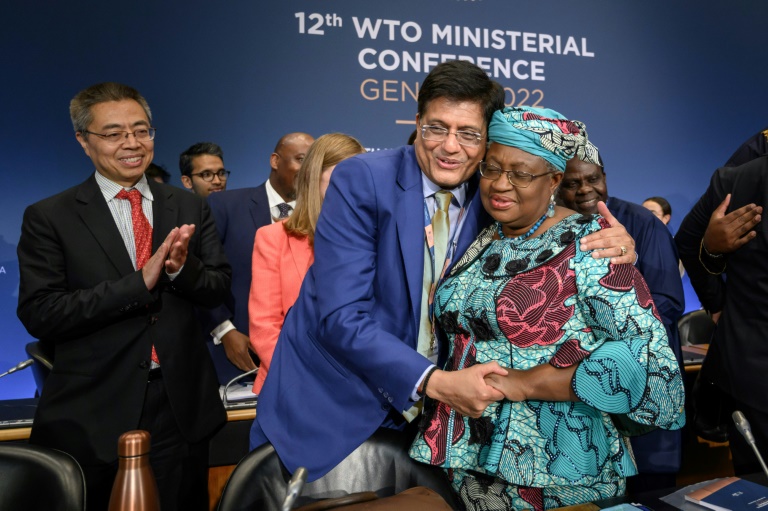
WTO director-general Ngozi Okonjo-Iweala said trade ministers had struck an “unprecedented” number of agreements that would affect the lives of people everywhere.

The talks in Geneva began Sunday and had been due to wrap up on Wednesday.

But instead the WTO’s 164 members went through two straight nights before getting the package over the line at around 5:00 am (0300 GMT) Friday.

“DEAL!” tweeted EU trade commissioner Valdis Dombrovskis after the conference went nearly 36 hours into overtime.

The WTO’s 12th ministerial conference (MC12) reeled in a deal to halt harmful fisheries subsidies after more than two decades of negotiations, and also reached agreements on e-commerce, responding to pandemics and reforming the organisation itself.

“Not in a long while has the WTO seen such a significant number of multilateral outcomes,” Okonjo-Iweala said.

“The package of agreements you have reached will make a difference to the lives of people around the world.”

But she acknowledged that “there were many moments when I feared we would come out of MC12 with nothing at all”.

As negotiations dragged on, delegates at one point had even danced to songs like “I will survive” and “Final Countdown” to blow off steam, US ambassador Maria Pagan told reporters.

– Fish deal netted –

The fisheries deal was the last one to get over the line, with negotiators hammering out the final points into the early hours of Friday.

Talks towards banning subsidies that encourage overfishing and threaten the sustainability of the planet’s fish stocks had been going on at the WTO since 2001.

The text was watered down significantly, but Okonjo-Iweala insisted it was better to get an agreement rather than keep negotiating for years to come.

Dombrovskis acknowledged to reporters that the agreement fell short of what the EU would have wanted, but “we decided that taking this first step… was better than not getting any agreement”.

US Trade Representative Katherine Tai also hailed the agreement, as “a positive step forward”, highlighting that countries had committed to continue talks towards a more ambitious text.

Myron Brilliant, head of international affairs at the US Chamber of Commerce, highlighted the importance of moving forward on banning harmful fisheries subsidies.

“This is a rare case where trade rules could make a huge contribution to addressing a major environmental problem,” he said.

– Consensus –

The fisheries agreement marks the first large multilateral deal agreed at the WTO in nearly a decade.

Okonjo-Iweala, who took over in March 2021, hinged her leadership on breathing new life into the sclerotic organisation.

She wanted to prove that the organisation could still make itself relevant in tackling the big global challenges.

The former foreign and finance minister of Nigeria positioned herself as someone who can bang heads together and get business done.

“I prefer to talk less and do more,” she said Friday.

As for why the discussions went on so long, some delegations accused India of being intransigent on every topic under discussion at the WTO — where decisions can only pass with the agreement of every member.

But Indian Commerce and Industry Minister Piyush Goyal insisted: “India is not a roadblock on anything… We were the ones who actually helped create the sole consensus.”

– Patents waiver –

The second major issue on the table was the plan for a Covid-19 vaccine patents waiver, aimed at providing more equitable access to the jabs.

After months of wrangling, and talks going down to the wire this week to win over some major players in pharmaceutical manufacturing to a compromise text, the United States and China finally clinched the deal by agreeing on which countries would benefit from the waiver. 

China provided a binding commitment not to take advantage of the waiver.

Tai hailed the deal, saying it would “get more safe and effective vaccines to those who need it most”. 

This agreement shows that we can work together to make the WTO more relevant to the needs of regular people.

The pharmaceutical industry organisation IFPMA however voiced “deep disappointment” at the deal, warning that “dismantling” patent protections would strangle innovation. 

Public interest groups meanwhile condemned the deal for not going far enough.

“It is a technocratic fudge aimed at saving reputations, not lives,” said  Max Lawson of the People’s Vaccine Alliance, while the Doctors Without Borders charity labelled it a “devastating global failure”.

WTO members also agreed to help ease supply shortages that some countries faced during the pandemic.

With Russia’s war in Ukraine fuelling a global food security crisis, ministers agreed on the importance of not imposing export restrictions.

But the need to secure consensus from all members, including from Moscow, meant their declaration did not mention Russia or its role in the crisis.

US approves Pfizer and Moderna vaccines for youngest children

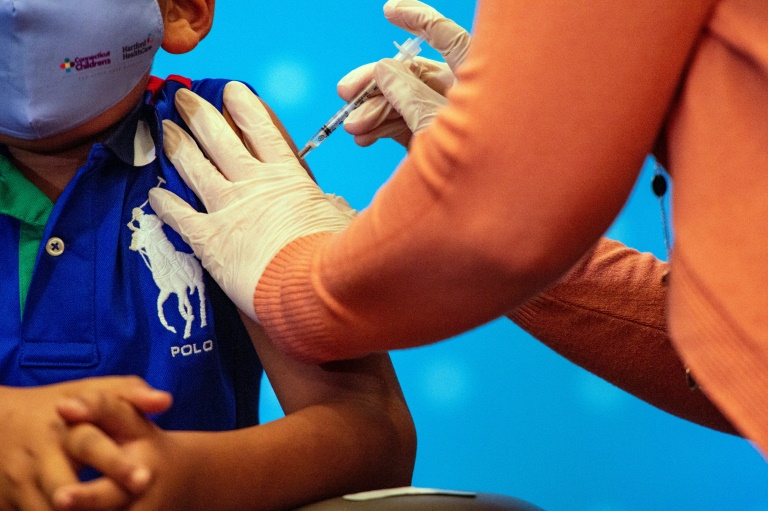
The US Food and Drug Administration granted emergency authorization Friday for the use of Pfizer and Moderna Covid-19 vaccines in the youngest children, the final age group awaiting immunization in most countries.

The agency, whose approval is considered the global gold standard, authorized Moderna’s two-dose vaccine for children aged six months to five years, and three doses of Pfizer’s shots for those between six months and four years old.

“Today is a day of huge relief for parents and families across America,” President Joe Biden said in a statement, adding that vaccinating young children will help “our nation continue to move forward safely.”

FDA chief Rober Califf similarly hailed the decision, saying “vaccines for younger children will provide protection from the most severe outcomes of Covid-19, such as hospitalization and death.”

Pfizer said it plans to submit requests for authorization to other regulators around the world, including the European Medicines Agency in early July.

“Parents in the US now have the option to vaccinate their children under 5 years of age, and we are working to ensure that other countries worldwide will follow,” said Ugur Sahin, CEO and co-founder of Germany’s BioNTech, which developed the vaccine together with Pfizer.

The Centers for Disease Control and Prevention (CDC) must now also recommend the vaccines before they are put into use in the United States — a final green light that will be given after a meeting of an advisory committee of experts that is expected to be held shortly.

But the government has said that as soon as the FDA decision was made, 10 million doses could immediately be sent around the country, followed by millions more in subsequent weeks.

– Successful trials –

Both vaccines are based on messenger RNA, which delivers genetic code for the coronavirus spike protein to human cells that then grow it on their surface, training the immune system to be ready. The technology is now considered the leading Covid vaccination platform.

The vaccines were tested in trials of thousands of children. They were found to cause similar levels of mild side effects as in older age groups and triggered similar levels of antibodies.

Efficacy against infection was higher for Pfizer, with the company placing it at 80 percent, compared to Moderna’s estimates of 51 percent for children aged six-months to two years old and 37 percent for those aged two to five years.

But the Pfizer figure is based on very few cases and is thus considered preliminary. It also takes three doses to achieve its protection, with the third shot given eight weeks after the second, which is given three weeks after the first.

Moderna’s vaccine should provide strong protection against severe disease after two doses, given four weeks apart, and the company is studying adding a booster that would raise efficacy levels against mild disease.

However, Moderna’s decision to go with a higher dose is associated with higher levels of fevers in reaction to the vaccine compared to Pfizer.

“We are thrilled that the FDA has granted Emergency Use Authorization of Moderna’s Covid-19 vaccine for children and adolescents, particularly for our vulnerable, youngest children,” said Moderna CEO Stephane Bancel.

“Children need to live highly social lives to develop and flourish,” Bancel added. “With this authorization, caregivers for young children ages 6 months through 5 years of age finally have a way to safeguard against Covid risks in classroom and daycare settings.”

The United States, home to 20 million children four years and under, has recorded 480 Covid deaths in that group in the pandemic — far higher than even a bad flu season, according to the FDA.

As of May 2022, there have been 45,000 hospitalizations in that group, nearly a quarter of which required intensive care.

Close Bitnami banner
Bitnami