AFP

Australia's new climate promise meets mining reality

Flood, fire and drought-battered Australia is trying to clean up its act on climate change, but dependence on fossil fuel riches could stymie the national makeover.

Centre-left Prime Minister Anthony Albanese swept to power in May promising weary Australians that he would tackle climate change.

He followed through on a key plank of that promise Thursday, nearly doubling the country’s 2030 emissions reduction target to 43 percent.

Albanese faces a thorny dilemma: Australians want real steps to slow global heating, but they live in a country that depends on exporting the fossil fuels that cause it.

Australia’s emissions — while high per person — account for just over one percent of global emissions.

Much more significant are the fossil fuels dug up in Australia and burned overseas.

Estimates differ, but these could account for anywhere between three and five percent of global emissions, making Australia one of the world’s largest carbon polluters. 

Another beneficiary of the May election wants to put an end to that. 

“You don’t end the climate wars by opening up new coal and gas mines,” said Australian Greens leader Adam Bandt, whose party now holds the balance of power in the Senate and wants radical energy reform in return for working with the government.

The sticking point for the Greens, Bandt told AFP, was that the government had pledged support for 114 new coal and gas projects already in Australia’s investment pipeline.

Modelling by the Greens found these projects would more than double Australia’s emissions.

“None of these new projects the government wants to open are factored into their climate modelling,” Bandt said.

– Wilder climate –

First discovered in 1791, Australia’s vast coal deposits make it the world’s second-largest exporter.

It is also one of the top exporters of gas — mostly natural gas and gas exploited from coal seams.

Fossil fuels account for about a quarter of Australian exports, with most destined for Japan, China and South Korea, according to Reserve Bank of Australia analysis.

Domestically, about 70 percent of electricity comes from coal and gas, according to official figures.

Given the economic sensitivities, the Albanese government has so far dodged calls to set a deadline for withdrawal from the sector, arguing international markets will decide when coal is no longer viable.

The approach may quell dissent from the coal and gas industry, used to getting its way after a decade of conservative governments.

But it could cause economic turmoil, with central bank analysts warning coal demand could fall by up to 80 percent by the middle of the century, leaving “stranded assets” that cannot be sold.

Already the strains are starting to show.

Mining giant BHP on Thursday announced it had been unable to sell its coal assets in the populous state of New South Wales.

The country’s largest energy producer and carbon emitter AGL is also facing an uncertain future.

When AGL tried to split off the most polluting parts of its business, green-minded tech billionaire Mike Cannon-Brookes sought to buy the company to stop the plan.

His bid was rejected, but Cannon-Brookes successfully lobbied fellow investors to block the demerger, arguing it would hurt shareholders and delay coal-fired power station closures.

Greenpeace Australia’s chief executive David Ritter said AGL’s experience was a lesson to listen to the call for climate action. 

“Every corporation that makes the same mistakes can expect to also run into real turbulence very, very quickly,” he told AFP.

This turbulence will come from activists, but also from the Australian public who have seen first-hand how a wilder climate can turn on them.

– After the ‘Black Summer’ –

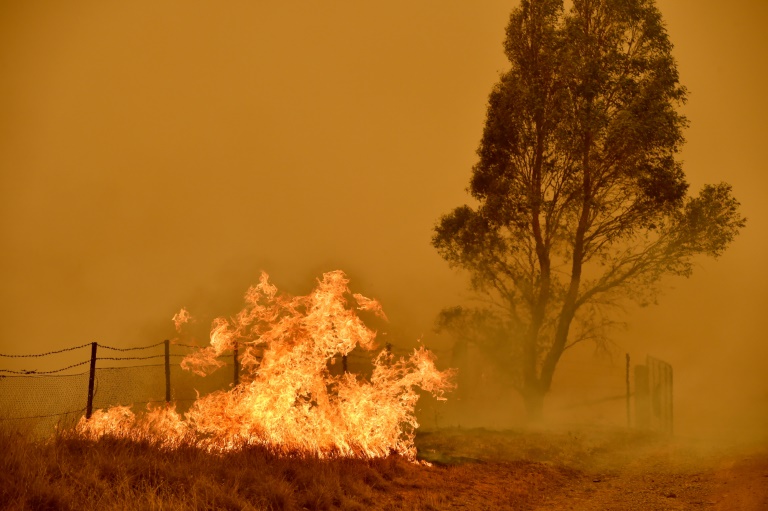
Australia’s 2019-20 “Black Summer” bushfires scorched 24 million hectares of land, cloaked cities in smoke, and killed more than 30 people along with an estimated tens of millions of wild animals.

In the two subsequent years, dramatic floods swamped Australia’s east coast, this year killing more than 20 people as waters reached rooftops and torrents swept cars off roads.

Before the bushfires, veteran firefighter Greg Mullins tried to warn the government it was not prepared for the infernos to come.

For 14 years, Mullins had led the fire service in Australia’s largest state, New South Wales, and he was joined by other retired emergency services leaders in sounding the alarm that climate change had dramatically escalated the fire threat.

“It was all political. Because we mentioned climate change, they just locked us out,” he told AFP.

He and fellow members of Emergency Leaders for Climate Action are calling for far more ambitious emissions cuts — 75 percent by 2030.

“We’ve lost the last decade of climate action, they’ve got to do a lot of catching up,” he said.

WTO strikes landmark deals package after tense talks

The World Trade Organization concluded hard-won deals Friday on fishing subsidies, food insecurity and Covid-19 vaccines in a landmark bundle of agreements secured through hectic round-the-clock talks.

WTO director-general Ngozi Okonjo-Iweala said the trade ministers’ conference had struck an “unprecedented package of deliverables” which would make a difference to people’s lives across the planet.

The talks at the global trade body’s Geneva headquarters began Sunday and were due to wrap up on Wednesday.

But instead the WTO’s 164 members went straight through on into Friday, finally concluding at around 5:00 am (0300 GMT).

The ministerial conference also agreed on deals on e-commerce, responding to pandemics and reforming the organisation itself.

“Not in a long while has the WTO seen such a significant number of multilateral outcomes,” Okonjo-Iweala said.

“The package of agreements you have reached will make a difference to the lives of people around the world. The outcomes demonstrate that the WTO is in fact capable of responding to the emergencies of our time.”

With ministers struggling to conclude agreements on each topic separately, countries began making trade-offs in a bid to get several measures through in a grand bargain.

– Big fish deal netted –

The fisheries deal was the last one to get over the line.

Delegations were frantically haggling in the early hours of Friday on the flagship issue being thrashed out at the WTO conference.

Negotiations towards banning subsidies that encourage overfishing and threaten the sustainability of the planet’s fish stocks have been going on at the WTO for more than 20 years.

Okonjo-Iweala, who took over in March 2021, hinged her leadership on breathing new life into the sclerotic organisation.

The former foreign and finance minister of Nigeria positioned herself as someone who can bang heads together and get business done.

The last ministerial conference in Buenos Aires in December 2017 was seen as a flop after failing to strike any heavyweight deals.

The new WTO chief wanted to prove that the organisation could still make itself relevant in tackling the big global challenges.

Some delegations accused India of being intransigent on every topic under discussion at the WTO — where decisions can only pass with the agreement of every member.

But Indian Commerce and Industry Minister Piyush Goyal insisted: “India is not a roadblock on anything… People are realising that we were the ones who actually helped create the sole consensus.”

The second major issue on the table was the plan for a Covid-19 vaccine patents waiver.

Some countries that host major pharmaceutical companies, like Britain and Switzerland, were finding some of the draft wording problematic, while big pharma feared a deal that would strangle innovation.

But Britain’s ambassador in Geneva, Simon Manley, told Okonjo-Iweala late Thursday that after clarification and improvements were achieved, London was “now ready to join the consensus”.

A Chinese invasion of Taiwan: Too costly to countenance?

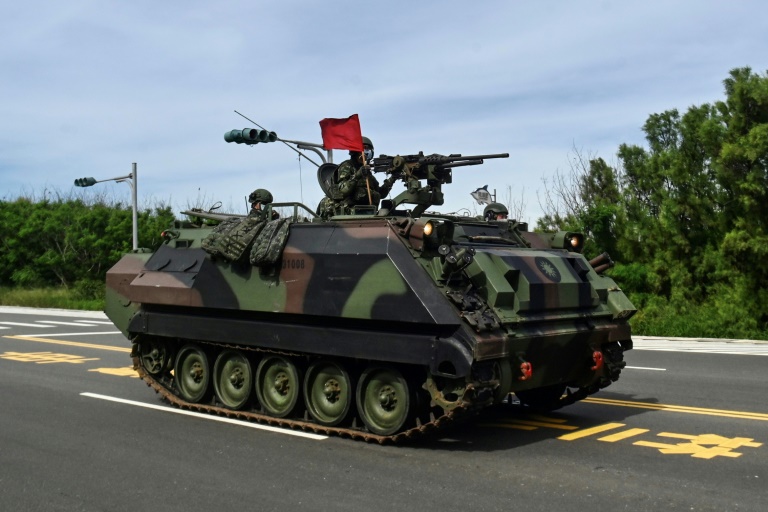
On Taiwan’s tiny Penghu islands, the missile bases that sit next to white-sand beaches and bustling fish markets are a visceral reminder of the constant threat of attack from China.

Despite the huge military discrepancy between the two sides, many analysts believe Taiwan’s location, inhospitable terrain and US support mean China would find a full-scale invasion extremely hard — and possibly too costly to countenance. 

Communist China and Taiwan split at the end of a civil war in 1949 with the losing Kuomintang forces retreating to the island. But Beijing insists now-democratically run Taiwan is part of its territory, and that it will one day re-take it, by force if necessary. 

Recent record Chinese fighter jet incursions into Taiwan’s air defence identification zone and increasingly aggressive rhetoric under President Xi Jinping have raised fears China might contemplate acting on that pledge sooner rather than later. 

The Chinese defence ministry last week said it would “not hesitate to start a war” to stop Taiwan becoming independent.

One US admiral has said an attack could come by 2027, the centenary of China’s People’s Liberation Army (PLA).

“If we were to go head to head militarily, we don’t stand a single chance,” retired admiral Lee Hsi-min, who was head of Taiwan’s armed forces until 2019, told AFP bluntly.

But Russia’s failure to quickly overrun Ukraine stands as a cautionary tale to Beijing, while simultaneously providing Taipei with both tactical blueprints and inspiration on how to hold off a much larger enemy.

“Our soldiers here are all Taiwanese and will be fighting to defend their homeland,” said Chen Ing-jin, a Penghu historian and architect. “That makes a difference. Just look at Ukraine.”

– ‘A defender’s dream’ – 

Taiwan’s biggest advantage is its geography.

Amphibious assaults are exceedingly difficult and if China was to invade Taiwan — and crucially hold it — Beijing would need to move hundreds of thousands of troops as well as equipment across the Taiwan Strait.

Even at its narrowest point the strait is 130 kilometres (80 miles) and weather conditions are notoriously unforgiving with two monsoon seasons. 

That leaves just two brief “windows of attack” — May to July and October — for such a large-scale operation, according to a US Naval War College report.

In addition, studded into the waters are outlying islands like the Penghu chain — bristling with radar and missiles pointing straight out into the strait.  

With the likely early warning, and the weaponry Taipei has at its disposal, the PLA would probably incur high losses even in that first stage of transit, said James Char, an Associate Research Fellow at Singapore’s S. Rajaratnam School of International Studies.

And while the small, flat outlying islands might in the end prove easy for Beijing to subdue, on Taiwan’s main island, the opposite applies.

The coastal terrain there “is a defender’s dream come true”, according to Ian Easton, author of “The Chinese Invasion Threat”.

He and his colleagues estimate that Taiwan only has 14 small beaches suitable for landing, and even they are bordered by mountains, cliffs or dense urban infrastructure. 

“Landing on Taiwan is only part of the problem,” Bonny Lin, director of the China Power Project at the Center for Strategic and International Studies (CSIS), told AFP. 

Progress through Taiwan’s wetlands, mountains and densely populated urban areas will require a huge range of different combat skills and weapons.

“How is it going to sustain those forces once they’re in position and advancing — how is it going to do the logistics?” Lin asked.

– Weapons –

China has spent hundreds of billions of dollars upgrading its military capabilities over the past decade, and its statistical dominance over Taiwan is enormous. 

The PLA has over one million ground force personnel to Taiwan’s 88,000, 6,300 tanks compared with 800, and 1,600 fighter jets to 400, according to the US Department of Defence.  

Washington also estimates Beijing has the world’s largest Navy by ship number. A recent US Naval War College paper described those ships as “increasingly sophisticated, capable vessels”.

But many experts, including both Char and Lin, question whether they are yet capable enough.

Atlantic Council senior advisor Harlan Ullman put it more forcefully in a February paper: “China simply lacks the military capability and capacity to launch a full-scale amphibious invasion of Taiwan for the foreseeable future”.  

In the meantime, Taiwan has plans to counter China’s might in numbers, with retired admiral Lee highlighting asymmetric warfare — an emphasis on mobility and precision attacks — an approach US officials are reportedly encouraging. 

Lee pointed to the success of the Ukrainian mobile missile launcher that sank Russia’s Black Sea flagship, the Moskva.

Taiwan has built up stockpiles of mobile missile batteries and shoulder-launched weapons but he said they needed lots more. 

– US support –

The factor that preoccupies Beijing most is who else might get involved in the conflict, Chinese military expert Song Zhongping told AFP. 

“The difficulty of liberating Taiwan lies in the potential intervention of the United States. It’s the biggest obstacle for the PLA to clear,” he said. 

The United States officially maintains a “strategic ambiguity” on whether it would intervene militarily in the event of an invasion. But it supplies Taiwan with military hardware and President Joe Biden has said multiple times that Washington would intervene. 

The “extent, depth and breadth” of US and other allies’ involvement would greatly determine how any conflict would play out, said Song. 

Some wargame scenarios see the PLA taking out US bases in the Pacific to kneecap its ability to respond. Washington would be heavily reliant on aircraft carriers operating far from home. 

To counter that threat China has prioritised the development of hypersonic “carrier killer” missiles and militarised multiple atolls in the disputed South China Sea.

But an attack on US forces could provoke a more determined backlash and draw American allies into a global conflict.

Even without a military intervention, Char said the threat of economic sanctions like those placed on Russia would give the Chinese leadership pause for thought.

– Political willpower –

The question of whether China would be prepared to cause mass casualties with an invasion, while risking its domestic and international image, is a fundamental one.

“You need to let China know that it will suffer tremendous losses, and even then it may still not be able to occupy Taiwan,” said Lee. 

“So that China will think that the best way to resolve the Taiwan problem is by peaceful means.”

There are a range of other options short of all-out invasion Beijing could use to bring Taipei to its knees — including a Taiwan Strait blockade, annexation of the outlying islands, or incapacitation of military and cyber systems.

“China might come up with other formulations or creative diplomatic strategic solutions to declare unification with Taiwan without actually having achieved that,” CSIS’ Lin said.  

Chinese analyst Song said Beijing has made its invasion trigger clear. 

“The timing depends on the behaviour of the Taiwanese separatists and if they insist on advocating for Taiwan’s independence,” he said.

The island’s 23 million people have increasingly embraced a distinct Taiwanese identity and President Tsai Ing-wen, who views the island as a sovereign state, has won two elections. 

The next presidential elections are next due in 2024 and Ukraine’s fate has only further hardened attitudes towards China.

In a survey conducted in May, 61.4 percent of respondents said they were willing to take up arms in the event of an invasion. 

The decision ultimately rests with Xi Jinping, the most authoritarian Chinese leader since Mao Zedong, who has been central to the rising fears that China will invade Taiwan.

Xi is on the cusp of securing an unprecedented third term this year. And since he came to power, Char said, “there’s been a total shift from the previous mantra of peace and development” towards Taiwan.

Instead, he added, Xi has pushed the mantra “accomplish something magnificent and great”.

In a landmark 2019 speech on Taiwan, Xi said unification was “an inevitable requirement for the great rejuvenation of the Chinese people”.

RIP Internet Explorer: South Korean engineer's browser 'grave' goes viral

A South Korean engineer who built a grave for Internet Explorer — photos of which quickly went viral — told AFP Friday that the now-defunct web browser had made his life a misery.

South Korea, which has some of the world’s fastest average internet speeds, remained bizarrely wedded to Microsoft’s Internet Explorer, which was retired by the company earlier this week after 27 years.

In honour of the browser’s “death”, a gravestone marked with its signature “e” logo was set up on the rooftop of a cafe in South Korea’s southern city of Gyeongju by engineer Kiyoung Jung, 38.

“He was a good tool to use to download other browsers,” the gravestone’s inscription reads. 

Images of Jung’s joke tombstone quickly spread online, with users of social media site Reddit upvoting it tens of thousands of times.

Once dominant globally, Internet Explorer was widely reviled in recent years due to its slowness and glitches.

But in South Korea, it was mandatory for online banking and shopping until about 2014, as all such online activities required sites to use ActiveX — a plugin created by Microsoft. 

It remained the default browser for many Seoul government sites until very recently, local reports said.

The websites of the Korea Water Resources Corporation and the Korea Expressway Corporation only functioned properly in IE until at least June 10, according to a report by the Maeil Economic Daily.

– ‘Suffering’ for IE –

As a software engineer and web developer, Jung told AFP he constantly “suffered” at work because of compatibility issues involving the now-defunct browser. 

“In South Korea, when you are doing web development work, the expectation was always that it should look good in Internet Explorer, rather than Chrome,” he said.

Websites that look good in other browsers, such as Safari or Chrome, can look very wrong in IE, which often forced him to spend many extra hours working to ensure compatibility.

Jung said that he was “overjoyed” by IE’s retirement.

But he also said he felt genuinely nostalgic and emotional about the browser’s demise, as he remembers its heyday — one of the reasons he was inspired to erect the grave stone.

He quoted Japanese animator Hayao Miyazaki: “People are often relieved that machines don’t have souls, but we as human beings actually give our hearts to them,” Jung told AFP, explaining his feelings for IE.

He said he was pleased by the response to his joke grave and that he and his brother — who owns the cafe — plan to leave the monument on the rooftop in Gyeongju indefinitely.

“It’s been very exciting to make others laugh,” he said.

Problems soar for airlines despite pandemic recovery

Desperate to put the coronavirus pandemic behind them, airlines will hold talks on Sunday ahead of a potential summer of chaos with shortages and strikes that could threaten their recovery.

While trade is roaring back to life, representatives from the aviation sector meeting for three days in Qatar have a packed agenda with multiple geopolitical crises including the war in Ukraine and the environment.

Cracks are already showing in the sector’s recovery, though industry figures are optimistic about the future despite the issues.

In the past few weeks, delays and cancellations caused by a lack of staff at airports and strikes for better pay have wreaked havoc upon travellers.

The problems originate with the pandemic when airlines and airports laid off thousands of workers during its worst-ever crisis.

Now, they are scrambling for workers.

Passenger numbers dropped by 60 percent in 2020, and in 2021 it was still down 50 percent. Airlines lost nearly $200 billion over two years.

While some firms in the sector went bankrupt, others — backed often by states — have emerged from the pandemic with profits intact.

European airlines are excited about the prospect for a “beautiful summer”, with some data showing booking rates higher than in 2019. In the United States, the domestic market has almost returned to pre-pandemic levels.

“Airlines are generating cash again, which is a real positive,” said Willie Walsh, head of the International Air Transport Association, during a visit to Paris earlier this month.

The sector’s morale was buoyant after “a very long and barren two years”, he told reporters.

– ‘Not up to speed’ –

The International Air Transport Association (IATA), which represents 290 airlines accounting for 83 percent of global air traffic, will host its annual general meeting in Doha instead of Shanghai after record-high Covid case counts forced it to relocate the forum.

There will be cause for celebration during the event.

In terms of Revenue Passenger Kilometres (RPKs), a measure of total distance flown by paying passengers, activity in April reached 62.8 percent compared with the same month in 2019.

That was the best figure since March 2020. 

Domestic routes, meanwhile, hit 74.2 percent in April, better than international markets which reached 56.6 percent compared with the same period in 2019.

After the Easter holidays fiasco at European airports, Walsh admitted “the system is not up to speed”, but vowed the issues would be addressed.

He was hopeful despite the war in Ukraine and its wider impacts, surging inflation and record prices for jet fuel.

Fuel makes up 25 to 30 percent of companies’ spending, and given the still-fragile state of airlines’ balance sheets, higher costs will be passed on to customers to preserve their profits.

But the effects of Russia’s war in Ukraine are already being felt.

European flights to Asia are constrained by long diverted routes to avoid Russian airspace after having slapped heavy sanctions on Moscow.

– Costly decarbonisation –

With inflation eroding people’s purchasing power, higher costs could weaken demand at a time when companies need to make serious investments to cut their carbon dioxide emissions.

The IATA pledged last October to achieve net-zero carbon emissions by 2050.

The issue will be raised at a general assembly meeting of the International Civil Aviation Organization in the autumn, but a deal between countries is far from certain.

The IATA, which expects 10 billion air passengers annually by the middle of the century compared with 4.5 billion in 2019, refuses to consider any restrictions on growth in order to contain the effects of climate change.

Commercial air travel, often the target of environmental activists, is responsible for between 2.5 and 3 percent of global emissions.

Between “cleaner” planes and sustainable fuel, investment worth $1.5 trillion over 30 years is needed to improve the sector’s environmental impact. The costs will be most likely handed down to the customer, again.

Asian markets hit by recession fears, yen drops after BoJ decision

Asian markets mostly fell Friday after another hefty drop in New York as central bank interest rate hikes fan fears of a recession, while the yen sank after the Bank of Japan said it would not yet follow its global peers in tightening policy.

Gone is the optimism that flowed through trading floors immediately after the Federal Reserve on Wednesday announced its biggest rate increase for 28 years as global finance chiefs followed suit, putting a squeeze on dealers’ ability to borrow.

Markets have been tumbling for months as traders contemplate the end of the era of cheap cash that sent valuations to record or multi-year highs, with inflation at levels not seen in decades owing to a surge in energy and food prices.

The Bank of England on Thursday lifted rates for a fifth straight time to their highest since 2009 during the financial crisis, just as the Swiss central bank shocked markets by unveiling its own half-point increase — its first rise in 15 years. 

The European Central Bank has also signalled it will announce a hike soon.

Equities plunged as expectations for recession continue to rise. The Dow ended below 30,000 for the first time in more than a year and the S&P 500 is now at its lowest since December 2020.

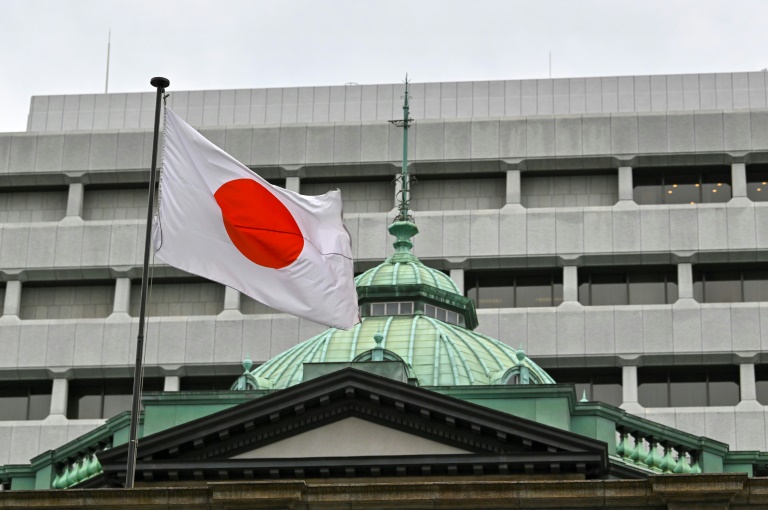
But with rates rising everywhere else, the Bank of Japan on Friday refused to move away from its ultra-loose monetary policy, despite inflation spiking and the yen sitting around a 24-year low.

Officials in Tokyo insist that low rates are still needed to nurture a struggling economy, though in a move away from its regular remarks in the post-meeting statement, the bank did say it “was necessary to pay due attention to developments in financial and foreign exchange markets”.

The yen tumbled to 134.63 against the dollar, from 133.37 before the decision, though it recouped some of those losses after the statement. Still, it is wallowing around a 24-year low and has lost around 13 percent this year.

But Stephen Innes at SPI Asset Management said: “No central bankers worth their weight would put inflation-fighting credentials on the line and import higher energy inflation via a weaker currency.”

He added that “in what is a highly ominous signal for stock market investors, given the broader index’s sensitivity to rising bond yields… the global race to hike rates is nowhere near the finishing line”. 

On equity markets, Tokyo, Shanghai, Sydney, Seoul, Singapore, Wellington, Taipei, Bangkok, Manila and Jakarta were all in the red, though Hong Kong was slightly higher after steep losses on Thursday.

– Key figures at around 0310 GMT –

Tokyo – Nikkei 225: DOWN 2.2 percent at 25,858.50 (break)

Hong Kong – Hang Seng Index: UP 0.5 percent at 20,958.37

Shanghai – Composite: DOWN 0.3 percent at 3,274.38

Dollar/yen: UP at 134.30 yen from 132.14 yen late Thursday

Euro/dollar: DOWN at $1.0527 from $1.0550

Pound/dollar: DOWN at $1.2307 from $1.2350

Euro/pound: UP at 85.54 pence from 85.40 pence

West Texas Intermediate: DOWN 0.5 percent at $117.00

Brent North Sea crude: DOWN 0.4 percent at $119.32 per barrel

New York – Dow: DOWN 2.4 percent at 29,927.07 (close)

London – FTSE 100: DOWN 3.1 percent at 7,044.98 (close)

— Bloomberg News contributed to this story —

Biden coup buoys Saudi crown prince after five years at helm

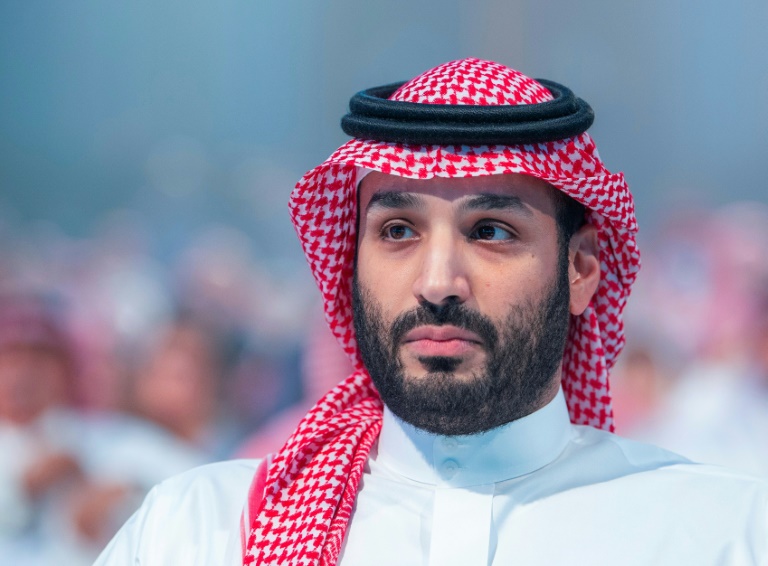
Saudi Arabia’s Crown Prince Mohammed bin Salman has long been sidelined on the world stage but as he prepares to mark five years as de facto leader, he is finally coming in from the cold.

Next month’s visit by US President Joe Biden will complete the international rehabilitation of the 36-year-old prince, who was widely reviled over the 2018 killing of journalist Jamal Khashoggi.

Biden’s trip — after Russia’s invasion of Ukraine sent oil prices soaring, piling on economic pain — follows visits by the leaders of France, Britain and Turkey.

It represents an unqualified victory for Prince Mohammed, who has led his country on a rollercoaster ride since being named the heir of his father King Salman, 86, on June 21, 2017.

In his time as unofficial ruler of Saudi Arabia, the world’s biggest oil exporter and the home of Islam’s two holiest sites, “MBS” has liberalised many aspects of daily life while asserting stern control over others.

Yet his drive to transform the conservative kingdom risked being completely overshadowed by Khashoggi’s murder, an act so abhorrent that Biden’s trip — a routine move for past American leaders — has sparked controversy.

Saudi agents killed and dismembered Khashoggi, an insider turned critic, in the kingdom’s Istanbul consulate in October 2018.

US intelligence concluded that Prince Mohammed “approved” an operation to capture or kill Khashoggi, a charge he denies.

Following the visits by France’s President Emmanuel Macron, Britain’s Prime Minister Boris Johnson and Turkey’s President Recep Tayyip Erdogan, the planned meeting with Biden is a major validation of Prince Mohammed.

“Washington was kind of the hub of opposition to MBS when it comes to official public statements and mobilisation in the West,” said Yasmine Farouk of the Carnegie Endowment for International Peace.

“This is exactly what MBS was aiming to get through the last year-and-a-half: a meeting and a picture with Biden as a counterpart,” said one Riyadh-based diplomat.

– Women at the wheel –

When he arrives, Biden will find Prince Mohammed’s stamp almost everywhere. But no group has been affected more than Saudi women.

The axing of notorious rules concerning what women can wear and where they can go is a centrepiece of the new Saudi liberalisation narrative.

Abaya robes and hijab headscarves are now optional, women are no longer banned from concerts and sporting events, and in 2018 they gained the right to drive.

The kingdom has also eased so-called guardianship rules, meaning women can now obtain passports and travel abroad without a male relative’s permission.

Yet the story for women has not been entirely positive, especially for those who dare to speak out.

In 2018, authorities arrested at least a dozen women activists, most of them right before the ban on female motorists was lifted.

The move was preceded by a clampdown that hit princes and senior officials suspected of graft or disloyalty, dozens of whom were rounded up in November 2017 in Riyadh’s luxury Ritz-Carlton hotel.

Prince Mohammed “has coupled his dramatic and thoroughgoing cultural, social and artistic revolution from the top down… with an equally dramatic concentration of power politically”, said Hussein Ibish of the Arab Gulf States Institute in Washington.

– Next phase ‘critical’ –

Some of Prince Mohammed’s most striking policies have played out beyond his country’s borders.

Two months after his father, King Salman, ascended the throne in 2015 and named Prince Mohammed defence minister, Riyadh rallied a coalition to intervene in war-hit Yemen.

The conflict between the Saudi-backed Yemeni government and Iran-aligned Huthi rebels has gone on to kill hundreds of thousands of people directly and indirectly and drive millions to the brink of famine.

Signs of a more muscular Saudi foreign policy were also seen in a three-year blockade of Qatar that began in June 2017, the same month Prince Mohammed became heir.

More recently, the kingdom has adopted what analysts call a somewhat conciliatory approach in the region, for example by engaging in talks with rival Iran. Prince Mohammed has also referred to Israel as a “potential ally”.

Perhaps the most significant element of Prince Mohammed’s Vision 2030 reform agenda is his bid to remake an economy long dependent on oil.

The effort includes a push for some 30 million foreign tourists annually by 2030, some of them lured by mega-projects like NEOM, a $500 billion futuristic megacity complete with robot maids and flying taxis.

Other changes, such as drawing more Saudis into the workforce, are less flashy and, like other recent moves, were discussed before Prince Mohammed’s rise.

“He is the powerhouse, but he didn’t do something that wasn’t already the subject of discussion in the public sphere,” said Farouk, referring to the reforms generally.

Nevertheless, Prince Mohammed now owns Saudi Arabia’s reform process and his legacy will hinge on its success, said Kristian Ulrichsen of Rice University’s Baker Institute in the United States.

“Having made so much of the fact that he, and only he, can transform Saudi Arabia by 2030, the next several years will be critical for Mohammed bin Salman as he seeks to deliver tangible results.”

US makes billions from prison labor as inmates earn pennies: rights group

Montrell Carmouche praises Mexico’s white beaches and coral reefs, selling it by telephone as a holiday destination while trying not to reveal that he has never been there — or that he is, in fact, an inmate imprisoned in the United States.

His story — and his pay, a meager $6 commission per sale — are featured in a report released this week by the powerful American Civil Liberties Union (ACLU) and the University of Chicago which documents the work of the US prison population. 

Inmates “are paid pennies for their work in often unsafe working conditions even as they produce billions of dollars for states and the federal government,” according to ACLU researcher Jennifer Turner, lead author of the paper.  

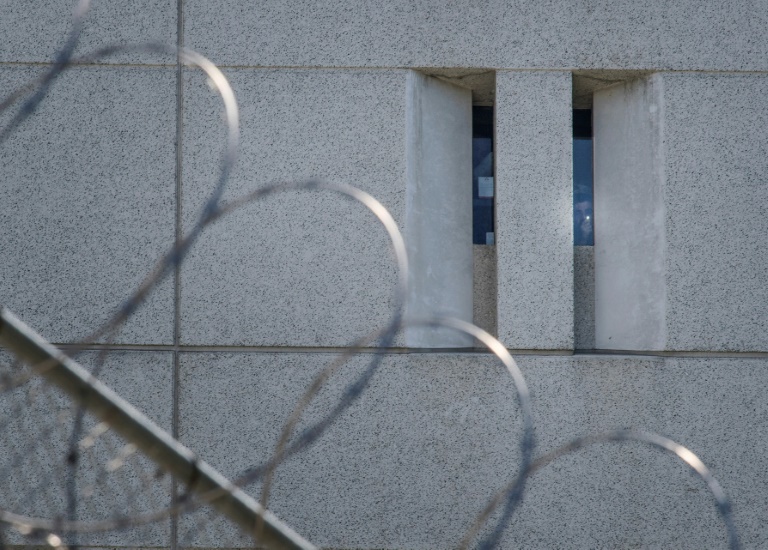
The US incarceration rate is among the highest in the world, with more than 1.2 million people held in state and federal prisons. 

Two-thirds of them have jobs behind bars and produce more than $11 billion worth of goods and services each year, according to the report, “Captive Labor: Exploitation of Incarcerated Workers,” which compiles other surveys, official documents and interviews with inmates. 

The vast majority — more than 80 percent — are employed to keep their prisons running as cleaners, cooks, electricians and plumbers for wages ranging from $0 to $1.24 an hour. 

The Bureau of Prisons described the work program in a statement to AFP as a means of reducing “inmate idleness, while allowing the inmate to improve and/or develop useful job skills, work habits, and experiences that will assist in post-release employment.”

In 2004, a conservative estimate of the value from their work was $9 billion, the ACLU report says. 

“All the jobs we are doing in prison are not really benefiting us; it is more benefitting the prison system,” commented Latashia Millender, an Illinois inmate quoted in the paper. 

“I work a job making $450 for a whole year. If they were to pay a civilian for the same job that would be his pay for just one week.” 

– ‘Fundamental human rights’ – 

Some 50,000 prisoners provide goods and services that are sold to other government agencies — jobs including washing sheets for hospitals, or making uniforms for public employees.

That labor was worth $2.09 billion in 2021, according to the National Prison Industries Association. 

Again, the wages are nominal: in Oregon, for example, the vehicle registration agency pays inmates $4 to $6 a day to make license plates, compared to $80 for free employees. 

Finally, fewer than 5,000 inmates, including Montrell Carmouche, work for private companies, whose clients often do not know the origin of the products. 

These jobs, which pay slightly more, are in high demand. But most of the earnings are seized by the government, often to reimburse their legal fees. 

Regardless of the job, the report’s authors point out that inmates have little or no training for the tasks assigned to them, generally cannot refuse them and lack the equipment necessary for their safety. 

In its statement, the Bureau of Prisons said that “human treatment” of inmates was “a top priority,” and added that subject to approval prisoners can instead do drug treatment, education or vocational training in place of some or all of the work program.

Only inmates who are “physically and mentally able” are assigned to work programs, it said, adding that the programs “are to meet the appropriate minimum standards for health and safety,”

For the report’s authors, that was not enough.

“(T)he labor conditions of incarcerated workers in many US prisons violate the most fundamental human rights to life and dignity,” concluded Claudia Flores of the University of Chicago, co-author of the study, recommending a series of reforms, including the imposition of a minimum wage. 

Bolsonaro blamed as UN, activists denounce Amazon murders

The United Nations as well as environmental and rights groups expressed outrage Thursday at the murder of British journalist Dom Phillips and Indigenous expert Bruno Pereira, which they linked to President Jair Bolsonaro’s willingness to allow commercial exploitation of the Brazilian Amazon.

Veteran correspondent Phillips, 57, and Pereira, 41, went missing on June 5 in a remote part of the rainforest rife with illegal mining, fishing and logging, as well as drug trafficking.

Ten days later, on Wednesday, a suspect named Amarildo da Costa de Oliveira took police to a place where he said he had buried bodies near the city of Atalaia do Norte, where the pair had been headed.

Human remains unearthed from the site arrived in Brasilia on Thursday evening for identification by experts, with members of the federal police seen carrying two brown coffins through a hangar. Official results are expected next week, according to local media.

Federal police said Thursday that traces of blood found in Oliveira’s boat belonged to a man, but not Phillips. Further analysis will be necessary to determine if it was that of Pereira.

There is still much to clarify in the case, including a motive and the circumstances surrounding the killings, apparently carried out by firearm. 

Late Wednesday, the federal police chief of Brazil’s northern Amazonas state said there was “a 99 percent probability” the unearthed remains corresponded to the missing men.

The UN human rights office said Thursday it was “deeply saddened by the information about the murder” of the two men.

“This brutal act of violence is appalling and we call on state authorities to ensure that investigations are impartial, transparent and thorough, and that redress is provided to the families of the victims,” spokeswoman Ravina Shamdasani said in Geneva.

Phillips, a longtime contributor to The Guardian and other leading international newspapers, was working on a book on sustainable development in the Amazon with Pereira as his guide, when they went missing.

Pereira, an expert at Brazil’s indigenous affairs agency FUNAI, had received multiple threats from loggers and miners with their eye on isolated Indigenous land.

– ‘Heartbroken’ –

Phillips’ family said in a statement they were “heartbroken” by the discovery of two bodies Wednesday, which they took as confirmation that the pair had been killed.

Beatriz Matos, the wife of Pereira, wrote on Twitter that “now that the spirits of Bruno are walking through the jungle and scattered among us, our strength is much greater.”

The Javari Valley where the men went missing — an area near the borders with Peru and Colombia — is home to about 20 isolated Indigenous groups where drug traffickers, loggers, miners and illegal fishermen operate. 

Greenpeace Brazil said the deaths were “a direct result of the agenda of President Jair Bolsonaro for the Amazon, which opens the way for predatory activities and crimes… in broad daylight.”

Bolsonaro, who took office in 2019, has pushed to develop the Amazon, the world’s largest tropical rainforest.

He drew fresh criticism Wednesday for saying Phillips was “disliked” for his reporting on the region and should have been more careful.

On Thursday, the far-right president tweeted “our condolences to the families” of the men.

In Brussels, seven Brazilian Indigenous leaders deplored the climate of violence and “impunity” in the Amazon in front of the European Union headquarters. 

One of them, Dinamam Tuxa, told AFP that “Bruno and Dom Phillips were victims of government policies.”

– ‘Political crime’ –

Shamdasani said attacks and threats against activists and Indigenous people in Brazil were “persistent” and urged the government to step up protections.

The Univaja association of Indigenous peoples, which had taken part in the search for the missing men, denounced the suspected killings as a “political crime,” while the Brazilian Association of Investigative Journalism said “the president and his allies have become protagonists of attacks on the press” uncovering environmental crimes.

“People dead for defending Indigenous lands and the environment. Brazil cannot be that,” added ex-president Luiz Inacio Lula da Silva, who will face Bolsonaro in October elections.

Investigations continue to look into the motive for the crime as well as the role played by Oliveira and fellow suspect Oseney da Costa de Oliveira. 

On the ground, civil police carried out three search warrants, but no arrests were made. Authorities said they had so far been unsuccessful in finding the boat in which Phillips and Pereira were traveling when they were last seen, an AFP journalist confirmed.

Brazilian media report there may be three more people involved. Police have not ruled out more arrests.

Ferrari says 80% of its models will be electric or hybrid by 2030

Ferrari unveiled Thursday plans to turn 80 percent of its production into all-electric or hybrid cars by 2030 in a major shift for an iconic brand renowned for its powerful combustion engines.

“Electrification is a way to improve performance,” new chief executive Benedetto Vigna said as he unveiled a four-year strategic plan at the brand’s historic Maranello site in northern Italy.

The 2022-2026 plan will be driven by the launch of new products — including Ferrari’s first 100 percent electric car, set to be presented in 2025.

“Ferrari’s first all-electric car will be 100 percent a sports car,” commercial director Enrico Galliera told AFP.

“We will develop an electric car that will deliver the same emotions as when you drive a (traditional) Ferrari,” he pledged, without revealing any technical details.

The Italian luxury carmaker plans to expand the Maranello plant and create a third production line for hybrid and electric vehicles.

Under the plan, some 60 percent of its production would be all-electric or hybrid models by 2026, rising to 80 percent by 2030.

Other upcoming new products include Ferrari’s first SUV, “Purosangue” (Thoroughbred), which will be unveiled in September, with deliveries from 2023.

Including the all-electric offer, another 15 new launches are expected between 2023 and 2026, Vigna said.

Ferrari, which celebrates its 75th anniversary this year, broke results records in 2021, delivering 11,155 cars — up 22.3 percent  — and generating revenue of 4.3 billion euros (up 23.4 percent).

It said Thursday it was setting an ambitious target for revenues. The 6.7-billion-euro ($7-billion) goal for 2026 is well above this year’s estimated revenue of around 4.8 billion euros.  

Vigna did not give many details of the new Purosangue, other than that it will be a sports car and will have a V12 engine, a trademark of the mythical brand.

But he said: “I am confident it will exceed all expectations.”

He emphasised its exclusivity, saying it would make up on average fewer than 20 percent of total deliveries.

Under the previous strategic plan unveiled in 2018, Ferrari had also promised the launch of 15 cars — a target Vigna said had been reached.

Close Bitnami banner
Bitnami